



الصفحة 13
الصفحة 13

Angiogenesis in Inflammation : Mechanisms and Clinical Correlates
This volume relates the lessons learned from tumour biology applied to inflammation. This issue of Angiogenesis in Inflammation: Mechanisms and Clinical Correlates develops current knowledge on the mechanisms at the molecular and cellular levels as they relate to inflammation, including acute and chronic inflammation, neurogenic initiation, and the role of the multiple cellular components that comprise inflammation: granulocytes, macrophages, fibroblasts, dendritic cells and lymphocytes. This is related to inflammatory disease: not only the familiar angiogenesis dependent diseases of rheumatoid arthritis and psoriasis, but also loci such as the lung, gastric ulcers, the eye with uveitis, wound healing and periodontal disease and their therapy, how this knowledge may be used in the discovery of novel therapeutics. The volume brings together experts in each of these fields to link the molecular and cellular processes in angiogenesis to those of inflammation and disease, culminating in a discourse on areas for future therapies.
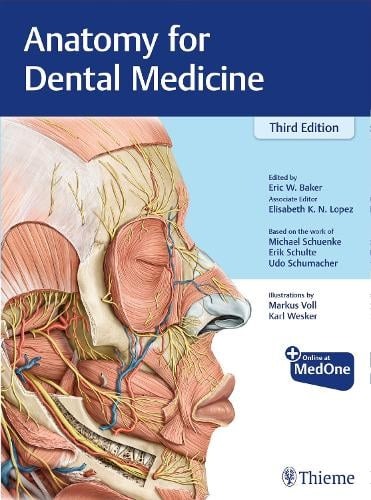
Anatomy for Dental Medicine
Strikes an optimal balance between systemic and regional approaches to complex head and neck anatomy. Award-winning full-color illustrations, succinct text, summary tables, and questions put anatomical structures and knowledge into a practical context. NEW! Additional radiologic images and landmark features throughoutNEW! Reorganized brain/nerve sectionsNEW! Expanded clinical question appendix including patient box questions in the style of the INBDENEW! Factual question appendix places greater emphasis on areas including the skull, larynx, cross sectional anatomy, body below the neck, and local anesthesia
Air quality integrated assessment : A European perspective
This book reports on the results of an extended survey conducted across Europe within the framework of the APPRAISAL FP7 project to determine the extent to which an integrated assessment approach to air quality is being adopted, on the one hand, by regional and local authorities to develop air quality plans and, on the other, by researchers. Following a detailed analysis of the role and structure of the components of an integrated assessment study, the results of the survey are considered from a variety of perspectives.

AI journal submitting = تقديم المقالات بالذكاء الصنعي
Aims to develop a comprehensive platform to support academic writers in preparing their research papers in word file format, adhering to the Damascus University template. The platform leverages advanced artificial intelligence techniques to offer services such as grammatical and spelling correction, plagiarism detection, and citation analysis. It also provides comprehensive evaluation tools for peer reviewers, facilitating accurate and reliable feedback.The platform consists of four main components: • User Interface for Creating and Formatting Papers: Simplifies the entry and automatic formatting of texts according to the Damascus University template. / • Intelligent Language Correction System: Utilizes natural language processing techniques to enhance language quality and clarity. / • Citation Analysis and Plagiarism Detection Tool: Identifies improper citations and provides detailed reports on copied sections. / • Peer Review Support System: Offers advanced evaluation tools and AI-driven analytical reports for reviewers.This platform aims to improve the quality and integrity of academic research, streamline the formatting process, and enhance the efficiency of the peer review process, thereby elevating the level of scientific output at Damascus University.

AI in disease detection : Advancements and applications
Discusses the integration of artificial intelligence to revolutionize disease detection approaches, with case studies of AI in disease detection as well as insight into the opportunities and challenges of AI in healthcare as a whole. The book explores a wide range of individual AI components such as computer vision, natural language processing, and machine learning as well as the development and implementation of AI systems for efficient practices in data collection, model training, and clinical validation.

Agricultural Implications of the Fukushima Nuclear Accident (III)
Reports on studies undertaken at contaminated sites such as farmland, forests, and marine and freshwater environments, with a particular focus on livestock, wild plants and mushrooms, crops, and marine products in those environments. It also provides additional data collected in the subsequent years to show how the radioactivity levels in agricultural products and their growing environments have changed with time and the route by which radioactive materials entered agricultural products as well as their movement between different components (e.g., soil, water, and trees) within an environmental system (e.g., forests). The book covers various topics, including radioactivity testing of food products; decontamination trials for rice and livestock production; the state of contamination in, trees, mushrooms, and timber; the dynamics of radioactivity distribution in paddy fields and upland forests; damage incurred by the forestry and fishery industries; and the change in consumers’ attitudes. Chapter 19 introduces a real-time radioisotope imaging system, a pioneering technique to visualize the movement of cesium in soil and in plants.
Agent-oriented software engineering VII ; 7th International Workshop, AOSE 2006, Hakodate, Japan, May 8, 2006, Revised and Invited Papers
Software architectures that contain many dynamically interacting components, each with their own thread of control, and engaging in complex coordination protocols, are difficult to correctly and efficiently engineer. Agent-oriented modelling techniques are important for supporting the design and development of such applications.The book is organized in topical sections on modelling and design of agent systems, modelling open agent systems, formal reasoning about designs, as well as testing, debugging and evolvability.

Agent-oriented software engineering V ; 5th International workshop, AOSE 2004, New York, NY, USA, July 2004, revised selected papers
The explosive growth of application areas such as electronic commerce, ent- prise resource planning and mobile computing has profoundly and irreversibly changed our views on software systems. Nowadays, software is to be based on open architectures that continuously change and evolve to accommodate new components and meet new requirements. Software must also operate on di?- ent platforms, without recompilation, and with minimal assumptions about its operating environment and its users. Furthermore, software must be robust and ¨ autonomous, capable of serving a naive user with a minimum of overhead and interference. Agent concepts hold great promise for responding to the new realities of software systems. They o?er higher-level abstractions and mechanisms which address issues such as knowledge representation and reasoning, communication, coordination, cooperation among heterogeneous and autonomous parties, p- ception, commitments, goals, beliefs, and intentions, all of which need conceptual modelling. On the one hand, the concrete implementation of these concepts can lead to advanced functionalities.

Advances in XML information retrieval and Evaluation ; 4th International workshop of the initiative for the evaluation of XML retrieval, INEX 2005, Dagstuhl Castle, Germany, November 28-30, 2005. Revised and Selected Papers
Content-oriented XML retrieval has been receiving increasing interest due to the widespread use of eXtensible Markup Language (XML), which is becoming a standard document format on the Web, in digital libraries,and publishing. By exploiting the enriched source of syntactic and semantic information that XML markup provides, XML information retrieval (IR) systems aim to implement a more focused retrieval strategy and return document components, so-called XML elements – instead of complete documents – in response to a user query. This focused retrieval approach is of particular bene?t for collections containing long documents or documents covering a wide variety of topics (e.g., books, user manuals, legal documents, etc.), where users’ e?ort to locate relevant content can be reduced by directing them to the most relevant parts of the documents.
Advances in verification of time Petri Nets and timed automata : A temporal logic approach
This monograph presents a comprehensive introduction to timed automata (TA) and time Petri nets (TPNs) which belong to the most widely used models of real-time systems. Some of the existing methods of translating time Petri nets to timed automata are presented, with a focus on the translations that correspond to the semantics of time Petri nets, associating clocks with various components of the nets. "Advances in Verification of Time Petri Nets and Timed Automata – A Temporal Logic Approach" introduces timed and untimed temporal specification languages and gives model abstraction methods based on state class approaches for TPNs and on partition refinement for TA. Moreover, the monograph presents a recent progress in the development of two model checking methods, based on either exploiting abstract state spaces or on application of SAT-based symbolic techniques.
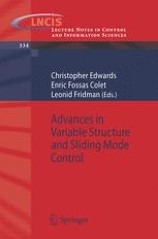
Advances in Variable Structure and Sliding Mode Control
Sliding Mode Control is recognized as an efficient tool to design controllers which are robust with respect to uncertainty. The resulting controllers have low sensitivity to plant parameters and perturbations and allow the possibility of decoupling the original plant system into two components of lower dimension. In addition many controllers ensure finite time convergence to the switching surface and can be straightforwardly implemented. However, in addition to this traditional area of exploitation, sliding mode concepts are being increasingly deployed for the design of observers for estimation and identification.
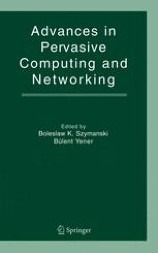
Advances in pervasive computing and networking
"Pervasive Computing and Networking aim at providing ubiquitous, ever-present, adaptable, smart, enveloping and immersive environments in which computing components and humans can interact regardless of the location. The combination of an abundance of computational power of the processors and the communication bandwidth provided by the wireless and mobile networking everywhere and all the time makes such environments within the reach of current technology. Yet, to realize the full potential of such environments, many technical and economical challenges needs to be overcome. These challenges and the perspective on the seminal directions of the research in this area were the subject of the Workshop for Pervasive Computing and Networking at Rensselaer Polytechnic Institute, Troy, NY, USA.
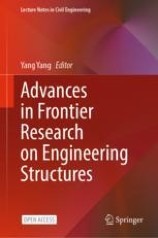
Advances in frontier research on engineering structures
Focuses on the research of advanced structures and anti-seismic in civil engineering. It features the most cutting-edge research directions and achievements related to civil and structural engineering. Subjects in this book include: ·Engineering Structure and Seismic Resistance ; ·Structural Mechanics Analysis ; Components and Materials ;·Structural Seismic Design ; 3D Printing Concrete ; Other Related Topics ; The works of this book promote development of civil and structural engineering, resource sharing, flexibility, and high efficiency.
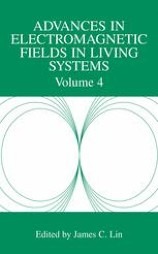
Advances in Electromagnetic Fields in Living Systems ; Vol.4
Advances in Electromagnetic Fields in Living Systems , Volume 4 begins with fetal magnetocardiography (fMCG), a noninvasive method of detecting components of the magnetic field produced by the electrical activity of the fetal heart. FMCG is experiencing steady growth, and is expected to gain influence in diagnosing certain congenital fetal heart defects while at the same time providing optimal care for patients. FMCG provides a distinct signal, free of maternal cardiac interference, which can be detected throughout the last half of pregnancy.
Advancements in Electric Machines
Discusses the stateof-the art of electric machines, associated components and contemporary trends of their development. Novel electric machines considered in this book have been limited to rotary electric machines. Linear electric machines and linear actuators have not been included.
Advanced machine learning and deep learning approaches for remote sensing
Provides research on how technologies such as artificial intelligence-based machine learning and deep learning can be applied to remote sensing. Through this, we can see the process of solving the existing problems of image and image signal processing for remote sensing. These techniques are computationally intensive and require the help of high-performance computing devices. With the development of devices such as GPUs, remote sensing technology, and aerial sensing technology, it is possible to monitor the Earth with high-resolution images and to obtain vast amounts of Earth observation data. The papers published in this reprint describe recent advances in big data processing and artificial intelligence-based technologies for remote sensing technology.
AdvancED Flex 3
Divided into three parts. The first part discusses the architectural and design aspects of Flex 3 application development. It explains the internals of a Flex 3 application and advocates a few best practices to fine-tune your application to ensure maximum performance. It includes tutorials on creating custom components, data binding, and creating AIR-powered desktop applications. The second part concentrates on effectively integrating Flex 3 with server- and client-side technologies. Techniques for integration with Java and PHP are covered in detail, and content covering interaction with client-side technologies is also included. After reading the chapter on JavaScript integration, you will be ready to create applications that can use Ajax and Flex 3 together. The third and final part of the book is a unique and eclectic mix of some advanced topics like mash-ups, collaborative applications, 3D rendering, highly interactive visualization, and audio and video streaming.
Advanced Experimental Methods For Noise Research in Nanoscale Electronic Devices
The approach described is to create methods for experimental observations of noise sources, their localization and their frequency spectrum, voltage-current and thermal dependences. Our current knowledge of measurement methods for mesoscopic devices is summarized to identify directions for future research, related to downscaling effects. The directions for future research into fluctuation phenomena in quantum dot and quantum wire devices are specified. Nanoscale electronic devices will be the basic components for electronics of the 21st century. From this point of view the signal-to-noise ratio is a very important parameter for the device application. Since the noise is also a quality and reliability indicator, experimental methods will have a wide application in the future.
Advanced ceramic materials
Examines exciting advancements in the field of ceramics, including nanotechnology, clean energy, and tribology as well as fundamental concepts like defects and structure. It is a comprehensive discussion on how today’s ceramics are processed and used in many of today’s critical technologies. It discusses current techniques for synthesizing durable and cost-effective ceramic components with biocompatibility, complexity, and high precision. This book is a comprehensive reference for researchers, engineers, dental clinicians, biologists, academics, and students interested in ceramics.
AdvancED ActionScript Components : Mastering the Flash Component Architecture
Macromedia's architecture is like a chest filled with precious jewels, and this book is quite simply the key to open it! One of the most important tools provided with Flash is the Macromedia Component Architecture: a framework of components written in ActionScript 2, based on established design patterns, that provides a wealth of functionality you can just bolt on to your Flash applications when desired. This can save you an enormous amount of time during application development and help you improve the quality of your code. What's more, the source code is included, so if you can't find the component you need within the component architecture, you can just modify existing components to create your own!
