



الصفحة 13
الصفحة 13

Clinical evaluation of medical devices : Principles and case studies
It include the many innovations and clinical research methods that have developed since the first edition, as well as current information on the regulatory, legal, and reimbursement environment for medical devices. The book's deeply experienced authors summarize the key principles and approaches employed in medical device clinical trials and illustrate their uses in a revealing series of detailed, real-world case studies.

Chlorophylls and Bacteriochlorophylls : Biochemistry, Biophysics, Functions and Applications
This book summarizes the chemical, physical, biological and medical aspects of chlorophyll (and bacteriochlorophyll) research and development, with a focus on the tremendous progress achieved over the past 15 years. Each section has an up-to-date introductory overview which is followed by a series of concise well-focused and fully-referenced chapters written by experts in (bio)chemistry, (bio)physics, photobiology and photomedicine.

Chinese Computational Linguistics ; 19th China National Conference, CCL 2020, Hainan, China, October 30 – November 1, 2020, Proceedings
This book constitutes the proceedings of the 19th China National Conference on Computational Linguistics, CCL 2020, held in Hainan, China, in October/November 2020. The 32 full and 2 short papers presented in this volume were carefully reviewed and selected from 99 submissions. They were organized in topical sections named: fundamental theory and methods of computational linguistics; information retrieval, dialogue and question answering; text generation and summarization; knowledge graph and information extraction; machine translation and multilingual information processing; minority language information processing; language resource and evaluation; social computing and sentiment analysis; and NLP applications.
Cardiovascular Regeneration Therapies Using Tissue Engineering Approaches
The cardiovascular system transports oxygen and nutrients to all parts of the body; therefore, any impediment to this system through, for example, a circulatory disorder, represents a serious threat to organs, tissues, and cells. Obstructive diseases of vessels with a diameter of more than 1 mm can be treated by conventional surgical and interventional approaches; however, blockages in small vessels with a diameter of less than 1 mm cannot be treated by conventional methods. As a consequence, therapeutic ang- genesis and vasculogenesis for the treatment of ischemic diseases have been widely studied in the last decade. These methods may contribute to the re pair of intractable cardiovascular diseases with a main vascular involvement in the body's smallest vessels. In this book, Hikaru Matsuda and I have tried to summarize recent Japanese developments in the field of cardiovascular regeneration therapies using tissue engineering.

Cardiac Safety of Noncardiac Drugs : Practical Guidelines for Clinical Research and Drug Development
The authors explain the parameters of cardiac safety at all stages of clinical research and drug development, including both the preclinical and pharmacogenomic aspects generally and the clinical methodologies and technical aspects for investigational drugs based on cardiac repolarization, as defined by the duration of the QTc interval. Additional chapters comprehensively review the application of electrocardiology in clinical research

Carbon monoxide in drug discovery, basics, pharmacology, and therapeutic potential
Carbon monoxide, one of the smallest organic natural molecules, is widely known for its toxicity. Formation of CO via incomplete combustion is a major contributing factor to accidental or intentional CO poisoning, leading to severe health consequences or death. In addition, CO is a by-product of tobacco smoking, and has been associated with some of the harmful effects of smoking. However, less known and probably far more important is the recognition of the essential physiological roles of CO as a signaling molecule in mammals. Against over more than a century of negative connotation, the last few decades have proven that CO possesses a multitude of physiological roles and therapeutic functions including regulation of the immune response, cellular proliferation, and control of cell survival. This concept is supported by the discovery that CO is produced by all cells and more so under conditions of stress. This book comprehensively summarizes key aspects of CO's endogenous roles, therapeutic functions, and challenges that we face in its development as a therapeutic agent. We hope this preface will provide a thread for reading this book and a birds-eye view of the landscape for understanding this field, and more importantly lay out the challenges ahead in understanding the detailed mechanisms of action of CO and in its development as a therapeutic agent.
Cancer drug resistance
In Cancer Drug Resistance, leading scientists from the best academic institutions and industrial laboratories summarize and synthesize the latest discoveries concerning the changes that occur in tumor cells as they develop resistance to a wide variety of anticancer therapeutics, as well as suggest new approaches to the biology of drug resistance that may afford new therapeutic opportunities.
Buruli Ulcer : Mycobacterium Ulcerans disease
A major objective of this book is to summarize the current status of Buruli Ulcer (BU) research for the first time. It will identify gaps in our knowledge, stimulate research and support control of the disease by providing insight into approaches for surveillance, diagnosis, and treatment of Buruli Ulcer. Book chapters will cover the history, epidemiology diagnosis, treatment and disease burden of BU and provide insight into the microbiology, genomics, transmission and virulence of Mycobacterium ulcerans.
Bulk Metallic Glasses : An Overview
Bulk Metallic Glasses explores an emerging field of materials known as bulk metallic glasses. It summarizes the rapid development of these materials over the last decade and includes documentation on diverse applications of bulk metallic glasses; from structural applications to microcomponents. Some of the applications covered are pressure sensors, microgears for motors, magnetic cores for power supplies, and nano-dies for replacing next generation DVDs. The chapters cover current theories and recent research including an atomistic theory of local topological fluctuations, atomistic simulations, and unique microstructures of these amorphous materials. Other topics include glass formation, glass forming ability, and the underlying mechanisms and physical insights of these criteria. The mechanical deformation of bulk metallic glasses, fatigue, fracture, and corrosion behaviors of these materials are also reviewed.
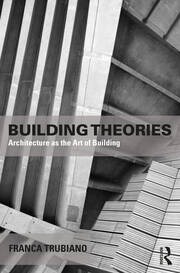
Building Theories : Architecture as the Art of Building
Discusses the content of treatises, essays, articles, and letters by those who have been, throughout history, committed to the art of building. In this, Building Theories argues for the return of a practice of architectural theory that is set amongst building, buildings, and builders. This journey of close reading reinterprets the words of Vitruvius, Alberti, de L’Orme, Le Camus de Mézières, Boullée, Laugier, Rondelet, Semper, Viollet-le-Duc, Hübsch, Bötticher, Berlage, Muthesius, Wagner, Behrendt, Gropius, and Arup. With chapters dedicated to texts from antiquity, the Renaissance, and the nineteenth century, and with a critical eye on architectural theory popularized in the Anglo-Saxon world post-1968, readers are introduced to a wider, more inclusive definition of architectural ideas.

Bioprocessing Technology for Production of Biopharmaceuticals and Bioproducts
Written for industrial and academic researchers and development scientists in the life sciences industry, Bioprocessing Technology for Production of Biopharmaceuticals and Bioproducts is a guide to the tools, approaches, and useful developments in bioprocessing. This important guide: •Summarizes state-of-the-art bioprocessing methods and reviews applications in life science industries •Includes illustrative case studies that review six milestone bio-products •Discuses a wide selection of host strain types and disruptive bioprocess technologies
Bioimage Data Analysis Workflows
This book provides students and researchers in the life sciences with essential practical information on how to quantitatively analyze data images. It refrains from focusing on theory, and instead uses practical examples and step-by step protocols to familiarize readers with the most commonly used image processing and analysis platforms such as ImageJ, MatLab and Python.

Biodentine : Properties and clinical applications
A comprehensive guide to BiodentineTM, an innovative biocompatible and bioactive material based on pure tricalcium silicate that can permanently replace dentin and can also serve as a temporary enamel substitute. Although BiodentineTM has been widely used across the world for the past decade, this is the first book to be devoted to its properties, interactions with the soft and hard tissues, and its multiple clinical applications. The coverage encompasses applications in primary and permanent teeth, in specialties as diverse as restorative dentistry, endodontics, paediatric dentistry, dental traumatology, and prosthetic dentistry. BiodentineTM application both in vital pulp therapy and endodontic procedures is illustrated and clinical step by step protocols are provided. The book provides a detailed update on BiodentineTM use to preserve the pulp vitality in direct/indirect pulp capping, pulpotomy and irreversible pulpitis treatment. It also details BiodentineTM use for non-vital teeth treatment in indications such as root/furcation perforation repair, apexification as well as in regenerative endodontic procedures.

Bioactive Heterocycles VI : Flavonoids and anthocyanins in plants, and latest bioactive heterocycles I
Heterocyclic chemistry is the biggest branch of chemistry covering two-thirds of the chemical literature and this book covers the hot topics of frontier research summarized by reputed scientists in

Bioactive Heterocycles III
Bioactive Heterocycles III provides readers with a comprehensive overview of the most recent breakthroughs in the ?eld of heterocycles. This volume contains 8 chapters written by experts in their respective ?elds from all over the world. The chapters summarize years of extensive research in each area, and providein sight in the new themesofnaturalproduct research.Manyofthe contributors illustrate their laboratory experiences. It's obvious that readers will gain exciting and essential information fromthe volume. In the ?rst chapter, Kayser et al. describe the chemistry, biosynthesis and biological activities of artemisinin, one of the most promising antimalarial molecules, and its related natural peroxides.

Beyond the Worst-Case Analysis of Algorithms
There are no silver bullets in algorithm design, and no single algorithmic idea is powerful and flexible enough to solve every computational problem. Nor are there silver bullets in algorithm analysis, as the most enlightening method for analyzing an algorithm often depends on the problem and the application. However, typical algorithms courses rely almost entirely on a single analysis framework, that of worst-case analysis, wherein an algorithm is assessed by its worst performance on any input of a given size. The purpose of this book is to popularize several alternatives to worst-case analysis and their most notable algorithmic applications, from clustering to linear programming to neural network training. Forty leading researchers have contributed introductions to different facets of this field, emphasizing the most important models and results, many of which can be taught in lectures to beginning graduate students in theoretical computer science and machine learning.
Best practices in software measurement : How to use metrics to improve project and process performance
Not everything that counts can be counted. Not everything that is counted counts. Albert Einstein This is a book about software measurement from the practitioner’s point of view and it is a book for practitioners. Software measurement needs a lot of practical guidance to build upon experiences and to avoid repeating errors. This book t- gets exactly this need, namely to share experiences in a constructive way that can be followed. It tries to summarize experiences and knowledge about software measurement so that it is applicable and repeatable. It extracts experiences and lessons learned from the narrow context of the specific industrial situation, thus facilitating transfer to other contexts. Software measurement is not at a standstill. With the speed software engine- ing is evolving, software measurement has to keep pace. While the underlying theory and basic principles remain invariant in the true sense (after all, they are not specific to software engineering), the application of measurement to specific contexts and situations is continuously extended. The book thus serves as a ref- ence on these invariant principles as well as a practical guidance on how to make software measurement a success.
Beginning GIMP : From novice to professional
Beginning GIMP: From Novice to Professional explains how to use the open source image manipulation program, GIMP version 2.4. You'll learn how to install GIMP on Windows, Linux, and MacOS X platforms. Once you've installed the application, you'll learn about the interface and configuration options, and then jump into a quick–and–simple project to familiarize yourself even further. With four–color graphics and screenshots throughout, you'll learn how to prepare camera images for display on web pagesincluding functions like rescaling, cropping, and balancing color. The book also explains with great detail how to utilize layers, paths, and masks. You'll also learn how to draw lines and shapes, use patterns and gradients, and even create your own brushes, patterns, and gradients.
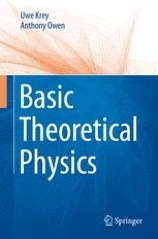
Basic theoretical physics : A concise overview
This concise treatment embraces, in four parts, all the main aspects of theoretical physics (I . Mechanics and Basic Relativity, II. Electrodynamics and Aspects of Optics, III. Non-relativistic Quantum Mechanics, IV. Thermodynamics and Statistical Physics). It summarizes the material that every graduate student, physicist working in industry, or physics teacher should master during his or her degree course. It thus serves both as an excellent revision and preparation tool, and as a convenient reference source, covering the whole of theoretical physics. It may also be successfully employed to deepen its readers' insight and add new dimensions to their understanding of these fundamental concepts. Recent topics such as holography and quantum cryptography are included, thus making this a unique contribution to the learning material for theoretical physics.

Axon growth and guidance
The complexarchitectureofneuronal networks togetherwith the extraordinary associated functions make the nervous system a fascinating biological structure. The considerable work performed to explore this cellular machinery is nowadays successfulbecause the mysteryofnervous system developmentisbeing unravelled. As described in their outstanding review published 10 years ago in Science.' Marc Tessier-Lavigne and Corey Goodman-the pioneers of the molecular era of axon guidance-summarized the assembly of nervous system connections as a subtle game of attraction and repulsion of neuronal growth cones. The cellular ballet ensuring the formation of billions of synapses, which ultimately gives rise to the highest cognitive functions, is primarily orchestrated by a step-by-step mechanism of growth driven by multiple molecular cues. While our general concept of axon guidance remains identical, a profound evolution ofour knowledge ofthe molecular identityofthe guidance cues together with their interactions and signalling pathways occurred over the past ten years.
