



الصفحة 125
الصفحة 125

Ambient intelligence : A novel paradigm
Ambient Intelligence (AmI) is an integrating technology for supporting a pervasive and transparent infrastructure for implementing smart environments. Such technology is used to enable environments for detecting events and behaviors of people and for responding in a contextually relevant fashion. AmI proposes a multi-disciplinary approach for enhancing human machine interaction. The authors start with a description of the iDorm as an example of a smart environment conforming to the AmI paradigm, and introduces computer vision as an important component of the system. Other computer vision examples describe visual monitoring for the elderly, classic and novel surveillance techniques using clusters of cameras installed in indoor and outdoor application domains, and the monitoring of public spaces. Face and speech recognition systems are also covered as well as enhanced LEGO blocks for novel educational purposes. The book closes with a provocative chapter on how a cybernetic system can be designed as the backbone of a human machine interaction.

Alzheimers Disease
Alzheimer’s disease (AD) is a neurodegenerative disease that robs the minds of our elderly population. Approximately one in every eight adults over the age of 65 and nearly half of those over 85 are afflicted with this disease. The aging population in developed societies will impose an ever increasing socioeconomic threat in the future. Current medicines for AD patients are mainly symptomatic treatments and a huge unmet medical need exists to slow the progression of this disease. A great deal of research has been dedicated to understanding the pathogenesis of AD from which comes many ideas for intervening with its progression. Some of these ideas have been fast-tracked to clinical trials due to the availability of medicines with proven clinical efficacies for other diseases (e.g. atorvastatin, simvastatin, rosiglitazone and clioquinol) while others represent novel chemical entities (e.g. glycogen synthase kinase-3 inhibitors).

Alternatives to Animal Testing : Proceedings of Asian Congress 2016
This book presents recent advances in the pure sciences that are of significance in the quest for alternatives to the use of animals in research and describes a variety of practical applications of the three key guiding principles for the more ethical use of animals in experiments – replacement, reduction, and refinement, collectively known as the 3Rs. Important examples from across the world of implementation of the 3Rs in the testing of cosmetics, chemicals, pesticides, and biologics, including vaccines, are described, with additional information on relevant regulations. The coverage also encompasses emerging approaches to alternative tests and the 3Rs.

Alternative medicines for diabetes management : Advances in pharmacognosy and medicinal chemistry
Apart from diet and exercise, the strategic use of different classes of prescribed or non-prescribed xenobiotic compounds for the restoration of euglycemic levels in the body is well known. The ongoing rivalry between the recommended usage of allopathic medicines versus ayurvedic remedies has encouraged many researchers to focus their studies on thoroughly isolating and characterizing the extracts from different parts of plants and then evaluating their relative activities via in vitro, in vivo and in some cases clinical studies.

Alternative medicine and it's uses in the treatment of kidney disease
The aim of this article was to review some of the new and commonly and alternative medicine in the treatment of kidney used medicinal plants , pharmacological activity, and research study of disease, kidney stones medicinal plants. Renal stones are a common problem worldwide with rden substantial morbidities and economic costs. The high economic bu associated with kidney stones is linked mainly with healthcare costs. In vitro and in vivo studies on alternative treatment of kidney stones have been searched by using words such as phytotherapy of kidney stones,. lithotriptic activity of plantss, and medicinal plants used in kidney stone Medicinal plants may be useful in treatment of kidney stones.

Altering nature ; Vol.2 : Religion, Biotechnology, and Public Policy
The two volumes of Altering Nature consider the complex ways that concepts of 'nature' and 'the natural' are understood and the relevance of those understandings to discussions of biotechnology.Volume Two, Religion, Biotechnology, and Public Policy, reviews recent religious and ethical analyses of four specific areas of biotechnology: assisted reproduction, genetic therapy and enhancement, human-machine incorporation, and biodiversity. It identifies and explores the richer normative themes that inform particular debates and suggests ways that policy choices in biotechnology may be illuminated by devoting greater attention to religious perspectives.

Allocating public and private resources across generations : Riding the age waves ; Vol .2
The chapters in this volume greatly develop our understanding of the nature and measurement of transfers, their motives and mechanisms, and their macro-level dimensions, especially in the context of demographic transitions.

Allergic rhinitis
Allergic rhinitis is a very common disorder that affects people of all ages, peaking in the teenage years. It is frequently ignored, underdiagnosed, misdiagnosed, and mistreated, which not only is detrimental to health but also has societal costs. Although allergic rhinitis is not a serious illness, it is clinically relevant because it underlies many complications, is a major risk factor for poor asthma control, and affects quality of life and productivity at work or school. Management of allergic rhinitis is best when directed by guidelines. A diagnostic trial of a pharmacotherapeutic agent could be started in people with clinically identified allergic rhinitis; however, to confirm the diagnosis, specific IgE reactivity needs to be recorded.

Allergic Diseases : Diagnosis and Treatment
In this updated third edition of the critically-acclaimed volume, expert physicians assemble user-friendly, clinically-oriented guides to aid in the day-to-day management of the allergic patient. With an emphasis on common allergic diseases and the pharmacological tools to control them, Allergic Diseases: Diagnosis and Treatment, Third Edition disseminates the practical knowledge that practitioners have accumulated through practice and teaching in the field of allergy and immunology.

Algorithms in Bioinformatics ; Vol.4175 : 6th International Workshop, WABI 2006, Zurich, Switzerland, September 11-13, 2006, Proceedings
This book constitutes the refereed proceedings of the 6th International Workshop on Algorithms in Bioinformatics, WABI 2006, held in Zurich, Switzerland in September 2006 in the course of the ALGO 2006 conference meetings. The 36 revised full papers presented were carefully reviewed and selected from 100 submissions. All current issues of algorithms in bioinformatics are addressed, ranging from mathematical tools to experimental studies of approximation algorithms and reports on significant computational analyses. Numerous biological problems are dealt with, including genetic mapping, sequence alignment and sequence analysis, phylogeny, comparative genomics, and protein structure. For the first time also machine-learning approaches along with combinatorial optimization are covered.
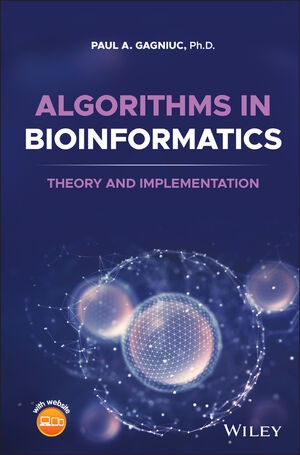
Algorithms in Bioinformatics : Theory and Implementation
Explores a comprehensive and insightful treatment of the practical application of bioinformatic algorithms in a variety of fields. Delivers a fulsome treatment of some of the main algorithms used to explain biological functions and relationships. It introduces readers to the art of algorithms in a practical manner which is linked with biological theory and interpretation. The book covers many key areas of bioinformatics, including global and local sequence alignment, forced alignment, detection of motifs, Sequence logos, Markov chains or information entropy. Other novel approaches are also described, such as Self-Sequence alignment, Objective Digital Stains (ODSs) or Spectral Forecast and the Discrete Probability Detector (DPD) algorithm. Readers will also benefit from the inclusion of: A detailed presentation of new methods, such as Self-sequence alignment, Objective Digital Stains and Spectral Forecast ; A treatment of sequence alignment, including local sequence alignment, global sequence alignment and forced sequence alignment with full implementations ; Discussions of position-specific weight matrices, including the count, weight, relative frequencies, and log-likelihoods matrices ; A detailed presentation of the methods related to Markov Chains as well as a description of their implementation in Bioinformatics and adjacent fields ; An examination of information and entropy, including sequence logos and explanations related to their meaning ; A chapter on philosophical transactions that allows the reader a broader view of the prediction process ; Extensive worked examples with detailed case studies that point out the meaning of different results

Algorithms for a New World : When Big Data and Mathematical Models Meet
Algorithms, artificial neural networks, and machine learning help us discover the opportunities and pitfalls of a world governed by mathematics and artificial intelligence.

Algorithms and architectures for parallel processing ; 7th International Conference, ICA3PP 2007, Hangzhou, China, June 11-14, 2007, Proceedings
The improvements in computation and communication capabilities have enabled the creation of demanding applications in critical domains such as the environment, health, aerospace, and other areas of science and technology. Similarly, new classes of applications are enabled by the availability of heterogeneous large-scale distributed systems which are becoming available nowadays (based on technologies such as grid and peer-to-peer systems).Parallel computing systems exploit a large diversity of computer architectures, from supercomputers, shared-memory or distributed-memory multi processors, to local networks and clusters of p- sonal computers. With the recent emergence of multi core architectures, parallel computing is now set to achieve “mainstream” status. Approaches that have been advocated by parallel computing researchers in the past are now being utilized in a number of software libraries and hardware systems that are available for everyday use. Parallel computing ideas have also come to dominate areas such as multi user gaming (especially in the development of gaming engines based on “cell” arc- tectures).

Algorithms – ESA 2005 ; 13th Annual European Symposium, Palma de Mallorca, Spain, October 3-6, 2005, Proceedings
This volume contains the 75 contributed papers and the abstracts of the threeinvited lectures presented at the 13th Annual European Symposium on Algo-rithms (ESA 2005), held in Spain, 2005. respectively.Papers were solicited in all areas of algorithmic research, including but notlimited to algorithmic aspects of networks, approximation and on-line algo-rithms, computational biology, computational geometry, computational financeand algorithmic game theory, data structures, database and information re-trieval, external memory algorithms, graph algorithms, graph drawing, machinelearning, mobile computing, pattern matching and data compression, quantumcomputing, and randomized algorithms. The algorithms could be sequential,distributed, or parallel. Submissions were especially encouraged in the area ofmathematical programming and operations research, including combinatorialoptimization, integer programming, polyhedral combinatorics, and semidefiniteprogramming.Each extended abstract was submitted to one of the two tracks.
Algorithmic learning theory ; Vol.4264 : 17th International Conference, ALT 2006, Barcelona, Spain, October 7-10, 2006, Proceedings
This book constitutes the refereed proceedings of the 17th International Conference on Algorithmic Learning Theory, ALT 2006, held in Barcelona, Spain in October 2006, colocated with the 9th International Conference on Discovery Science, DS 2006.The 24 revised full papers presented together with the abstracts of five invited papers were carefully reviewed and selected from 53 submissions. The papers are dedicated to the theoretical foundations of machine learning.
Algorithmic learning theory ; Vol. 3734 ; 16th international conference, ALT 2005, Singapore, October 8-11, 2005, Proceedings
This volume contains the papers presented at the 16th Annual InternationalConference on Algorithmic Learning Theory (ALT 2005), which was held (Republic of Singapore), 2005. The main objective of theconference is to provide an interdisciplinary forum for the discussion of the the-oretical foundations of machine learning as well as their relevance to practicalapplications. The volume includes 30 technical contributions, which were selected by theprogram committee from 98 submissions.

Algorithmic learning theory ; 19th International Conference, ALT 2008, Budapest, Hungary, October 13-16, 2008. Proceedings
This book constitutes the refereed proceedings of the 19th International Conference on Algorithmic Learning Theory, ALT 2008, held in Budapest, Hungary, in October 2008, co-located with the 11th International Conference on Discovery Science, DS 2008.

Algorithmic learning theory ; 18th International conference, ALT 2007, Sendai, Japan, October 1-4, 2007, Proceedings
This volume contains the papers presented at the 18th International Conf- ence on Algorithmic Learning Theory.The main objective of the conference was to provide an interdisciplinary forum for high-quality talks with a strong theore- cal background and scientiبهc interchange in areas such as query models, on-line learning, inductive inference, algorithmic forecasting, boosting, support vector machines, kernel methods, complexity and learning, reinforcement learning, - supervised learning and grammatical inference.
Algorithmic Learning in a Random World
This new monograph integrates mathematical theory and revealing experimental work. It demonstrates mathematically the validity of the reliability claimed by conformal predictors when they are applied to independent and identically distributed data, and it confirms experimentally that the accuracy is sufficient for many practical problems. Later chapters generalize these results to models called repetitive structures, which originate in the algorithmic theory of randomness and statistical physics. The approach is flexible enough to incorporate most existing methods of machine learning, including newer methods such as boosting and support vector machines and older methods such as nearest neighbors and the bootstrap.

Algorithmic Foundation of Robotics VII : Selected Contributions of the 7th International Workshop on the Algorithmic Foundations of Robotics
This book contains the proceedings from the 2006 Workshop on the Algorithmic Foundations of Robotics. The 32 papers in this book span a wide variety of topics: from fundamental motion planning algorithms to applications in medicine and biology, but they have in common a foundation in the algorithmic problems of robotic systems.
