



الصفحة 124
الصفحة 124
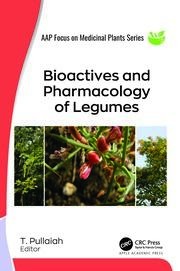
Bioactives and pharmacology of Legumes
A variety of bioactives and therapeutics from the legume family (Fabaceae or Leguminosae) are thoroughly detailed. For each species included in the volume, a brief introduction is given, the plant’s bioactive compounds are listed, and its chemical structures shown, followed by their pharmacological activities. Many of these plants have medicinal activities that include antiviral, antimicrobial, antioxidant, anticancer, anti-inflammatory, and antidiabetic, hepatoprotective, nephroprotective and cardioprotective. The biochemical characteristics of the 37 plants included, such as the type of starch, protein, and fibers, can be exploited as binders, excipients, thickeners, and dispersants in the formulation of various products in the pharmaceutical industry. The published literature on the pharmacological activities on each species is reviewed and presented in a concise and clear manner.
Bioactive Molecules and Medicinal Plants
Use of medicinal plants is as old as human civilization and continuous efforts are being made to improve medicinal plants or produce their products in high amounts through various technologies. About 200,000 natural products of plant origin are known and many more are being identifed from higher plants and microorganisms. Some plant-based drugs have been used for centuries and there is no alternative medicine for many drugs, such as cardiac glycosides. However, natural products research was sidelined to pave the way for com- natorial chemistry, which was expected to produce large numbers of synthetic compounds for high-throughput screening (HTS). This line of work has failed to deliver desirable results. Moreover, it is not possible for all pharmaceutical companies and institutions to adopt costly HTS technology. Therefore, medi- nal plants and their bioactive molecules are always in demand and are a central point of research. While planning this book, we endeavored to incorporate - ticles that cover the entire gamut of current medicinal plants research.
Bioactive Heterocycles II
As part of the series Topics in Heterocyclic Chemistry, this volume titled Bio- tive Heterocycles II presents comprehensive and up-to-date reviews on selected topics regarding synthetic as well as naturally occurring bioactive heterocycles. The frst chapter, "High Pressure Synthesis of Heterocycles Related to Bio- tive Molecules" by Kiyoshi Matsumoto, presents a unique high-pressure s- thetic methodology in heterocyclic chemistry. Basic principles and fruitful examples for pericyclic reactions, such as Diels-Alder reactions, 1,3-dipolar reactions, and also for ionic reactions, such as S and addition reactions, are N discussed.
Bioactive egg compounds
Hen eggs have exceptional potential as an inexhaustible source for a variety of products with unique properties. These products are valuable to human health and nutrition and can be used as raw materials for diverse purposes in the cosmetics and pharmaceutical industries. Bioactive Egg Compounds presents the latest results and concepts in the biotechnological use of egg compounds. Following an introduction to the different compounds of egg white, yolk and shell, the nutritive value of egg compounds is discussed. Procedures for processing egg compounds to improve their nutritive value are described, including the concept of so-called enriched eggs. Also described is the isolation and application of egg compounds with special properties, such as antibiotic action.

Bioactive and therapeutic dental materials
Special attention has been given to bioactive materials developed to induce cells differentiation/stimulation, hard tissue formation and exert antimicrobial actions. New innovations are necessary to continue to help reinforcing existing technologies and to introduce new paradigms for treating dental disease and restoring teeth seriously compromised by caries lesions via biomimetic and more biological operative approaches. Dental bioactive materials is arguably the latest research area in dentistry and thus the amount of new research is overwhelming. However, in this day and age of evidence based practice it important for this new information to be distilled into a practical and understandable format.
Binocular astronomy
Anyone who has used a binocular telescope or even wide-field binoculars to look at the night sky will know just how breathtakingly beautiful the view can be when you observe with both eyes. Observing galaxies and nebulae with ‘regular’ prismatic binoculars is just a beginning. Binocular eyepieces and adapters can be added to almost any commercially-made astronomical telescope, and of course specialized astronomical binoculars can be assembled or purchased complete. These range from modest instruments to giants that are basically two large telescopes mounted together. Binocular Astronomy contains everything you’ll need to know about this exciting branch of astronomical observing.

BIM in small practices : Illustrated case studies
Full of practical tips and hard-won experience, and includes pithy contributions from industry experts who identify and explore the important issues for small practices including how to get your practice started with BIM, and how it aligns to the new Plan of Work. This landmark publication will motivate small practices who are considering taking those first steps towards implementing BIM.

Bilinear integrable systems : From classical to quantum, continuous to discrete ; Proceedings of the NATO Advanced Research Workshop on Bilinear Integrable Systems: From Classical to Quantum, Continuous to Discrete St. Petersburg, Russia, 15-19 September 2002
Trained as a physicistin his home university Kyushu University, Professor Hirota earned his PhD in’61 at Northwestern University with Professor Siegert in the field of “QuantumStatistical mechanics”. He wrote a widely appreciated Doctoral dissertation on“Functional Integral representation of the grand partition function”. As a youngresearcher, he entered the RCA Company in Tokyo to do research on semi-conductor plasmas. Professor Hirota was led to model the Toda lattice as a non-linear networkof ladder-type LC circuits. The self-dual case led to equations very reminiscentof the Sine-Gordon equation, with much the same features (existence of onesoliton, soliton-soliton interaction, etc)

Big little hotel : Small hotels designed by architects
This book showcases small hotels, all located in the United States, designed by architects who use light and materials in interesting and intentional ways. The designs also deliberately connect to their local history, context, or land – in many cases all three. Both the architecture and the operations harmonize with the place, whether that is a bustling city, small town, or natural area. Many are new buildings but some are adaptive reuse projects or renovations of historic properties, extending the connectivity of the place into the future.
Big data-enabled internet of things
Covers analytical techniques for handling the huge amount of data generated by the Internet of Things, from architectures and platforms to security and privacy issues, applications, and challenges as well as future directions. The fields of Big Data and the Internet of Things (IoT) have seen tremendous advances, developments, and growth in recent years. The IoT is the inter-networking of connected smart devices, buildings, vehicles and other items which are embedded with electronics, software, sensors and actuators, and network connectivity that enable these objects to collect and exchange data. The IoT produces a lot of data. Big data describes very large and complex data sets that traditional data processing application software is inadequate to deal with, and the use of analytical methods to extract value from data. This edited book covers analytical techniques for handling the huge amount of data generated by the Internet of Things, from architectures and platforms to security and privacy issues, applications, and challenges as well as future directions.
Big Data Recommender Systems ; Vol.2 : Application Paradigms
Combines experimental and theoretical research on big data recommender systems to help computer scientists develop new concepts and methodologies for complex applications. It includes original scientific contributions in the form of theoretical foundations, comparative analysis, surveys, case studies, techniques and tools. First designed to generate personalized recommendations to users in the 90s, recommender systems apply knowledge discovery techniques to users’ data to suggest information, products, and services that best match their preferences. In recent decades, we have seen an exponential increase in the volumes of data, which has introduced many new challenges. recommender systems. Volume 2 covers a broad range of application paradigms for recommender systems over 22 chapters
Big Data Recommender Systems ; Vol.1 : Algorithms, Architectures, Big Data, Security and Trust
Combines experimental and theoretical research on big data recommender systems to help computer scientists develop new concepts and methodologies for complex applications. It includes original scientific contributions in the form of theoretical foundations, comparative analysis, surveys, case studies, techniques and tools.
Big Data : An Art of Decision Making
Manipulating and processing masses of digital data is never a purely technical activity. It requires an interpretative and exploratory outlook - already well known in the social sciences and the humanities - to convey intelligible results from data analysis algorithms and create new knowledge. Big Data is based on an inquiry of several years within Proxem, a software publisher specializing in big data processing. The book examines how data scientists explore, interpret and visualize our digital traces to make sense of them, and to produce new knowledge. Grounded in epistemology and science and technology studies, Big Data offers a reflection on data in general, and on how they help us to better understand reality and decide on our daily actions.

Beyond the apparent Banality of the mathematics classroom
New research in mathematics education deals with the complexity of the mathematics’ classroom. The classroom teaching situation constitutes a pertinent unit of analysis for research into the ternary didactic relationship which binds teachers, students and mathematical knowledge. The classroom is considered as a complex didactic system, which offers the researcher an opportunity to gauge the boundaries of the freedom that is left with regard to choices about the knowledge to be taught and the ways of organizing the students’ learning, while giveing rise to the study of interrelations between three main elements of the teaching process the: mathematical content to be taught and learned, management of the various time dimensions, and activity of the teacher who prepares and manages the class, to the benefit of the students' knowledge and the teachers' own experience.
Beyond knowledge : The legacy of competence : Meaningful computer-based learning environments
The edited and peer reviewed volume presents selected papers of the conference "Beyond knowlegde: the legacy of competence" It reflects the current state-of-the-art work of scholars worldwide within the area of learning and instruction with computers. Mainly, areas of computer-based learning environments supporting competence-focused knowledge acquisition but also foundational scientific work are addressed. More specific, contents cover cognitive processes in hypermedia and multimedia learning, social issues in computer-supported collaborative learning, motivation and emotion in Blended Learning and e-Learning.
Beyond Cartesian Dualism : Encountering affect in the teaching and learning of science.
There is surprisingly little known about affect in science education. Despite periodic forays into monitoring students’ attitudes-toward-science, the effect of affect is too often overlooked. Beyond Cartesian Dualism gathers together contemporary theorizing in this axiomatic area. In fourteen chapters, senior scholars of international standing use their knowledge of the literature and empirical data to model the relationship between cognition and affect in science education. Their revealing discussions are grounded in a broad range of educational contexts including school classrooms, universities, science centres, travelling exhibits and refugee camps, and explore an array of far reaching questions. What is known about science teachers’ and students’ emotions? How do emotions mediate and moderate instruction? How might science education promote psychological
Best practices in software measurement : How to use metrics to improve project and process performance
Not everything that counts can be counted. Not everything that is counted counts. Albert Einstein This is a book about software measurement from the practitioner’s point of view and it is a book for practitioners. Software measurement needs a lot of practical guidance to build upon experiences and to avoid repeating errors. This book t- gets exactly this need, namely to share experiences in a constructive way that can be followed. It tries to summarize experiences and knowledge about software measurement so that it is applicable and repeatable. It extracts experiences and lessons learned from the narrow context of the specific industrial situation, thus facilitating transfer to other contexts. Software measurement is not at a standstill. With the speed software engine- ing is evolving, software measurement has to keep pace. While the underlying theory and basic principles remain invariant in the true sense (after all, they are not specific to software engineering), the application of measurement to specific contexts and situations is continuously extended. The book thus serves as a ref- ence on these invariant principles as well as a practical guidance on how to make software measurement a success.

Best of Detail : Fassaden / Facades : Architectural highlights from DETAIL on the topic 'Facades' - best of DETAIL
The facade serves as the building's public face, allowing rapid assessment of its architecture. 'Best of Detail: Facades' explores this topic with theoretical discussions and an in-depth look at a range of selected projects, which, besides showcasing suitable materials and designs, give the reader a detailed look behind the scenes. It turns out that quality architecture can only result from a coherency between the facade, structure, internal organisation and building services design elements that interact directly with each other. This presents the architect with enormous challenges, particularly as the unity between the exterior and interior is no longer a given, as today's range of materials and design possibilities offer nearly limitless creativity.
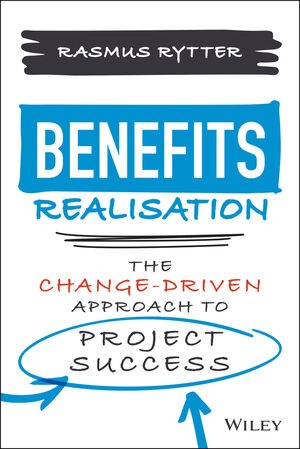
Benefits realisation : The change-driven approach to project success
In Benefits Realisation: The Change-Driven Approach to Project Success, renowned benefits realisation expert, speaker, and consultant Rasmus Rytter introduces a new approach to change projects where benefits realisation defines the design of the project and how it’s led. Once the project’s benefits have been defined, the key question for the project to answer is: ‘How might we help our colleagues change their behaviour? Thus, identifying behavioural change as the key driver of benefit realisation.

Behavioural research for marketing : A practitioner's handbook
Provides market researchers and marketeers with the tools to better understand human behaviour by drawing upon social science theory from different schools of thought, including sociology, psychology and behavioural economics. It has practical examples throughout to help illustrate how to operationalise theory in market research and to underpin the way we understand how people think, behave, decide and make choices.
