



الصفحة 124
الصفحة 124
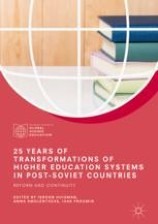
25 Years of Transformations of Higher Education Systems in Post-Soviet Countries : Reform and Continuity
A result of the first ever study of the transformations of the higher education institutional landscape in fifteen former USSR countries after the dissolution of the Soviet Union in 1991. It explores how the single Soviet model that developed across the vast and diverse territory of the Soviet Union over several decades has evolved into fifteen unique national systems, systems that have responded to national and global developments while still bearing some traces of the past. The book is distinctive as it presents a comprehensive analysis of the reforms and transformations in the region in the last 25 years; and it focuses on institutional landscape through the evolution of the institutional types established and developed in Pre-Soviet, Soviet and Post-Soviet time. It also embraces all fifteen countries of the former USSR, and provides a comparative analysis of transformations of institutional landscape across Post-Soviet systems.
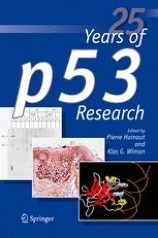
25 Years of P53 Research
Communication, awareness and access to information: Given the complexity of the field and the fact that data pertaining to each particular aspects of p53 biology or deregulation are scattered in many different publications, it is extremely difficult to access the full scale of relevant information of any specific p53-related topic. This book may help in this task by putting into perspective both general considerations on the p53 pathway and more specific information on various aspects of p53. In the longer term, however, open access to p53 complexity will require the development of knowledge bases accessible through the web and using simple navigation tools to guide users towards the specific information they need. Several efforts are currently being developed in that direction. They need to be strenghtened and better integrated within the rapidly growing galaxy of web-based information sources on molecular and individual variations in cancer. 2. Reference functional assays and structural analysis: Given the huge diversity of cellular and animal models for wild-type or mutant p53 functions, it will be important to set up standard, universally accepted assays to measure critical p53 protein functions.

25 Years of Model Checking : History, Achievements, Perspectives
Model checking technology is among the foremost applications of logic to computer science and computer engineering. The model checking community has achieved many breakthroughs, bridging the gap between theoretical computer science and hardware and software engineering, and it is reaching out to new challenging areas such as system biology and hybrid systems. Model checking is extensively used in the hardware industry and has also been applied to the verification of many types of software. Model checking has been introduced into computer science and electrical engineering curricula at universities worldwide and has become a universal tool for the analysis of systems.
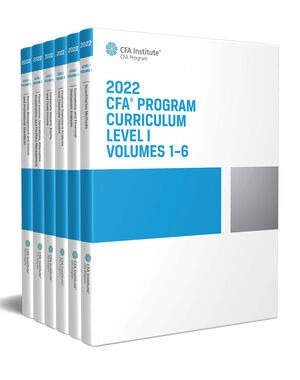
2022 CFA Program Curriculum Level I Box Set
Highly visual and intuitively organized, this box set allows you to: Learn from financial thought leaders / Access market-relevant instruction / Gain critical knowledge and skills / The set also includes practice questions to assist with your recall of key terms, concepts, and formulas.
14th Nordic-Baltic conference on biomedical engineering and medical physics : NBC 2008 16–20 June 2008 Riga, Latvia
The topics covered by the Conference Proceedings include: Biomaterials and Tissue Engineering; Biomechanics, Artificial Organs, Implants and Rehabilitation; Biomedical Instrumentation and Measurements, Biosensors and Transducers; Biomedical Optics and Lasers; Healthcare Management, Education and Training; Information Technology to Health; Medical Imaging, Telemedicine and E-Health; Medical Physics; Micro and Nanoobjects, Nanostructured Systems, Biophysics
13th International Conference on Electrical Bioimpedance and the 8th Conference on Electrical Impedance Tomography2007 ; ICEBI 2007, August 29th - September 2nd 2007, Graz, Austria
These proceedings continue the series edited in the framework of the traditional triennial International Conference on Electrical Bio-Impedance (ICEBI), the most important platform for presenting recent scientific achievements in the area of electrical bio-impedance. The XIII ICEBI was held from Aug. 29th – Sept. 02nd 2007 at the Graz University of Technology in Graz, Austria. As already in previous years the 13th ICEBI was held together with the 8th Conference on Electrical Impedance Tomography, the annual meeting for biomedical impedance imaging. Consequently, the proceedings also contain many contributions from this very important and challenging branch of bioimpedance research.
11th Mediterranean Conference on Medical and Biomedical Engineering and Computing 2007 ; MEDICON 2007, 26-30 June 2007, Ljubljana, Slovenia
Biomedical engineering today is a well-recognized area of research. It brings together bright minds from diverse disciplines ranging from engineering, physics, and computer sciences on one side to biology and medicine on the other side. With valuable assistance of members of the International Advisory Committee and Scientific Program Committee, the co-organizing institutions and societies, our sponsors, and distinguished invited lecturers we will ensure that the research and development presented at MEDICON 2007 plenary meetings, scientific sessions, and workshops will truly be relevant and up-to-date. The MEDICON conferences are international events of high scientific standards with long lasting tradition held every third year in one of the Mediterranean countries under the auspices of the International Federation for Medical and Biological Engineering.
