



الصفحة 123
الصفحة 123
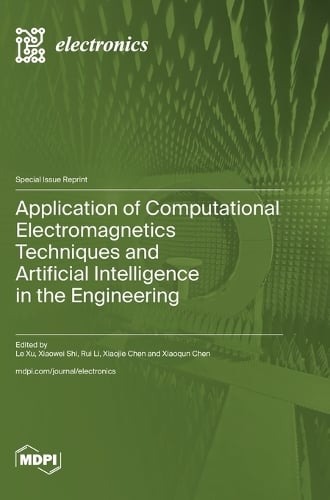
Application of computational electromagnetics techniques and artificial intelligence in the engineering
Introduces the latest developments in electromagnetic computing and artificial intelligence technology. Artificial intelligence technology can be applied to the modeling, analysis, and optimization design of microwave equipment, solving the routing problem of self-organizing networks in small unmanned aerial vehicle systems, calculating the radiation characteristics of antenna arrays on large electrical platforms, analyzing the impact of electromagnetic wave coupling on electronic devices, simulating the field distribution characteristics of electronic devices, and so on. With the help of artificial intelligence, designers can more conveniently, quickly, and accurately solve engineering problems.

Application of power electronics converters in smart grids and renewable energy systems
Focuses on the applications of Power Electronics Converters in smart grids and renewable energy systems. The topics covered include methods to CO2 emission control, schemes for electric vehicle charging, reliable renewable energy forecasting methods, and various power electronics converters. The converters include the quasi neutral point clamped inverter, MPPT algorithms, the bidirectional DC-DC converter, and the push–pull converter with a fuzzy logic controller.

Application and theory of multimedia signal processing using machine learning or advanced methods
Consists of a collection of peer-reviewed published papers on various advanced technology researches related to signal processing applications and theories for multimedia systems using machine learning or advanced methods. Multimedia signals include image, video, audio, character recognition, and communication channel optimization for networks. The specific contents included in this book are data hiding, encryption, object detection, image classification, and character recognition.
Anti-viral metabolites from medicinal plants
Covers general concepts of anti-viral metabolites, classifications, ethnopharmacology, chemistry, clinical and preclinical studies focusing on different medicinal plants against various types of viral infections. Various plants have been used in medicine since ancient times and are known for their strong therapeutic effects. The book will describe potential antiviral properties of medicinal plants against a diverse group of viruses, and provide an insight to the potential plants possess for broad-spectrum antiviral effects against emerging viral infections.The book aims to target a broad audience including virologists, molecular biologist, microbiologist and scientists working with natural products as well as researchers, students, healthcare experts involved in pharmaceutical and medical field.
Antiviral drug discovery and development
Summarizes antiviral drug design and discovery approaches Provides the latest update in the field of antiviral therapeutics Includes antiviral research of coronaviruses

Antisense RNA Technology
The following project aims to introducing the technology of RNA Antisense as new therapy for many diseases. Antisense RNA: In molecular biology, the strand complementary to a coding sequence of a nucleic acid. Antisense DNA is the non-coding strand complementary to the coding strand in double-stranded DNA. The antisense strand serves as the template for messenger RNA (mRNA) synthesis. This synthesized nucleic acid is termed an "anti-sense" oligonucleotide (AON) because its base sequence is complementary to the gene's messenger RNA (mRNA), which is called the "sense" sequence (so that a sense segment of mRNA " 5'-AAGGUC-3' " would be blocked by the anti-sense mRNA segment " 3'-UUCCAG-5' ").
Antisense RNA Design, Delivery, and Analysis
This volume gathers a variety of models, delivery systems, and approaches that can be used to assess RNA technology for exploiting antisense as a therapeutic intervention. Beginning with a section on the design of antisense technology and their delivery, the book continues by covering model systems developed to evaluate efficacy, both in vivo and in vitro, as well as methods to evaluate preclinically the toxicity associated with these new potential drugs, and intellectual property considerations. Written for the highly successful Methods in Molecular Biology series, chapters include introductions to their respective topics, lists of the necessary materials and reagents, step-by-step, readily reproducible laboratory protocols, and tips on troubleshooting and avoiding known pitfalls.

Antifouling Compounds
Increasing awareness of the deleterious effects of toxic components in antifouling coatings has raised interest in the potential for nontoxic alternatives. This book examines how marine organisms from bacteria to invertebrates and plants use chemicals to communicate and defend themselves. Chemicals that prevent colonisation of living surfaces are particularly pertinent to antifouling technology and may inspire new solutions. The challenge is to identify such compounds, identify the means for sustainable production and incorporate them into coatings to give long-term antifouling efficacy.
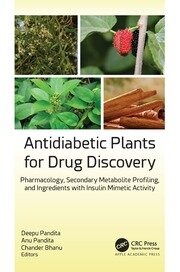
Antidiabetic plants for drug discovery pharmacology, secondary metabolite profiling, and ingredients with insulin mimetic activity
Takes an in-depth look at the potential pharmacological applications of 11 important antidiabetic plants, examining their antihyperglycemic, hypoglycemic, and anti-lipidemic properties along with current genome editing research perspectives. Plant natural products, or phytoconstituents, are promising candidates for antidiabetic pharmacological actions. The phytoconstituents, such as fl avonoids, terpenoids, saponins, carotenoids, alkaloids and glycosides, play vital roles in the current and future potent antidiabetic drug development programs. Each chapter reviews a particular plant with antidiabetic properties, explaining the therapeutic aspects, its active antidiabetic compounds, and relevant genome editing technology.

Antibody-drug conjugates and cellular metabolic dynamics
Summarizes the related research achievements in Antibody-drug conjugates (ADCs) and their cell metabolism kinetics. The book has three main parts. The first part describes the basic theory of ADCs, including the basic concept and structure of ADCs, and the relationship between the targets of ADCs and their specific functions. The second part mainly introduces the endocytosis and intracellular metabolism of ADCs, including the relationship between endocytosis and ADC activity, the endocytosis and intracellular transport of ADCs, the distribution and metabolism of ADC in vivo. Then it discusses the new formats and research technology of ADCs, including the application of miniaturized antibodies in ADC synthesis, novel carriers for ADC design, the technology and application of site-specific conjugation, and approaches for analyzing the drug: antibody ratio (DAR), the study of pharmacokinetics of ADCs.
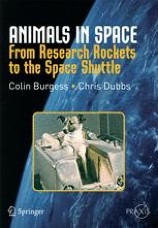
Animals in space : From research rockets to the space shuttle
Animals in Space will explain why dogs, primates, mice and other rodents were chosen and tested, at a time when dedicated scientists from both space nations were determined to establish the survivability of human subjects on both ballistic and orbital space flights. It will also recount the way this happened; the secrecy involved and the methods employed, and offer an objective analysis of how the role of animals as spaceflight test subjects not only evolved, but subsequently changed over the years in response to a public outcry led by animal activists. It will explore the ways in which animal high-altitude and space flight research impacted on space flight biomedicine and technology, and how the results - both successful and disappointing - allowed human beings to then undertake that same hazardous journey with far greater understanding and confidence.
Animals in Our Midst : The Challenges of Co-existing with Animals in the Anthropocene
This book brings together authoritative voices in animal and environmental ethics, who address the many different facets of changing human-animal relationships in the Anthropocene. As we are living in complex times, the issue of how to establish meaningful relationships with other animals under Anthropocene conditions needs to be approached from a multitude of angles. This book offers the reader insight into the different discussions that exist around the topics of how we should understand animal agency, how we could take animal agency seriously in farms, urban areas and the wild, and what technologies are appropriate and morally desirable to use regarding animals. This book is of interest to both animal studies scholars and environmental ethics scholars, as well as to practitioners working with animals, such as wildlife managers, zookeepers, and conservation biologists.

Animal Welfare : Competing Conceptions and Their Ethical Implications
The thesis of this book is that members of what I shall call the “animal welfare science community,”3 which includes both scientists and philosophers, have illegitimately appropriated the concept of animal welfare by claiming to have given a scientific account of it that is more objectively valid than the more sentimental” account given by animal liberationists.
Animal cell technology meets genomics ; Proceedings of the 18th ESACT Meeting. Granada, Spain, May 11-14, 2003
Reflects the spirit and scientific excellence of the 18th ESACT meeting in different chapters. This book presents, in form of short papers, a high number of the contributions to the meeting, and has been prepared with the aim to provide a relevant reference of the research efforts in Animal Cell Technology

Animal cell technology : Basic & applied aspects ; Proceedings of the 7th Annual Meeting of the Japanese Association for animal cell technology (JAACT), Nagoya, Japan, November 15-18, 2004
This book contains the proceedings of the 17th Annual and International Meeting of the Japanese Association for Animal Cell Technology (JAACT) that was held in Nagoya, Japan from November 15 to 18, 2004. This volume gives the readers a complete review of present state-of-the-art in Japan and other countries where this field is well advanced. The Proceedings will be useful for the cell biologists, biochemists, molecular biologists, immunologists, biochemical engineers and other disciplines related to animal cell culture, working in either academic environments or in industries of biotechnology and pharmacy.

Analyzing the availability of fin tech and its role in enhancing the strategic : Performance of Syrian banks using the balanced scorecard
Aims to examine the role of financial technology (FinTech) in enhancing the strategic performance of Syrian banks by analyzing its impact on the four dimensions of the balanced scorecard : financial performance, customer satisfaction, internal process quality, and learning and growth. Amid economic and technological challenges, integrating fintech emerges as a strategic tool to boost operational efficiency, reduce costs, and promote financial inclusion. The study explores the experiences of several Syrian banks in implementing modern financial technologies, such as digital banking and smart payment systems, while evaluating key financial indicators like return on assets (ROA) and return on equity (ROE).
Analyzing computer system performance with Perl::PDQ
Analyzing computer system performance is often regarded by most system administrators, IT professionals and software engineers as a black art that is too time consuming to learn and apply. Finally, this book by acclaimed performance analyst Dr. Neil Gunther makes this subject understandable and applicable through programmatic examples. The means to this end is the open-source performance analyzer Pretty Damn Quick (PDQ) written in Perl As the epigraph in this book points out, Common sense is the pitfall of performance analysis. The performance analysis framework that replaces common sense is revealed in the first few chapters of Part I. The important queueing concepts embedded in PDQ are explained in a very simple style that does not require any knowledge of formal probability theory. Part II begins with a full specification of how to set up and use PDQ replete with examples written in Perl. Subsequent chapters present applications of PDQ to the performance analysis of multicomputer architectures, benchmark results, client/server scalability, and Web-based applications.
Analytics of Protein-DNA Interactions
This book covers trends in modern biotechnology. All aspects of this interdisciplinary technology, where knowledge, methods and expertise are required from chemistry, biochemistry, microbiology, genetics, chemical engineering and computer science, are treated. More information as well as the electronic version is available at springer.com.
Analysis, design and construction of foundations
Outlines methods for analysis and design the construction of shallow and deep foundations with particular reference to case studies in Hong Kong and China, as well as a discussion of methods used in other countries. It introduces the main approaches used by geotechnical and structural engineers, and the precautions required for planning and designing foundation structures. Some computational methods and computer programs are reviewed to provide tools for performing more realistic analysis of foundation systems.
Analysis of Structures by Matrix Methods
Deals with the analysis of engineering structures made of skeletal members and covers the type of structures that are commonly used in practice. It builds up on the subject matter dealing with matrix algebra, analysis of bar elements, special forms of members, stability and vibration of structures, and pin-connected, rigid-plane, and 3D frames. It treats the important step of formulating the overall stiffness matrix of a structure in a systematic and straightforward manner and uses simple mathematical approaches wherever possible.
