



الصفحة 12
الصفحة 12

Moment Analysis for Subsurface Hydrologic Applications
This book deals with the concept of moments, and how they find application in subsurface hydrologic problems-particularly those dealing with solute transport. This book will be very valuable to researchers who are beginning to learn about moment analysis, and will also be of interest to advanced researchers as well. Both temporal and spatial moments are dealt with in some detail for a wide variety of problems. Several examples using experimental data, both from laboratory columns and field experiments, are provided to give the readers a clear idea about the scope of this method. Apart from conventional uses of moments for solute transport problems, this book contains chapters dealing with use of moments in interval computing, vapour phase transport applications, transfer functions to subsurface tile drains, and construction of breakthrough curves from knowledge of moments.

Molecular Targeting in Oncology
In Molecular Targeting in Oncology, authors present an overview of the development of targeted therapies for the treatment of cancer with an emphasis on clinical application. The volume covers the complexity of the rapidly developing area of targeted therapies for the treatment of patients with cancer and is structured in a way so readers may begin with chapters that most interest them and work through the rest of the chapters in the order of their choice. The volume is divided into five sections that cover the most important elements of drug development. The first section focuses on approaches using targeted therapies to inhibit cell growth. The second section describes how clinicians are evaluating targeted therapies in specific organ systems. The third section illustrates how various classes of pharmacologic and immunologic agents are developed for individual molecular targets. The fourth section details new drugs that have novel mechanisms of action. The final section looks to the future of targeted therapeutics and includes chapters on appropriate patient selection, use of combination therapy, dealing with tumor cell resistance, and more. Comprehensive and cutting-edge, Molecular Targeting in Oncology is an essential reference for those working in the field.

Molecular Pathology of Gynecologic Cancer
This book focuses on putting successful molecular strategies into practice for the treatment of gynecologic cancer. The volume begins with an explication of the editors’ hypothesis that cancer is mainly a disease of the cell cycle, based on the deregulation of the physiological process of cell reproduction. The following eleven chapters focus on specific issues in gynecologic cancers, including: a proposed model of ovarian serous carcinogenesis, molecular markers for ovarian epithelial cancer, an overview of the pathology of endometrial cancer, molecular genetic aspects of endometrial carcinoma and cervical cancer, a natural history of Human Papilloma Virus (HPV) as it relates to cervical cancer, and hereditary issues in gynecologic cancers. The concluding chapter proposes and outlines a holistic approach to the treatment of female cancer patients.

Molecular Mimicry : Infection Inducing Autoimmune Disease
The conceptual basis for molecular mimicry was first defined in the early 1980s when monoclonal antibodies against viruses were also shown to react with non-viral host protein; in this case, measles virus phosphoprotein cross-reacted with host cell cytokeratin, herpes simplex virus type 1 with host-cell vimentin and vaccinia virus with host-cell intermediate filaments. Following this discovery, others emerged, again at the clonal level, that T cell clones against proteins from a variety of infectious agents also reacted with host antigenic determinants. The clonal distinction was imperative fo.

Molecular Mechanisms of Phagocytosis
Although, Phagocytosis was first described nearly 120 year ago, we are just recently beginning to understand the molecules that phagocytic cells use to bring about this complex cell function. Molecular Mechanisms of Phagocytosis was prepared as a series of up-to-date essays (chapters) that describe the present knowledge on the various steps of the phagocytic process from initial cell contact, through internalization of the foreign particle, to the final phagosome formation where the phagocytosed particle is destroyed.

Molecular Mechanisms of Exocytosis
This book, written by recognized experts in the field aims at clarifying for a non-specialist audience the role of the key players in the exocytotic process not only in neuronal and endocrine cells but also in a variety of other relevant cell systems. The book represents a unique collection of up-to-date reviews that will introduce researchers and students to the forefront of this rapidly moving and fascinating field.

Molecular mechanisms in nutritional epigenetics
The field of nutritional epigenetics/nutri-epigenetics has expanded significantly, shedding light on how environmentally-driven epigenetic pathways can be modulated through nutrition and eating habits. The book provides a comprehensive introduction to the various epigenetic mechanisms affected by dietary compounds and focuses on specific topics such as the relationship between diet and the gut microbiome, the impact of diet on cardiovascular disease and psychopathology and the role of diet in pregnancy.

Molecular Materials with Specific Interactions - Modeling and Design
One of the first requirements to initiate the molecular modeling of molecular materials is an accurate and realistic description of the electronic structure, intermolecular interactions and chemical reactions at microscopic and macroscopic scale. Therefore the first four chapters contain an extensive introduction into the latest theories of intermolecular interactions, functional density techniques, microscopic and mezoscopic modeling techniques as well as first-principle molecular dynamics.In the following chapters, techniques bridging microscopic and mezoscopic modeling scales are presented. The authors then illustrate various successful applications of molecular design of new materials, drugs, biocatalysts, etc. before presenting challenging topics in molecular materials design.

Molecular Markers of Brain Tumor Cells : Implications for Diagnosis, Prognosis and Anti-Neoplastic Biological Therapy
Childhood brain tumors are a diverse group of diseases characterized by the abnormal growth of tissue contained within the skull. Other than leukemia and lymphoma, brain tumors are the most common type of neoplasms that occur in children. The leading cause of death from childhood neoplasms among persons up to 19 years is brain tumors. As such, this book is a review of the most recent molecular biological research concerning brain tumors with references and comparisons to a variety of neoplastic disorders. The book then uses this information to foreshadow the direction that future anti-neoplastic therapies will take. Because of the wide spectrum of the objectives of the book, any individual involved in cancer research will greatly benefit from the work. Histopathologists, neuropathologists, clinical and research oncologists, and medical students will find this book to be an invaluable resource as a reference guide. Patients and their families will also find the book useful as it offers a comprehensive update on new, non-classical therapeutic modality options and contains a detailed description and analysis of brain tumors. Such an endeavor has yet to be undertaken by any other book and may prove to be the most comprehensive book on brain tumors thus far.

Molecular Marker Systems in Plant Breeding and Crop Improvement
Successful release of new and better crop varieties increasingly requires genomics and molecular biology. This volume presents basic information on plant molecular marker techniques from marker location up to gene cloning. The text includes a description of technical approaches in genome analysis such as comparison of marker systems, positional cloning, and array techniques in 19 crop plants. A special section focuses on converting this knowledge into general and specific breeding strategies, particularly in relation to biotic stress. Theory and practice of marker assisted selection for QTL, gene pyramiding and the future of MAS are summarized and discussed for maize, wheat, and soybean. Furthermore, approaches in silviculture on the examples of Fagus, Populus, Eucalyptus, Picea and Abies are presented. The volume ends with a comprehensive review of the patents relevant for using molecular markers and marker assisted selection.

Molecular Imaging II
The aim of this textbook of molecular imaging is to provide an up to date review of this rapidly growing field and to discuss basic methodological aspects necessary for the interpretation of experimental and clinical results. Emphasis is placed on the interplay of imaging technology and probe development, since the physical properties of the imaging approach need to be closely linked with the biologic application of the probe (i.e. nanoparticles and microbubbles). Various chemical strategies are discussed and related to the biologic applications. Reporter-gene imaging is beeing addressed not only in experimental protocols, but also first clinical applications are discussed. Finally, strategies of imaging to characterize apoptosis and angiogenesis are described and discussed in the context of possible clinical translation.
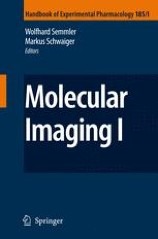
Molecular Imaging I
The aim of this textbook of molecular imaging is to provide an up to date review of this rapidly growing field and to discuss basic methodological aspects necessary for the interpretation of experimental and clinical results. Emphasis is placed on the interplay of imaging technology and probe development, since the physical properties of the imaging approach need to be closely linked with the biologic application of the probe (i.e. nanoparticles and microbubbles). Various chemical strategies are discussed and related to the biologic applications. Reporter-gene imaging is being addressed not only in experimental protocols, but also first clinical applications are discussed. Finally, strategies of imaging to characterize apoptosis and angiogenesis are described and discussed in the context of possible clinical translation.
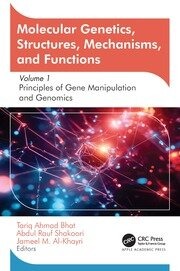
Molecular genetics, structures, mechanisms, and functions : Principles of gene manipulation and genomics ; Vol.1
Provides an overview of the future of genetic engineering and delves into the role of biotechnology and its applications in genetic engineering. It discusses the tools of recombinant technology, which have brought about revolution in our understanding of various complex biological phenomena. Chapters cover mutagenesis, construction, and sequencing of DNA libraries along with applications of genetic engineering for improving health, preventing genetic diseases, enhancing food resources, managing environmental bioremediation, and more. Topics include genetic engineering tools for restriction enzymes and vectors, gene and cell division, mutation detection and screening in plants, population genetics, sexuality in bacteria, and more. Several chapters focus on the tools of recombinant technology, such as restriction enzymes, vectors, etc., that have paved the way for creating organisms of choice and opened new horizons in the field of medicine, agriculture, and industry for human welfare.

Molecular Gas Dynamics : Theory, Techniques, and Applications
This self-contained work is an up-to-date treatment of the basic theory of molecular gas dynamics and its various applications. Recent progress in the field has greatly enhanced the original theory and stimulated interesting and critical gas dynamic phenomena and problems. This book, unique in the literature, presents working knowledge, theory, techniques, and typical phenomena in rarefied gases for theoretical development and applications.
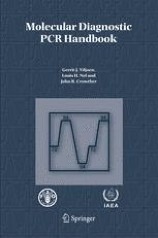
Molecular Diagnostic PCR Handbook
PREFACE The Joint FAO/IAEA Division of Nuclear Techniques in Food and Agriculture is involved in agricultural research and development and assists Member States of FAO and IAEA in improving strategies to ensure food security through the use of nuclear techniques and related biotechnologies, where such techniques have a valuable and often unique role. In particular, molecular diagnostic methods have rapidly evolved in the past twenty years, since the advent of the Polymerase Chain Reaction (PCR). They are used in a wide range of agricultural areas such as, improving soil and water management; producing better crop varieties; diagnosing plant and animal diseases; controlling insect pests and improving food quality and safety. The uses of nucleic acid-directed methods have increased significantly in the past five years and have made important contributions to disease control country programmes for improving national and international trade. These developments include the more routine use of PCR as a diagnostic tool in veterinary diagnostic laboratories. However, there are many problems associated with the transfer and particularly, the application of this technology. These include lack of consideration of: the establishment of quality-assured procedures, the required set-up of the laboratory and the proper training of staff. This can lead to a situation where results are not assured. This book gives a comprehensive account of the practical aspects of PCR and strong consideration is given to ensure its optimal use in a laboratory environment. This includes the setting-up of a PCR laboratory; Good Laboratory Practice and standardised of PCR protocols.

Molecular Chaperones in Health and Disease
Molecular chaperones are involved in a wide variety of essential cellular processes in living cells. A subset of molecular chaperones have been initially described as heat shock proteins protecting cells from stress damage by keeping cellular proteins in a folding competent state and preventing them from irreversible aggregation. Later it became obvious that molecular chaperones are also expressed constitutively in the cell and are involved in complex processes such as protein synthesis, intracellular protein transport, post-translational modification and secretion of proteins as well as receptor signalling. Hence, it is not surprising that molecular chaperones are implicated in the pathogenesis of many relevant diseases and could be regarded as potential pharmacological targets. Starting with the analysis of the mode of action of chaperones at the molecular, cellular and organismic level, this book will then describe specific aspects where modulation of chaperone action could be of pharmacological and therapeutic interest.

Molecular Building Blocks for Nanotechnology : From Diamondoids to Nanoscale Materials and Applications
This book contains a variety of subjects covering computational, dry and wet nanotechnology. The state-of-the-art subject matters presented here provide the reader with the latest developments on ongoing nanoscience and nanotechnology research from the bottom-up approach.

Molecular Biology of Metal Homeostasis and Detoxification : From Microbes to Man
One of the challenges faced by every cell as well as by whole organisms is to maintain appropriate concentrations of essential nutrient metals while excluding nonessential toxic metals. Toward that end, all organisms have developed mechanisms for metal homeostasis and detoxification to maintain metal levels within physiological limits. This book brings together current knowledge of the molecular basis of metal homeostasis and detoxification in various eukaryotic model systems, including yeasts, plants, and mammals. It focuses on the cellular systems controlling metal transport, intracellular distribution, and immobilization as well as on systems regulating metal-dependent transcription. In addition to environmental aspects (including phytoremediation), the book treats the pathophysiology of metal deficiency and overload in relation to disease.
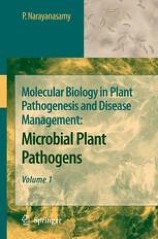
Molecular Biology in Plant Pathogenesis and Disease Management : Microbial Plant Pathogens ; Vol.1
Studies on molecular biology of pathogens, infection process and disease resistance, have provided information essentially required to understand the vulnerable stages at which the pathogens can be tackled effectively and to adopt novel strategies to incorporate disease resistance genes from diverse sources and /or to induce resistance of cultivars with desirable agronomic attributes using biotic or abiotic agents. The nature of interaction between the gene products of the pathogen and plant appears to determine the outcome of the interaction resulting in either disease progression or suppression. Transgenic plants with engineered genes show promise for effective exploitation of this approach for practical application. Research efforts during the recent years to sequence the whole genomes of the pathogens and plants may lead to development of better ways of manipulating disease resistance mechanisms enabling the grower to achieve higher production levels and the consumer to enjoy safer food and agricultural products. Experimental protocols included in appropriate chapters will be useful for researchers and graduate students.

Molecular Biology in Plant Pathogenesis and Disease Management : Disease Management ; Vol.3
Exclusion and eradication of plant pathogens by rapid and precise detection and identification of microbial pathogens in symptomatic and asymptomatic plants and planting materials by employing molecular methods has been practiced extensively by quarantines and certification programs with a decisive advantage. Identification of sources of resistance genes, cloning and characterization of desired resistance genes and incorporation of resistance gene(s) into cultivars and transformation of plants with selected gene(s) have been successfully performed by applying appropriate molecular techniques. Induction of resistance in susceptible cultivars by using biotic and abiotic inducers of resistance is a practical proposition for several crops whose resistance levels could not be improved by breeding or transformation procedures. The risks of emergence of pathogen strains less sensitive or resistant to chemicals have been reduced appreciably by rapid identification of resistant strains and monitoring the occurrence of such strains in different geographical locations.
