



الصفحة 12
الصفحة 12
Model Driven Engineering Languages and Systems ; 11th International Conference, MoDELS 2008, Toulouse, France, September 28 - October 3, 2008. Proceedings
The book also contains three keynote speeches and contributions to workshops, symposia, tutorials and panels at the conference. The papers are organized in topical sections on Model Transformation: Foundations; Requirements Modeling; Domain-Specific Modeling; Model Transformation: Techniques, Composition and Analysis of Behavioral Models; Model Comprehension; Model Management; Behavioral Conformance and Refinement; Metamodeling and Modularity; Constraints; Model Analysis; Service-Oriented Architectures; Adaptive and Autonomic Systems; Empirical Studies; Evolution and Reverse Engineering; Modeling Language Semantics; Dependability Analysis and Testing; Aspect-Oriented Modeling; Structural Modeling;and Embedded Systems.
Model Driven Architecture ; European MDA Workshops : Foundations and Applications, MDAFA 2003 and MDAFA 2004, Twente, The Netherlands, June 26-27, 2003, and Linköping, Sweden, June 10-11, 2004, Revised Selected Papers
Model-Driven Architecture (MDA) is an initiative proposedby the Object M- agement Group (OMG) for platform-generic software development. MDA s- arates the specification of system functionality from the implementation on a specific platform. It is aimed at making software assets more resilient to changes caused by emerging technologies. While stressing the importance of modeling, the MDA initiative covers a wide spectrum of research areas. Further efforts are required to bring them into a coherent approach based on open standards and supported by matured tools and techniques. This volume contains the selected papers of two workshops on “Model-Driven Architecture – Foundations and Applications” (MDAFA): MDAFA 2003 held at the University of Twente, Twente, The Netherlands, June 26–27, 2003, and MDAFA 2004 held at Linko ¨ping University, Link¨ oping, Sweden, June 10–11, 2004. The goal of the workshops was to understand the foundations of MDA, to share experience in applying MDA techniques and tools, and to outline future research directions. The workshops organizers encouraged authors of accepted papers to re-submit their papers to a post-workshop reviewing process; 15 of these papers were accepted to appear in this volume on MDA.
Model Checking Software ; Vol. 3925 ; 13th International SPIN Workshop, Vienna, Austria, March 30 - April 1, 2006, Proceedings
he name “SPIN” refers both to a workshopon model checking and to a famous model checking tool. The SPIN workshop is an annual forum for practitioners and researchersinterested in state space-based techniques for the validation and analysis of software and hardware systems, including communication protocols. It focuses on techniques based on explicit representations of state spaces, as implemented in the SPIN model checker or other tools, and techniques based on a combination of explicit representations with other representations. The SPIN model checker has proven to be particularly suited for the analysis of concurrent asynchronous systems. The workshop aims to encourage interaction and exchange of ideas with all related areas in software engineering.
Model Checking Software ; 15th International SPIN Workshop, Los Angeles, CA, USA, August 10-12, 2008 Proceedings
This book constitutes the refereed proceedings of the 15th International SPIN workshop on Model Checking Software, SPIN 2008, held in Los Angeles, CA, USA, in August 2008.The 17 revised full papers presented together with 1 tool paper and 4 invited talks were carefully reviewed and selected from 41 submissions. The main focus of the workshop series is software systems, including models and programs. The papers cover theoretical and algorithmic foundations as well as tools for software model checking and foster interactions and exchanges of ideas with related areas in software engineering, such as static analysis, dynamic analysis, and testing.
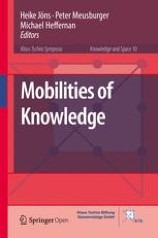
Mobilities of Knowledge
This collection of essays examines how spatial mobilities of people and practices, technologies and objects, knowledge and ideas have shaped the production, circulation, and transfer of knowledge in different historical and geographical contexts. Targeting an interdisciplinary audience, Mobilities of Knowledge combines detailed empirical analyses with innovative conceptual approaches. The first part scrutinizes knowledge circulation, transfer, and adaption, focussing on the interpersonal communication process, early techniques of papermaking, a geographical text, indigenous knowledge in exploration, the genealogy of spatial analysis, and different disciplinary knowledges about the formation of cities, states, and agriculture.
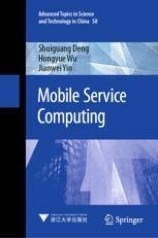
Mobile Service Computing
This book introduces readers to the background and principles of mobile service computing. It discusses various aspects of service computing in mobile environments, including key methods and techniques for service selection, recommendation, composition, offloading, execution, deployment, and provision.

Mobile Robots : The Evolutionary Approach
The design and control of autonomous intelligent mobile robotic systems operating in unstructured changing environments includes many objective difficulties. There are several studies about the ways in which, robots exhibiting some degree of autonomy, adapt themselves to fit in their environments. The application and use of bio-inspired and intelligent techniques such as reinforcement learning, artificial neural networks, evolutionary computation and so forth in the design and improvement of robot designs is an emergent research topic. Researchers have obtained robots that display an amazing slew of behaviours and perform a multitude of tasks. These include perception of environment, planning and navigation in rough terrain, pushing boxes, negotiating an obstacle course, etc.

Mobile Edge Computing
It offers comprehensive, self-contained knowledge on Mobile Edge Computing (MEC), which is a very promising technology for achieving intelligence in the next-generation wireless communications and computing networks. The book starts with the basic concepts, key techniques and network architectures of MEC. Then, we present the wide applications of MEC, including edge caching, 6G networks, Internet of Vehicles, and UAVs. In the last part, we present new opportunities when MEC meets blockchain, Artificial Intelligence, and distributed machine learning (e.g., federated learning). We also identify the emerging applications of MEC in pandemic, industrial Internet of Things and disaster management.

Mobile and Wireless Communications Networks ; IFIP TC6 / WG6.8 Conference on Mobile and Wireless Communication Networks (MWCN 2004) October 25-27, 2004 Paris, France
Mobile Ad hoc NETworks (MANETs) has attracted great research interest in recent years. A Mobile Ad Hoc Network is a self-organizing multi-hop wireless network where all hosts (often called nodes) participate in the routing and data forwarding process. The dependence on nodes to relay data packets for others makes mobile ad hoc networks extremely susceptible to various malicious and selfish behaviors. This point is largely overlooked during the early stage of MANET research. Many works simply assume nodes are inherently cooperative and benign. However, experiences from the wired world manifest that the reverse is usually true; and many works [3] [10] [9] [8] [12] [19] have pointed out that the impact of malicious and selfish users must be carefully investigated. The goal of this research is to address the cooperation problem and related security issues in wireless ad hoc networks. As a rule of thumb, it is more desirable to include security mechanisms in the design phase rather than continually patching the system for security breaches. As pointed out in [2] [1], there can be both selfish and malicious nodes in a mobile ad hoc network. Selfish nodes are most concerned about their energy consumption and intentionally drop packets to save power. The purpose of malicious nodes, on the other hand, is to attack the network using various intrusive techniques. In general, nodes in an ad hoc network can exhibit Byzantine behaviors.
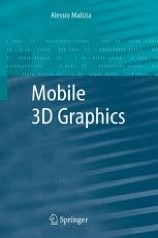
Mobile 3D Graphics
Historically, not enough was understood about how to deliver a high quality playing experience on handheld, small screen, small memory devices, plus there has been considerable confusion about the hardware’s abilities and restrictions. By addressing these issues this book provides: • A comprehensive explanation of 3D mobile graphics programming • Includes an extensive range of code samples in both C and Java • Combines 3D and 2D mobile graphics methods • Covers recent advances in mobile computer graphics techniques and applications. The book teaches fundamental 3D mobile graphics programming with standard APIs, and covers the basic and advanced application programme interfaces behind the major wireless and mobile devices supporting 3D graphics applications. Advanced undergraduates and postgraduates, as well as mobile application and games developers, will find this an excellent reference source.

Mixture Formation in Internal Combustion Engines
This book covers the various approaches to modelling and optimising the spray and mixture formation processes in modern internal combustion engines. Due to their complexity and importance in predicting the temporal and spatial distribution of liquid and gaseous fuel inside the cylinder, special emphasis is put on the detailed description of multi-dimensional CFD-models. The book describes and discusses the most widely used mathematical models for in-cylinder spray and mixture formation processes.

Minimally Invasive Tumor Therapies
In the age of the World Wide Web, informed patients continue to surprise oncologists with detailed questions about popular tumor therapies. Although minimally invasive tumor therapies (MITT) have become daily clinical practice for palliative treatment of liver tumors, the acceptance of these palliative modalities still varies enormously. In addition, promising results have been published for in situ ablation of lung metastases, bone tumors, and renal cell carcinoma. This book gives an up-to-date overview of the popular techniques and clinical results of MITT, with a clarification of the actual indications including the size, tumor entities, and clinical benefits. Moreover, the book focuses on the prospectives and limitations of imaging methods - ultrasound, computed tomography, and magnetic resonance imaging - used for MITT.

Minimally Invasive Spine Surgery : A Surgical Manual
The second, completely revised and expanded edition of the successful surgical manual on minimally invasive spine surgery includes 51 chapters (including more than 20 new chapters) covering all current minimally invasive techniques in spine surgery. A complete survey of all microsurgical and endoscopic techniques with a special focus on semi-invasive injection techniques for diagnostic and therapeutic purposes in low back pain is given. The clear chapter structure with terminology, history, surgical principles, advantages/disadvantages, indications, access principles, complications, and results facilitates navigation through the manual. Topics include the principles of microsurgical and endoscopic treatment, spinal navigation and computer-assisted surgery, minimally invasive reconstruction, fusion, dynamic stabilization in fractures, degenerative disc disease, spinal stenosis, low back pain and deformities

Minimally invasive periodontal therapy : Clinical techniques and visualization technology
The long-term success of periodontal therapy is dependent on proper diagnosis and removal of subgingival tooth-borne accretions in the form of calculus and bacteria. From a clinical perspective, better visualization during the diagnostic and therapeutic phases has been shown to yield better results compared to traditional approaches.Minimally Invasive Periodontal Therapy evaluates the advantages of using minimal invasive techniques, the technologies available for enhancing visualization during minimally invasive therapy, and step-by-step illustrates the clinical use of each technique.

Minimally invasive glaucoma surgery
This book covers all aspects of minimally invasive glaucoma surgery (MIGS) and provides detailed information on each MIGS device, including its mechanism of action; patient selection; implantation techniques; post-operative management; and a review of the existing literature. Step-by-step descriptions are provided for the surgical technique used in implanting each MIGS device, accompanied by clear photographs of each surgical stage. Other areas covered include intra-operative gonioscopy (with tips on optimising the view of the anterior chamber angle) and the management of the intra-operative and post-operative complications. Essential information on the anatomy and physiology of the different aqueous outflow pathways is also included.

Minimally invasive dental implant surgery
Presents a new clinical text and atlas focused on cutting edge and rapidly developing, minimally invasive treatment modalities and their applications to implant dentistry. Centered on progress in imaging, instrumentation, biomaterials and techniques, this book discusses both the “how to” as well as the “why” behind the concept of minimally invasive applications in implant surgery.

Minimally Invasive Bariatric Surgery
This book covers the full spectrum of laparoscopic weight loss surgery and the pathophysiology of obesity. The chapter authors, all currently operating experts in the field, cover the essentials of establishing a bariatric surgery program, including equipment needs, guidelines for training, and patient selection. The operative chapters discuss in full detail the surgical techniques and outcomes, including laparoscopic VGB, laparoscopic adjustable gastric banding, laparoscopic Roux-en-Y, and laparoscopic malabsorption procedures. The text also tackles post-operative issues, such as complications, reoperation, plastic surgery after weight loss, nutritional issues, and pregnancy following obesity surgery.

MIMO Signals and Systems
The book provide a basic understanding of the fundamentals, implementation, and of MIMO techniques. For easier comprehension, these applications techniques, in conjunction with several "classic" algorithms, are illustrated by means of numerous worked examples.
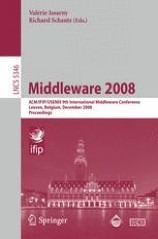
Middleware 2008 ; ACM/IFIP/USENIX 9th International Middleware Conference Leuven, Belgium, December 1-5, 2008 Proceedings
This book constitutes the refereed proceedings of the ACM/IFIP/USENIX 9th International Middleware Conference 2008, held in Leuven, Belgium, in December 2008.The 21 revised full papers presented were carefully reviewed and selected from 117 submissions for inclusion in the book. The papers are organized in topical sections on platforms extended to new capabilities, advanced software engineering focusing on specific system properties, system management techniques, as well as components and system algorithms and properties.

Middleware 2006 ; ACM/IFIP/USENIX 7th International Middleware Conference, Melbourne, Australia, November 27 - December 1, 2006, Proceedings
This book constitutes the refereed proceedings of the ACM/IFIP/USENIX 7th International Middleware Conference 2006, held in Melbourne, Australia, in November/December 2006. The 21 revised full papers presented were carefully reviewed and selected from 122 submissions. The papers are organized in topical sections on performance, composition, management, publish/subscribe technology, databases, mobile and ubiquitous computing, security, and data mining techniques.
