



الصفحة 12
الصفحة 12

Media Theory : Interdisciplinary Applied Mathematics
The focus of this book is a mathematical structure modeling a physical or biological system that can be in any of a number of `states.' Each state is characterized by a set of binary features, and differs from some other neighbor state or states by just one of those feature. A simple example of a `state’ is a partial solution of a jigsaw puzzle, which can be transformed into another partial solution or into the final solution just by adding or removing a single adjoining piece. The evolution of such a system over time is considered. Such a structure is analyzed from algebraic and probabilistic (stochastic) standpoints.

Mechanisms of Lymphocyte Activation and Immune Regulation XI ; B Cell Biology
These proceedings highlight recent developments in lymphocyte development, Ig gene rearrangements and somatic hypermutation, chromatin structure modification, B lymphocyte signaling and fate, receptor editing, and autoimmunity.

Mechanics of Elastic Structures with Inclined Members : Analysis of vibration, buckling and Bending of X-Braced Frames and Conical Shells
This monograph presents the mechanics of vibration, buckling and bending of elastic structures with inclined members such as x-braced high rise frames and conical shells. More than giving detailed derivations of basic equations.

Mechanics of Composite Materials with MATLAB
This textbook makes use of the popular computer program MATLAB as the major computer tool to study Mechanics of Composite Materials. It is written specifically for students in Engineering and Materials Science examining step-by-step solutions of composite material mechanics problems using MATLAB.

Mechanics of Civil Engineering Structures
Presents the material needed by practicing engineers engaged in the design of civil engineering structures, and students of civil engineering. The book covers the fundamental principles of mechanics needed to understand the responses of structures to different types of load and provides the analytical and empirical tools for design. The title presents the mechanics of relevant structural elements—including columns, beams, frames, plates and shells—and the use of mechanical models for assessing design code application. Eleven chapters cover topics including stresses and strains; elastic beams and columns; inelastic and composite beams and columns; temperature and other kinematic loads; energy principles; stability and second-order effects for beams and columns; basics of vibration; indeterminate elastic-plastic structures; plates and shells.

Mechanics of biomaterials : Fundamental principles for implant design
Teaching mechanical and structural biomaterials concepts for successful medical implant design, this self-contained text provides a complete grounding for students and newcomers to the field. Split into three sections: Materials, Mechanics and Case Studies, it begins with a review of sterilization, biocompatibility and foreign body response before presenting the fundamental structures of synthetic biomaterials and natural tissues. Mechanical behavior of materials is then discussed in depth, covering elastic deformation, viscoelasticity and time-dependent behavior, multiaxial loading and complex stress states, yielding and failure theories, and fracture mechanics. The final section on clinical aspects of medical devices provides crucial information on FDA regulatory issues.

Mechanics and Strength of Materials
This treatise contains topics on Solid Mechanics, the Theory of Slender Members and an Introduction to the Theory of Structures, usually taught in the disciplines of Strength of Materials of most Engineering courses, such as Civil, Mechanical and Aeronautical Engineering.
Mechanics and Physics of Fracture : Multiscale Modeling of the Failure Behavior of Solids
Provides a comprehensive understanding of the macroscopic failure behavior of solids from the description of the microscopic failure processes and their coupling with the microstructure. Several fundamental questions were addressed: the relation between the microstructural features of materials and their fracture properties and crack trajectories; the role of damage mechanisms and non-linear deformations near the crack tip on the failure behavior of solids; and finally the role of dynamic inertial effects during fast fracture was more briefly evoked.

Mechanics : From Newton's Laws to Deterministic Chaos
This updated and revised fourth edition covers all topics in mechanics from elementary Newtonian mechanics, canonical and rigid body mechanics to relativistic mechanics and nonlinear dynamics. In particular, symmetries and invariance principles, geometrical structures and continuum mechanics play an important role. This book will enable the reader to develop general principles from which equations of motions may be derived, to understand the importance of symmetries as a basis for quantum mechanics and to get practice in using theoretical tools and concepts that are essential for all branches of physics. The book contains numerous problems with complete solutions, and some practical examples.This will be appreciated in particular by students using the text to accompnay lectures on mechanics. The book ends with some historical remarks on important pioneers in mechanics.
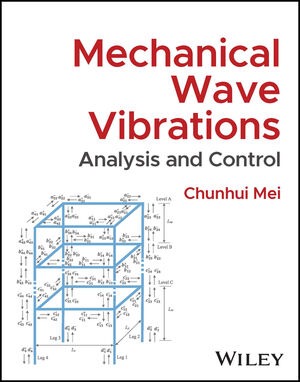
Mechanical Wave Vibrations: Analysis and Control
Delivers an expert discussion of the wave analysis approach (as opposed to the modal-based approach) to mechanical vibrations in structures. The book begins with deriving the equations of motion using the Newtonian approach based on various sign conventions before comprehensively covering the wave vibration analysis approach. It concludes by exploring passive and active feedback control of mechanical vibration waves in structures.

Mechanical Modelling and Computational Issues in Civil Engineering
In this edited book various novel approaches to problems of modern civil engineering are demonstrated. Experts associated within the Lagrange Laboratory present recent research results in civil engineering dealing both with modelling and computational aspects.

Mechanical Behaviour of Engineering Materials : Metals, Ceramics, Polymers, and Composites
How do engineering materials deform when bearing mechanical loads? To answer this crucial question, the book bridges the gap between continuum mechanics and materials science. The different kinds of material deformation (elasticity, plasticity, fracture, creep, fatigue) are explained in detail. The book also discusses the physical processes occurring during the deformation of all classes of engineering materials (metals, ceramics, polymers, and composites) and shows how these materials can be strengthened to meet the design requirements. It provides the knowledge needed in selecting the appropriate engineering material for a certain design problem. The reader will thus learn how to critically employ design rules and thus to avoid failure of mechanical components.

Mechanical Behavior of Materials : Fundamentals, Analysis, and Calculations
Provides a holistic understanding of mechanical behavior of materials, and enables critical thinking through mathematical modeling and problem solving.Each of the 15 chapters first introduces readers to the technologic importance of the topic and provides basic concepts with diagrammatic illustrations; and then its engineering analysis/mathematical modelling along with calculations are presented.

Measuring, Monitoring and Modeling Concrete Properties ; An International Symposium dedicated to Professor Surendra P. Shah, Northwestern University, USA
Of ECF16 Chairman Emmanuel E. Gdoutos The "16th European Conference of Fracture. The present volume is devoted to the symposium on "Measuring, Monitoring and Modeling Concrete Properties" (MMMCP). ECF16 focused in all aspects of structural integrity with the objective of improving the safety and performance of engineering str- tures, components, systems and their associated materials.

Measuring the Business Value of Cloud Computing
The importance of demonstrating the value achieved from IT investments is long established in the Computer Science (CS) and Information Systems (IS) literature. However, emerging technologies such as the ever-changing complex area of cloud computing present new challenges and opportunities for demonstrating how IT investments lead to business value.

Means, Ends and Medical Care
In this remarkable book, Gary Wright brings his thirty years of experience as a physician in pediatric and family medicine together with his Ph.D. in philosophy to address the important problem of the nature of good medical reasoning. Wright gives a brilliant analysis of the complex internal structure of our concepts of health and disease, showing that our present models are wholly incapable of dealing with the realities of actual human disease. He then shows the error of assuming that we always know in advance what the medical and moral ends are for any medical situation. This leads to a radical questioning of so-called "rational actor" or "economic" models of rationality that are popular in medicine today.

Maxillofacial Imaging
Demonstrates how advanced medical imaging techniques can be successfully applied to dental and maxillofacial conditions. There is a focus on CT and MRI, but the use of all contemporary imaging techniques are illustrated including PET, PET/CT, ultrasonography, and cone beam CT. The presentation is in atlas style, with succinct, bulleted text and a wealth of high-quality images in multiple planes. All images for each patient are grouped to enable the reader very quickly to gain an imaging overview of the condition under consideration. After a comprehensive introductory chapter on normal imaging anatomy, the role of advanced imaging techniques is described in pathologic conditions of the mandible and maxilla, temporomandibular joint, regions closely related to the jaw, paranasal sinuses, oral cavity, salivary glands, and structures adjacent to the maxillofacial region. A concluding chapter examines the use of interventional procedures for diagnosis and treatment of maxillofacial conditions. Compared with the first edition, numerous additional cases have been incorporated and a completely new chapter focuses on cone beam CT.

Matrix Convolution Operators on Groups
In the last decade, convolution operators of matrix functions have received unusual attention due to their diverse applications. This monograph presents some new developments in the spectral theory of these operators. The setting is the Lp spaces of matrix-valued functions on locally compact groups. The focus is on the spectra and eigenspaces of convolution operators on these spaces, defined by matrix-valued measures. Among various spectral results, the L2-spectrum of such an operator is completely determined and as an application, the spectrum of a discrete Laplacian on a homogeneous graph is computed using this result. The contractivity properties of matrix convolution semigroups are studied and applications to harmonic functions on Lie groups and Riemannian symmetric spaces are discussed. An interesting feature is the presence of Jordan algebraic structures in matrix-harmonic functions.

Mathematics of Large Eddy Simulation of Turbulent Flows
Large eddy simulation (LES) is a method of scientific computation seeking to predict the dynamics of organized structures in turbulent flows by approximating local, spatial averages of the flow. This book focuses on the mathematical foundations of LES and its models and provides a connection between the powerful tools of applied mathematics, partial differential equations and LES. Thus, it is concerned with fundamental aspects not treated so deeply in the other books in the field, aspects such as well-posedness of the models, their energy balance and the connection to the Leray theory of weak solutions of the Navier-Stokes equations.

Mathematics of Financial Markets
This book presents the mathematics that underpins pricing models for derivative securities, such as options, futures and swaps, in modern financial markets. The idealized continuous-time models built upon the famous Black-Scholes theory require sophisticated mathematical tools drawn from modern stochastic calculus. However, many of the underlying ideas can be explained more simply within a discrete-time framework. This is developed extensively in this substantially revised second edition to motivate the technically more demanding continuous-time theory, which includes a detailed analysis of the Black-Scholes model and its generalizations, American put options, term structure models and consumption-investment problems. The mathematics of martingales and stochastic calculus is developed where it is needed.
