



الصفحة 12
الصفحة 12

Intelleger = انتليجر
The project management system is a web application designed to assist software managers in efficiently managing their projects, including websites, mobile apps, and other software initiatives. Utilizing artificial intelligence, the application streamlines project creation and management processes, offering significant benefits in terms of organization and accuracy. Managers can create projects by inputting essential details such as the name, scope, deadline, and tasks. The system generates AI-based functional and non-functional requirements tailored to the project scope using gpt2 model on Pure dataset. Managers can then review and edit these requirements as needed before finalizing the project. The application facilitates comprehensive task management by allowing managers to assign tasks to developers, edit task details, and ensure task deadlines align with project deadlines. Developers can log their start and end times automatically when they begin and complete tasks, providing accurate time tracking and performance analysis.also they can use code generation model to generate their task’s code using codebert model on concode and codesearchnet dataset Real-time notifications keep both managers and developers informed of task assignments, completions, and other critical updates.

Integration of AI and OR Techniques in Constraint Programming for Combinatorial Optimization Problems ; Vol.3524 : 2nd International Conference, CPAIOR 2005, Prague, Czech Republic, May 31 -- June 1, 2005
Intended primarily as a forum to focus on the integration and hybridization of the approaches of constraint programming (CP), arti?cial intelligence (AI), and operations research (OR) technologies for solving large-scale and complex real-life optimization problems. Therefore, CPAIOR is never far from industrial applications. The high number of submissions received this year, almost 100 papers, in witness to the interest of the research community in this conference. From these submissions, we chose 26 to be published in full in the proceedings. This volume includes summaries of the invited talks of CPAIOR: one from industry, one from the embedded system research community, and one from the operations research community.

Integrated System-Level Modeling of Network-on-Chip enabled Multi-Processor Platforms
Integrated System-Level Modeling of Network-on-Chip Enabled Multi-Processor Platforms first gives a comprehensive update on recent developments in the area of SoC platforms and ESL design methodologies. The main contribution is the rigorous definition of a framework for modeling at the timing approximate level of abstraction. Subsequently this book presents a set of tools for the creation and exploration of timing approximate SoC platform models.
Integrated Graphic and Computer Modelling
Full colour throughout, the book explores programming language developments from machine code to more natural language forms, and the basic display operations and commands needed to create effective computer graphic systems. As the visual presentation of real and virtual environments becomes more and more the norm in application systems, a clear understanding of the theory that underpins these techniques is required of all students and practitioners studying and working on large computer systems.

Integrated formal methods ; 6th International Conference, IFM 2007, Oxford, UK, July 2-5, 2007, Proceedings
It addresses all aspects of formal methods integration, including of a process of analysis or design application of formal methods to analysis or design, extension of one method based upon the inclusion of ideas or concepts from others, and semantic integration or practical application.

Integrated formal methods ; 3rd International Conference, IFM 2002, Turku, Finland, May 15-18, 2002. Proceedings.
IFM 2002 explored the relations between formal methods and graphical notations, especially the industrial standard language for software design, the Unified Modeling Language (UML). The themes of IFM 2002 reflect what we believe is a growing trend in the Formal Methods and Software Engineering research communities. Over the last threedecades,computer scientists have developed a range of formalisms focusing on particular aspects of behavior or analysis, such as sequential program structures, concurrent program structures, data and information structures, temporal reasoning, deductive proof, and model checking. Much effort is now being devoted to integrating these methods in order to combine their advantages and ensure they scale up to industrial needs. Graphical notations are now widely used in software engineering and there is growing recognition of the importance of providing these with the for mal underpinnings and form alanalysis capabilities found in formal methods.

Integrated Chemical Microsensor Systems in CMOS Technology
This book, "Integrated Chemical Microsensor Systems in CMOS Technology", provides a comprehensive treatment of the highly interdisciplinary field of CMOS chemical microsensor systems. It is targeted at students, scientists and engineers who are interested in gaining an introduction to the field of chemical sensing since all the necessary fundamental knowledge is included. However, as it provides detailed information on all important issues related to the realization of chemical microsensors in CMOS technology, it also addresses experts well familiar with the field.

Innovative Tools and methods using BIM for an efficient renovation in buildings
This book describes a BIM-based toolkit that has been developed according to the latest research activities on building information modelling and semantic interoperability to optimize the building process. It highlights the impacts of using such new tools to fast renovation activities starting from the decision-making and design stages to the construction site management with the possibility to monitor occupants' and owners’ feedback during the realization process. In this process, a framework has been developed and implemented to allow stakeholders involved in a renovation project to efficiently compile, maintain, and add data about (i) building elements, (ii) building services systems, (iii) tenants, operators, and owners of the building, and (iv) current and predicted performance of the building from the various data sources available. The framework applies and specializes the existing practices in the Semantic Web, Linked Data, and ontology domain to the management of renovation projects. It has been designed to be open so that any system which implements the required functions and uses the specified conventions will be able to achieve semantic interoperability with other framework-compliant systems in the renovation domain. Finally, this book represents the validation process of the toolkit that has been held in three demo sites: a social housing building in Italy and two private residential buildings in Poland and Finland. The outcome shows that the toolkit facilitates the renovation process with relevant reductions of time, costs, and energy consumption and that the inhabitants can take advantage of the increase in building performances, quality, and comfort.

Innovative Medicine : Basic Research and Development
Devoted to innovative medicine, comprising the proceedings of the Uehara Memorial Foundation Symposium 2014. It remains extremely rare for the findings of basic research to be developed into clinical applications, and it takes a long time for the process to be achieved. The task of advancing the development of basic research into clinical reality lies with translational science, yet the field seems to struggle to find a way to move forward. To create innovative medical technology, many steps need to be taken: development and analysis of optimal animal models of human diseases, elucidation of genomic and epidemiological data, and establishment of “proof of concept”.

Innovative Learning Environments in STEM Higher Education : Opportunities, Challenges, and Looking Forward
As explored in this book, higher education in STEM fields is influenced by many factors, including education research, government and school policies, financial considerations, technology limitations, and acceptance of innovations by faculty and students.

Innovations in robot mobility and control
The most important aspects of this book is that the principles and models introduced in the text are all field-tested, and thus can readily be used in solving real world problems, such as factory automation, disposal of nuclear wastes, landmine clearing and computerized surgery.

Innovations in Hybrid Intelligent Systems
Hybrid Artificial Intelligence Systems (HAIS) combines symbolic and sub-symbolic techniques to construct more robust and reliable problem solving models. This volume focused on "Hybrid Artificial Intelligence Systems" contains a collection of papers that were presented at the 2nd International Workshop on Hybrid Artificial Intelligence Systems, held in 12 - 13 November, 2007, Salamanca, Spain. This carefully edited book provides a comprehensive overview of the recent advances in the hybrid intelligent systems and covers a wide range of application areas, including data analysis and data mining, intelligent control, pattern recognition, robotics, optimization, etc. The book is aimed at researchers, practitioners and postgraduate students who are engaged in developing and applying advanced intelligent systems principles to solving real-world problems.
Innovations in Design & Decision Support Systems in Architecture and Urban Planning
Traditionally, the DDSS conferences aim to be a platform for both starting and experienced researchers who focus on the development and application of computer support in urban planning and architectural design. This volume contains 31 peer reviewed papers from this year’s conference. This book will bring researchers together and is a valuable resource for their continuous joint effort to improve the design and planning of our environment.

Innovations in 3D Geoinformation Science
Covers various aspects of spatial data modelling specifically regarding three-dimensional (3D) modelling and structuring. The realization of "true" 3D geoinformation spatial systems requires a high input, and the developmental process is taking place in various research centers and universities around the globe.
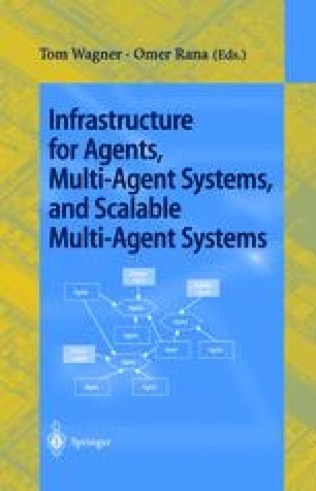
Infrastructure for Agents, Multi-Agent Systems, and Scalable Multi-Agent Systems ; International Workshop on Infrastructure for Scalable Multi-Agent Systems, Barcelona, Spain, June 3-7, 2000 Revised Papers
Building research grade multi-agent systems usually involves a broad variety of software infrastructure ingredients like planning, scheduling, coordination, communication, transport, simulation, and module integration technologies and as such constitutes a great challenge to the individual researcher active in the area. The book presents a collection of papers on approaches that will help make deployed and large scale multi-agent systems a reality. The first part focuses on available infrastructure and requirements for constructing research-grade agents and multi-agent systems. The second part deals with support in infrastructure and software development methods for multi-agent systems that can directly support coordination and management of large multi-agent communities; performance analysis and scalability techniques are needed to promote deployment of multi-agent systems to professionals in software engineering and information technology.

Information Visualization : Beyond the Horizon
Information visualization is not only about creating graphical displays of complex and latent information structures; it contributes to a broader range of cognitive, social, and collaborative activities. This is the first book to examine information visualization from this perspective. This 2nd edition continues the unique and ambitious quest for setting information visualization and virtual environments in a unifying framework. Information Visualization: Beyond the Horizon pays special attention to the advances made over the last 5 years and potentially fruitful directions to pursue. It is particularly updated to meet the need for practitioners. The book is a valuable source for researchers and graduate students. This new edition is forwarded by Ben Shneiderman, University of Maryland.

Information Security Handbook
Provides a comprehensive collection of knowledge for emerging multidisciplinary research areas such as cybersecurity, IoT, Blockchain, Machine Learning, Data Science, and AI. This book brings together, in one resource, information security across multiple domains. It explores basic and high-level concepts and serves as a manual for industry while also helping beginners to understand both basic and advanced aspects in security-related issues. The handbook explores security and privacy issues through the IoT ecosystem and implications to the real world and, at the same time, explains the concepts of IoT-related technologies, trends, and future directions.

Information security applications ; 7th International Workshop, WISA 2006, Jeju Island, Korea, August 28-30, 2006, Revised Selected Papers
This book constitutes the thoroughly refereed post-proceedings of the 12th International Monterey Workshop on Networked Systems with special focus on realization of reliable systems on top of unreliable networked platforms, held in Laguna Beach, CA, USA, in September 2005.

Information Processing in Medical Imaging ; 20th International Conference, IPMI 2007, Kerkrade, The Netherlands, July 2-6, 2007, Proceedings
The 20th International Conference on Information Processing in Medical Im- ing(IPMI)washeldduringJuly2–6,2007,atRolducAbbey,locatedinKerkrade in the south of the Netherlands. IPMI is one of the longest running conferences in medical imaging.

Information Geometry : Near Randomness and Near Independence
This volume will be useful to practising scientists and students working in the application of statistical models to real materials or to processes with perturbations of a Poisson process, a uniform process, or a state of independence for a bivariate process. We use information geometry to provide a common differential geometric framework for a wide range of illustrative applications including amino acid sequence spacings in protein chains, cryptology studies, clustering of communications and galaxies, cosmological voids, coupled spatial statistics in stochastic fibre networks and stochastic porous media, quantum chaology. Introduction sections are provided to mathematical statistics, differential geometry and the information geometry of spaces of probability density functions.
