



الصفحة 12
الصفحة 12
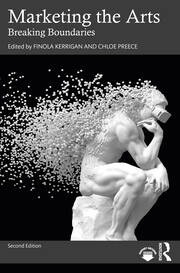
Marketing the Arts : Breaking Boundaries
"The importance of arts consumption and its socio-cultural, political, and economic dimensions / The impact of new technologies, platforms, and alternative artforms on the art market / The importance of the aesthetic experience itself and how to research it / The value of arts-based methods / The art versus commerce debate / The artist as entrepreneur / The role of the arts marketer as market-maker"

Maritime Spatial Planning : past, present, future
This book is the first comprehensive overview of maritime spatial planning. Situated at the intersection between theory and practice, the volume draws together several strands of interdisciplinary research, reflecting on the history of MSP as well as examining current practice and looking towards the future. The authors and contributors examine MSP from disciplines as diverse as geography, urban planning, political science, natural science, sociology and education; reflecting the growing critical engagement with MSP in many academic fields. This innovative and pioneering volume will be of interest and value to students and scholars of maritime spatial planning, as well as planners and practitioners.

Marine Anthropogenic Litter
This book describes how man-made litter, primarily plastic, has spread into the remotest parts of the oceans and covers all aspects of this pollution problem from the impacts on wildlife and human health to socio-economic and political issues. Marine litter is a prime threat to marine wildlife, habitats and food webs worldwide. The book illustrates how advanced technologies from deep-sea research, microbiology and mathematic modelling as well as classic beach litter counts by volunteers contributed to the broad awareness of marine litter as a problem of global significance. The authors summarise more than five decades of marine litter research, which receives growing attention after the recent discovery of great oceanic garbage patches and the ubiquity of microscopic plastic particles in marine organisms and habitats.

Marginality : Addressing the Nexus of poverty, exclusion and ecology
In this volume economists, ecology experts, geographers, agronomists, sociologist, and business experts come together to address marginality. The inter-disciplinary research offers conceptual innovations and presents the dimensions of marginality in developing countries. Economic, political, and environmental drivers are assessed and mapped globally and in detail for countries in Africa and Asia, especially Ethiopia, India, Bangladesh, China, Indonesia. Economic growth especially in rural areas remains and farming communities is central to poverty reduction but needs to be complemented with specific actions to reach those at the margins.
Mapping selfies and memes as Touch
This book offers a rich and nuanced analysis of digitally networked socialities as culturally meaningful relationships of Touch. Focusing on the ways Touch is practised in everyday social interactions serves as a basis for understanding how Touch is multiply significant – physically, emotionally, intellectually and politically. Fiona Andreallo initiates a map of the fundamentals of Touch and how they can be considered for future research in considering digitally networked cultures. This map also serves as a basis for closely examining selfies and memes.

Managing public services : Making informed choices
Chapters provide a valuable frame of reference for the 21st-century manager of public services by assessing the renewal of existing practices such as strategic costing, performance management, digitization and procurement and innovations in management practices, including branding, Lean Management, resilience and risk management. The book suggests that, as the management of public services is imbued with financial, social, economic and political uncertainties, management needs to be flexible and responsive to new ideas and practices to fulfil its purpose. This book ultimately supports the reflective manager, those who think about their job and are open to new ideas on how their job can be done better, by revisiting existing practices and examining innovations in public management.
Managing Forest Ecosystems : The Challenge of Climate Change
With climate change now charging up the political agenda, there are three issues commonly making the headlines: carbon budgets, renewable energy, and the anticipated impacts of climate change. Equally important, though currently less well covered, is the issue how these effects might be mitigated. Given the significant role that forests play in the climate system – as sources, sinks, and through carbon trading – this book discusses the current scientific evidence on the relationships between climate, forest resources and forest management practices around the world. Drawing on expertise from forest scientists from several continents, the book presents both in depth analysis of the current knowledge, and a series of case studies which assess the biological and the economic impacts of climate change. It includes sections on forest responses to climate change, monitoring and modeling changes, economic and management implications, and carbon sequestration under specific management systems.

Managing Diversity in Intergovernmental Organisations
Intensifying worldwide environmental changes as well as political, cultural, religious, and economic crises have made intergovernmental organisations (IGOs) important instruments in international and global cooperation. In order to cope with their diverse stakeholders, it is more imperative than ever for intergovernmental organisations to engage in personnel policy on an international scale. Successful diversity management is an essential prerequisite for organisational performance, conflict management, and dynamics of IGOs. Björn A. Peters examines the challenges of diversity and managing diversity in IGOs on the basis of the Mekong River Commission case study.

Management of Regulatory Influences on Corporate Strategy and Structure
In many industries, e.g. telecommunications, transportation, energy, chemicals, food and beverages, firm performance is heavily influenced by regulation. Despite this fact, strategic management research has traditionally focused on market strategies and related issues. Questions of how to manage regulatory involvement have been left to separate research streams on corporate political activity and a broader understanding of the complex inter-dependencies and mutual influences between corporate and external actors remains lacking.
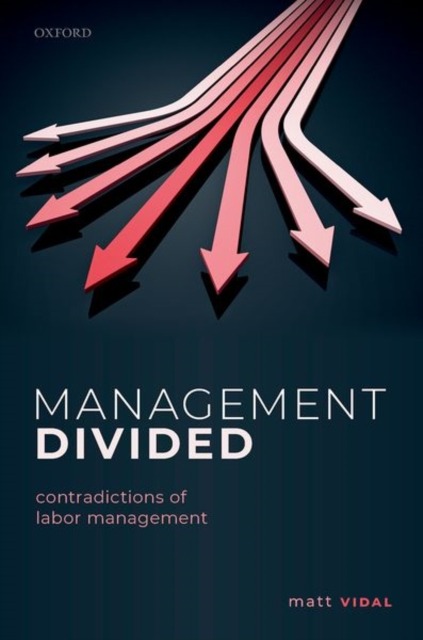
Management divided : Contradictions of labor management
One of the central dynamics shaping organizations is a contradiction managers face between ensuring workforce discipline and harnessing worker creativity. In this rich study of American manufacturing, Matt Vidal offers a theory of 'organizational political economy', integrating concepts from organization theory into a classical Marxist framework

Making Fisheries Management Work : Implementation of Policies for Sustainable Fishing
This book seeks to widen the perspective taken on implementation in fisheries management. The cases presented in this volume addresses legal, administrative, and political challenges regarding implementation of resource conservation policies. The book addresses problems relating to goal achievement, but also causes of deliberate change of political goals during implementation. Fisheries management systems are embedded in inert social structures and natural conditions that vary among different states. Consequently, the book takes a historical and comparative approach, describing the historical developments of national implementation systems and the conditions that shaped their development. It thus seeks to explain why national fisheries management systems have evolved differently, focusing on Norwegian, Faeroese, and EU/Danish management systems. The descriptive and explanatory outlines are accompanied by qualitative assessments of the systems effectiveness as tools for collective action.

Magazines, Tourism, and Nation-Building in Mexico
This book discusses the relationship between periodicals, tourism, and nation-building in Mexico. It enquires into how magazines, a staple form of the promotional apparatus of tourism since its inception, articulated an imaginative geography of Mexico at a time when that industry became a critical means of economic recovery and political stability after the Revolution. Notwithstanding their vogue, popularity, reach, and close affiliations to commerce and state over several decades, magazines have not received any sustained critical attention in the scholarship on that period.

Macrosocial Determinants of Population Health
Macrosocial Determinants of Population Health explores social factors such as culture, mass media, political systems, and migration that influence population health while systematically considering how we may best study these factors and use our knowledge from this study to guide public health interventions.Each section ends with Galea’s integrative chapters, bringing the observations and conclusions from the chapters into clear, usable focus. Macrosocial Determinants of Population Health is a work of major theoretical, empirical, and practical interest for disciplines as varied as public health, epidemiology, health promotion, sociology, and health policy. Its systematic field-building approach makes it as valuable to the public health provider as to the scholars and students studying the health of populations.

Locational Tournaments in the Context of the EU Competitive Environment : A New Institutional Economics Approach to Foreign Direct Investment Policy Competition between Governments in Europe
The last decade has witnessed a dramatic change in attitude towards foreign direct investment (FDI) and a significant increase in competition between governments to attract FDI as a result. These "locational tournaments" are perpetuated not simply by classical factor endowments, but also by government interventions that impact both market imperfections and FDI flows.
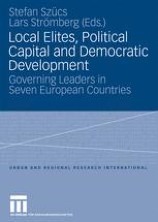
Local Elites, Political Capital and Democratic Development : Governing Leaders in Seven European Countries
This book helps to understand in which ways local governing elites are important for the success or failure of national democratic development. Although we know a great deal about the general importance of civil society and social capital for the development of sustainable democracy, we still know little about what specific local governing qualities or political capital that interact with democratic development. The collected data covers time series of surveys from between 15 to 30 political and administrative leaders in over a hundred middle-sized European and Eurasian cities. The study takes us across the 1980s and 1990s, going from cities in Sweden and the Netherlands - through the Baltic cities - to the cities of Belarus and Russia.

Lived Nation as the History of Experiences and Emotions in Finland, 1800-2000
It revolves around the following questions: What kinds of experiences have engendered national mobilization and feelings of national belonging? How have political and societal conflicts turned into new communities of experience and emotion? What kinds of experiences have been integrated into, or excluded from, the national context in different instances? How have people internalized or contested the nation as a context for their personal, family and minority-group experiences? In what ways has the nation entered and affected people’s intimate spheres of life? How have “national” experiences been transmitted to children in the renewal of the nation? This edited collection points to the histories of experience and emotions as a novel way of studying nations and nationalism. Building on current debates in nationalism studies, it offers a theoretical framework for analyzing the historical construction of “lived nations,” and introduces a number of new methodological approaches to understand the experiences of the nation, extending from the investigation of personal reminiscences and music records to the study of dreams and children’s drawings.

Lifelong Learning : Interpretations of an Education Policy in Europe
In Europe, the idea of Lifelong Learning has developed from an education policy to the most important pedagogic paradigm. The concept was created as an answer to the international education crisis, diagnozed by Philip H. Coombs in 1967. Since the European Year of Lifelong Learning in 1996, it has been regarded as an alternative to deal with the rapid social, political and economic changes of the modern world. Andrea Óhidy shows the genesis of the concept and its development towards a pedagogic paradigm. She investigates the relations between the concept of Lifelong Learning and school education and points out the most important links between Lifelong Learning and adult education.

Liberal Democracy : Prosperity through Freedom
Aims to show which factors have been decisive in the rise of successful countries. Never before have so many people been so well off. However, prosperity is not a law of nature; it has to be worked for. A liberal economy stands at the forefront of this success – not as a political system, but as a set of economic rules promoting competition, which in turn leads to innovation, research and enormous productivity.

Lewis Fry Richardson : His Intellectual Legacy and Influence in the Social Sciences
A pioneer in meteorology and peace research and remains a towering presence in both fields. This edited volume reviews his work and assesses its influence in the social sciences, notably his work on arms races and their consequences, mathematical models, the size distribution of wars, and geographical features of conflict

Legitimacy In European Nature Conservation Policy : Case Studies In Multilevel Governance
Focuses on the issue of legitimacy in the context of European nature conservation policy. It provides insights in the way in which democratic legitimacy is being ‘produced’ at different levels of governance. Building forth upon recent developments in democracy theory that have identified multiple forms of legitimacy, the volume observes a EU-wide shift from output legitimacy to input and throughput legitimacy. Top down policy making is increasingly meeting
