



الصفحة 12
الصفحة 12

Human mitochondrial DNA and the evolution of homo sapiens
Mitochondrial DNA is one of the most explored genetic systems because of what it can tell us about the human past. This volume takes a unique perspective, presenting the disparate strands that must be tied together to exploit this system. From molecular biology to anthropology, statistics to ancient DNA, this first volume of three presents the global picture of human mitochondrial DNA variation. It takes a critical look at the field, flagging the problems, as well as the successes, and always placing the mitochondrial phylogeny centre stage.
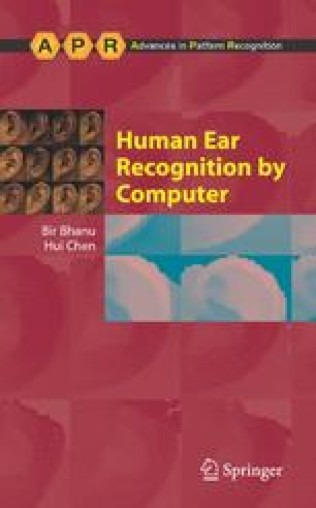
Human Ear Recognition by Computer
Human Ear Recognition by Computer is the first book on the automatic recognition of human ears. It presents an entire range of computational algorithms for recognition of humans by their ears. These algorithms have been tested and validated on the largest databases that are available today,This state-of-the-art research reference explores all aspects of 3D ear recognition, including representation, detection, recognition, indexing and performance prediction. It has been written for a professional audience of both researchers and practitioners within industry, and is also ideal as an informative text for graduate students in computer science and engineering.

Human Cytomegalovirus
The golden age of cytomegalovirus research was ushered in during the late 1970s and early 1980s by a set of powerful new technologies that included restriction enzymes, DNA cloning, DNA sequencing, and open reading frame prediction. The genetic manipulation and propagation of novel CMV strains was accelerated with the app- cation of bacterial artificial chromosome technology. Today, we still struggle to understand the full spectrum of disease associated with human CMV. To the molecular biologist, CMV is a master of regulation in the eukaryotic cell where it either replicates or remains latent. To the immunologist, CMV is a master of immune evasion with tools to escape both the innate and acquired immune responses. The use of animal models with non-human CMVs has become significantly more sophisticated and tied to a more certain understanding of the interrelationships of non-human and human CMV genes.

Hubble : 15 Years of Discovery
This book forms part of the European Space Agency’s 15th anniversary celebration activities for the 1990 launch of the NASA/ESA Hubble Space Telescope. As an observatory in space, Hubble is one of the most successful scientific projects of all time, both in terms of scientific output and its immediate public appeal.Hubble creates an enormous impact by exploiting a unique scientific niche where no other instruments can compete. It consistently delivers super-sharp images and clean, uncontaminated spectra over the entire near-infrared and ultraviolet regions of the electromagnetic spectrum. This has opened up new scientific territory and resulted in many paradigm-breaking discoveries.

How to Future : Leading and Sense-making in an Age of Hyperchange
Provides clear, practical and easy to understand tools that will help you spot trends and patterns, strategically evaluate different futures and guide your strategy Depicts a strategic framework to understand the uncertain nature of the current business world that crucially allows you to embrace hyperchange and adapt and plan for it Delivers a common language to engage stakeholders and teams with innovation practices and strategy foresight

How to Build Your Brand : Implementing a Proven and Effective Process
Develop "big picture" insight that inspires big brand ideas Use imagery to understand the fundamental human values that give our life meaning as well as learn about the feelings that reveal our hopes and dreams. Develop highly motivating brand concepts that link to our values and aspirations. Create the tactical roadmap to implement the concepts.

How generations remember : Conflicting histories and shared memories in post-war Bosnia and Herzegovina
Provides a profound insight into post-war Mostar, and the memories of three generations of this Bosnian-Herzegovinian city. Drawing on several years of ethnographic fieldwork, it offers a vivid account of how personal and collective memories are utterly intertwined, and how memories across the generations are reimagined and ‘rewritten’ following great socio-political change. Focusing on both Bosniak-dominated East Mostar and Croat-dominated West Mostar, it demonstrates that, even in this ethno-nationally divided city with its two divergent national historiographies, generation-specific experiences are crucial in how people ascribe meaning to past events.

How Ficta Follow Fiction : A Syncretistic Account of Fictional Entities
This book presents a novel theory of fictional entities which is syncretistic insofar as it integrates the work of previous authors. It puts forward a new metaphysical conception of the nature of these entities, according to which a fictional entity is a compound entity built up from both a make-believe theoretical element and a set theoretical element. The fictional entity is constructed by imagining the existence of an individual with certain properties and adding a set-theoretical element consisting of the set of properties corresponding to the properties of the imagined entity.

How does MRI work? : An introduction to the physics and function of magnetic resonance imaging
A succinct introduction to the physics and function of magnetic resonance imaging with an emphasis on practical information. It progresses to more advanced techniques such as parallel imaging and cardiovascular MR imaging.

How Documentaries Work
This book presents examples from contemporary documentaries and docuseries and delivers insights from some of the most exciting nonfiction filmmakers and craftspeople working today, including director Steve James (City So Real, Hoop Dreams), producer Amy Ziering (Allen v. Farrow, The Hunting Ground), editor Aaron Wickenden, ACE (Roadrunner: A Film About Anthony Bourdain, 20 Feet from Stardom), and composer Miriam Cutler (RBG, Lost in La Mancha). Chapters such as "Flow," "Narrative," and "Time" offer a new way of looking at documentary film language, while others like "Titles," "Music," and "Sound" deliver extraordinary insights on seemingly ordinary topics.

Hot Property : The Housing Market in Major Cities
This book discusses booming housing markets in cities around the globe, and the resulting challenges for policymakers and central banks. Cities are booming everywhere, leading to a growing demand for urban housing. In many cities this demand is out-pacing supply, which causes house prices to soar and increases the pressure on rental markets. These developments are posing major challenges for policymakers, central banks and other authorities responsible for ensuring financial stability, and economic well-being in general. This volume collects views from high-level policymakers and researchers, providing essential insights into these challenges, their impact on society, the economy and financial stability, and possible policy responses. The respective chapters address issues such as the popularity of cities, the question of a credit-fueled housing bubble, the role of housing supply frictions and potential policy solutions. Given its scope, the book offers a revealing read and valuable guide for everyone involved in practical policymaking for housing markets, mortgage credit and financial stability.

Homology modeling : Methods and protocols
It Provides state-of-the-art methodologies and reviews of important topics in the field of homology modeling. From homology modeling in the twilight zone and improving accuracy through sequence space analysis to approaches to construct multi-protein complex models, the book explores a wide variety of uses and applications of this valuable technique.

Home Informatics and Telematics : ICT for The Next Billion
The IFIP series publishes state-of-the-art results in the sciences and technologies of information and communication. The principal aim of the IFIP series is to encourage education and the dissemination and exchange of information about all aspects of computing.

Holonic and multi-agent systems for manufacturing ; 2nd International conference on industrial applications of holonic and multi-agent systems, HoloMAS 2005, Copenhagen, Denmark, August 22-24, 2005, Proceedings
The challenge faced in today’s manufacturing and business environments is the question of how to satisfy increasingly stringent customer requirements while managing growing system complexity. For example, customers expect high-quality, customizable, low-cost products that can be delivered quickly. The systems that deliver these expectations are by nature distributed, concurrent, and stochastic, and, as a result, increasingly difficult to manage. Unfortunately, the traditional hierarchical, strictly centralized approach to control used in these domains is characteristically inflexible, fragile, and difficult to maintain. These shortcomings have led to the development of a new class of manufacturing and supply-chain decision-making approaches in recent years. Solutions based on these approaches usually explore a set of highly distributed decision-making units that are capable of autonomous operations while cooperating interactively to resolve larger problems. The units, referred to as agents in classical computer science and software engineering, or holons if physically integrated with the manufacturing hardware, interact by exchanging information. These units are motivated by arriving at local solutions as well as collaborating and sharing resources and goals in solving the overall problem in question collectively.

History Education and Conflict Transformation : Social Psychological Theories, History Teaching and Reconciliation
This volume discusses the effects, models and implications of history teaching in relation to conflict transformation and reconciliation from a social-psychological perspective. Bringing together a mix of established and young researchers and academics, from the fields of psychology, education, and history, the book provides an in-depth exploration of the role of historical narratives, history teaching, history textbooks and the work of civil society organizations in post-conflict societies undergoing reconciliation processes, and reflects on the state of the art at both the international and regional level. As well as dealing with the question of the ‘perpetrator-victim’ dynamic, the book also focuses on the particular context of transition in and out of cold war in Eastern Europe and the post-conflict settings of Northern Ireland, Israel and Palestine and Cyprus.

Hip Sonography : Diagnosis and Management of Infant Hip Dysplasia
Sonography of baby hips for the diagnosis of DDH and dysplasia has grown steadily in importance in recent years. A strict standardized technique for investigation of the baby and interpretation of the sonograms has made hip ultrasound reproducible, reliable and independent of examiner skill and experience.

HIMSS Dictionary of Health Information and Technology Terms, Acronyms and Organizations
This valuable resource includes more than 3,400 definitions, organizations, credentials, acronyms and references. Definitions of terms for the health IT, medical and nursing informatics fields are updated and included. This fifth edition also includes an acronyms list with cross references to current definitions and a list of health IT-related associations and organizations, including contact information, mission statements and web addresses.

High-Dynamic-Range (HDR) Vision : Microelectronics, Image Processing, Computer Graphics
This first comprehensive account of high-dynamic-range (HDR) vision focusses on HDR real-time, high-speed digital video recording and also systematically presents HDR video transmission and display. The power of the eye-like, logarithmic optoelectronic conversion concept is demonstrated in machine-vision, medical, automotive, surveillance and cinematic applications, and it is extended to HDR sub-retinal implants for the vision impaired. While the book conveys the overall picture of HDR vision, specific knowledge of microelectronics and image processing is not required. It provides a quantitative summary of the major issues to allow the assessment of the state of the art and a glimpse at future developments. Selected experts share their know-how and expectations in this rapidly evolving art related to the single most powerful of our senses.

High-dimensional chaotic and attractor systems : A comprehensive introduction
If we try to describe real world in mathematical terms, we will see that real life is very often a high–dimensional chaos. Sometimes, by ‘pushing hard’, we manage to make order out of it; yet sometimes, we need simply to accept our life as it is. To be able to still live successfully, we need tounderstand, predict, and ultimately control this high–dimensional chaotic dynamics of life. This is the main theme of the present book.

High performance computing for drug discovery and biomedicine
Explores the application of high-performance computing (HPC) technologies to computational drug discovery (CDD) and biomedicine. Collects CDD approaches that, together with HPC, can revolutionize and automate drug discovery process, such as knowledge graphs, natural language processing (NLP), Bayesian optimization, automated virtual screening platforms, alchemical free energy workflows, fragment-molecular orbitals (FMO), HPC-adapted molecular dynamic simulation (MD-HPC), and the potential of cloud computing for drug discovery. And delves into computational algorithms and workflows for biomedicine, featuring an HPC framework to assess drug-induced arrhythmic risk, digital patient applications relevant to the clinic, virtual human simulations, cellular and whole-body blood flow modeling for stroke treatments, prediction of the femoral bone strength from CT data, and many more subjects.
