



الصفحة 12
الصفحة 12

Autonomic communication ; Vol. 3457 ; 1st International IFIP Workshop, WAC 2004, Berlin, Germany, October 18-19, 2004, Revised Selected Papers
The ?rst IFIP Workshop on Autonomic Communication (WAC 2004) was held 2004 in Berlin, Germany. The purpose of this workshop was to discuss Autonomic Communication—a new communication paradigm to assist the design of the next-generation n- works. WAC 2004 was explicitly focused on the principles that help to achieve purposeful behavior on top of self-organization (self-management, self-healing, self-awareness, etc. ). The workshop intended to derive these common principles from submissions that study network element’s autonomic behavior exposed by innovative (cross-layer optimized, context-aware, and securely programmable) protocol stack (or its middleware emulations) in its interaction with numerous, often dynamic network groups and communities. The goals were to understand how autonomic behaviors are learned, in?uenced or changed, and how, in turn, these a?ect other elements, groups and the network. Panel reports were compiled by panel moderators and conclude this volume.
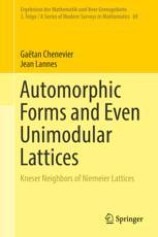
Automorphic forms and even unimodular lattices : Kneser neighbors of niemeier lattices
This book includes a self-contained approach of the general theory of quadratic forms and integral Euclidean lattices.It explains how the new advances in the Langlands program mentioned above pave the way for a solution. This study proves to be very rich, leading us to classical themes such as theta series, Siegel modular forms, the triality principle, L-functions and congruences between Galois representations.

Asset allocation and private markets : A guide to investing with private equity, private debt, and private real assets
Asset Allocation and Private Markets provides institutional investors, such as pension funds, insurance groups and family offices, with a single-volume authoritative resource on including private markets in strategic asset allocation. The discussion focuses on private equity, private debt and private real assets, and their correlation with other asset classes to establish optimized investment portfolios.

As Pastoralists settle : Social, health, and economic consequences of the pastoral Sedentarization in Marsabit District, Kenya
Formerly nomadic livestock-keeping pastoralists have settled in many regions of the world in the past century. Some groups, including those in the former Soviet Union, Iran, and Israel, have settled in response to state-enforced measures; others including Saami in Norway or Bedouins in Saudi Arabia, in response to changing economic opportunities. East Africa, home to many cattle- and camel-keeping pastoral societies, has been among the most recent to change. The shift to sedentism by East African pastoralists increased d- matically in the late 20th century as a result of sharp economic, political, demographic, and environmental changes.
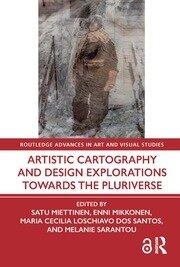
Artistic cartography and design explorations towards the pluriverse
Explores the pluriverse of art and design through epistemological and methodological considerations. What kinds of sustainable ways are there for knowledge transfer, supporting plural agendas, finding novel ways for unsettling conversations, unlearning and learning and challenging power structures with marginalised groups and contexts through art and design? The main themes of the book are art and design methods, epistemologies and practices that provide critical, interdisciplinary, pluriversal and decolonial considerations. The book challenges the domination of the white logic of art and design and shifts away from the Anglo-European one-world system towards the pluriverse.
Artinian Modules over Group Rings
This book highlights important developments on artinian modules over group rings of generalized nilpotent groups. Along with traditional topics such as direct decompositions of artinian modules, criteria of complementability for some important modules, and criteria of semisimplicity of artinian modules, it also focuses on recent advanced results on these matters.

Artificial general intelligence
This book focused on engineering general intelligence – autonomous, self-reflective, self-improving, commonsensical intelligence.Each author explains a specific aspect of AGI in detail in each chapter, while also investigating the common themes in the work of diverse groups, and posing the big, open questions in this vital area.

Arithmetical investigations : Representation theory, orthogonal polynomials, and quantum interpolations
In this volume the author further develops his philosophy of quantum interpolation between the real numbers and the p-adic numbers. The p-adic numbers contain the p-adic integers Zp which are the inverse limit of the finite rings Z/pn. This gives rise to a tree, and probability measures w on Zp correspond to Markov chains on this tree. From the tree structure one obtains special basis for the Hilbert space L2(Zp,w). The real analogue of the p-adic integers is the interval [-1,1], and a probability measure w on it gives rise to a special basis for L2([-1,1],w) - the orthogonal polynomials, and to a Markov chain on "finite approximations" of [-1,1]. For special (gamma and beta) measures there is a "quantum" or "q-analogue" Markov chain, and a special basis, that within certain limits yield the real and the p-adic theories. This idea can be generalized variously. In representation theory, it is the quantum general linear group GLn(q)that interpolates between the p-adic group GLn(Zp), and between its real (and complex) analogue -the orthogonal On (and unitary Un )groups. There is a similar quantum interpolation between the real and p-adic Fourier transform and between the real and p-adic (local unramified part of) Tate thesis, and Weil explicit sums.
Applied algebra, algebraic algorithms and error-correcting codes ; 16th International Symposium, AAECC-16, Las Vegas, NV, USA, February 20-24, 2006, Proceedings
This book constitutes the refereed proceedings of the 16th International Symposium on Applied Algebra, Algebraic Algorithms and Error-Correcting Codes, AAECC-16, held in Las Vegas, NV, USA in February 2006. The 25 revised full papers presented together with 7 invited papers were carefully reviewed and selected from 32 submissions. Among the subjects addressed are block codes; algebra and codes: rings, fields, and AG codes; cryptography; sequences; decoding algorithms; and algebra: constructions in algebra, Galois groups, differential algebra, and polynomials.

Antidepressants Beyond Depression, and Into Bacteria
Antidepressants are one of the most predominant drug groups in the pharmaceutical world, primary care units and the general public. Their original use was majorly for the treatment of depression along with other mental disorders. Today, antidepressant consume over 20% of the medical prescriptions and healthcare plans due to their recently discovered applications outside the psychiatry field. Due to the alarming rise of antibiotic resistance and the slow pace of new drug discovery, the world has been searching frantically for new or alternative drugs with antibacterial activity. Repurposing already FDA- approved drugs for uses that are off-label has become an important preposition in the pharmacy world due to its availability, low risk and low cost.

Anesthesia Considerations for the Oral and Maxillofacial Surgeon
Strengthens the margin of safety of office-based anesthesia administration by helping practitioners determine whether the patients they treat are good candidates for office-based anesthesia. This book is organized into three sections. The first section provides a review of the principles of anesthesia, including the pharmacology of anesthetic agents, local anesthesia, patient monitoring, preoperative evaluation, the airway, and management of emergencies and complications. The major organ systems of the body are reviewed in section two, and the most common comorbid conditions that affect these systems are described in terms of their pathophysiology, diagnosis, management, and anesthesia-related considerations. Section three reviews patient groups that warrant special consideration in the administration of office-based anesthesia, such as geriatric, pediatric, pregnant, and obese patients. Spiral-bound and featuring tabs for quick and easy reference, this important book belongs on the shelf of every clinician who provides anesthesia in the office setting.
Analysis and Modelling of Faces and Gestures ; 2nd International workshop, AMFG 2005, Beijing, China, October 16, 2005, Proceedings
During the last 30 years, face recognition and related problems such as face detection/tracking and facial expression recognition have attracted researchers from both the engineering and psychology communities. In addition, extensive research has been carried out to study hand and body gestures. The understanding of how humans perceive these important cues has significant scientific value and extensive applications. this one-day workshop (AMFG 2005) provided a focused international forum to bring together well-known researchers and research groups to review the status of recognition, analysis and modeling of faces and gestures, to discuss the challenges that we are facing, and to explore future directions. Overall, 30 papers were selected from 90 submitted manuscripts. The topics of these papers range from feature representation, robust recognition, learning, and 3D modeling to psychology.
An Introduction to the Heisenberg Group and the Sub-Riemannian Isoperimetric Problem
This book provides an introduction to the basics of sub-Riemannian differential geometry and geometric analysis in the Heisenberg group, focusing primarily on the current state of knowledge regarding Pierre Pansu's celebrated 1982 conjecture regarding the sub-Riemannian isoperimetric profile.

An Introduction to Quantum and Vassiliev Knot Invariants
Provides an accessible introduction to knot theory, focussing on Vassiliev invariants, quantum knot invariants constructed via representations of quantum groups, and how these two apparently distinct theories come together through the Kontsevich invariant. Consisting of four parts, the book opens with an introduction to the fundamentals of knot theory, and to knot invariants such as the Jones polynomial. The second part introduces quantum invariants of knots, working constructively from first principles towards the construction of Reshetikhin-Turaev invariants and a description of how these arise through Drinfeld and Jimbo's quantum groups. Its third part offers an introduction to Vassiliev invariants, providing a careful account of how chord diagrams and Jacobi diagrams arise in the theory, and the role that Lie algebras play. The final part of the book introduces the Konstevich invariant. This is a universal quantum invariant and a universal Vassiliev invariant, and brings together these two seemingly different families of knot invariants. The book provides a detailed account of the construction of the Jones polynomial via the quantum groups attached to sl(2), the Vassiliev weight system arising from sl(2), and how these invariants come together through the Kontsevich invariant.

An Introduction to Infinite-Dimensional Analysis
In this revised and extended version of his course notes from a 1-year course at Scuola Normale Superiore, Pisa, the author provides an introduction – for an audience knowing basic functional analysis and measure theory but not necessarily probability theory – to analysis in a separable Hilbert space of infinite dimension.Starting from the definition of Gaussian measures in Hilbert spaces, concepts such as the Cameron-Martin formula, Brownian motion and Wiener integral are introduced in a simple way. These concepts are then used to illustrate some basic stochastic dynamical systems (including dissipative nonlinearities) and Markov semi-groups, paying special attention to their long-time behavior: ergodicity, invariant measure. Here fundamental results like the theorems of Prokhorov, Von Neumann, Krylov-Bogoliubov and Khas'minski are proved. The last chapter is devoted to gradient systems and their asymptotic behavior.
Algorithmic number theory ; 7th International Symposium, ANTS-VII, Berlin, Germany, July 23-28, 2006, Proceedings
This book constitutes the refereed proceedings of the 7th International Algorithmic Number Theory Symposium, ANTS 2006, held in Berlin, July 2006. The book presents 37 revised full papers together with 4 invited papers selected for inclusion. The papers are organized in topical sections on algebraic number theory, analytic and elementary number theory, lattices, curves and varieties over fields of characteristic zero, curves over finite fields and applications, and discrete logarithms.
Algèbre, Chapitre 9 = Algebra, Chapter 9
Sesquilinear and quadratic forms : The Mathematics Elements of Nicolas BOURBAKI aim to provide a rigorous, systematic presentation without prerequisites of mathematics from their foundations. This ninth chapter of the Book of Algebra, the second Book of the treatise, is devoted to quadratic, symplectic or Hermitian forms and to associated groups.
Algèbre, Chapitre 4 à 7 = Algebra, Chapter 4 to 7
The Mathematics Elements of Nicolas BOURBAKI aim to provide a rigorous, systematic presentation without prerequisites of mathematics from their foundations. Deals in particular with extensions of fields and Galois theory. It includes the chaptires: 4. Polynomials and rational fractions; 5. Commutative bodies 6. Orderly groups and bodies; 7. Modules on the main rings

Algebras, Rings and Modules ; Vol.2
This book provides both the classical aspects of the theory of groups and their representations as well as a general introduction to the modern theory of representations including the representations of quivers and finite partially ordered sets and their applications to finite dimensional algebras.
Algebraic Groups and Lie Groups with Few Factors
Algebraic groups are treated in this volume from a group theoretical point of view and the obtained results are compared with the analogous issues in the theory of Lie groups. The main body of the text is devoted to a classification of algebraic groups and Lie groups having only few subgroups or few factor groups of different type. In particular, the diversity of the nature of algebraic groups over fields of positive characteristic and over fields of characteristic zero is emphasized. This is revealed by the plethora of three-dimensional unipotent algebraic groups over a perfect field of positive characteristic, as well as, by many concrete examples which cover an area systematically. In the final section, algebraic groups and Lie groups having many closed normal subgroups are determined.
