



الصفحة 12
الصفحة 12
Climate Smart Agriculture : Building Resilience to Climate Change
"The book uses an economic lens to identify the main features of climate-smart agriculture (CSA), its likely impact, and the challenges associated with its implementation. This book offers tools and insights for a range of stakeholders to help meet these challenges in the many forms they are manifested."
Climate prediction and agriculture : Advances and challenges
Improved adaptation of food production, particularly in areas where climate variability is large, holds the key to improving food security for human populations. Increasing climate knowledge and improved prediction capabilities facilitate the development of relevant climate information and prediction products for applications in agriculture to reduce the negative impacts due to climate variations and to enhance planning activities based on the developing capacity of climate science. This book, based on an International Workshop held in Geneva in 2005, reviews the advances made so far in seasonal climate predictions and their applications for management and decision-making in agriculture and identifies the challenges to be addressed in the next 5 to 10 years to further enhance operational applications of climate predictions in agriculture, especially in the developing countries.
Climate and Land Degradation
In many parts of the world, climatic variations are recognized as one of the major factors contributing to land degradation impacting on agricultural systems performance and management. To accurately assess sustainable land management practices, the climate resources and the risk of climate-related or induced natural disasters in a region must be known. Only when climate resources are paired with management or development practices can the land degradation potential be assessed and appropriate mitigation technologies be developed. This book is based on an International Workshop held in Arusha, Tanzania and should be of interest to all organizations and agencies interested in sustainable land management to arrest land degradation.

Class 2 Transferases I : EC 2.1.1
This new, second edition reflects considerable progress in enzymology: many enzymes are newly classified or reclassified. Each entry is correlated with references and one or more source organisms. New datafields are created: application and engineering (for the properties of enzymes where the sequence has been changed). The total amount of material contained in the Handbook has more than doubled so that the complete second edition consists of 39 volumes as well as a Synonym Index. In addition, starting in 2009, all newly classified enzymes are treated in Supplement Volumes. Springer Handbook of Enzymes is an ideal source of information for researchers in biochemistry, biotechnology, organic and analytical chemistry, and food sciences, as well as for medicinal applications

Class 1 Oxidoreductases XI : EC 1.14.11 - 1.14.14
This new, second edition reflects considerable progress in enzymology: many enzymes are newly classified or reclassified. Each entry is correlated with references and one or more source organisms. New datafields are created: application and engineering (for the properties of enzymes where the sequence has been changed). The total amount of material contained in the Handbook has more than doubled so that the complete second edition consists of 39 volumes as well as a Synonym Index. In addition, starting in 2009, all newly classified enzymes are treated in Supplement Volumes. Springer Handbook of Enzymes is an ideal source of information for researchers in biochemistry, biotechnology, organic and analytical chemistry, and food sciences, as well as for medicinal applications.

Class 1 Oxidoreductases X : EC 1.9 - 1.13
This new, second edition reflects considerable progress in enzymology: many enzymes are newly classified or reclassified. Each entry is correlated with references and one or more source organisms. New datafields are created: application and engineering (for the properties of enzymes where the sequence has been changed). The total amount of material contained in the Handbook has more than doubled so that the complete second edition consists of 39 volumes as well as a Synonym Index. In addition, starting in 2009, all newly classified enzymes are treated in Supplement Volumes. Springer Handbook of Enzymes is an ideal source of information for researchers in biochemistry, biotechnology, organic and analytical chemistry, and food sciences, as well as for medicinal applications.

Class 1 Oxidoreductases VIII : EC 1.5
Springer Handbook of Enzymes provides data on enzymes sufficiently well characterized. It offers concise and complete descriptions of some 5,000 enzymes and their application areas. Data sheets are arranged in their EC-Number sequence and the volumes themselves are arranged according to enzyme classes. This new, second edition reflects considerable progress in enzymology: many enzymes are newly classified or reclassified. Each entry is correlated with references and one or more source organisms. New datafields are created: application and engineering (for the properties of enzymes where the sequence has been changed). Springer Handbook of Enzymes is an ideal source of information for researchers in biochemistry, biotechnology, organic and analytical chemistry, and food sciences, as well as for medicinal applications.

Class 1 Oxidoreductases VII : EC 1.4
Springer Handbook of Enzymes provides data on enzymes sufficiently well characterized. It offers concise and complete descriptions of some 5,000 enzymes and their application areas. Data sheets are arranged in their EC-Number sequence and the volumes themselves are arranged according to enzyme classes. This new, second edition reflects considerable progress in enzymology: many enzymes are newly classified or reclassified. Each entry is correlated with references and one or more source organisms. New datafields are created: application and engineering (for the properties of enzymes where the sequence has been changed). Springer Handbook of Enzymes is an ideal source of information for researchers in biochemistry, biotechnology, organic and analytical chemistry, and food sciences, as well as for medicinal applications.

Class 1 Oxidoreductases IX : EC 1.6 - 1.8
Springer Handbook of Enzymes provides data on enzymes sufficiently well characterized. It offers concise and complete descriptions of some 5,000 enzymes and their application areas. Data sheets are arranged in their EC-Number sequence and the volumes themselves are arranged according to enzyme classes. This new, second edition reflects considerable progress in enzymology: many enzymes are newly classified or reclassified. Each entry is correlated with references and one or more source organisms. New datafields are created: application and engineering (for the properties of enzymes where the sequence has been changed). Springer Handbook of Enzymes is an ideal source of information for researchers in biochemistry, biotechnology, organic and analytical chemistry, and food sciences, as well as for medicinal applications.
Chitosan : properties and applications in bioengineering
Presents a review of chitosan, including information regarding its structure, main properties, available sources, extraction, and processing techniques. It presents the different applications of chitosan as a biomaterial in fields such as medicine and the agricultural, cosmetology, pharmaceutical, and food industries to have readers obtain a more technical vision of the current use of this biopolymer.

Chia seeds : Tiny superfood, big impact
Chia (Salvia hispanica) is an annual herbaceous plant, the seeds of which were consumed already thousands of years ago. Current research results indicate a high nutritive value for chia seeds and confirm their extensive health-promoting properties. Research indicates that components of chia seeds are ascribed a beneficial effect on the improvement of the blood lipid profile, through their hypotensive, hypoglycemic, antimicrobial and immunostimulatory effects. This article provides a review of the most important information concerning the potential application of chia seeds in food production. The chemical composition of chia seeds is presented and the effect of their consumption on human health is discussed.
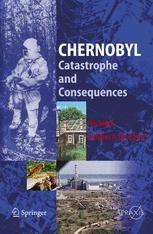
Chernobyl: Catastrophe and Consequences
The long-term effects of the Chernobyl incident on the environment are still becoming apparent, twenty years after the event. This book, written by two researchers with frontline experience in this field, provides a detailed review of these over a wide range of ecosystems. It also discusses the responses and countermeasures utilised to combat the effects of the accident, as well as considering the health, social, psychological and economic impacts on the human population. Chernobyl - Catastrophe and Consequences / provides a comprehensive assessment of the Chernobyl accident and its long-term consequences draws on the most recent measurements of contamination in the terrestrial and aquatic food chains / discusses the sociological consequences of such disasters in detail / This book adds valuable weight to the debate about the environmental cost of nuclear power and the issue of nuclear safety.

Chemistry for pharmacy students : General, organic and natural product chemistry ; 2nd ed.
Opens with an overview of the general aspects of chemistry and their importance to modern life, with emphasis on medicinal applications. The text then moves on to discuss the concepts of atomic structure and bonding and the fundamentals of stereochemistry and their significance to pharmacy in relation to drug action and toxicity. Various aspects of organic functional groups, organic reactions, heterocyclic chemistry, nucleic acids and their pharmaceutical importance are then covered in subsequent chapters, with the final chapter dealing with drug discovery and development, and natural product chemistry. Provides a student-friendly introduction to the main areas of chemistry required by pharmacy degree courses. Written at a level suitable for non-chemistry students in pharmacy, but also relevant to those in life sciences, food science, and the health sciences Includes learning objectives at the beginning of each chapter Focuses on the physical properties and actions of drug molecules
Chemistry and Safety of Acrylamide in Food
Specifically covered are the following aspects: exposure from the environment and the diet; biomarkers of exposure; risk assessment; epidemiology; mechanism of formation in food; biological alkylation of amino acids, peptides, proteins, and DNA by acrylamide and its epoxide metabolite glycidamide; neurotoxicity, reproductive toxicity, and carcinogenicity; protection against adverse effects; and possible approaches to reducing levels in food. Cross-fertilization of ideas among several disciplines in which an interest in acrylamide has developed, including food science, pharmacology, toxicology, and medicine, will provide a better understanding of the chemistry and biology of acrylamide in food, and can lead to the development of food processes to decrease the acrylamide content of the diet.

Chemical components in some winter vegetables and their effectiveness in treating diseases
Cruciferous (Brassicaceae) vegetables comprise many important species cultivated worldwide and utilized traditionally for culinary and medicinal purposes in different cultures. In the last couple of decades, growing scientific evidence has suggested that consumption of cruciferous vegetables has a preventive role against a variety of human diseases. This prompted the development of nutritional ingredients derived from these vegetables and their use as dietary supplements in different formulations that contain complete plant extracts or specific compounds...
Chemical and functional properties of food components
Described the contents of food raw materials and products, the chemistry/biochemistry of food components, as well as the changes occurring during post-harvest storage and processing affecting the quality of foods. Discusses the role of chemical compounds in the structure of raw materials and the formation of different attributes of food quality, including nutritional value, safety, and sensory properties. It contains four new chapters: “Non-Protein Nitrogenous Compounds”; “Prooxidants and Antioxidants in Food”; “Non-Nutritive Bioactive Compounds in Food of Plant Origin”; and “Analytical Methods Used for Assessing the Quality of Food Products.”

Chemical residues in food from animal produce
One Health' is an approach to designing and implementing programmers, policies, legislation and research in which multiple sectors communicate and work together to achieve better public health outcomes . The areas of work in which a One Health approach is particularly relevant include food safety, the control of zoo noses (diseases that can spread between animals and humans, such as flu, rabies and Rift Valley Fever), and combating antibiotic resistance (when bacteria change after being exposed to antibiotics and become more difficult to.
Characteristic based planning with mySAP SCM™ : Scenarios, processes, and functions
Characteristics are used in SAP as attributes, e.g. to specify the configuration of products or the properties of batches. In many industries – engineering, automotive, mill, pharmaceutical and foods to name the most typical – supply chain planning has to consider these characteristics. APO offers many different functionalities for planning with characteristics, where each of the functionalities has some prerequisites and incompatibilities. This book offers help and advice for the basic design of the implementation by explaining the processes and scenarios (process chains) for planning with characteristics, the functionalities for planning with characteristics in APO including their prerequisites and incompatibilities and the entities, dependencies and system configuration determinants for planning with characteristics in R/3 and APO. This book is based on the releases R/3 4.7 and mySAP SCM 4.1.

Celiac disease
Celiac Disease is a chronic small intestinal immune-mediated enteropathy caused by the ingestion of dietary gluten proteins in genetically susceptible individuals. CD is one of the most common autoimmune diseases, affecting around 1.4% of the population globally . Celiac disease remains a challenging condition because of a steady increase in knowledge tackling its pathophysiology, diagnosis, management, and possible therapeutic options. Finding alternative diet and trying different lifestyle still under debates. However, complete exclusion of the gluten-containing food from the patient's diet is the only effective treatment to avoid the disease complications
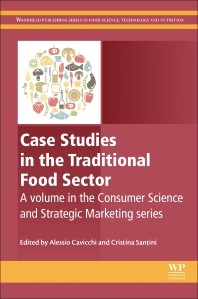
Case studies in the traditional food sector : A volume in the consumer science and strategic marketing series
The book explores how consumer and sensory science has been implemented in the food industry for achieving the following strategic aims: Rejuvenating product image, Shaping new market places, Achieving market differentiation and geographical diffusion, Achieving customer loyalty, Promoting traditional features of the product and defining product positioning in competitive environment. This book aims to answer the following questions, amongst others: How research in the field of consumer science became relevant for marketing strategies?, Which tangible economic and financial outcomes have been obtained by the joint work of sensory scientists, Researchers in marketing field and food business professionals?, And which communication methods and practices have been relevant to make the most of R&D in the food industry?
