



الصفحة 12
الصفحة 12

Mathematical Control Theory and Finance
This book highlights recent developments in mathematical control theory and its applications to finance. It presents a collection of original contributions by distinguished scholars, addressing a large spectrum of problems and techniques. Control theory provides a large set of theoretical and computational tools with applications in a wide range of fields, ranging from "pure" areas of mathematics up to applied sciences like finance. Stochastic optimal control is a well established and important tool of mathematical finance. Other branches of control theory have found comparatively less applications to financial problems, but the exchange of ideas and methods has intensified in recent years. This volume should contribute to establish bridges between these separate fields. The diversity of topics covered as well as the large array of techniques and ideas brought in to obtain the results make this volume a valuable resource for advanced students and researchers.
Mathematical and Statistical Methods in Insurance and Finance
The interaction between mathematicians and statisticians reveals to be an effective approach to the analysis of insurance and financial problems, in particular in an operative perspective. The Maf2006 conference, held at the University of Salerno in 2006, had precisely this purpose and the collection here published gathers some of the papers presented at the conference and successively worked out to this aim. They cover a wide variety of subjects in insurance and financial fields, all treated in light of the successful cooperation between the two quantitative methods.
Mathematical and Computational Models for Congestion Charging
This book presents rigorous treatments of issues related to congestion pricing. The chapters describe recent advances in areas such as mathematical and computational models for predicting traffic congestion, determining when, where, and how much to levy tolls, and analyzing the impact of tolls on transporation systems. The analyses and methodologies developed in this book provide Mechanisms that aid in determining and comparing congestion pricing schemes; Methodologies for evaluating the efficiency of existing and proposed congestion pricing schemes; A means to predict the impact of pricing on urban transporation systems; and Information essential to the financial and political success of congestion pricing programs.

Math for business and economics : Compedium of essential formulas
This mathematical formulary is presented in a practice-oriented, clear, and understandable manner, as it is needed for meaningful and relevant application in global business, as well as in the academic setting and economic practice. The topics presented include but are not limited to mathematical signs and symbols, logic, arithmetic, algebra, linear algebra, combinatorics, and financial mathematics, including an international comparison between different national methods used in the calculation of interest, optimization of linear models, functions, differential calculus, integral calculus, elasticities, annuity calculation, economic functions, and the Peren Theorem.

Martingales and financial mathematics in discrete time
This book is entirely devoted to discrete time and provides a detailed introduction to the construction of the rigorous mathematical tools required for the evaluation of options in financial markets. Both theoretical and practical aspects are explored through multiple examples and exercises, for which complete solutions are provided. Particular attention is paid to the Cox, Ross and Rubinstein model in discrete time.

Martingale Methods in Financial Modelling
This book provides a comprehensive, self-contained and up-to-date treatment of the main topics in the theory of option pricing. The first part of the text starts with discrete-time models of financial markets, including the Cox-Ross-Rubinstein binomial model. The passage from discrete- to continuous-time models, done in the Black-Scholes model setting, assumes familiarity with basic ideas and results from stochastic calculus. However, an Appendix containing all the necessary results is included. This model setting is later generalized to cover standard and exotic options involving several assets and/or currencies. An outline of the general theory of arbitrage pricing is presented. The second part of the text is devoted to the term structure modelling and the pricing of interest-rate derivatives. The main emphasis is on models that can be made consistent with market pricing practice.
Market-Consistent Actuarial Valuation
It is a challenging task to read the balance sheet of an insurance company. This derives from the fact that different positions are often measured by different yardsticks. Assets, for example, are mostly valued at market prices whereas liabilities are often measured by established actuarial methods. Market-Consistent Actuarial Valuation presents powerful methods to measure liabilities and assets in the same way. The mathematical framework that leads to market-consistent values for insurance liabilities is explained in detail by the authors. Topics covered are Stochastic discounting, Valuation portfolio in life and non-life insurance, Asset and liability management, Financial risks, Insurance technical risks, and Solvency.
Market-Conform Valuation of Options
we will investigate the 'market-conform' pricing of newly issued contingent claims. A contingent claim is a derivative whose value at any settlement date is determined by the value of one or more other underlying assets, e. g. , forwards, futures, plain-vanilla or exotic options with European or American-style exercise features. Market-conform pricing means that prices of existing actively traded securities are taken as given, and then the set of equivalent martingale measures that are consistent with the initial prices of the traded securities is derived using no-arbitrage arguments.
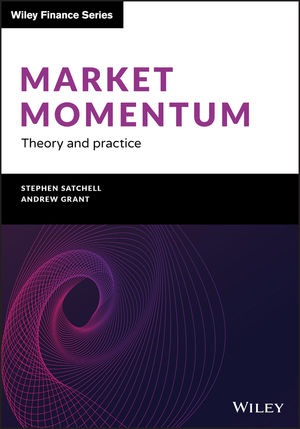
Market Momentum : Theory and Practice
Market Momentum: It examines the behavioral and statistical causes of market momentum while also exploring the practical side of implementing related strategies. The phenomenon of momentum in finance occurs when past high returns are followed by subsequent high returns, and past low returns are followed by subsequent low returns. Market Momentum provides a detailed introduction to the financial topic, while examining existing literature.

Managing public services : Making informed choices
Chapters provide a valuable frame of reference for the 21st-century manager of public services by assessing the renewal of existing practices such as strategic costing, performance management, digitization and procurement and innovations in management practices, including branding, Lean Management, resilience and risk management. The book suggests that, as the management of public services is imbued with financial, social, economic and political uncertainties, management needs to be flexible and responsive to new ideas and practices to fulfil its purpose. This book ultimately supports the reflective manager, those who think about their job and are open to new ideas on how their job can be done better, by revisiting existing practices and examining innovations in public management.

Managing Elevated Risk : Global Liquidity, Capital Flows, and Macroprudential Policy—An Asian Perspective
Discusses the risks and opportunities that arise in Emerging Asia given the context of a new environment in global liquidity and capital flows. It elaborates on the need to ensure financial and overall economic stability in the region through improved financial regulation and other policy measures to minimize the emergent risks. "Managing Elevated Risk: Global Liquidity, Capital Flows, and Macroprudential Policy—An Asian Perspective" also explores the range of policy options that may be deployed to address the impact of global liquidity on domestic financial and socio-economic conditions including income inequality. The book is primarily aimed at policy makers, financial market regulators and supervisory agencies to help them improve national regulatory systems and to promote harmonization of national regulations and practices in line with global standards.

Managing Business Projects : The Essentials
Strong emphasis is placed on things that happen before, around, and after the project itself. So, while the basic disciplines like engaging with stakeholders, managing scope, schedules, costs, risks, issues, changes, and communication, are thoroughly explained, other important aspects are covered. These include: governance of a project and of a portfolio of projects, project selection with its financial and non-financial aspects, effective use of the business case through to benefits realization, procurement, outsourcing and partnership, and also the agile mindset that is valuable beyond Agile projects.
Manage IT! : Organizing IT Demand and IT Supply
Discusses the IT management tasks and the objects involved. This book outlines traditional IT management; deals with controlling IT; and, tackles the financial, personnel, purchasing, legal and security aspects in IT. It explains the effects of striving for 'utility computing' and control of IT by means of 'IT portfolio management'.

Macroeconomic Risk Management Against Natural Disasters : Analysis focussed on governments in developing countries
Natural disasters cause considerable economic damage. While developed countries usually are able to cope with the impacts of natural hazards, developing countries are faced with severe consequences for their resources. In order to prevent long-term macroeconomic repercussions, governments need a comprehensive disaster risk management strategy.Budgetary resources are allocated to pre-disaster risk management strategies to reduce the probability of financing gaps. The framework and model approach allows cross country comparisons as well as the assessment of financial vulnerability, macroeconomic risk, and risk management strategies.
Macroeconomic analysis for economic growth
Discusses the essential principles that guide macroeconomic policy formulation and implementation to stimulate strong economic growth for sustainable development, especially for emerging economies. it includes twelve chapters over three sections: "macroeconomics of economic growth", "labour market and employment", and "the financial system and macroeconomic performance". key conclusions illustrate that the efficacy of regulatory frameworks to create enabling conditions for nurturing and bolstering robust value-adding production structures anchored on appropriate macroeconomic management are the fundamental building blocks of strong economic growth.

Machine learning for risk calculations : A practitioner's view
Fundamental Approximation Methods. Machine Learning -- Deep Neural Nets -- Chebyshev Tensors -- The toolkit - plugging in approximation methods. Introduction: why is a toolkit needed -- Composition techniques -- Tensors in TT format and Tensor Extension Algorithms -- Sliding Technique -- The Jacobian projection technique -- Hybrid solutions - approximation methods and the toolkit.
Long Memory in Economics
When applying the statistical theory of long range dependent (LRD) processes to economics, the strong complexity of macroeconomic and financial variables, compared to standard LRD processes, becomes apparent. In order to get a better understanding of the behaviour of some economic variables, the book assembles three different strands of long memory analysis: statistical literature on the properties of, and tests for, LRD processes; mathematical literature on the stochastic processes involved; models from economic theory providing plausible micro foundations for the occurence of long memory in economics. Each chapter of the book will give a comprehensive survey of the state of the art and the directions that future developments are likely to take. Taken as a whole the book provides an overview of LRD processes which is accessible to economists, econometricians and statisticians.

Logistics Systems Analysis
It has two new sections, a new appendix, and more than half a dozen new figures. A few references have also been added, Much of the new material is based on work , The financial support of the National Science Foundation and the Volvo Foundations Center of Excellence for the Future of Urban Transportation at U. C. Berkeley is also acknowledged. The new appendix presents the logic behind the traveling salesman and vehicle routing results used in Sec. 4. 2 to describe the transportation ope- tion; Chapter 4 is more self-contained as a result. New section 5. 6 int- duces and evaluates a general method that automatically translates the c- tinuum approximation recipes of Chapters 4 and 5 into discrete system designs. This closes a gap in previous editions. Other additions include an explanation of how to develop system designs that can efficiently acc- modate real-time control strategies to manage uncertainty (new section 4. 6. 3), and extensions of the many-to-many design ideas of Chap. 6
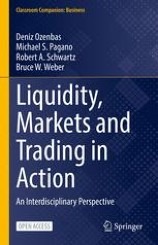
Liquidity, markets and trading in action : An interdisciplinary perspective
This book addresses four standard business school subjects: microeconomics, macroeconomics, finance and information systems as they relate to trading, liquidity, and market structure. It provides a detailed examination of the impact of trading costs and other impediments of trading that the authors call “frictions”. It also presents an interactive simulation model of equity market trading, TraderEx, that enables students to implement trading decisions in different market scenarios and structures. Addressing these topics shines a bright light on how a real-world financial market operates, and the simulation provides students with an experiential learning opportunity that is informative and fun.

Life Cycle Investing and Occupational Old-Age Provision in Switzerland
Florian Zainhofer uses the theory of life cycle investing, i.e. how we should optimally choose our savings rate and risky asset share throughout our lives, as a framework to study the implications of a potential BVG individualization. Following an introduction on the Swiss system of old-age provision, the author reviews recent life cycle models of portfolio choice and covers their numerical solution algorithms in depth. He presents an empirical analysis of Swiss workers’ earnings dynamics since these are important determinants of life cycle investment behavior. To further investigate the implications of a flexible contribution rate and risky asset share in the mandatory BVG, the author proposes a model adapted to Swiss conditions and parameterized with the estimated earnings dynamics.
