



الصفحة 12
الصفحة 12

Eco-design of buildings and infrastructure : developments in the period 2016–2020
Reviews the second five-year sequence of the Chair, first presenting methodological advances in eco-design: life cycle assessment and quantification of uncertainties; local environmental impacts of transport and biodiversity. The interdisciplinary partnership, also associating the human sciences, shows its interest in taking into account the human factor in the modelling of urban systems. This modelling is based on several numerical simulation tools, presented in the third part.

Earthquake disaster simulation of civil infrastructures : From tall buildings to urban areas
Covers a range of numerical modeling approaches, higher performance computation methods, and high fidelity visualization techniques for earthquake disaster simulation of tall buildings and urban areas. It also demonstrates successful engineering applications of the proposed methodologies to typical landmark projects (e.g., Shanghai Tower and CITIC Tower, two of the world's tallest buildings; Beijing CBD and San Francisco Bay Area).
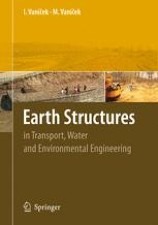
Earth Structures : In Transport, Water and Environmental Engineering
This book describes the principles of working with soil as a construction material, including two basic ways of treating it: geosynthetics and stabilization. The book discusses the design logic and ways to control Earth Structures, which differ significantly from other construction materials. Building with Earth involves greater uncertainty and risk, which means that there is a need for better design detailing and improvement in the quality of financial calculations. The general part of the book gives a detailed description of the principles of limit states according to Eurocode 7, after which geotechnical design is also described. Subsequent chapters concentrate on earth structures for transport, water, and environmental projects. The chapter on Earth Structures in transport engineering presents detailed coverage of limit states of stability and deformation. Earth Structures in water engineering prioritizes the limit state of internal erosion. Earth Structures in environmental engineering describes new designs, in which part of the structure is created from non-standard materials which are usually susceptible to internal collapse, double porosity, unsaturation, etc. It also focuses on protecting the surrounding environment from contamination.

Earth reinforcement and soil structures
Provides a comprehensive explanation and illustration of earth reinforcement and soil structures, from the viewpoint of practising engineers involved in design and construction. This edition has been updated to reflect the latest changes in theory, materials and practice.

Early Public Libraries and Colonial Citizenship in the British Southern Hemisphere
This Pivot book is a comparative study of six early colonial public libraries in nineteenth-century Australia, South Africa, and Southeast Asia. Drawing on networked conceptualisations of empire, transnational frameworks, and ‘new imperial history’ paradigms that privilege imbricated colonial and metropolitan ‘intercultures’, it looks at the neglected role of public libraries in shaping a programme of Anglophone civic education, scientific knowledge creation, and modernisation in the British southern hemisphere. The book’s six chapters analyse institutional models and precedents, reading publics and types, book holdings and catalogues, and regional scientific networks in order to demonstrate the significance of these libraries for the construction of colonial identity, citizenship, and national self-government as well as charting their influence in shaping perceptions of social class, gender, and race. Using primary source material from the recently completed ‘Book Catalogues of the Colonial Southern Hemisphere’ digital archive, the book argues that public libraries played a formative role in colonial public discourse, contributing to broader debates on imperial citizenship and nation-statehood across different geographic, cultural, and linguistic borders.

Dynamics of soils and their engineering applications
Offers systematic dynamic analysis of soils and their engineering applications, including machine foundations, and aims to develop a clear understanding of the subject. It comprises sixteen chapters. Chapter 1 introduces the reader to the various problems in soil dynamics. In Chapter 2, concepts of theory of vibrations are discussed along with their applications in designing Vibration Absorbers and Pickups. Wave propagation in elastic medium including wave refraction in layered medium is covered in Chapter 3. Chapter 4 deals with the procedure of determining dynamic properties of soils using various laboratory and field tests. Dynamic earth pressures in retaining walls and dynamic bearing capacity of footings are dealt with in Chapters 5 and 6 respectively

Dynamics of Railway Bridges
Provides a comprehensive survey of the dynamic stresses in railway bridges under moving vehicles and summarizes important theoretical and experimental results which has been obtained from various research programs dealing with European railway bridges.

Dynamics of Freezing-Thawing Soil around Subway Shield Tunnels
Addresses development laws for axial strain and excess pore water pressure in silty clay around subway shield tunnels before and after freezing-thawing when subjected to subway loading, as well as the effect of freezing-thawing on the dynamic parameters of silty clay, including the dynamic modulus and damping ratio, introducing readers to the design and construction of bypasses in subway tunnels with the artificial freezing method. On this basis, it then studies the microstructures of silty clay before and after freezing-thawing cyclic loading by means of scanning electron microscope tests and mercury intrusion porosimetry tests. Lastly, the book presents a numerical simulation of the dynamics of silty clay around subway tunnels before and after thawing.

Dynamical Vision ; ICCV 2005 and ECCV 2006 Workshops, WDV 2005 and WDV 2006, Beijing, China, October 21, 2005, Graz, Austria, May 13, 2006, Revised Papers
Classical multiple-view geometry studies the reconstruction of a static scene - served by a rigidly moving camera. However, in many real-world applications the scene may undergo much more complex dynamical changes. For instance, the scene may consist of multiple moving objects (e.g., a trafic scene) or arti- lated motions (e.g., a walking human) or even non-rigid dynamics (e.g., smoke, fire, or a waterfall). In addition, some applications may require interaction with the scene through a dynamical system (e.g., vision-guided robot navigation and coordination). To study the problem of reconstructing dynamical scenes, many new al- braic, geometric, statistical, and computational tools have recently emerged in computer vision, computer graphics, image processing, and vision-based c- trol.

Dynamic Analysis of Structures
Reflects the latest application of structural dynamics theory to produce more optimal and economical structural designs. The author includes carefully worked-out examples which are solved utilizing more recent numerical methods. These examples pave the way to more accurately simulate the behavior of various types of structures. The essential topics covered include principles of structural dynamics applied to particles, rigid and deformable bodies, thus enabling the formulation of equations for the motion of any structure.

Dynamic Analysis of Petri Net-Based Discrete Systems
Design of modern digital hardware systems and of complex software systems is almost always connected with parallelism. For example, execution of an object-oriented p- gram can be considered as parallel functioning of the co-operating objects; all modern operating systems are multitasking, and the software tends to be multithread; many complex calculation tasks are solved in distributed way. But designers of the control systems probably have to face parallelism in more evident and direct way. Controllers rarely deal with just one controlled object. Usually a system of several objects is to be controlled, and then the control algorithm naturally turns to be parallel. So, classical and very deeply investigated model of discrete device, Finite State Machine, is not expressive enough for the design of control devices and systems. Theoretically in most of cases behavior of a controller can be described by an FSM, but usually it is not convenient; such FSM description would be much more complex, than a parallel specification (even as a network of several communicating FSMs).

Durability of reinforced concrete structures
Reinforced concrete structures corrode as they age, with significant financial implications, but it is not immediately clear why some are more durable than others. This book looks at the mechanisms for corrosion and how corrosion engineering can be used for these problems to be minimized in future projects. Several different examples of reinforced concrete structures with corrosion problems are described and the various life enhancement solutions considered and applied are discussed. The book includes a chapter on the effectiveness of corrosion monitoring techniques and questions why the reality is at odds with current theory and standards.

Drying and wetting of building materials and components
Discusses important topics of heat and mass transfer in particulate materials Includes a set of new developments in the science of drying and wetting processes Fosters the encounter of a variety of scientific and engineering disciplines
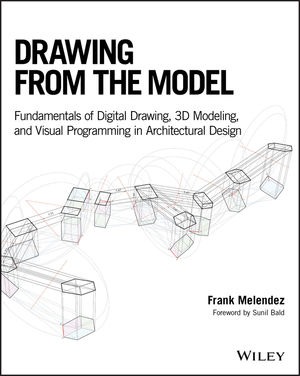
Drawing from the model : Fundamentals of digital drawing, 3D modeling, and visual programming in architectural design
Bridges traditional and contemporary methods of creating architectural design drawings and 3D models through digital tools and computational processes.

Draughtsmen, Botanists and Nature : The Construction of Eighteenth-Century Botanical Illustrations
This book is the first in-depth study of eighteenth-century botanical illustrations, and its findings offer a completely new insight into the working practices of the botanists and scientific draughtsmen of this period. The author describes the different production stages of these illustrations, traces their uses by means of the private correspondence of participants and the documentation of the learned societies and academies, and explores their visual language, with particular emphasis placed on the difficult issue of colour. Finally, and for the first time, the author presents a convincing description of how these botanical illustrations developed.

Doors : History, repair and conservation
Guides you through the function, history, development, care, repair and conservation of doors by chapter authors who are experts in their field. This book offers depth and range of detail from dating and archaeology right through to the surveying, recording, engineering and curation of the door, its furniture and the part of the building into which it is set.

Doormaking : Materials, Techniques, and Projects for Building Your First Door
Starts first by addressing the fundamentals: the basics of good design and proper construction technique, the pros-and-cons of common materials including wood and sheet goods, interior and exterior finishes, hardware and the fine points of hanging doors. Once those key elements are covered, it offers project chapters that walk the reader step-by-step through the construction of eight essential doors, explaining design and material choices in specific contexts, tool options and other considerations. The first four projects are easly accessible to a beginner while the the remaining projects offer up some more challenging details for the intermediate woodworker. Also included are sidebars containing amusing anecdotes and mistake stories each delivering tips as well as details for hanging a door and an inspiring gallery of doors that are sure to inspire.

Domain Decomposition Methods in Science and Engineering XVII
This volume contains a selection of papers presented at the 17th International Conference on Domain Decomposition Methods in Science and Engineering held at St. Wolfgang / Strobl, Austria, July 3 - 7, 2006. Domain decomposition is an active, interdisciplinary research area concerned with the development, analysis, and implementation of coupling and decoupling strategies in mathematical and computational models. Domain decomposition techniques provide efficient tools for treating problems in all Computational Sciences. The reader will become familiar with the newest domain decomposition technologies and their use for modeling and simulating of complex problems from different fields of applications.

Document Analysis Systems VII ; 7th International Workshop, DAS 2006, Nelson, New Zealand, February 13-15, 2006, Proceedings
This book constitutes the refereed proceedings of the 7th International Conference on Document Analysis Systems, DAS 2006, held in Nelson, New Zealand, in February 2006.

Diversity Training for Classroom Teaching : A Manual for Students and Educators
This book encourages readers to generate their own construction of effective multicultural education and learn how to adapt it across various student populations and educational problems. At the same time, learning activities encourage readers to respect and seek to understand the experiences and worldviews of different people and how these diverse realities influence what is meant by multicultural education
