



الصفحة 115
الصفحة 115
Computational and Statistical Approaches to Genomics
Computational and Statistical Approaches to Genomics, 2nd Edition, aims to help researchers deal with current genomic challenges. During the three years after the publication of the first edition of this book, the computational and statistical research in genomics have become increasingly more important and indispensable for understanding cellular behavior under a variety of environmental conditions and for tackling challenging clinical problems. In the first edition, the organizational structure was: data à analysis à synthesis à application. In the second edition, the same structure remains, but the chapters that primarily focused on applications have been deleted.

Computational and Information Science ; 1st International Symposium, CIS 2004, Shanghai, China, December 16-18, 2004, Proceedings
this book present the proceedings of The 2004 International Symposium on Computational and Information Sciences (CIS 2004) aimed at bringing researchers in the area of computational and - formation sciences together to exchange new ideas and to explore new ground. The goal of the conference was to push the application of modern computing technologies to science, engineering, and information technologies to a new level of sophistication and understanding.

Computational and Ambient Intelligence ; 9th International Work-Conference on Artificial Neural Networks, IWANN 2007, San Sebastián, Spain, June 20-22, 2007, Proceedings
This biennial meeting focuses on the foundations, theory, models and applications of systems inspired by nature (neural networks, fuzzy logic and evo- tionary systems).These new computational techniques are used in applications that try to bring a new situation of well-being to the user. The conjunction of a more and more miniaturized hardware together with the growing computational intelligence embodied in this hardware leads us towards fully integrated embedded systems-on- chip and opens the door for truly ubiquitous electronics.

Computation Engineering : Applied Automata Theory and Logic
This book covers automata in depth, providing good intuitions along the way, and culminating with applications that are used every day in the field. In this respect, it is a departure from the conventional textbooks on complexity and computability, although these 'tradtional' aspects remain well represented.

Computable Models of the Law : Languages, Dialogues, Games, Ontologies
This book originate from a workshop held at the European University Institute of Florence, Italy, in December 2006. The workshop was devoted to the discussion of the different ways of understanding and explaining contemporary law, for the purpose of building computable models of it -- especially models enabling the development of computer applications for the legal domain.

COMPSTAT 2008 ; Proceedings in Computational Statistics
Presents methodological developments in Applied/Computational Statistics. This work covers a range of topics including Advances on Statistical Computing Environments, Methods for Classification and Clustering, Computation for Graphical Models and Bayes Nets, Computational Econometrics, and, Computational Statistics and Data Mining.

Compressor Instability with Integral Methods
Compressor Instability with Integral Methods" is a book, to bring together the quick integral approaches and advances in the field for the prediction of stall and surge problem in compressor. This book is useful for people involved in the flow analysis, design and testing of rotating machinery. For students, it can be used as a specialized topic of senior undergraduate or graduate study. The book can also be served as a self-study material to those who keen to acquire this knowledge. In brief, this book focuses on the numerical/computational analysis for the effect of distorted inlet flow propagation on the rotating stall and surge in axial compressors. It gains insight into the basic phenomena controlling these flow instabilities, and reveals the influence of inlet parameters on rotating stall and surge.

Composition of embedded systems : Scientific and industrial issues ; 13th Monterey Workshop 2006 Paris, France, October 16-18, 2006 Revised Selected Papers
This book discussed a range of challenges in embedded systems design that require further major advances in software and systems composition technology. The papers are organized in topical sections on model driven develo.
Composites with micro- and nano-structure : Computational modeling and experiments
The book contains atomistic and continuum numerical methods and experimental validation for composite materials reinforced with particles or fibres, porous materials, homogenization and other important topics for research in this field.
Composites for building assembly : connections, members and structures
Pesents buildings developed using modular assembly approaches based on lightweight and corrosion-resistant fiber reinforced polymer (FRP) composites. Construction methods and the choice of building materials offer great opportunities for more productive and environmentally friendly solutions. This book includes valuable experimental data on large-scale structural components (beams, slabs, amd columns), connections (shear connections, wall stud connections, beam-column connections, column-column connections) and structures (composite floor system, structural sandwich assemblies, and full-scale structural demonstrations), supported with detailed numerical modelling and analytical methods.
Composite Systems Decisions
Composite decisions consist of interconnected parts or subdecisions and correspond to a composite (composable, modular, decomposable) system. Composite Systems Decisions describes an educational approach that is based on systems engineering and considered modular design of composite decisions. Divided into four parts, this book contains descriptions of basic systems approaches and examines basic ‘technological’ problems for composite systems, including: modular hierarchical design; multistage design; multistage planning; redesign/improvement/adaptation; evaluation; and, combinatorial evolution/development.
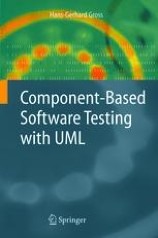
Component-Based Software Testing with UML
Component-based software development regards software construction in terms of conventional engineering disciplines where the assembly of systems from readily-available prefabricated parts is the norm. Because both component-based systems themselves and the stakeholders in component-based development projects are different from traditional software systems, component-based testing also needs to deviate from traditional software testing approaches. Gross first describes the specific challenges related to component-based testing like the lack of internal knowledge of a component or the usage of a component in diverse contexts. He argues that only built-in contract testing, a test organization for component-based applications founded on building test artifacts directly into components, can prevent catastrophic failures like the one that caused the now famous ARIANE 5 crash in 1996. This book is the first comprehensive treatment of the intricacies of testing component-based software systems. With its strong modeling background, it appeals to researchers and graduate students specializing in component-based software engineering. Professionals architecting and developing component-based systems will profit from the UML-based methodology and the implementation hints based on the XUnit and JUnit frameworks.
Component-based software engineering ; Vol. 4063 ; 9th International Symposium, CBSE 2006, Västeras, Sweden, June 29 - July 1, 2006, Proceedings
CBSE is concerned with the development of software-intensive systems from reusable parts (components), the development of reusable parts, and system maintenance and improvement by means of component replacement and customization. CBSE 2006 was the ninth in a series of events that promote a science and technology foundation for achieving predictable quality in software systems through the use of software component technology and its associated software engineering practices.

Component-based software engineering ; 11th International Symposium, CBSE 2008, Karlsruhe, Germany, October 14-17, 2008. Proceedings
This book constitutes the refereed proceedings of the 11th International ACM SIGSOFT Symposium on Component-Based Software Engineering, CBSE 2008, held in Karlsruhe, Germany in October 2008.
Component-Based Software Development for Embedded Systems : An Overview of Current Research Trends
Embedded systems are ubiquitous. They appear in cell phones, microwave ovens, refrigerators, consumer electronics, cars, and jets. Some of these embedded s- tems are safety- or security-critical such as in medical equipment, nuclear plants, and X-by-wire control systems in naval, ground and aerospace transportation - hicles. With the continuing shift from hardware to software, embedded systems are increasingly dominated by embedded software. Embedded software is complex. Its engineering inherently involves a mul- disciplinary interplay with the physics of the embedding system or environment. Embedded software also comes in ever larger quantity and diversity. The next generation of premium automobiles will carry around one gigabyte of binary code. The proposed US DDX submarine is e?ectively a ?oating embedded so- ware system, comprising 30 billion lines of code written in over 100 programming languages. Embedded software is expensive. Cost estimates are quoted at around US$15– 30 per line (from commencement to shipping). In the defense realm, costs can range up to $100, while for highly critical applications, such as the Space Shuttle, the cost per line approximates $1,000. In view of the exponential increase in complexity, the projected costs of future embedded software are staggering.
Component-Based Digital Movie Production : Reference Model of an Integrated Production System
The ongoing digitization process affects all areas of the media industry. Within the scientific discussion, movie production is little observed although it currently faces crucial structural developments. The change to digital production processes allows new ways of cooperation and coordination in the project networks. Marcus Pankow examines the specifics of the movie production industry and its value-creating processes, reflecting the digitization and its impact on the information systems strategy. An empirical case study analysis forms the basis for the development of a reference model for a company-wide application system to support the entire movie production process. Following the concept of a Service Oriented Architecture (SOA), he encapsulates established applications in services and integrates them on one platform.

Component models and systems for grid applications ; Proceedings of the Workshop on Component Models and Systems for Grid Applications held June 26, 2004 in Saint Malo, France.
This first volume of the CoreGRID series addresses such vital issues as the architecture of the Grid, the way software will influence the development of the Grid, and the practical applications of Grid technologies for individuals and businesses alike. Part I of the book, Application-Oriented Designs, focuses on development methodology and how it may contribute to a more component-based use of the Grid. Middleware Architecture, the second part, examines portable Grid engines, hierarchical infrastructures, interoperability, as well as workflow modeling environments. The final part of the book, Communication Frameworks, looks at dynamic self-adaptation, collective operations, and higher-order components. With Component Models and Systems for Grid Applications, editors Vladimir Getov and Thilo Kielmann offer the computing professional and the computing researcher the most informative, up-to-date, and forward-looking thoughts on the fast-growing field of Grid studies.

Component Deployment; 3rd International Working Conference, CD 2005, Grenoble, France, November 28-29, 2005, Proceedings
his volume of Lecture Notes in Computer Science contains the proceedings of the rd 3 Working Conference on Component Deployment (CD 2005), which took place 2005 in Grenoble, France, and co-located with Middleware 2005. CD 2005 is the third international conference in the series, the first two being held in Berlin and Edinburgh in 2002 and 2004, respectively. The proceedings of both these conferences were also published by Springer in the Lecture Notes in Computer Science series and may be found in volumes 2370 and 3083. Component deployment addresses the tasks that need to be performed after components have been developed and addresses questions such as: • What do we do with components after they have been built? • How do we deploy them into their execution environment? • How can we evolve them once they have been deployed?
Complexity management : Optimizing product architecture of Industrial products
This book presents a complexity management model that is based on the reasoning that product architecture determines to a considerable extent how external complexity is translated into physical products. The model demonstrates a procedure to optimize a product’s architecture and is applied to several industrial products.
Complexity hints for economic policy
This volume extends the complexity approach to economics. It provides some alternative pattern generators, which can supplement existing approaches by providing an alternative way of finding patterns than be obtained by the traditional scientific approach.
