



الصفحة 115
الصفحة 115
Biophotonics ; Optical science and engineering for the 21st century
Biophotonics: Optical Science and Engineering in the 21st Century serves as an ideal aid to the research and development of these areas integrating light, photonics, and biological systems.Key topics include: Fluctuation Correlation Spectroscopy in Cells: Determination of Molecular Aggregation ,Using GFP and FRET Technologies for Studying Signaling Mechanisms of Apoptosis in a Single Living Cell, Study on Protein-Protein Interaction in Single Living Cells, Functional Optical Coherence Tomography: Simultaneous In Vivo Imaging of Tissue Structure and Physiology, Imaging –Photo- and Sonodynamic Diagnosis of Cancer Mediated by Chemiluminescence Probes, Biophotonic Analysis of Spontaneous Self-Organizing Oxidative Processes in Aqueous Systems, Biophoton Emission and Defense Systems in Plants
Biomining
Biomining is the biotechnology that uses microorganisms to recover metals, in particular copper and gold, from ores and concentrates. Having developed from a very simple operational (in terms of both engineering and biology) process, biomining has developed into a multifaceted technology, to the extent that many of the largest industrial stirred tanks and heaps throughout the world are employed for bioprocessing minerals. This book has a strong applied approach and describes emerging and established industrial processes, as well as the underlying theory of the process, and the biology of the microorganisms involved. Chapters have been written by personnel from leading biomining companies, consultants and internationally recognized researchers and academics
Biomimicry for Optimization, Control, and Automation
In this book, we focus onhowtousebiomimicryof the functionaloperationofthe “hardwareandso- ware” of biological systems for the development of optimization algorithms and feedbackcontrolsystemsthatextendourcapabilitiestoimplementsophisticated levels of automation. The primary focus is not on the modeling, emulation, or analysis of some biological system. The focus is on using “bio-inspiration” to inject new ideas, techniques, and perspective into the engineering of complex automation systems. There are many biological processes that, at some level of abstraction, can berepresentedasoptimizationprocesses,manyofwhichhaveasa basicpurpose automatic control, decision making, or automation.
Biomimetic neural learning for intelligent robots : Intelligent systems, cognitive robotics, and neuroscience
This book presents research performed as part of the EU project on biomimeticmultimodal learning in a mirror neuron-based robot (MirrorBot) and contribu-tions presented at the International AI-Workshop on NeuroBotics. The over-all aim of the book is to present a broad spectrum of current research intobiomimetic neural learning for intelligent autonomous robots. In this book we show the development of newtechniques using cell assemblies, associative neural networks, and Hebbian-typelearning in order to associate vision, language and motor concepts. We havedeveloped biomimetic multimodal learning and language instruction in a robotto investigate the task of searching for objects. As well as the research performedin this area for the MirrorBot project, the second part of this book incorporatessignificant contributions from other research in the field of biomimetic robotics.This second part of the book concentrates on the progress made in neuroscienceinspired robotic learning approaches (in short: NeuroBotics). We hope that this book stimulates and encourages new research in this in-teresting and dynamic area.
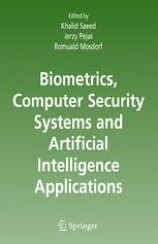
Biometrics, Computer Security Systems and Artificial Intelligence Applications
This book presents the most recent achievements in some fascinating and rapidly developing fields within Computer Science. The scientific works presented in this book have been partitioned into three topical groups: Image Analysis and Biometrics, Computer Security Systems, and Artificial Intelligence and Applications. Image Analysis and Biometrics is the branch of Computer Science dealing with the very difficult task of artificial, visual perception of objects and surroundings, as well as the problems connected with it. Computer Security and Safety is at present a very important and intensively investigated branch of Computer Science because of the menacing activity of hackers and computer viruses.
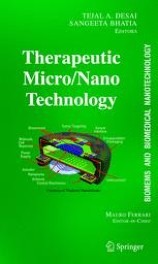
BioMEMS and biomedical nanotechnology ; Vol. III : Therapeutic Micro/Nanotechnology
The human body is composed of structures organized in a hierarchical fashion: from biomolecules assembled into polymers, to multimeric assemblies such as cellular or-ganelles, to individual cells, to tissues, to organ systems working together in health and disease- each dominated by a characteristic length scale. Decades of science and engineer-ing are now converging to provide tools that enable the orderly manipulation of biological systems at previously inaccessible, though critically important, length scales (<100 mi-crons). Thus, the approaches described in this volume provide a snapshot of how micro-and nanotechnologies can enable the investigation, prevention, and treatment of human disease.The volume is divided into three parts. The first part, Cell-based therapeutics; cov- ers the merger of cells with micro- and anosystems for applications in regenerative medicine spanning the development of novel nanobiomaterials.
Biomedical Simulation; 4th International Symposium, ISBMS 2008, London, UK, July 7-8, 2008 Proceedings
This book constitutes the refereed proceedings of the 4th International Symposium on Biomedical Simulation, ISBMS 2008, held in London, UK, in July 2008.
Biomedical Simulation ; 3rd International Symposium, ISBMS 2006, Zurich, Switzerland, July 10-11, 2006, Proceedings
This book contains the written contributions to the Third International Sym- sium on Biomedical Simulation (ISBMS), which was held in Zurich, Switzerland, on July 10-11, 2006. The manuscripts are organized around three thematic sections which cover several of the major aspects of our rapidly growing ?eld: anatomical modeling and tissue properties, simulation of biophysical processes, as well as systems and applications. The symposium provided an international forum for researchers interested in using biomedical simulation technology for the improvement of patient care. It was held in the spirit and continuation of the symposia on Surgical Simulation and Soft Tissue Modeling (IS4TM) organized in 2003 by INRIA, and on Medical Simulation (ISMS) in 2004 by CIMIT.
Bio-mechanisms of swimming and flying ; Fluid dynamics, biomimetic robots, and sports science
This book follows "Bio-mechanisms of Animals in Swimming and Flying" published in 2004 including 11 chapters. This time, the book includes 31 chapters on the latest researches into natural autonomous systems and locomotion in both flying and swimming organisms. The area of sports science such as analysis and simulation of human swimming is newly added. The computational frameworks for the modeling, simulation and optimization of animals in swimming and flying demonstrate an important role in the progress of interdisciplinary work in the fields of biology and engineering. An innovative technology is exhibited for the flight of an insect size micro air vehicle. Neuronal science is not only unveiling the locomotion mechanisms of swimming in fish from the aspect of the neuronal activities, but also applied to underwater biomimetic robots. The interdisciplinary works are exhibited in the fields of biology and engineering, yielding real-world benefits in innovative technologies.
Biomacromolecules : Carbohydrates, lipids, proteins and nucleic acids
The first chapter looks at the structural formulas and cyclic forms of monosaccharides, as well as their synthesis and breakdown. Cyclization, enolization, isomerization, tautomerization, mutarotation, and epimerization are all briefly described. Examples of disaccharides and polysaccharides are also presented. The second chapter covers triglycerides, steroids, vitamins, and their constituents. The third chapter examines the primary structure of proteins, including amino acid properties, peptide bond formation, and peptide synthesis. It also addresses secondary, tertiary, and quaternary structures. The book concludes with a chapter on nucleic acids, which covers the chemistry of nucleosides and oligonucleotides as well as topics such as genetic code, DNA secret code, Polymerase Chain Reaction and DNA fingerprinting.

Biology and mechanics of blood flows ; Part II : Mechanics and medical aspects
Biology and Mechanics of Blood Flows presents the basic knowledge and state-of-the-art techniques necessary to carry out investigations of the cardiovascular system using modeling and simulation. Part II of this two-volume sequence, Mechanics and Medical Aspects, refers to the extraction of input data at the macroscopic scale for modeling the cardiovascular system, and complements Part I, which focuses on nanoscopic and microscopic components and processes. This volume contains chapters on anatomy, physiology, continuum mechanics, as well as pathological changes in the vasculature walls including the heart and their treatments. Methods of numerical simulations are given and illustrated in particular by application to wall diseases. This authoritative book will appeal to any biologist, chemist, physicist, or applied mathematician interested in the functioning of the cardiovascular system.

Biology and mechanics of blood flows ; Part I : Biology
Biology and Mechanics of Blood Flows presents the basic knowledge and state-of-the-art techniques necessary to carry out investigations of the cardiovascular system using modeling and simulation. Part I of this two-volume sequence, Biology, addresses the nanoscopic and microscopic scales. The nanoscale corresponds to the scale of biochemical reaction cascades involved in cell adaptation to mechanical stresses among other stimuli. The microscale is the scale of stress-induced tissue remodeling associated with acute or chronic loadings. The cardiovascular system, like any physiological system, has a complicated three-dimensional structure and composition. Its time dependent behavior is regulated, and this complex system has many components.
Biologically Inspired Approaches to Advanced Information Technology ; 2nd International Workshop, BioADIT 2006, Osaka, Japan 26-27, 2006, Proceedings
This book contains 30 articles and three abstracts of invited talks presented at The Second International Workshop on Biologically Inspired Approaches for Advanced Information Technology,The workshop is intended to provide an e?ective forum for original research results in the ?eld of bio-inspired approaches to advanced information technologies. It also serves to foster the connection between biological paradigms and solutions to building the next-generation information systems.

Bioinspired optimization methods and their applications ; 9th International conference, BIOMA 2020, Brussels, Belgium, November 19–20, 2020, Proceedings
This book constitutes the refereed proceedings of the 9th International Conference on Bioinspired Optimization Methods and Their Applications, BIOMA 2020, held in Brussels, Belgium, in November 2020. The 24 full papers presented in this book were carefully reviewed and selected from 68 submissions. The papers in this BIOMA proceedings specialized in bioinspired algorithms as a means for solving the optimization problems and came in two categories: theoretical studies and methodology advancements on the one hand, and algorithm adjustments and their applications on the other.

Bio-inspired modeling of cognitive tasks ; 2nd International Work-conference on the interplay between natural and artificial computation, IWINAC 2007, La Manga del Mar Menor, Spain, June 18-21, 2007, Proceedings, Part I
This volume includes all the contributions mainly related with theoretical, conceptual and methodological aspects linking AI and knowledge engineering with neurophysiology, clinics and cognition.

Bio-inspired information and communication technologies ; 12th EAI International Conference, BICT 2020, Shanghai, China, July 7-8, 2020, Proceedings
This book constitutes the refereed conference proceedings of the 12th International Conference on Bio-inspired Information and Communications Technologies, held in Shanghai, China, in July 2020. Due to the safety concerns and travel restrictions caused by COVID-19, BICT 2020 took place online in a live stream. BICT 2020 aims to provide a world-leading and multidisciplinary venue for researchers and practitioners in diverse disciplines that seek the understanding of key principles, processes and mechanisms in biological systems and leverage those understandings to develop novel information and communications technologies (ICT).

Bio-inspired computing and communication ; 1st Workshop on Bio-inspired design of networks, BIOWIRE 2007 Cambridge, UK, April 2-5, 2007 Revised Selected Papers
The book constitutes the thoroughly refereed post-workshop proceedings of the First Workshop on Bio-Inspired Design of Networks, BIOWIRE 2007, held in Cambridge, UK, in April 2007.

Bio-inspired computational intelligence and applications ; International conference on life system modeling, and simulation, LSMS 2007, Shanghai, China, September 14-17, 2007. Proceedings
It covers both micro and macro c- ponents ranging from cells, tissues and organs across to organisms and ecologic niches. These interact and evolve to produce an overall complex system whose beh- ior is difficult to comprehend and predict.The arrival of the 21st century has been marked by a resurgence of research interest both in arriving at a systems-level und- standing of biology and in applying such knowledge in complex real-world appli- tions. Consequently, computational methods and intelligence in systems, biology, as well as bio-inspired computational intelligence, have emerged as key drivers for new computational methods. For this reason papers dealing with theory, techniques and real-world applications relating to these two themes were especially solicited.

Bioinformatics research and applications ; 3rd International Symposium,ISBRA 2007, Atlanta, GA, USA, May 7-10, 2007, Proceedings
This book including clustering and classification, gene expression analysis, gene networks, genome analysis, motif finding, pathways, protein structure prediction, protein domain interactions, phylogenetics, and software tools.

Bioinformatics for oral cancer : Current insights and advances
Offering a deep dive into the multifaceted landscape of oral cancer research and bioinformatics. Readers will uncover a wealth of knowledge, starting with foundational chapters introducing bioinformatics and establishing the backdrop of oral cancer. The book then progresses into the realm of diagnostic biomarkers, revealing cutting-edge methodologies for their identification in the context of oral cancer. The book’s keen focus extends to gene expression profiles and the intricacies of gene sequencing in the context of oral cancer progression.
