



الصفحة 11
الصفحة 11

Experimental analysis of nano and engineering materials and structures ; Proceedings of the 13th international conference on experimental mechanics, Alexandroupolis, Greece, July 1-6, 2007
ICEM13 focused on all aspects of experimental mechanics of solids with emphasis on mechanical characterization and testing at the micro and nano scale levels. The technical program of ICEM13 was the product of hard work and devotion of more than 100 world leading experts. This volume contains two-page abstracts of the 482 papers presented at ICEM13. The accompanying CD contains the full length papers. The abstracts of the fifteen plenary lectures are included in the beginning of the book. The remaining 467 abstracts are arranged in 23 tracks and 28 special symposia/sessions with 225 and 242 abstracts, respectively. The papers of the tracks have been contributed from open call, while the papers of the symposia/sessions have been solicited by the respective organizers.

Existence and Regularity Properties of the Integrated Density of States of Random Schrödinger Operators
The theory of random Schrödinger operators is devoted to the mathematical analysis of quantum mechanical Hamiltonians modeling disordered solids. Apart from its importance in physics, it is a multifaceted subject in its own right, drawing on ideas and methods from various mathematical disciplines like functional analysis, selfadjoint operators, PDE, stochastic processes and multiscale methods. The present text describes in detail a quantity encoding spectral features of random operators: the integrated density of states or spectral distribution function. Various approaches to the construction of the integrated density of states and the proof of its regularity properties are presented.

Evolutionary Scheduling
Evolutionary scheduling is a vital research domain at the interface of two important sciences - artificial intelligence and operational research. Scheduling problems are generally complex, large scale, constrained, and multi-objective in nature, and classical operational research techniques are often inadequate at solving them effectively. With the advent of computation intelligence, there is renewed interest in solving scheduling problems using evolutionary computational techniques. These techniques, which include genetic algorithms, genetic programming, evolutionary strategies, memetic algorithms, particle swarm optimization, ant colony systems, etc, are derived from biologically inspired concepts and are well-suited to solve scheduling problems since they are highly scalable and flexible in terms of handling constraints and multiple objectives. This edited book gives an overview of many of the current developments in the large and growing field of evolutionary scheduling, and demonstrates the applicability of evolutionary computational techniques to solve scheduling problems, not only to small-scale test problems, but also fully-fledged real-world problems.

Evolutionary Multi-Criterion Optimization ; 4th International Conference, EMO 2007, Matsushima, Japan, March 5-8, 2007, Proceedings
Multicriterion optimization refers to problems with two or more objectives (normally in conflict with each other) which must be simultaneously satisfied. Evolutionary algorithms have been used for solving multicriterion optimization problems for over two decades, gaining an increasing attention from industry. This book included four keynote speakers: Hirotaka Nakayama on aspiration level methods, Kay Chen Tan on large and computationally intensive real-world MO optimization problems, Carlos Fonseca on decision making, and Gary B. Lamont on design of large-scale network centric systems.

Evolution from Cellular to Social Scales
Evolution is a critical challenge for many areas of science, technology and development of society. The book reviews general evolutionary facts such as origin of life and evolution of the genome and clues to evolution through simple systems. Emerging areas of science such as "systems biology" and "bio-complexity" are founded on the idea that phenomena need to be understood in the context of highly interactive processes operating at different levels and on different scales. This is where physics meets complexity in nature, and where we must begin to learn about complexity if we are to understand it. Similarly, there is an increasingly urgent need to understand and predict the evolutionary behavior of highly interacting man-made systems, in areas such as communications and transport, which permeate the modern world. The same applies to the evolution of human networks such as social, political and financial systems, where technology has tended to vastly increase both the complexity and speed of interaction, which is sometimes effectively instantaneous.

Évaluation des troubles neuropsychologiques en vie quotidienne = Assessment of neuropsychological disorders in daily life
Neurological diseases such as stroke, head trauma, Alzheimer's disease pose a public health problem. They affect all ages, from children to the elderly. They affect the possibilities of autonomy in daily life, the possibilities of social or professional integration. In these pathologies, neuropsychological disorders: disorders of language, memory, attention, etc., are the source of crucial difficulties. Cognitive tests performed by psychologists are essential for their diagnosis, but do not on their own make it possible to prejudge the difficulties encountered by people in their everyday life. This book presents an original approach to neuropsychological disorders, by describing specific assessments describing difficulties in daily life, in order to better understand them and to quantify their impact. The second part of the book develops the consequences in clinical practice in particular populations - children and the elderly - or the social objective of the evaluation, in particular school integration, professional integration and driving. Finally, the relevance of these assessments in the context of recent laws on disabled people as well as the development of compensation for bodily injury after an accident are also discussed.
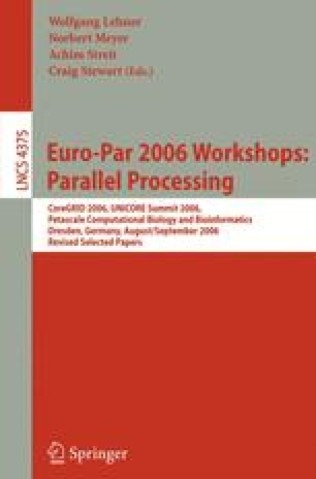
Euro-Par 2006 Parallel Processing ; CoreGRID 2006, UNICORE Summit 2006, Petascale Computational Biology and Bioinformatics, Dresden, Germany, August 29-September 1, 2006, Revised Selected Papers
This book contiants Petascale Computational Biology and Bioinformatics.

Ester Boserup’s legacy on sustainability : Orientations for contemporary research
The contents are organized in three sections reflecting important focal points of Boserup’s own work: Long-Term Socio-Ecological Change; Agriculture, Land Use, and Development; and Gender, Population, and Economy. The first three chapters offer a comprehensive review of her political and scientific work. Section Two focuses on the applicability of Boserup’s reflections on land use, technology, and agriculture, incorporating case studies which illuminate and test Boserup’s hypotheses on land use intensification and soil degradation, the impact of population growth on land use, the agricultural transition, and the role of women in development. The case studies examine both long historical time series and present-day dynamics, and explore different levels of geographical scale, from the local to the regional and the global. Section Three emphasizes the key role of women and gender relations for agriculture and development.

Essential Fish Habitat Mapping in the Mediterranean
This book presents latest advances in EFH mapping and modelling and introduces the environmental approach to EFH identification through the combined use of latest technologies and advanced techniques, such as Remote Sensing, Geographic Information Systems and Spatial Statistics.The contents of this book include overviews and comparisons of different approaches on species habitat modelling, methods to identify teleconnection patterns between large-scale meteo-oceanic phenomena and local environmental variation, and EFH maps for cephalopod, shrimp, hake, anchovy, sardine, and swordfish resources in the Mediterranean.

Equity, Equality and Diversity in the Nordic : Model of Education
Does the Nordic model of education still stand by its original principles and safeguard education for all? This Open Access volume is a carefully crafted collection of chapters that investigate the different aspects of equity, equality and diversity across the education systems in the Nordic countries.

EQ-5D value sets
For various reasons, cost benefit analysis is usually rejected in favour of cost-effectiveness or cost-utility analyses, often involving the estimation of the incremental cost per Quality Adjusted Life Year (QALY) gained (Drummond et al, 2005). The estimation of QALYs gained requires valuations for all relevant health states on a scale anchored at 1 = Full health and 0 = Dead. The EQ-5D is widely used in this context and a number of value sets are available for all the health states generated by the EQ-5D descriptive system. These can be readily applied to health outcomes measured as EQ-5D profiles. EQ-5D has become one of the valuation approaches recommended by several reimbursement authorities and academic bodies in European countries

Environmental Simulation Chambers : Application to Atmospheric Chemical Processes
Atmospheric pollution has many different detrimental impacts on air quality at urban, regional and global scales. Large volume photoreactors (often referred to as smog or simulation chambers) have been used very effectively to investigate and understand many varied aspects of atmospheric chemistry related to air pollution problems. Photochemical smog formation, which was first observed around 1945 in Los Angeles, is now a major environmental problem for all industrialised and densely populated regions of the world. Over the years many different modelling and experimental tools have been developed to analyse and simulate the complex chemical processes associated with tropspheric photooxidant formation. Work in environmental chambers has played a key role in the development of our understanding of the atmospheric chemistry associated with pollution problems on local, regional and global scales.

Environmental Governance in Latin America
The multiple purposes of nature – livelihood for communities, revenues for states, commodities for companies, and biodiversity for conservationists – have turned environmental governance in Latin America into a highly contested arena. In such a resource-rich region, unequal power relations, conflicting priorities, and trade-offs among multiple goals have led to a myriad of contrasting initiatives that are reshaping social relations and rural territories. This edited collection addresses these tensions by unpacking environmental governance as a complex process of formulating and contesting values, procedures and practices shaping the access, control and use of natural resources. Contributors from various fields address the challenges, limitations, and possibilities for a more sustainable, equal, and fair development. In this book, environmental governance is seen as an overarching concept defining the dynamic and multi-layered repertoire of society-nature interactions, where images of nature and discourses on the use of natural resources are mediated by contextual processes at multiple scales.

Environmental Effects of Marine Finfish Aquaculture
Environmental risks associated with large-scale marine finfish cage aquaculture have led to claims that the long-term sustainability of the industry is in doubt. Methods and models currently used to measure near and far-field environmental effects of finfish mariculture and to assess their implications for management are presented in 20 chapters arranged in four sections (Eutrophication, Sedimentation and Benthic Impacts, Changes in Trophic Structure and Function, and Managing Environmental Risks). Case studies show how models may be used to predict environmental changes and provide management tools to minimize potentially adverse environmental risks. The volume is of interest to those working towards sustainable development of mariculture, including environmental managers and decision-makers with regulatory responsibilities.

Engineering self-organising systems Vol. 3910 ; 3rd International Workshop, ESOA 2005, Utrecht, The Netherlands, July 25, 2005, Revised Selected Papers
This book contains recent work from a broad range of areas with the common theme of utilising self-organisation productively. As distributed information infrastructures continue to spread (such as the Internet, wireless and mobile systems), new challenges have arisen demanding robust and scalable solutions. In these new challenging environments the - signers and engineers of global applications and services can seldom rely on centralised control or management, high reliability of devices, or secure en- ronments. At the other end of the scale, ad-hoc sensor networks and ubiquitous computing devices are making it possible to embed millions of smart computing agents into the local environment.

Energy Poverty : (Dis)Assembling Europe's Infrastructural Divide
Aims to consolidate and advance debates on European and global energy poverty by exploring the political and infrastructural drivers and implications of the condition across a variety of spatial scales. It highlights the need for a geographical conceptualization of the different ways in which household-level energy deprivation both influences and is contingent upon disparities occurring at a wider range of spatial scales. There is a strong focus on the relationships among energy transformation, institutional change and place-based factors in determining the nature and location of energy-related injustices. The book also explores how patterns and structures of energy poverty have changed over time, as evidenced by some of the common measures used to describe the condition. In part, this means investigating the makeup of energy poor demographics across various social and spatial cleavages. More broadly, it also argues that energy sector reconfigurations are both reflected in and shaped by various domains of social and political organization, especially in terms of creating poverty-relevant outcomes.

Energy in Africa : Challenges and Opportunities
This open access book presents a picture of the current energy challenges on the African continent (and the Sub-Saharan region in particular) and proposes pathways to an accelerated energy transition. Starting with an analysis of the status quo and the outlook for Africa’s energy demand and energy access, it provides an account of the available resources, including hydrocarbons and renewable energy resources, which are playing an increasingly crucial role. It then moves on to analyze the level of investment required to scale-up Africa’s energy systems, shedding light on the key barriers and elaborating on potential solutions. It also provides a suggestion for improving the effectiveness of EU–Africa cooperation. While mainly intended for policymakers and academics, this book also speaks to a broader audience interested in gaining an overview of the challenges and opportunities of the African energy sector today and in the future.

Encyclopedia of Microfluidics and Nanofluidics
Covering all aspects of transport phenomena on the nano- and micro-scale, Springer’s Encyclopedia of Microfluidics and Nanofluidics includes over 750 entries in three alphabetically-arranged volumes including the most up-to-date research, insights, and applied techniques across all areas. Specifically, subjects covered in this comprehensive Springer Reference include electrical double-layers, optofluidics, DNC lab-on-a-chip, nanosensors, and more.

Empowering teachers to build a better world : How six nations support teachers for 21st Century education
This book presents a comparative study on how large-scale professional development programs for teachers are designed and implemented. Around the world, governments and educators are recognizing the need to educate students in a broad range of higher order cognitive skills and socio-emotional competencies

Elements of spatial structures : Analysis and design
Highlights all aspects of the analysis and design of elements related to spatial structures, which have been carefully selected from existing structures. Analysing the design of elements of any full scale structure that contains facilities that have already been constructed makes good economic sense and avoids duplication in respect of research and development, the decision-making process and accurate design criteria for new constructed facilities.
