



الصفحة 11
الصفحة 11

Coastal dunes : Ecology and conservation
Brings together coastal dune specialists from tropical and temperate latitudes, which together cover a wide set of topics, including: geomorphology, community dynamics, ecophysiology, biotic interactions and environmental problems and conservation. A major product of this book is a set of recommendations for future research, identifying relevant topics where detailed knowledge is still lacking. It also identifies management tools that will promote and maintain the rich diversity of the dune environments in the context of continuing coastal development.

CMOS Current-Mode Circuits for Data Communications
Addresses the analysis and design principles of CMOS current mode circuits and their applications for data communications. The analytical methods and design principles are based on the characteristics of MOS devices applied to current CMOS technologies. Major topics include: design techniques for current mode circuits, electrical signaling for high speed data links, current-mode transmitters and receivers, switching noise and grounding of mixed mode circuits, a comparison of voltage-mode with current-mode circuits, ESD protection, and additional related topics. Examples are given of CMOS technologies from leading semiconductor companies and analyzed using the latest computer-aided design tools by leading design companies. CMOS Current-Mode Circuits for Data Communications is a valuable reference for circuit design engineers and hardware system engineers.
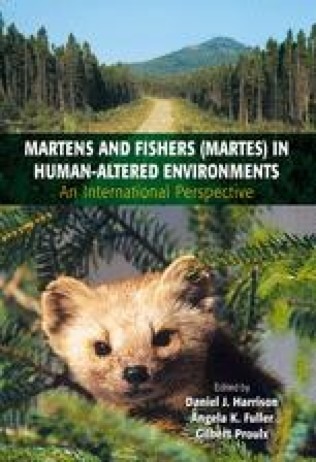
Martens and Fishers (Martes) in human-altered environments : An international perspective
Examines the conditions where humans and martens are compatible and incompatible, and promotes land use practices that allow Martes to be representatively distributed and viable. All Martes have been documented to use forested habitats and 6 species (excluding the stone marten) are generally considered to require complex mid- to late-successional forests throughout much of their geographic ranges. All species in the genus require complex horizontal and vertical structure to provide escape cover protection from predators, habitat for their prey, access to food resources, and protection from the elements. Martens and the fisher have high metabolic rates, have large spatial requirements, have high surface area to volume ratios for animals that often inhabit high latitudes, and often require among the largest home range areas per unit body weight of any group of mammals. Resulting from these unique life history characteristics, this genus is particularly sensitive to human influences on their habitats, including habitat loss, stand-scale simplification of forest structure via some forms of logging, and landscape-scale effects of habitat fragmentation. Given their strong associations with structural complexity in forests, martens and the fisher are often considered as useful barometers of forest health and have been used as ecological indicators, flagship, and umbrella species in different parts of the world. Thus, efforts to successfully conserve and manage martens and fishers are associated with the ecological fates of other forest dependent species and can greatly influence ecosystem integrity within forests that are increasingly shared among wildlife and humans.We have made great strides in our fundamental understanding of how animals with these unique life history traits perceive and utilize habitats, respond to habitat change, and how their populations function and perform under different forms of human management and mismanagement.
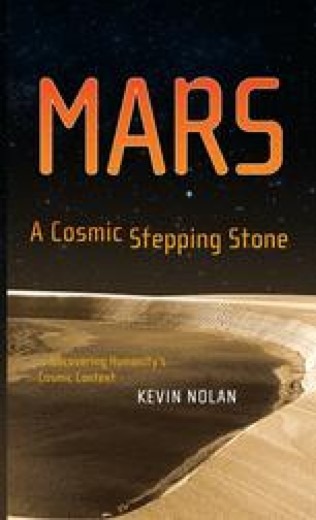
Mars, A Cosmic Stepping Stone : Uncovering Humanity’s Cosmic Context
The questions of our origin and cosmic abundance of life are among the compelling facing humanity. For all of the difficulties facing us however, the planet Mars may act as a cosmic stepping stone in uncovering the answers. This book examines these issues in one of the comprehensive treatments about Mars and our legacy of engagement with it.
Marine Organic Matter : Biomarkers, Isotopes and DNA
The oceans contain a great biodiversity of marine organisms. They include a rich variety of unusual genes and biochemistries and hence a diverse array of organic compounds ranging from colourful carotenoids and chlorophylls to lipids with structures ranging from the simple to the complex. This volume brings together ten chapters on the occurrence and identification of the lipid biomarkers and of pigments in marine waters. It describes how they can be used in conjunction with stable isotopes and molecular biology to ascertain the sources and fate of organic matter (both natural and pollutant) in the sea and underlying sediments. The authors are each experts in their field and the chapters provide both an overview of the state-of-the-art and knowledge gaps together with abundant detail to satisfy the needs of specialists and non-specialists alike.
Marine environment protection and biodiversity conservation : The application and future development of the IMOs particularly sensitive sea area concept
Despite the potential benefits that PSSA designation can deliver, recent practice both within the IMO and by individual member States, has considerably undermined confidence in this emerging concept. The focus of this book is on the events within the IMO that have led to this lack of confidence arising. In doing so, this book presents an examination of coastal State practice with the PSSA concept.
Marine Biodiversity : Patterns and Processes, Assessment, Threats, Management and Conservation
Understanding the functioning of Marine Ecosystems is the first step to measure and predict the influence of Man, and to find solutions for the enormous array of problems we face today. This volume is organised according to the four subthemes of the symposium and to issues commonly perceived as relevant by scientists concerned with the study, protection and management of Marine Biodiversity: patterns and processes, assessment, threats and management and conservation.
Managing the Complexity of Critical Infrastructures : A Modelling and Simulation Approach
This book summarizes work being pursued in the context of the CIPRNet (Critical Infrastructure Preparedness and Resilience Research Network) research project, co-funded by the European Union under the Seventh Framework Programme (FP7). The project is intended to provide concrete and on-going support to the Critical Infrastructure Protection (CIP) research communities, enhancing their preparedness for CI-related emergencies, while also providing expertise and technologies for other stakeholders to promote their understanding and mitigation of the consequences of CI disruptions, leading to enhanced resilience.
Managing Critical Infrastructure Risks
At the beginning of each year, there is a deluge of top-10 lists on just about every subject you can imagine. A top-10 list of biggest news stories, best-selling books, most popular music and movies, richest companies, and best places to visit or live. It seems everyone has his or her own top-10 list, reflecting, perhaps, differences in regional, national, and cultural values. Companies and governments most often tend to focus their top-10 lists on economic priorities, or priorities related to national defense, security, public health, and new infrastructure. This year, 2007, was no exception. Yet, increasingly, we see governments, private organizations, and companies advocating a new type of prioritization. This framework needs to reach beyond the realms of economics, world trade, and corporate management to include the environment, stakeholders, public preferences, and social goals. Moreover, corporations and individuals are not only interested in generic 10-best lists; they want lists tailored to their values, goals, and current economic and social state. For example, the U. S.
Management of Intentional and Accidental Water Pollution
The goals of the workshop included a discussion of the state of the science in identification of new research and approaches for water pollution events and communication of the management of water pollution and sustainability of water resources. Critical to management of accidental and intentional pollution events is the assessment of the risk, an understanding of the hazards and lessons learned from events which may lead to preventative management and control strategies. Public health protection will ultimately be improved by the ability to develop management frameworks which are flexible and adaptable to the specific region, country or watershed problems and concerns and allow for prioritization in the decision making. The integration of scientific information regarding the types of hazards the environmental fate of the chemical/biological, exposure pathways and human and ecosystem impacts may be implemented from both a qualitative or descriptive approach or using a more classical quantitative risk assessment paradigm. Thus the frameworks for assessing the risk and managing the risk may be seen as preventive, early warning and responsive.
Magnesium Technology : Metallurgy, Design Data, Applications
Magnesium, with a density of 1.74 g/cm², is the lightest structural metal and magnesium are increasingly chosen for weight-critical applications such as in land-based transport systems. "Magnesium Technology" substantially updates and complements existing reference sources on this key material. It assembles international contributions from seven countries covering a wide range of research programs into new alloys with the requisite property profiles, i.e., the current state of both research and technological applications of magnesium. In particular, the international team of authors covers key topics, such as: casting and wrought alloys; fabrication methods; corrosion and protection; engineering requirements and strategies, with examples from the automobile, aerospace, and consumer-goods industries, and recycling.
Macro-Engineering : A Challenge for the Future
Macro-engineering involves the large-scale modification and manipulation of natural systems for the benefit of mankind. The primary goals of some Earth-based macroprojects described in this book are power production, land reclamation, food production, climate change, environment, water, transport and coastal protection. Other Earth or space projects considered here have a more futuristic ring, but our present-day technical skill makes their realization possible. Earth-based macroprojects usually combine different aspects and aims. They have a major impact on the ecology of a region and the inhabitants' means of living (like tourism, fishing, shipping). Its effects may be felt worldwide, like the rise in global sea level after the damming and evaporation of large ocean gulfs for power production, or the change in climate following the regional reduction of solar insolation.
Low-Dose Radiation Effects on Animals and Ecosystems : Long-Term Study on the Fukushima Nuclear Accident
Brings together the works of radiation biologists and ecologists to provide reliable radioecology data and gives insight into future radioprotection. The book examines the environmental pollution and radiation exposure, and contains valuable data from abandoned livestock in the ex-evacuation zone and from wild animals including invertebrates and vertebrates, aqueous and terrestrial animals, and plants that are subjected to long-term exposure in the area still affected by radiation. It also analyzes dose evaluation, and offers new perspectives gained from the accident, as well as an overview for future studies to promote radioprotection of humans and the ecosystem.

Logic, language, information and computation ; 15th International Workshop, WoLLIC 2008 Edinburgh, UK, July 1-4, 2008 Proceedings
The papers cover all pertinent subjects in computer science with particular interest in cross-disciplinary topics. Typical areas of interest are: foundations of computing and programming; novel computation models and paradigms; broad notions of proof and belief; formal methods in software and hardware development; logical approach to natural language and reasoning; logics of programs, actions and resources; foundational aspects of information organization, search, flow, sharing, and protection.

Location- and Context-Awareness ; Vol. 3479 ; First International Workshop, LoCA 2005, Oberpfaffenhofen, Germany, May 12-13, 2005, Proceedings
The workshop was organized by the Institute of Communications and Navigation of the German Aerospace Center (DLR) in Oberpfa?enhofen, and the Mobile and Distributed Systems Group of the University of Munich. During the workshop, novel positioning algorithms and location sensing techniques were discussed, comprising not only enhancements of singular systems, like positioning in GSM or WLAN, but also hybrid technologies, such as the integration of global satellite systems with inertial positioning. Furthermore, improvements in sensor technology, as well as the integration and fusion of sensors, were addressed both on a theoretical and on an implementation level. Personal and confidential data, such as location data of users, have p- found implications for personal information privacy. Thus privacy protection, privacy-oriented location-aware systems, and how privacy aspects the feasibility and usefulness of systems were also addressed in the workshop.

Limnology and Aquatic Birds ; Proceedings of the Fourth Conference Working Group on Aquatic Birds of Societas Internationalis Limnologiae (SIL), Sackville, New Brunswick, Canada, August 3-7, 2003
The importance of habitat conservation for the protection of birds has become widely acknowledged and accepted by natural resource managers and the general public. Papers presented in this volume further our understanding of the important role that limnology has in determining habitat suitability for waterbirds. Long-term population monitoring of waterbirds is an important tool in our quest to understand the role waterbirds play in their environment. Continued population declines of many species of aquatic birds indicate the need for additional understanding of how human activities negatively impact water quality and bird populations and what mitigative actions can be taken. The main objective of the Working Group on Aquatic Birds of the International Limnological Society (SIL) is to integrate waterbirds into hydrobiology and treat waterbird studies in a limnological context. To achieve this goal, the Working Group organizes conferences to facilitate communications among limnologists interested in aquatic birds and ornithologists interested in the aquatic habitat. The efforts of the SIL Working Group on aquatic birds has resulted in a new emphasis on the links between aquatic birds and their environment

Light earth building : a handbook for building with wood and earth
Light clay, which is light in weight and easy to work, is presented here as a versatile and forward-looking building material for modern computer-aided timber construction and the renewal of historic timber-framed buildings with clay infill. The balanced building physics properties of the material, which can be controlled through the mixing proportions, make it suitable for resource-efficient building in various different climate zones. Thermal storage, sound insulation, protection against moisture and fire in conventional timber construction are improved, and the construction is simplified.
Lidar : Range-Resolved Optical Remote Sensing of the Atmosphere
Written by leading experts in optical radar, or lidar, this book brings all the recent practices up-to-date and covers a multitude of applications, from atmospheric sciences to environmental protection. Its broad cross-disciplinary scope should appeal to both the experienced scientist and the novice in the field. The Foreword is by one of the early pioneers in the area, Herbert Walther.

Lessons Learned : Risk Management Issues in Genetic Counseling
The only book devoted exclusively to this specialty, Lessons Learned details the risk management issues involved in genetic counseling practice, and offers solid strategies for minimizing the risk of costly, career-damaging malpractice suits. Schmerler clearly identifies areas of practitioner liability and demonstrates how they may be averted, so counselors can better manage their practice while lowering the risk of legal action. Examples drawn from relevant court cases illustrate typical issues in malpractice, negligence, and breach of contract suits. With this in-depth knowledge, readers can refine their goals toward increased self-protection as well as client care.

Learning to Live in the Knowledge Society ; IFIP 20th World Computer Congress, IFIP TC 3 ED-L2L Conference September 7–10, 2008, Milano, Italy
The IFIP series publishes state-of-the-art results in the sciences and technologies of information and communication. The scope of the series includes: foundations of computer science; software theory and practice; education; computer applications in technology; communication systems; systems modeling and optimization; information systems; computers and society; computer systems technology; security and protection in information processing systems; artificial intelligence; and human-computer interaction. Proceedings and post-proceedings of refereed international conferences in computer science and interdisciplinary fields are featured. These results often precede journal publication and represent the most current research.
