



الصفحة 11
الصفحة 11
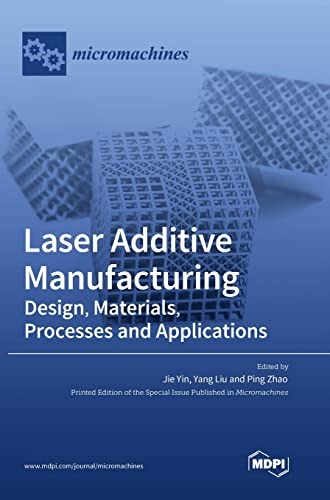
Laser additive manufacturing: design, materials, processes and applications
Laser-based additive manufacturing (LAM) is a revolutionary advanced digital manufacturing technology developed in recent decades, which is also a key strategic technology for technological innovation and industrial sustainability. This technology unlocks the design and constraints of traditional manufacturing and meets the needs of complex geometry fabrication and high-performance part fabrication. A deeper understanding of the design, materials, processes, structures, properties and applications is desired to produce novel functional devices, as well as defect-free structurally sound and reliable LAM parts.The topics in this Special Issue reprint include macro- and micro-scale additive manufacturing with lasers, such as structure/material design, fabrication, modeling and simulation, in situ characterization of additive manufacturing processes and ex situ materials characterization and performance, with an overview that covers various applications in aerospace, biomedicine, optics and energy.

Laboratory control system operations in a GMP environment
In Laboratory Control System Operations in a GMP Environment, readers are given the guidance they need to implement a CGMP compliant Laboratory Control System (LCS) that fits within Global Regulatory guidelines. Using the Quality Systems Approach, regulatory agencies like the FDA and the European Medicine Agency have developed a scheme of systems for auditing pharmaceutical manufacturing facilities which includes evaluating the LCS.

Knowledge Enterprise : Intelligent Strategies in Product Design, Manufacturing, and Management ; Proceedings of PROLAMAT 2006, IFIP TC5, International Conference, June 15-17 2006, Shanghai, China
Contains the edited version of the technical presentations of PROLMAT 2006, the IFIP TC5 international conference held on June 15-17, 2006 at the Shanghai University in China. The main theme of this conference is Knowledge Enterprise – Intelligent Strategies in Product Design, Manufacturing and Management. These proceedings focus on the issue of how to translate data and information into knowledge in manufacturing enterprises.
Knowledge and Skill Chains in Engineering and Manufacturing : Information Infrastructure in the Era of Global Communications
Explores knowledge and skill chains in engineering and manufacturing in the age of global communications. Information infrastructure involves a range of activities from product planning, engineering, and manufacturing trough transportation, marketing, and repair/upgrade to returns and recycling/disposal. Distinct from the traditional engineering database, life-cycle support information has its own characteristic requirements, -- flexible extensibility, distributed architecture, multiple viewpoints, long-time archiving, and product usage information. Several authors address the architecture of the information infrastructure, its services and its requirements. Other papers focus on the knowledge and skill chains that develop in a variety of situations: the supply chain, the factory floor, the man-system interaction, etc. For each of these, state-of-the-art and state-of-research scenarios for various industrial sectors address both engineering and operations requirements in the current socio-economic environment.
Kanban-Controlled Manufacturing Systems
Kanban control systems bear a great potential to significantly improve operations. A company may reap the full benefits of kanban control only after determining an optimal or near-optimal system configuration. To do that, methods are needed to evaluate the performance and operating costs of individual system configurations. We propose an innovative construction-kit approach that enables us to build stochastic analytical models of a large class of single- and multi-product kanban systems. The presented construction-kit approach may be extended and augmented in various directions
Just-in-Time Scheduling : Models and Algorithms for Computer and Manufacturing Systems
As the field of Supply Chain Management has matured, maintaining the precise flow of goods to maintain schedules (hence, minimizing inventories) on a just-in-time basis still remains as a major challenge. This problem or challenge has resulted in a fair amount of quantitative research in the area, producing an array of models and algorithms to help ensure the precise flow of components and final products into inventories to meet just-in-time requirements.The scheduling models and algorithms presented and illustrated in the book will be done so in the context of extensive use of computer systems in a "real time context.
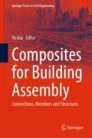
Composites for building assembly : connections, members and structures
Pesents buildings developed using modular assembly approaches based on lightweight and corrosion-resistant fiber reinforced polymer (FRP) composites. Construction methods and the choice of building materials offer great opportunities for more productive and environmentally friendly solutions. This book includes valuable experimental data on large-scale structural components (beams, slabs, amd columns), connections (shear connections, wall stud connections, beam-column connections, column-column connections) and structures (composite floor system, structural sandwich assemblies, and full-scale structural demonstrations), supported with detailed numerical modelling and analytical methods.

Complex System Maintenance Handbook
Complex System Maintenance Handbook is the first book to integrate this vast literature with chapters written by internationally-renowned active researchers and experienced practitioners focussing on different aspects of maintenance. Each chapter reviews the literature dealing with a particular aspect of maintenance, reports on developments and trends in a particular industry sector, or presents a case study.

Clinical and laboratory manual of dental implant abutments
Compiles technical information from a vast variety of sources, including implant manufacturers and designers, master dental technicians, implant researchers, and expert clinicians leading the field of implant dentistry worldwide. He and his expert contributors meticulously assembled each chapter to include only the most relevant and up-to-date content and procedures in a concise and simple format.

Climate Change and Technological Options : Basic facts, Evaluation and Practical Solutions
climate change focussing on technical solutions for the most important and climate relevant economic sectors is presented. It is intended for key decision makers, and administrators within industry, agricultural and energy sectors, as well as masters students and post graduates. The first of three sections covers the scientific basis of climate change and the instruments to prevent or reduce negative climate effects. It includes a survey covering current practices at different levels.It discusses evaluation methods for climate impacts from industrial processes. Climate relevant processes and measures to reduce their impact such as sequestration are defined in the final section, with the main focus being on renewable resources. Details are given on climate impacts of waste prevention, recycling and waste management as well as are proposals for every day solutions.

Cleaning validation : Practical compliance approaches for pharmaceutical manufacturing
Timely coverage of cleaning validation for the pharmaceutical industry, a dynamic area in terms of health-based limits. Encourages pharmaceutical manufacturers, and particularly upper management, to meet the challenges of the science-based and riskbased approaches to cleaning validation. Draws on the author’s vast experience in the field of cleaning validation and hazardous materials. Discusses EMA vs. ISPE on Cleaning Limits and revised Risk-MaPP for highly hazardous products in shared facilities. A diverse list of topics from protocol limits for yeasts and molds to cleaning validation for homeopathic drug products.

Classic Papers in Modern Diagnostic Radiology
The subject of diagnostic radiology is now very large and radiology depa- ments are involved in all areas of modern patient care.The defining event in m- ern radiology,and arguably the most significant development in radiology since Wilhelm Röntgen discovered X-rays, was the invention of the CT scanner in the 1970s.The CT scanner introduced modern cross-sectional imaging and also di- tal imaging.We now have MRI and ultrasound and these techniques are replacing many traditional X-ray procedures.The developments in radiology have been the result of a fruitful interaction between the basic sciences, clinical medicine and the manufacturers. This can be seen by looking at the various sources of these publications. Change is produced by the interactions between the various dis- plines. The editors have had a very difficult task in selecting the key discoveries and descriptions.The radiological literature is very large.Medical imaging continues to develop rapidly and these papers are the foundations of our current practice.

CCD Image Sensors in Deep-Ultraviolet : Degradation Behavior and Damage Mechanisms
As the deep-ultraviolet (DUV) laser technology continues to mature, an increasing number of industrial and manufacturing applications are emerging. For example, the new generation of semiconductor inspection systems is being pushed to image at increasingly shorter DUV wavelengths to facilitate inspection of deep sub-micron features in integrated circuits. DUV-sensitive charge-coupled device (CCD) cameras are in demand for these applications. Although CCD cameras that are responsive at DUV wavelengths are now available, their long-term stability is still a major concern. This book describes the degradation mechanisms and long-term performance of CCDs in the DUV, along with new results of device performance at these wavelengths.
Business process management Workshops ; Vol. 4103 : BPM 2006 International Workshops, BPD, BPI, ENEI, GPWW, DPM, semantics4ws, Vienna, Austria, September 4-7, 2006, Proceedings
BPM 2006 was the fourth in a conference series that provides a forum for - searchers and practitioners in all areas of business process management. In c- junction with BPM 2006, a series of workshops were held. They were meant to facilitate the exchange of ideas and experiences between active researchers, and to stimulate discussions on new and emerging topics in line with the conference topics. We see the workshops as a necessary extension to the main conference. BPM has established itself rapidly as a high quality conference with a highly competitive selection process.
Business agility and information technology diffusion ; IFIP TC8 WG 8.6 International working Conference, May 8-11, 2005, Atlanta, Georgia, USA
Addresses issues related to business agility and the diffusion of Information Technology (IT). Success, even survival, in today's business environment has been made complex and difficult by technologically-based competitive pressure. One promising strategy is to be agile and ready to adapt quickly to changes in the environment or market. Such strategy takes shape as an agile software development, agile manufacturing, agile modeling and agile iterations. In contrast, successful IT diffusion is known to be a process that takes time and careful effort. Many IT projects that succeeded in developing a product have subsequently failed in changing the behavior of the target group when diffusion just didn't happen. Therefore this volume responds to the question: What is the relationship between agility and IT diffusion? The book's scope will cover information systems and technology issues, as well as organizational and managerial issues, related to agility and IT diffusion. The planned perspectives include topics such as diffusion of agile methods, enabling business agility with IT, creating agile environments that facilitate diffusion of IT, theories and frameworks for understanding diffusion and agility issues, best practices relating to business agility and IT diffusion, software process improvement and agility, diffusion studies of specific agile technologies, and impacts of diffusion of IT agile methods.
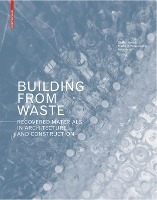
Building from waste : Recovered materials in architecture and construction
"Reduce, Reuse, Recycle, and Recover" is the sustainable guideline that has replaced the "Take, Make, Waste" attitude of the industrial age. Based on their background at the ETH Zurich and the Future Cities Laboratory in Singapore, the authors provide both a conceptual and practical look into materials and products which use waste as a renewable resource. It looks into innovative concepts of how materials usually regarded as waste can be processed into new construction elements. The products are organized along the manufacturing processes: densified, reconfigured, transformed, designed and cultivated materials.
Boundary Representation Modelling Techniques
Boundary representation is the principle solid modelling method used in modern CAD/CAM systems. There have been a long series of developments on which currently available systems are based, full details of which are only partially known. Ian Stroud’s thorough coverage of these developments puts this technology in perspective. Ian Stroud started working with boundary representation solid modelling in 1977. Since then he has researched and is researching a wide variety of topics in and around this field. The information in the book comes from the results of this research.
Bone densitometry for technologists
Radiologic technologists, nurse practitioners, physician assistants, and dedicated densitometry technologists can find new guidelines for bone density testing, new therapies for osteoporosis, and new treatment guidelines for osteoporosis, as well as new chapters on pediatric densitometry body composition assessments, and the use of skeletal morphometry in diagnosis and fracture risk prediction. The twelve appendices have also been updated to reflect the most current information available, including contacts for densitometry equipment manufacturers and organizations, guidelines for bone density testing and CPT codes, definitions of terms, and new conversion equations.
Blockchain, artificial intelligence, and the internet of things : Possibilities and opportunities
Provides basic concepts and deep knowledge about various security mechanisms that can be implemented in IoT through Blockchain technology. This book aids readers in gaining insight and knowledge about providing security and solutions to different challenges in IoT using Blockchain technology. This book primarily focuses on challenges to addressing the integration of the IoT with Blockchain with respect to potential benefits for IoT. This book gives descriptive analysis of Blockchain integrated with IoT applications and platforms for the development of IoT solutions along with possible topologies to that integration. Several application examples are included in a variety of industries / Provides the latest on secure IIoT communication using Blockchain technology for Industry 4.0 / Includes updates on using Blockchain technology in secure vehicular communication (VANET), healthcare, retail, and gaming / Provides the latest on secure IIoT communication using Blockchain technology for Industry 4.0

Biotechnology for Odor and Air Pollution Control
An international board of authors from universities, research institutes, and industries describe various biotechnological methods ranging from laboratory, to pilot evaluation and to full-scale process implementation. Topics include bioprocesses for the treatment of odors and air pollutants in wastewater treatment plants, rendering plants, chemical production facilities, and food and flavor manufacturing facilities. In addition to the basic microbiological and engineering aspects, the design, modeling and control of bioreactors are also presented.
