



الصفحة 11
الصفحة 11

Logic Programming : 24th International Conference, ICLP 2008 Udine, Italy, December 9-13 2008 Proceedings
The 35 revised full papers together with 2 invited talks, 2 invited tutorials, 11 papers of the co-located first Workshop on Answer Set Programming and Other Computing Paradigms (ASPOCP 2008), as well as 26 poster presentations and the abstracts of 11 doctoral consortium articles were carefully reviewed and selected from 177 initial submissions. The papers cover all issues of current research in logic programming - they are organized in topical sections on applications, algorithms, systems, and implementations, semantics and foundations, analysis and transformations, CHRs and extensions, implementations and systems, answer set programming and extensions, as well as constraints and optimizations.
Lines of Inquiry in Mathematical Modelling Research in Education
The book addresses the “balancing act” between developing students’ modelling skills on the one hand, and using modelling to help them learn mathematics on the other, which arises from the integration of modelling into classrooms. In addition the book highlights professional learning and development for in-service teachers, particularly in systems where the introduction of modelling into curricula means reassessing how mathematics is taught.
Lifelong Learning : Interpretations of an Education Policy in Europe
In Europe, the idea of Lifelong Learning has developed from an education policy to the most important pedagogic paradigm. The concept was created as an answer to the international education crisis, diagnozed by Philip H. Coombs in 1967. Since the European Year of Lifelong Learning in 1996, it has been regarded as an alternative to deal with the rapid social, political and economic changes of the modern world. Andrea Óhidy shows the genesis of the concept and its development towards a pedagogic paradigm. She investigates the relations between the concept of Lifelong Learning and school education and points out the most important links between Lifelong Learning and adult education.
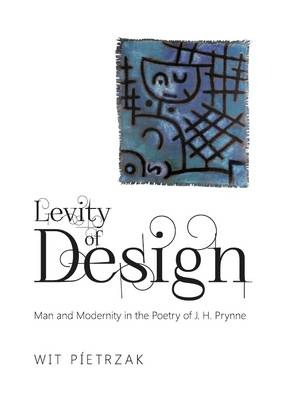
Levity of Design : Cambridge Scholars Publishing
How can poetry embrace morality through focusing on metaphrasts? What is the relation between an allummette and the alpha rhythm? Why is it that money has turned into a metonym of goodness and success? And above all, is it still possible to think of the human subject as a viable category in late modernity? These are some of the questions that J.
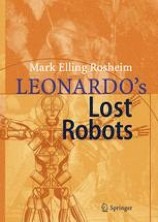
Leonardo´s Lost Robots
Reinterprets Leonardo's legacy of notes, showing that apparently unconnected fragments from dispersed manuscripts actually comprise cohesive designs for functioning automata. Using the rough sketches scattered throughout almost all of Leonardo's notebooks, the author has reconstructed Leonardo's programmable cart, which was the platform for other automata: a Robot Lion, a Robot Knight, and a hydraulically powered automaton for striking a bell.

Leibniz and the natural world : Activity, passivity and corporeal substances in Leibniz's Philosophy
In the present book, Pauline Phemister argues against traditional Anglo-American interpretations of Leibniz as an idealist who conceives ultimate reality as a plurality of mind-like immaterial beings and for whom physical bodies are ultimately unreal and our perceptions of them illusory. Re-reading the texts without the prior assumption of idealism allows the more material aspects of Leibniz's metaphysics to emerge. Leibniz is found to advance a synthesis of idealism and materialism. His ontology posits indivisible, living, animal-like corporeal substances as the real metaphysical constituents of the universe; his epistemology combines sense-experience and reason; and his ethics fuses confused perceptions and insensible appetites with distinct perceptions and rational choice. In the light of his sustained commitment to the reality of bodies, Phemister re-examines his dynamics, the doctrine of pre-established harmony and his views on freedom.
Leibniz : What Kind of Rationalist?
The chapters of the book are the result of intense discussion in the course of an international conference focused on the title question of this book, and were selected in view of their contribution to this topic. They are clustered in thematically organized parts. No effort has been made to hide the controversies underlying the different interpretations of Leibniz’s “rationalism” – in each particular domain and as a whole. On the contrary, the editor firmly believes that only through a variety of conflicting interpretive perspectives can the multi-faceted nature of an oeuvre of such a magnitude and variety as Leibniz’s be brought to light and understood as it deserves.

Learning Classifier Systems ; 10th International Workshop, IWLCS 2006, Seattle, MA, USA, July 8, 2006 and 11th International Workshop, IWLCS 2007, London, UK, July 8, 2007, Revised Selected Papers
Constitutes the thoroughly refereed joint post-conference proceedings of two consecutive International Workshops on Learning Classifier Systems that took place in Seattle, WA, USA in July 2006, and in London, UK, in July 2007 - all hosted by the Genetic and Evolutionary Computation Conference, GECCO.The 14 revised full papers presented were carefully reviewed and selected from the workshop contributions. The papers are organized in topical sections on knowledge representation, analysis of the system, mechanisms, new directions, as well as applications.

Le forme spastiche della paralisi cerebrale infantile : Guida all'esplorazione delle funzioni adattive = Spastic forms of cerebral palsy : A guide to exploring adaptive functions
Offers "travel notes" on the topics covered, to spark reflection and comparisons with the readers' experience. The authors address the topics from a pathophysiological perspective that guides their interpretation of the nature of the defect (functional diagnosis), the problems related to prognosis (as a natural history hypothesis), and rehabilitation (as a modification of the architecture of the function in an adaptive sense).The text is accompanied by an extensive glossary of terms used and a DVD with clinical cases, organized according to the authors' classification. This material also highlights the volume's great educational value, both for those already working in this field (physicians, child neuropsychiatrists and physiatrists, rehabilitation therapists) and for students completing their first and second level degrees in rehabilitation and attending postgraduate schools.

Languages and Compilers for Parallel Computing ; 21th International Workshop, LCPC 2008, Edmonton, Canada, July 31 - August 2, 2008, Revised Selected Papers
This book constitutes the thoroughly refereed post-conference proceedings of the 21th International Workshop on Languages and Compilers for Parallel Computing, LCPC 2008, held in Edmonton, Canada, in July/August 2008.The 18 revised full papers and 6 revised short papers presented were carefully reviewed and selected from 35 submissions. The papers address all aspects of languages, compiler techniques, run-time environments, and compiler-related performance evaluation for parallel and high-performance computing and comprise

Languages and Compilers for Parallel Computing ; 20th International Workshop, LCPC 2007, Urbana, IL, USA, October 11-13, 2007, Revised Selected Papers
This book constitutes the thoroughly refereed post-conference proceedings of the 20th International Workshop on Languages and Compilers for Parallel Computing, LCPC 2007, held in Urbana, IL, USA, in October 2007.The 23 revised full papers presented were carefully reviewed and selected from 49 submissions. The papers are organized in topical sections on reliability, languages, parallel compiler technology, libraries, run-time systems and performance analysis, and general compiler techniques.
Language, Meaning, Interpretation
Philosophy of logic and language, and of meaning and communication are central to this volume. The discussion of these issues involves analytical approaches, including semantics and semiotics, philosophy of science, mathematical logic, phenomenology, hermeneutics and some aspects of philosophical anthropology and aesthetics. Philosophy of the Absolute also belongs to this broad repertoire of philosophical problems and disciplines. A number of problems and viewpoints derive from the metaphysical system; any relativistic view on ethical values, for instance, makes sense in relation to some absolute. Metaphysical system building may have come to an end, but after all it belongs to philosophy to remind us of our past.

Language and Automata Theory and Applications ; 2nd International Conference, LATA 2008, Tarragona, Spain, March 13-19, 2008. Revised Papers
This book constitutes the refereed proceedings of the Second International Conference on Language and Automata Theory and Applications, LATA 2008, held in Tarragona, Spain, in March 2008.The 40 revised full papers presented were carefully reviewed and selected from 134 submissions. The papers deal with the various issues related to automata theory and formal languages

Lacroix and the Calculus
Lacroix and the Calculus is the first major study of Lacroix’s large Traité. It uses the unique and massive bibliography given by Lacroix to explore late 18th-century calculus, and the way it is reflected in Lacroix’s account. Several particular aspects are addressed in detail, including: the foundations of differential calculus, analytic and differential geometry, conceptions of the integral, and types of solutions of differential equations (singular/complete/general integrals, geometrical interpretations, and generality of arbitrary functions).
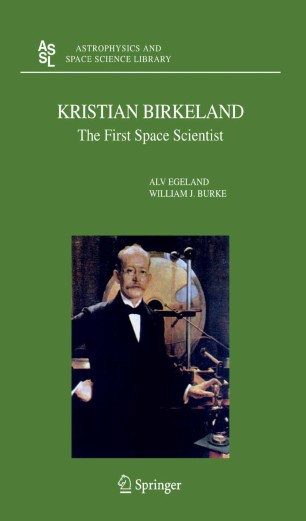
Kristian Birkeland : The First Space Scientist
PREFACEThisscientific biography of Kristian Birkeland (1867–1917) was written to bring the story ofa Norwegian national hero to the attention ofthe English-speaking world. Birkeland’sheroic stature was established not on a field of military battle,but in the bitter cold of the Artic wilderness ashe sought to answer basic questions abouthow the Sun controlled northern lights andmag-netic storms. He was also afather of Norsk Hydro one ofNorway’s largest industries. Birkel and died before reaching the age of 50.Because Birkel and never kept adiary, documented information about his family and private life is sparse. Before he died, Olaf Devik, the last of Birke-ffland’s close friends, gave along interview and graciously transferred his personal archive to A.E. Birkeland’s 82 scientific papers and three book-length publications map the progress of his investigations. addressed this book questions that had vexed European scientists for centuries. Why do the northern lights appear overhead when the Earth’s magnetic field is disturbed? How are magnetic storms connected to disturbances on the Sun? To answer these questions Birkeland interpreted his advance laboratory simulations and daring campaigns in the Arctic wilderness in the light of Maxwell’s newly discovered laws of electricity and magnetism. Birkeland’s ideas were dismissed for decades, only to be vindicated when satellites could fly above the Earth’s atmosphere.

Knowledge Management for Health Care Procedures ; From Knowledge to Global Care, AIME 2007 Workshop K4CARE 2007, Amsterdam, The Netherlands, July 7, 2007, Revised Selected Papers
The incursion of information and communication technologies (ICT) in health care entails evident bene?ts at the levels of security and efciency that improve not only the quality of life of the patients, but also the quality of the work of the health care professionals and the costs of national health care systems. Leaving research approaches aside, the analysis of ICT in health care shows an evo- tion from the initial interest in representing and storing health care data (i. e. , electronic health care records) to the current interest of having remote access to electronic health care systems, as for example HL7 initiatives or telemedicine. This sometimes imperceptible evolution can be interpreted as a new step of the progress path of health care informatics.
Knowledge and Information Visualization : Searching for Synergies
The basic ideas underlying knowledge visualization and information vi- alization are outlined. In a short preview of the contributions of this volume, the idea behind each approach and its contribution to the goals of the book are outlined. 2 The Basic Concepts of the Book Three basic concepts are the focus of this book: "data", "information", and "kno- edge". There have been numerous attempts to define the terms "data", "information", and "knowledge", among them, the OTEC Homepage "Data, Information, Kno- edge, and Wisdom" (Bellinger, Castro, & Mills, see http://www.syste- thinking.org/dikw/dikw.htm): Data are raw. They are symbols or isolated and non-interpreted facts. Data rep- sent a fact or statement of event without any relation to other data. Data simply exists and has no significance beyond its existence (in and of itself). It can exist in any form, usable or not. It does not have meaning of itself.
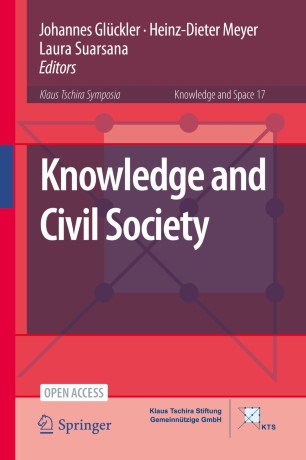
Knowledge and Civil Society
Focuses on the role of civil society in the creation, dissemination, and interpretation of knowledge in geographical contexts. It offers original, interdisciplinary and counterintuitive perspectives on civil society. The book includes reflections on civil and uncivil society, the role of civil society as a change agent, and on civil society perspectives of undone science. Conceptual approaches go beyond the tripartite division of public, private and civic sectors to propose new frameworks of civic networks and philanthropic fields, which take an inclusive view of the connectivity of civic agency across sectors.

Judges and Adjudication in Constitutional Democracies : A View from Legal Realism
Offers contributions to a philosophical and realistic approach to the place of adjudication in contemporary constitutional democracies. Bringing together scholars from different legal and philosophical backgrounds, purports to cast light on the role(s) of judges and the function of judicial interpretation inside of constitutional states, from the standpoint of legal realism as a revisited and sophisticated jurisprudential outlook. In so doing, also copes with a few major jurisprudential issues, like, e.g., determining the ideas that make up the core of legal realism, exploring the relation between legal realism and legal positivism, identifying the boundaries of judicial interpretation as they appear from a realist standpoint, as well as considering some skeptical outlooks on the very claims of contemporary legal realism.
Java 17 Recipes : A Problem-Solution Approach
Quickly find solutions to dozens of common programming problems encountered while building Java applications, with recipes presented in the popular problem-solution format. Look up the programming problem that you want to resolve. Read the solution. Apply the solution directly in your own code. Problem solved! covers of some of the newest features, APIs, and more such as pattern matching for switch, Restore Always-Strict-Floating-Point-Semantics, enhanced pseudo-random number generators, the vector API, sealed classes, and enhancements in the use of String. Source code for all recipes is available in a dedicated GitHub repository. This must-have reference belongs in your library. You will learn : Look up solutions to everyday problems involving Java SE 17 LTS and other recent releases / Develop Java SE applications using the latest in Java SE technology / Incorporate Java major features introduced in versions 17, 16, and 15 into your code
