



الصفحة 11
الصفحة 11

Growing Plantation Forests
Plantation forests are grown to supply wood and to provide environmental benefits, such as waste disposal, rehabilitation of degraded sites, enhancement of regional biodiversity and reduction of logging in native forests. In a highly readable fashion, this book describes the scientific principles which are used throughout the world to ensure rapid, healthy plantation growth. It is written for a world-wide audience, from forestry professionals and scientists through to small plantation growers, to describe how plantations may be grown responsibly and profitably.

Groundwater and Ecosystems
Groundwater Dependent Ecosystems (GDEs) frequently exhibit rich biological diversity and can provide enormous economic wealth. In recent years, GDEs in many industrialized countries have shown signs of serious degradation, primarily the result of groundwater abstraction and pollution. Many such systems, including a number of well documented cases in Eastern Europe, are no longer sustainable. As a consequence, the conservation and sustainable management of GDEs has emerged as one of the most urgent environmental research priorities of our time. A large percentage of the world’s population lives in cities and either depends on, or is affected in some way, by groundwater. Moreover, groundwater has become a very important and complex issue that attracts the interest of many diverse stakeholders. Many problems related to groundwater and ecosystems are shared by countries throughout the world and there is growing recognition that much can be gained by co-operation on an international scale.

Greening the Supply Chain
Since the Rio summit in 1992, the paradigm of corporate environmental responsibility has gradually and consistently extended beyond complying with increasingly stringent environmental regulation and taking up the proactive initiatives of a few world-class companies. Research indicates that the business and financial performance of companies may depend directly on socially and environmentally responsible business practices. Many world-class companies now realize that customers and other stakeholders do not distinguish between a company and its suppliers. As a result, greening the supply chain is an innovative idea which is fast gaining attention in the industry.

Greening the Industrial Facility : Perspectives, Approaches, and Tools
This book fills a critical gap as a textbook and reference book on the comprehensive environmental impacts of industrial organizations. It is intended for both upper-level undergraduate and beginning graduate students in environmental studies or engineering, and, more broadly, for practicing managers and engineers seeking to improve industrial processes. Nineteen chapters, each focusing on an industrial sector, from resource extraction through fabrication and manufacturing to recycling, evaluate the sector’s inherent "potential to pollute" by providing an overview of typical sector operations and their environmental implications. Beyond outlining and providing frameworks for assessing industrial facilities’ contemporary interactions with the environment (energy and water use, material throughput and hazard, and pollution potential), the book provides forward-looking analyses concerning how new technologies and practices can transform environmentally degrading effects of industry. It also addresses how managers can navigate these changes and move their industrial organizations towards environmental sustainability over the long term.

Graph theory
Graph theory is a flourishing discipline containing a body of beautiful and powerful theorems of wide applicability. Its explosive growth in recent years is mainly due to its role as an essential structure underpinning modern applied mathematics – computer science, combinatorial optimization, and operations research in particular – but also to its increasing application in the more applied sciences. The versatility of graphs makes them indispensable tools in the design and analysis of communication networks, for instance. The primary aim of this book is to present a coherent introduction to the subject, suitable as a textbook for advanced undergraduate and beginning graduate students in mathematics and computer science. It provides a systematic treatment of the theory of graphs without sacrificing its intuitive and aesthetic appeal. Commonly used proof techniques are described and illustrated, and a wealth of exercises - of varying levels of difficulty - are provided to help the reader master the techniques and reinforce their grasp of the material.

Graduate Attributes, Learning and Employability
In these complex and challenging times, students, teachers and employers are all interested in the development of generic abilities as these typically make the difference between good and indifferent employees, successful and unsuccessful learners. This book explains why generic capacities have become so important and argues that the process of acquiring them is both lifelong and developmental. By using case studies and theoretical analyses the authors collectively provide a comprehensive and contemporary coverage of the issues concerning generic abilities.

Gradients in a Tropical Mountain Ecosystem of Ecuador
This volume addresses a multitude of ecologically relevant aspects: macro- and microclimate; physics, chemistry and biology of soils; water relations, matter turnover and nutrient availability; plant growth and biomass partitioning; floral composition and plant life forms; vegetation structure and dynamics; organismic interactions, diversity and population biology of birds, moths and microarthropods; forest management, and reforestation with indigenous species; ethnobotanical and social aspects. New hypotheses are presented with regard to biodiversity and ecosystem functioning, as well as sustainable management of an ecosystem in a biodiversity hotspot.

Gradient Flows : in Metric Spaces and in the Space of Probability Measures ; 2nd ed.
Devoted to a theory of gradient flows in spaces which are not necessarily endowed with a natural linear or differentiable structure, this book focuses on gradient flows in metric spaces. It covers gradient flows in the space of probability measures on a separable Hilbert space, endowed with the Kantorovich-Rubinstein-Wasserstein distance.

Gradient Flows : In Metric Spaces and in the Space of Probability Measures ; 1st ed.
This book is devoted to a theory of gradient flows in spaces which are not nec- sarily endowed with a natural linear or differentiable structure. It is made of two parts, the first one concerning gradient flows in metric spaces and the second one 2 1 devoted to gradient flows in the L -Wasserstein space of probability measures on p a separable Hilbert space X (we consider the L -Wasserstein distance, p? (1,?), as well). The two parts have some connections, due to the fact that the Wasserstein space of probability measures provides an important model to which the “metric” theory applies, but the book is conceived in such a way that the two parts can be read independently, the first one by the reader more interested to Non-Smooth Analysis and Analysis in Metric Spaces, and the second one by the reader more oriented to theapplications in Partial Differential Equations, Measure Theory and Probability.

Graded Ferroelectrics, Transpacitors and Transponents
The primary focus of the book is directed toward polarization-graded ferroelectrics and their active components - transpacitors; however, the findings here are quite general. The theory of graded ferroics is put on a solid foundation in Chapters 2 and 5, whereas much of the introductory material relies more heavily upon analogy. This was done so as to provide the reader with an intuitive approach to graded ferroics. Heterogeneous ferroics are shown as logical extensions of passive semiconductor junction devices such as p-n and n-p diodes and their active manifestations: transistors, to transpacitors, transductors, translastics and ultimately to the general active ferroic elements, transponents.

Globalisation, Poverty and Conflict : A Critical 'Development' Reader
Is ‘development’ passé? Is it merely a by-product or a ‘trickle down’ effect of economic growth, spurred by globalisation? Will poverty simply diminish with increased global markets? This state-of-the-art critical ‘development’ reader deals with these and related questions. Globalisation, Poverty and Conflict examines the inter-relationships between globalisation, poverty and conflict. It complements current debates in the field of development studies and, in an era in which development fatigue seems to have become more profound than ever before, it brings the importance of development once again to the forefront. Achieving the Millennium Development Goals by 2015 is a concrete target which many governments have agreed to work towards.Whether these goals can be realised is another issue. Nonetheless, the Millennium Development Goals have brought more focused attention to development in the past few years and renewed debate about the relationships between the process of globalisation and widespread poverty and the emergence of violent conflicts. The authors in this edited volume discuss these inter-related and highly controversial topical elements of development in a number of chapters organised around three sets of issues: (1) globalisation, inequality and poverty; (2) governance, civil society and poverty; and (3) resource degradation, institutions and conflict. The contributions represent current thinking on (and practice of) development policy, poverty reduction, the need for multi-level democratic institutions, and the containing and prevention of conflicts. The authors confront the predominant mainstream ideas on ‘development’ and propose alternatives.
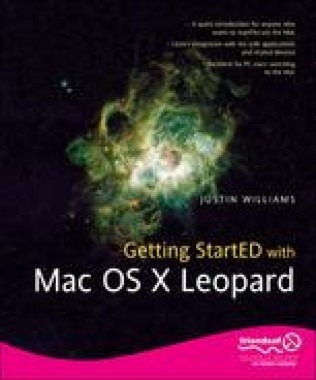
Getting StartED with Mac OS X Leopard
This book offers a simple to read, fast way to discover all that's new in Mac OS X Leopard, and how to make the most of it, whether you are new to the Mac, or simply upgrading from a previous version of Mac OS X.

Gettering Defects in Semiconductors
The authors address not only well-established gettering techniques but also describe contemporary trends in gettering technologies from an international perspective. The types and properties of structural defects in semiconductors, their generating and their transforming mechanisms during fabrication are described. The primary emphasis is placed on classifying and describing specific gettering techniques, their specificity arising from both their position in a general technological process and the regimes of their application. This book addresses both engineers and material scientists interested in semiconducting materials theory and also undergraduate and graduate students in solid–state microelectronics and nanoelectronics. A comprehensive list of references provides readers with direction for further reading.

Geometric and Topological Methods for Quantum Field Theory
This volume offers an introduction, in the form of four extensive lectures, to some recent developments in several active topics at the interface between geometry, topology and quantum field theory. The first lecture is by Christine Lescop on knot invariants and configuration spaces, in which a universal finite-type invariant for knots is constructed as a series of integrals over configuration spaces. This is followed by the contribution of Raimar Wulkenhaar on Euclidean quantum field theory from a statistical point of view. The author also discusses possible renormalization techniques on noncommutative spaces. The third lecture is by Anamaria Font and Stefan Theisen on string compactification with unbroken supersymmetry. The authors show that this requirement leads to internal spaces of special holonomy and describe Calabi-Yau manifolds in detail. The last lecture, by Thierry Fack, is devoted to a K-theory proof of the Atiyah-Singer index theorem and discusses some applications of K-theory to noncommutative geometry. These lectures notes, which are aimed in particular at graduate students in physics and mathematics, start with introductory material before presenting more advanced results. Each chapter is self-contained and can be read independently.

Game Theory : Decisions, Interaction and Evolution
This introduction to game theory is written from a mathematical perspective. Its primary purpose is to be a first course for undergraduate students of mathematics, but it also contains material which will be of interest to advanced students or researchers in biology and economics.An understanding of basic calculus and probability is assumed but no prior knowledge of game theory is required. Detailed solutions are provided for the numerous exercises.

Game Theory : A Multi-Leveled Approach
This book presents the basics of game theory both on an undergraduate level and on a more advanced mathematical level. It covers most topics of interest in game theory, including cooperative game theory. Part I presents introductions to all these topics on a basic yet formally precise level. It includes chapters on repeated games, social choice theory, and selected topics such as bargaining theory, exchange economies, and matching. Part II goes deeper into noncooperative theory and treats the theory of zerosum games, refinements of Nash equilibrium in strategic as well as extensive form games, and evolutionary games. Part III covers basic concepts in the theory of transferable utility games, such as core and balancedness, Shapley value and variations, and nucleolus. Some mathematical tools on duality and convexity are collected in Part IV. Every chapter in the book concludes with a problem section. Hints, answers and solutions are included.

Galactose Regulon of Yeast : From Genetics to Systems Biology
The galactose regulon of yeast is one of the best studied regulons. It is an ideal paradigm for demonstrating fundamental and evolving concepts in biology and is used in this book as a model system to explain various facets of conventional and modern biology. The book starts with a brief historical overview on yeast research, i.e. early observations in enzyme adaptation, classical genetics, formulating hypotheses based on genetic inference. This is followed by molecular genetics of the galactose regulon, isolation of genes and testing of the hypotheses. The power of mutational analysis in deciphering molecular mechanisms is conveyed. Further, contemporary topics such as genomics, evolution, single cell analysis of transcriptional switching, binary and graded responses, biological consequences of feed back regulation in genetic circuits, and stochasticity are addressed.

Fuzzy Logic, Identification and Predictive Control
Fuzzy Logic, Identification and Predictive Control is a comprehensive introduction to the use of fuzzy methods in many different control paradigms encompassing robust, model-based, PID-like and predictive control. This combination of fuzzy control theory and industrial serviceability will make a telling contribution to your research whether in the academic or industrial sphere and also serves as a fine roundup of the fuzzy control area for the graduate student

Fuzzy logic with engineering applications
With numerous examples and end-of-chapter problems, this book is essential reading for graduates and senior undergraduate students in civil, chemical, mechanical and electrical engineering as wells as researchers and practitioners working with fuzzy logic in industry.

Fuzzy Group Theory
This book presents an up-to-date account of research in important topics of fuzzy group theory. The book concentrates on the theoretical aspects of fuzzy subgroups of a group. It also includes applications to some abstract recognition problems and to coding theory. The book begins with basic properties of fuzzy subgroups. The notions of ascending series and descending series of fuzzy subgroups are used to define nilpotency of a fuzzy subgroup. The material presented in this book makes it a good reference for graduate students and researchers working in fuzzy group theory.
