



الصفحة 11
الصفحة 11

Information visualization : Human-centered issues and perspectives
This book is the outcome of the Dagstuhl Seminar on "Information Visualization -- Human-Centered Issues in Visual Representation, Interaction, and Evaluation" held at Dagstuhl Castle, Germany, from May 28 to June 1, 2007.Information Visualization (InfoVis) is a relatively new research area, which focuses on the use of visualization techniques to help people understand and analyze data.This book documents and extends the findings and discussions of the various sessions in detail.

Information Processing with Evolutionary Algorithms : From Industrial Applications to Academic Speculations
The last decade of the 20th century has witnessed a surge of interest in num- ical, computation-intensive approaches to information processing. The lines that draw the boundaries among statistics, optimization, arti cial intelligence and information processing are disappearing, and it is not uncommon to nd well-founded and sophisticated mathematical approaches in application - mains traditionally associated with ad-hoc programming. Heuristics has - come a branch of optimization and statistics. Clustering is applied to analyze soft data and to provide fast indexing in the World Wide Web. Non-trivial matrix algebra is at the heart of the last advances in computer vision. The breakthrough impulse was, apparently, due to the rise of the interest in arti cial neural networks, after its rediscovery in the late 1980s. Disguised as ANN, numerical and statistical methods made an appearance in the - formation processing scene, and others followed. A key component in many intelligent computational processing is the search for an optimal value of some function. Sometimes, this function is not evident and it must be made explicit in order to formulate the problem as an optimization problem. The search - ten takes place in high-dimensional spaces that can be either discrete, or c- tinuous or mixed. The shape of the high-dimensional surface that corresponds to the optimized function is usually very complex. Evolutionary algorithms are increasingly being applied to information processing applications that require any kind of optimization.

Information Hiding ; 10th International Workshop, IH 2008, Santa Barbara, CA, USA, May 19-21, 2008, Revised Selected Papers
This book constitutes the thoroughly refereed post-workshop proceedings of the 10th International Workshop on Information Hiding, IH 2008, held in Santa Barbara, CA, USA, in May 2008.The 25 revised full papers presented were carefully reviewed and selected from 64 submissions. The papers are organized in topical sections on anonymity and privacy, steganography, forensics, novel technologies and applications, watermarking, steganalysis, other hiding domains, network security, and fingerprinting.

Information Governance : Concepts, Strategies and Best Practices
Information Governance is a highly practical and deeply informative handbook for the implementation of effective Information Governance (IG) procedures and strategies. A critical facet of any mid- to large-sized company, this “super-discipline” has expanded to cover the management and output of information across the entire organization; from email, social media, and cloud computing to electronic records and documents, the IG umbrella now covers nearly every aspect of your business. As more and more everyday business is conducted electronically, the need for robust internal management and compliance grows accordingly.

Information Fusion and Geographic Information Systems ; Proceedings of the Third International Workshop
This volume contains the papers presented at the International Workshop “Inf- mation Fusion and Geographical Information Systems” (IF&GIS’07) held in St. Petersburg, Russia, 2007. Research in the Geosciences field interprets the concept of Information Fusion as a synonym of an approach that permits research into all the problems and issues which program-makers and scientific researchers are faced with. Thus, topics that are to be covered during the workshop relate to issues such as harmonization, - tegration and information fusion. At the same time the spectrum of problems - der discussion exceeds the current bounds of developing GIS applications. This is a significant modern trend since GIS technology is more often used as an interface in support and decision making systems. As a result, it is difficult to consider Geoinformation Science without considering related scientific directions such as Ontology, Artificial Intelligent Systems and Situation Management.
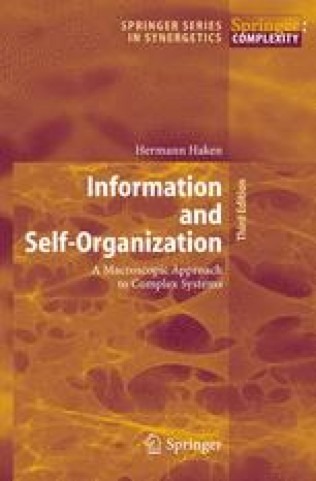
Information and self-organization : A macroscopic approach to complex systems
This book presents the concepts needed to deal with self-organizing complex systems from a unifying point of view that uses macroscopic data. The various meanings of the concept "information" are discussed and a general formulation of the maximum information (entropy) principle is used. With the aid of results from synergetics, adequate objective constraints for a large class of self-organizing systems are formulated and examples are given from physics, life and computer science. The relationship to chaos theory is examined and it is further shown that, based on possibly scarce and noisy data, unbiased guesses about processes of complex systems can be made and the underlying deterministic and random forces determined. This allows for probabilistic predictions of processes, with applications to numerous fields in science, technology, medicine and economics. The extensions of the third edition are essentially devoted to an introduction to the meaning of information in the quantum context. Indeed, quantum information science and technology is presently one of the most active fields of research at the interface of physics, technology and information sciences and has already established itself as one of the major future technologies for processing and communicating information on any scale.

Information and knowledge : A constructive type-theoretical approach
This book develops a philosophical and logical interpretation of the concept of information within the formal structure of Constructive Type Theory (CTT), in a manner concurrent with a diverse range of contemporary perspectives on the philosophy of information. On the basis of this conceptual framework, the problem of analyticity for logical derivations is faced and a solution is proposed.The text begins with a presentation of the formal structure of CTT, paying particular attention to some topics that have been neglected by current researchers in Type Theory. Information and Knowledge presents a new interesting perspective on the constructive interpretation of knowledge processes, suggesting the reliability of such an approach for the logical modeling of epistemic problems and proposing a unifying frame from one of the more important contemporary philosophical perspectives.

Industrial Robots Programming : Building Applications for the Factories of the Future
Industrial Robots Programming focuses on designing and building robotic manufacturing cells, and explores the capabilities of today’s industrial equipment as well as the latest computer and software technologies. Special attention is given to the input devices and systems that create efficient human-machine interfaces, and how they help non-technical personnel perform necessary programming, control, and supervision tasks.

Induction, Algorithmic Learning Theory, and Philosophy
This is the first book to collect essays from philosophers, mathematicians and computer scientists working at the exciting interface of algorithmic learning theory and the epistemology of science and inductive inference. Readable, introductory essays provide engaging surveys of different, complementary, and mutually inspiring approaches to the topic, both from a philosophical and a mathematical viewpoint.

Individual Criminal Responsibility for Core International Crimes : Selected Pertinent Issues
The media has, of course, played a crucial role in increasing awareness of this concept, especially amongst the general populace. Indeed, the concept has, arguably, a much higher profile today, than ever before in its history. However, the concept of individual criminal responsibility for core inter- tional crimes is neither as straightforward nor as single-facetted, as might appear on first glance. While the general principle behind the concept does not generate too many difficulties, it is in its practical application that the more challenging aspects of the concept are brought to the fore. Each of these ‘challenging - pects’ can also be described as a ‘pertinent issue’ of the concept of individual criminal responsibility for core international crimes.

Inclusion, Education and Translanguaging : How to Promote Social Justice in (Teacher) Education?
This book is designed as an international anthology on the broader subject of inclusion, education, social justice and translanguaging. Prefaced by Ofelia García, the volume unites conceptional and empirical contributions focusing on various actors within educational institutions, from early childhood to secondary education and teacher training, while offering insights into multiple European and North-American educational systems.

Implant surfaces and their biological and clinical impact
Provides the reader with the knowledge required in order to understand the chemical, physical, mechanical, and topographical aspects of implant surfaces, as well as their impact on the biological response.
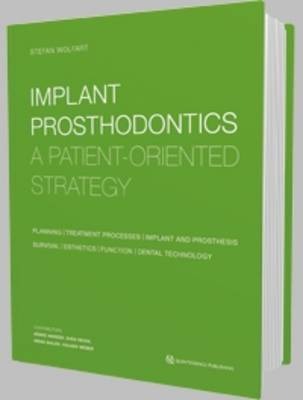
Implant prosthodontics : A patient-oriented strategy
Presents a coherent, evidence-based concept of prosthesis-oriented implant placement and individual esthetic prosthodontic restoration, conceptualized in detail from the first stages of planning to the aftercare period. The key interfaces between implantologist and prosthodontist, prosthodontist and dental technician, and also between the patient and the treatment team, are explained in detail.Sure to become a future standard text, this book is a must-have, not only for implantologists and prosthodontists, but also for the overwhelming majority of dentists and dental technicians.

Immunogenetics of Autoimmune Disease
Utoimmunity is the downstream outcome of a rather extensive and coordinated series of events that include loss of self-tolerance, peripheral lymphocyte Aactivation, disruption of the blood-systems barriers, cellular infiltration into the target organs and local inflammation. Cytokines, adhesion molecules, growth factors, antibodies, and other molecules induce and regulate critical cell functions that perpetuate inflammation, leading to tissue injury and clinical phenotype. The nature and intensity of this response as well as the physiological ability to restore homeostasis are to a large extent conditioned by the unique amino acid sequences that define allelic variants on each of the numerous participating mol ecules. Therefore, the coding genes in their germline configuration play a primary role in determining who is at risk for developing such disorders, how the disease progresses, and how someone responds to therapy. Although genetic components in these diseases are clearly present, the lack of obvious and homogeneous modes of transmission has slowed progress by prevent ing the full exploitation of classical genetic epidemiologic techniques. Furthermore, autoimmune diseases are characterized by modest disease risk heritability and m- tifaceted interactions with environmental influences. Yet, several recent discoveries have dramatically changed our ability to examine genetic variation as it relates to human disease. In addition to the development of large-scale laboratory methods and tools to efficiently recognize and catalog DNA diversity, over the past few years there has been real progress in the application of new analytical and data-manage ment approaches

Immobilisation of DNA on Chips II
DNA chips are gaining increasing importance in different fields ranging from medicine to analytical chemistry with applications in the latter in food safety and food quality issues as well as in environmental protection. In the medical field, DNA chips are frequently used in arrays for gene expression studies to identify diseased cells due to over- or under-expression of certain genes, to follow the response of drug treatments, or to grade cancers), for genotyping of individuals, for the detection of single nucleotide polymorphisms, point mutations, and short tandem reports, or moreover for genome and transcriptome analyses in the quasi post-genomic sequencing era. Furthermore, due to some unique properties of DNA molecules, self-assembled layers of DNA are promising candidates in the field of molecular electronics.the main focus of these two volumes is on the immobilization chemistry, considering the various aspects of the immobilization process itself, since different types of nucleic acids, support materials, surface activation chemistries and patterning tools are of key concern.

Immobilisation of DNA on Chips I
the main focus of these two volumes is on the immobilization chemistry, considering the various aspects of the immobilization process itself, since different types of nucleic acids, support materials, surface activation chemistries and patterning tools are of key concern.the focus of the major part of the chapters lies on the coupling chemistry used for DNA immobilization. Successful immobilization techniques for DNA appear to either involve a multi-site attachment of DNA (preferentially by electrochemical and/or physical adsorption) or a single-point attachment of DNA (mainly by surface activation and covalent immobilization or (strept)avidin-biotin linkage).

Immigration Policy and the Labor Market : The German Experience and Lessons for Europe
German and European immigration policies have only recently begun to cope with the inevitable: growing labor demand in the face of high unemployment and a shrinking labor force due to demographic change. Despite the implementation of Germany's first immigration act and several European initiatives towards legal harmonization at the EU level, an actively controlling immigration policy, which would be needed to master the challenges ahead, is not yet in sight. Against this background, the book draws conclusions from the German history of immigration policy. It analyzes the country's future demand for immigration and develops an economic model for the effective selection and integration of labor migrants that could provide the foundation for a joint European immigration strategy.

Imaging of Carotid Artery Stenosis
This book take the reader step by step through illustrated descriptions of state-of-the-art imaging techniques that they have helped to develop, and demonstrate that these techniques are crucial in the management of patients. This book covers all facets of imaging in carotid artery stenosis and gives an outlook to future aspects. The "take-home-messages" at the end of each chapter are a quick help in daily practice.

Image and video encryption : From digital rights management to secured personal communication
Image and Video Encryption provides a unified overview of techniques for encryption of images and video data. This ranges from commercial applications like DVD or DVB to more research oriented topics and recently published material. This volume introduces different techniques from unified viewpoint, then evaluates these techniques with respect to their respective properties (e.g., security, speed.....). Encryption of visual data is an important topic in the area of mutimedia security, applications range from digital rights management (DVD, DVB) ) to secure personal communications. Within this topic area, we face several aims which contradict each other. What we thrive on is good compression, fast compression, high security, fast encryption, bitstream compliance, little power consumption and little memory requirements. The authors experimentally compare different approaches proposed in the literature and include an extensive bibliography of corresponding published material. Image and Video Encryption is designed for a professional audience composed of researchers and practitioners in industry. The book is also suitable for graduate-level students in computer science and electrical engineering.

Image and Signal Processing ; 3rd International Conference, ICISP 2008. Cherbourg-Octeville, France, July 1 - 3, 2008. Proceedings
This book constitutes the refereed proceedings of the Third International Conference on Image and Signal Processing, ICISP 2008, held in Cherbourg-Octeville, France, in July 2008.The 48 revised full papers and 22 revised poster papers presented were carefully reviewed and selected from 193 submissions. The papers are organized in topical sections on image filtering, image segmentation, computer vision, feature extraction, pattern recognition, graph-based representations, motion detection and estimation, new interfaces, document processing, and signal processing.
