



الصفحة 11
الصفحة 11

Computer-Aided Design of User Interfaces V ; Proceedings of the 6th International Conference on Computer-Aided Design of User Interfaces CADUI '06 (6-8 June 2006, Bucharest, Romania)
Today, the development life cycle of 3D User Interfaces (UIs) mostly remains an art more than a principled-based approach. Several methods [1,3,7,8,9,10,11,15,17,18,19] have been introduced to decompose this life cycle into steps and sub-steps, but these methods rarely provide the design knowledge that should be typically used for achieving each step. In addition, the development life cycle is more focusing directly on the programming - sues than on the design and analysis phases. This is sometimes reinforced by the fact that available tools for 3D UIs are toolkits, interface builders, r- dering engines, etc. When there is such a development life cycle defined, it is typically structured into the following set of activities: 1. The conceptual phase is characterized by the identification of the content and interaction requests. The meta-author discusses with the interface designer to take advantage of the current interaction technology. The int- face designer receives information about the content. The result of this phase is the production of UI schemes (e. g. , written sentences, visual schemes on paper) for defining classes of interactive experiences (e. g. , class Guided tour). Conceptual schemes are produced both for the final users and the authors. The meta-author has a deep knowledge of the c- tent domain and didactic skills too. He/she communicates with the final user too, in order to focus on didactic aspects of interaction. 2.

Computer security principles and practice
Provides an up-to-date survey of developments in computer security. Central problems that confront security designers and security administrators include defining the threats to computer and network systems, evaluating the relative risks of these threats, and developing cost-effective and user friendly countermeasures

Computer Insecurity : Risking the System
Security is one of the most significant issues facing the owners and users of computer systems in the Internet age, and recent years have convincingly illustrated that the problem is increasing in both scale and cost. Computer Insecurity: Risking the System approaches its topic from the perspective of vulnerability – how can your system be attacked? Covering technical issues and human factors, the comprehensively researched text makes reference to numerous real-life security incidents, which help to provide persuasive practical evidence of the problems and the impacts that result. Key issues covered include: • the problem of computer insecurity • the need to raise security awareness • common failings that compromise protection • the attack and exploitation of systems • considerations in responding to the threats

Computational Structural Concrete : Theory and Applications
Concrete is by far the most used building material due to its advantages: it is shapeable, cost-effective and available everywhere. Combined with reinforcement it provides an immense bandwidth of properties and may be customized for a huge range of purposes. Thus, concrete is the building material of the 20th century. To be the building material of the 21th century its sustainability has to move into focus. Reinforced concrete structures have to be designed expending less material whereby their load carrying potential has to be fully utilized.

Computational Materials Chemistry : Methods and Applications
As a result of the advancements in algorithms and the huge increase in speed of computers over the past decade, electronic structure calculations have evolved into a valuable tool for characterizing surface species and for elucidating the pathways for their formation and reactivity. It is also now possible to calculate, including electric field effects, STM images for surface structures. To date the calculation of such images has been dominated by density functional methods, primarily because the computational cost of - curate wave-function based calculations using either realistic cluster or slab models would be prohibitive. DFT calculations have proven especially valuable for elucidating chemical processes on silicon and other semiconductor surfaces. However, it is also clear that some of the systems to which DFT methods have been applied have large non-dynamical correlation effects, which may not be properly handled by the current generation of Kohn-Sham-based density functionals. For example, our CASSCF calculations on the Si(001)/acetylene system reveal that at some geometries there is extensive 86 configuration mixing. This, in turn, could signal problems for DFT cal- lations on these systems.

Collaborative Engineering: Theory and Practice
Collaborative Engineering: Theory and Practice offers insights into the methods and techniques involved in implementing a systematic approach to the integrated, concurrent design of products and related processes, including manufacturing, product service and support. The approach discussed here will help developers consider all elements of the product life cycle from conception through disposal, including quality, cost, schedule, and user requirements.
Cognitive Supervision for Robot-Assisted Minimally Invasive Laser Surgery
This thesis lays the groundwork for the automatic supervision of the laser incision process, which aims to complement surgeons’ perception of the state of tissues and enhance their control over laser incisions. The research problem is formulated as the estimation of variables that are representative of the state of tissues during laser cutting. Prior research in this area leveraged numerical computation methods that bear a high computational cost and are not straightforward to use in a surgical setting. This book proposes a novel solution to this problem, using models inspired by the ability of experienced surgeons to perform precise and clean laser cutting. It shows that these new models, which were extracted from experimental data using statistical learning techniques, are straightforward to use in a surgical setup, allowing greater precision in laser-based surgical procedures.

CMOS single chip fast frequency hopping synthesizers for Wireless multi-gigahertz applications : Design methodology, analysis, and implementation
Describes an efficient design and characterization methodology that has been developed to study loop trade-offs in both open and close loop modelling techniques. This is based on a simulation platform that incorporates both behavioral models and measured/simulated sub-blocks of the chosen frequency synthesizer. The platform predicts accurately the phase noise, spurious and switching performance of the final design. Therefore excellent phase noise and spurious performance can be achieved while meeting all the specified requirements. The design methodology reduces the need for silicon re-spin enabling circuit designers to directly meet cost, performance and schedule milestones. The developed knowledge and techniques have been used in the successful design and implementation of two high speed multi-mode fractional-N frequency synthesizers for the IEEE 801.11a/b/g standards. Both synthesizer designs are described in details.

CMOS Biotechnology
"CMOS Biotechnology reviews the recent research and developments joining CMOS technology with biology. Written by leading researchers these chapters delve into four areas including: Microfluidics for electrical engineers / CMOS Actuators CMOS Electrical Sensors CMOS Optical Sensors Bioanalytical instruments have been miniaturized on ICs to study various biophenomena or to actuate biosystems. These bio-lab-on-IC systems utilize the IC to facilitate faster, repeatable, and standardized biological experiments at low cost with a small volume of biological sample. CMOS Biotechnology will interest electrical engineers, bioengineers, biophysicists as well as researchers in MEMS, bioMEMS, microelectronics, microfluidics, and circuits and systems."

Clinical Research Methods for Surgeons
The text addresses the clinical research questions facing 21st century surgeons, and provides clear direction on how to incorporate sophisticated research techniques into practice. In addition to the surgical generalist, this practical volume is specifically oriented to surgeons who treat unique diseases, yet have no single resource to facilitate clinical research in these specific areas. This comprehensive and easy-to-use guide encompasses the entire process of clinical study design, application, and assessment. Part One is aimed at the young surgeon about to engage in new studies, and gives a general overview of the infrastructure of clinical research. Parts Two and Three are geared towards experienced investigators interested in pursuing clinical research and surgeons reviewing the literature for practical application. Part Two focuses on study design and related statistical issues, while Part Three is concerned with measuring and assessing the outcome of clinical studies. Part Four presents topics of interest to the active investigator, such as quality of care and cost-effectiveness analyses. Clinical Research Methods for Surgeons is relevant to both beginning investigators and established researchers, and addresses the unique concerns of surgical diseases and acknowledges that they require special approaches to deal with clinical questions.
Materials Issues for Generation IV Systems ; Status, Open Questions and Challenges
Global warming, shortage of low-cost oil resources and the increasing demand for energy are currently controlling the world's economic expansion while often opposing desires for sustainable and peaceful development. In this context, atomic energy satisfactorily fulfills the criteria of low carbon gas production and high overall yield. However, in the absence of industrial fast-breeders the use of nuclear fuel is not optimal, and the production of high activity waste materials is at a maximum. These are the principal reasons for the development of a new, fourth generation of nuclear reactors, minimizing the undesirable side-effects of current nuclear energy production technology while increasing yields by increasing operation temperatures and opening the way for the industrial production of hydrogen through the decomposition of water.
Material Flow Management : Improving Cost Efficiency and Environmental Performance
The implementation of material flow management offers enterprises a high potential for realizing new economic competitive advantages. The eco-efficient optimization of material flows aims at reducing costs while simultaneously achieving long-term sustainability with regard to ecological and societal aspects. Knowledge of existing methods and the latest trends is a key prerequisite for successfully implementing, refining and disseminating material flow management approaches.
Masterpieces of Swiss Entrepreneurship : Swiss SMEs Competing in Global Markets
This book focuses on Switzerland-based medium-sized companies with a longstanding export tradition and a proven dominance in global niche markets. Based upon in-depth documentation and analysis of 36 Swiss companies over their entire history, an expert team of authors presents several parallels in the pathways and success factors which allowed these firms to become dominant and operate from a high-cost location such as Switzerland.
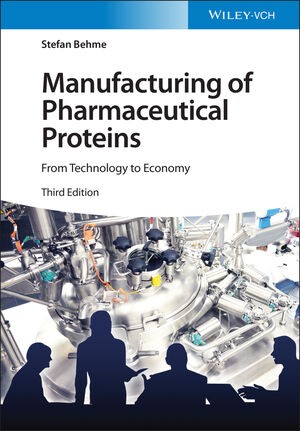
Manufacturing of Pharmaceutical Proteins: From Technology to Economy
Manufacturing of Pharmaceutical Proteins: From Technology to Economy, renowned chemical engineer Dr. Stefan Behme delivers a comprehensive text covering all aspects of biopharmaceutical manufacturing, including legal and regulatory considerations, production facility design, quality assurance, supply chain management, emerging market regulations, and cost control.
Managing public services : Making informed choices
Chapters provide a valuable frame of reference for the 21st-century manager of public services by assessing the renewal of existing practices such as strategic costing, performance management, digitization and procurement and innovations in management practices, including branding, Lean Management, resilience and risk management. The book suggests that, as the management of public services is imbued with financial, social, economic and political uncertainties, management needs to be flexible and responsive to new ideas and practices to fulfil its purpose. This book ultimately supports the reflective manager, those who think about their job and are open to new ideas on how their job can be done better, by revisiting existing practices and examining innovations in public management.

Managing Business Projects : The Essentials
Strong emphasis is placed on things that happen before, around, and after the project itself. So, while the basic disciplines like engaging with stakeholders, managing scope, schedules, costs, risks, issues, changes, and communication, are thoroughly explained, other important aspects are covered. These include: governance of a project and of a portfolio of projects, project selection with its financial and non-financial aspects, effective use of the business case through to benefits realization, procurement, outsourcing and partnership, and also the agile mindset that is valuable beyond Agile projects.
Management Quality and Competitiveness : Lessons from the Industrial Excellence Award
This book showcases examples of excellent manufacturing companies who have succeeded in creating value and job growth in Western Europe. The examples show managers of industrial firms how a clearly articulated strategic position can be combined with excellent execution to achieve competitiveness in Europe, in spite of the usually cited disadvantage of high labor costs and rigidity. Not every company is alike — strategic positions differ, and the means of execution differ, but what is common is a clear plan together with mobilization of all employees to apply their abilities in supporting this common plan. The book is indispensable reading for all managers that are interested in improving competitiveness.
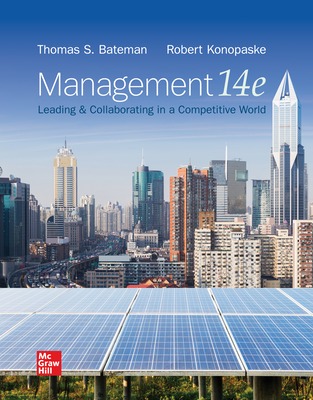
Management : Leading & collaborating in a competitive world
Management: Leading and Collaborating in a Competitive World is the perspective of a current or future manager and emphasizes six essential performance dimensions: cost, quality, speed, innovation, service, and sustainability. This bottom-line, results-oriented approach is a unique hallmark of this text. Leadership is also a vital theme and includes working collaboratively toward outstanding results

Making Globally Distributed Software Development a Success Story : International Conference on Software Process, ICSP 2008 Leipzig, Germany, May 10-11, 2008 Proceedings
This volume contains papers presented at the International Conference on Software Process (ICSP 2008) held in Leipzig, Germany, during May 10-11, 2008. ICSP 2008 was the second conference of the ICSP series. The theme of ICSP 2008 was “Making Globally Distributed Software Development a Success Story. ” Software developers work in a dynamic context of frequently changing technologies and with limited resources. Globally distributed development teams are under ev- increasing pressure to deliver their products more quickly and with higher levels of qu- ity. At the same time, global competition is forcing software development organizations to cut costs by rationalizing processes, outsourcing part of or all development activities, reusing existing software in new or modified applications, and evolving existing systems to meet new needs, while still minimizing the risk of projects failing to deliver.

Maintenance of brick and stone masonry structures
Deals with all the tasks related to brick and stone masonry structures, from the initial identification of defects and their diagnosis to their treatment and monitoring of its cost-effectiveness.
