



الصفحة 11
الصفحة 11
Mathematical Linguistics
Mathematical Linguistics introduces the mathematical foundations of linguistics to computer scientists, engineers, and mathematicians interested in natural language processing. The book presents linguistics as a cumulative body of knowledge from the ground up, with no prior knowledge of linguistics being assumed, covering more than the average two-semester introductory course in linguistics.This comprehensive, reader-friendly volume offers readers a high-level orientation, discussing the foundations of the field and presenting both the classical work and the most recent results. It covers an extremely rich array of topics including not only syntax and semantics but also phonology and morphology, probabilistic approaches, complexity, learnability, and the analysis of speech and handwriting.
Mathematical Formulas for Economists
This collection of formulas constitutes a compendium of mathematics for eco nomics and business. It contains the most important formulas, statements and algorithms in this significant subfield of modern mathematics and addresses primarily students of economics or business at universities, colleges and trade schools. But people dealing with practical or applied problems will also find this collection to be an efiicient and easy-to-use work of reference. First the book treats mathematical symbols and constants, sets and state ments, number systems and their arithmetic as well as fundamentals of com binatorics. The chapter on sequences and series is followed by mathematics of finance, the representation of functions of one and several independent vari ables, their differential and integral calculus and by differential and difference equations. In each case special emphasis is placed on applications and models in economics. The chapter on linear algebra deals with matrices, vectors, determinants and systems of linear equations. This is followed by the representation of struc tures and algorithms of linear programming. Finally, the reader finds formu las on descriptive statistics (data analysis, ratios, inventory and time series analysis), on probability theory (events, probabilities, random variables and distributions) and on inductive statistics (point and interval estimates, tests). Some important tables complete the work.
Markov Chains : Models, Algorithms and Applications
Markov chains are a particularly powerful and widely used tool for analyzing a variety of stochastic (probabilistic) systems over time. This monograph will present a series of Markov models, starting from the basic models and then building up to higher-order models. Included in the higher-order discussions are multivariate models, higher-order multivariate models, and higher-order hidden models. In each case, the focus is on the important kinds of applications that can be made with the class of models being considered in the current chapter. Special attention is given to numerical algorithms that can efficiently solve the models. Therefore, Markov Chains: Models, Algorithms and Applications outlines recent developments of Markov chain models for modeling queueing sequences, Internet, re-manufacturing systems, reverse logistics, inventory systems, bio-informatics, DNA sequences, genetic networks, data mining, and many other practical systems.
Markets, Games, and Strategic Behavior : An Introduction to Experimental Economics
This is the perfect book for any undergraduate course in experimental economics or behavioral game theory. New material on topics such as matching, belief elicitation, repeated games, prospect theory, probabilistic choice, macro experiments, and statistical analysis Participatory experiments that connect behavioral theory and laboratory research Largely self-contained chapters that can each be covered in a single class Guidance for instructors on setting up classroom experiments, with either hand-run procedures or free online software End-of-chapter problems, including some conceptual-design questions, with hints or partial solutions provided
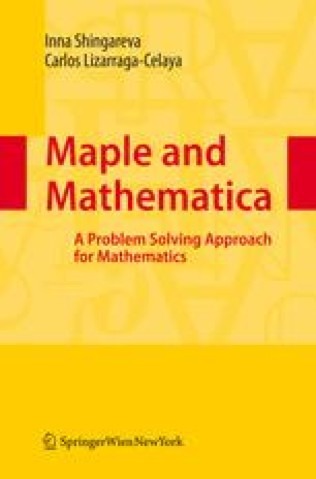
Maple and Mathematica : A Problem Solving Approach for Mathematics
the history of mathematics there are many situations in which cal- lations were performed incorrectly for important practical applications. the history of computing the number began in Egypt and Babylon about 2000 years BC, since then many mathematicians have calculated (e. g. , Archimedes, Ptolemy, Vi` ete, etc. ). In modern mathematics there exist computers that can perform various mathematical operations for which humans are incapable. Therefore the computers can be used to verify the results obtained by humans, to discovery new results, to - prove the result sthatahumancanobtain without anytechnology
Managing Global Innovation : Uncovering the Secrets of Future Competitiveness
"Managing Global Innovation is a rich compendium of new concepts of global R&D, enlivened by 18 excellent best-in-class case studies. What is especially impressive, the authors bridge seamlessly theoretical and practical issues about how companies create, transform and implement new technology in an expanding marketplace. This will be intriguing to both the industry and the academic world. The lessons learned are invaluable. The book is a real tour de force, probably destined to become a standard in this field for some time to come." Professor Jeff Huang, Harvard University "This excellent book demonstrates how the dynamics of innovation and creativity can be mastered. Important reading for senior management and a must for R&D leaders."

Maîtriser laléatoire : Exercices résolus de probabilités et statistique = Mastering Randomness : Solved Exercises in Probability and Statistics
Consists of 245 solved exercises that cover all the basic concepts of probability and statistics. The work is structured in nine chapters, each containing a brief introduction, bibliographic references to more specialized works, as well as a series of exercises and their detailed solutions. Ranked in increasing order of difficulty, these will allow the reader to appreciate the extent of his progress. This book can be used as a supplement to any theory manual on statistics and probability. Due to the great diversity of the examples offered, it will suit a diverse readership: students of economics, psychology, social sciences, mathematics, physics, chemistry, medicine or biology.

Macroeconomic Risk Management Against Natural Disasters : Analysis focussed on governments in developing countries
Natural disasters cause considerable economic damage. While developed countries usually are able to cope with the impacts of natural hazards, developing countries are faced with severe consequences for their resources. In order to prevent long-term macroeconomic repercussions, governments need a comprehensive disaster risk management strategy.Budgetary resources are allocated to pre-disaster risk management strategies to reduce the probability of financing gaps. The framework and model approach allows cross country comparisons as well as the assessment of financial vulnerability, macroeconomic risk, and risk management strategies.
Machine Learning and Probabilistic Graphical Models for Decision Support Systems
Presents recent advancements in research, a review of new methods and techniques, and applications in decision support systems (DSS) with Machine Learning and Probabilistic Graphical Models, which are very effective techniques in gaining knowledge from Big Data and in interpreting decisions. It explores Bayesian network learning, Control Chart, Reinforcement Learning for multicriteria DSS, Anomaly Detection in Smart Manufacturing with Federated Learning, DSS in healthcare, DSS for supply chain management, etc. Researchers and practitioners alike will benefit from this book to enhance the understanding of machine learning, Probabilistic Graphical Models, and their uses in DSS in the context of decision making with uncertainty. The real-world case studies in various fields with guidance and recommendations for the practical applications of these studies are introduced in each chapter.

Machine Learning and Knowledge Discovery in Databases ; European Conference, ECML PKDD 2008, Antwerp, Belgium, September 15-19, 2008, Proceedings, Part II
Constitutes the refereed proceedings of the joint conference on Machine Learning and Knowledge Discovery in Databases: ECML PKDD 2008, held in Antwerp, Belgium, in September 2008.The 100 papers presented in two volumes, together with 5 invited talks, were carefully reviewed and selected from 521 submissions. In addition to the regular papers the volume contains 14 abstracts of papers appearing in full version in the Machine Learning Journal and the Knowledge Discovery and Databases Journal of Springer.

Longer Life and Healthy Aging
Focuses on theoretical issues and empirical findings related to trends and determinants of healthy aging, including factors related to "healthy longevity" of the oldest-old, aged 80 and over. The group is the most rapidly increasing elderly sub-population and is most likely to need assistance in daily living in all countries. Chapters include both longitudinal and cross-sectional data from North America, Europe, and Asia in country-specific studies and cross-national comparisons. Part I focuses on the definition, components, concepts, measurements, and determinants of healthy aging, and discusses the trends and patterns of disability and healthy life expectancy at the macro level. Part II addresses individual healthy aging, including its biological and socio-demographic aspects. Part III focuses on issues concerning the family and healthy aging, and Part IV explores formal and informal care for healthy aging through governmental policy interventions and community service programs.

Logics in Artificial Intelligence ; 11th European Conference, JELIA 2008, Dresden, Germany, September 28-October 1, 2008. Proceedings
Constitutes the refereed proceedings of the 11th European Conference on Logics in Artificial Intelligence, JELIA 2008, held in Dresden, Germany, Liverpool, in September/October 2008.The 32 revised full papers presented together with 2 invited talks were carefully reviewed and selected from 98 submissions. The papers cover a broad range of topics including belief revision, description logics, non-monotonic reasoning, multi-agent systems, probabilistic logic, and temporal logic.
Linear and Generalized Linear Mixed Models and Their Applications
This book covers two major classes of mixed effects models—linear mixed models and generalized linear mixed models—and it presents an up-to-date account of theory and methods in analysis of these models as well as their applications in various fields. It offers a systematic approach to inference about non-Gaussian linear mixed models. Furthermore, it discusses the latest developments and methods in the field, incorporating relevant updates since publication of the first edition. These include advances in high-dimensional linear mixed models in genome-wide association studies (GWAS), advances in inference about generalized linear mixed models with crossed random effects, new methods in mixed model prediction, mixed model selection, and mixed model diagnostics.

Leveraging applications of formal methods, verification and validation : Verification Principles ; 9th International Symposium on Leveraging Applications of Formal Methods, ISoLA 2020, Rhodes, Greece, October 20–30, 2020, Proceedings, Part I
Constitutes the refereed proceedings of the 9th International Symposium on Leveraging Applications of Formal Methods, ISoLA 2020, which was planned to take place during October 20–30, 2020, on Rhodes, Greece. The papers presented were carefully reviewed and selected for inclusion in the proceedings. Each volume focusses on an individual topic with topical section headings within the volume : Part I, Verification Principles : Modularity and (De-)Composition in Verification ; X-by-Construction: Correctness meets Probability ; 30 Years of Statistical Model Checking ; Verification and Validation of Concurrent and Distributed Systems.
Level Crossing Methods in Stochastic Models
Since its inception in 1974, the level crossing approach for analyzing a large class of stochastic models has become increasingly popular among researchers. This volume traces the evolution of level crossing theory for obtaining probability distributions of state variables and demonstrates solution methods in a variety of stochastic models including: queues, inventories, dams, renewal models, counter models, pharmacokinetics, and the natural sciences. Results for both steady-state and transient distributions are given, and numerous examples help the reader apply the method to solve problems faster, more easily, and more intuitively.
Lectures on Probability Theory and Statistics : Ecole d'Eté de Probabilités de Saint-Flour XXXIII - 2003
Contains two of the three lectures that were given at the 33rd Probability Summer School in Saint-Flour (July 6-23, 2003). Amir Dembo’s course is devoted to recent studies of the fractal nature of random sets, focusing on some fine properties of the sample path of random walk and Brownian motion. In particular, the cover time for Markov chains, the dimension of discrete limsup random fractals, the multi-scale truncated second moment and the Ciesielski-Taylor identities are explored. Tadahisa Funaki’s course reviews recent developments of the mathematical theory on stochastic interface models, mostly on the so-called nabla varphi interface model. The results are formulated as classical limit theorems in probability theory, and the text serves with good applications of basic probability techniques.

Learning and Intelligent Optimization ; 2nd International Conference, LION 2007 II, Trento, Italy, December 8-12, 2007. Selected Papers
The papers cover current issues of machine learning, artificial intelligence, mathematical programming and algorithms for hard optimization problems and are organized in topical sections on improving optimization through learning, variable neighborhood search, insect colony optimization, applications, new paradigms, cliques, stochastic optimization, combinatorial optimization, fitness and landscapes, and particle swarm optimization.

Le raisonnement bayésien : Modélisation et inférence = Bayesian reasoning : Modeling and inference
Describes in detail the practice of the Bayesian statistical approach using many examples chosen for their educational interest. The first part gives the general principles of statistical modeling making it possible to supervise but also to come to the aid of the imagination of the apprentice modeler. By examining examples of increasing difficulty, the reader forges the keys to building their own model. The second part presents the most useful calculation algorithms for estimating the unknowns of the model. Each inference method is presented and illustrated by numerous application cases.

Le choix bayésien: Principes et pratique
Covers the so-called Bayesian approach to statistical inference and in particular its decision-making aspects. The bases of this axiomatics (choice of the a priori, optimal decisions, tests and regions of confidence) are discussed in detail, as well as more recent openings of Bayesian analysis such as the choice of models, the use of numerical methods. Stochastic approximation (MCMC), the theory of noninformative laws (Berger-Bernardo axioms) and the relation to the classical theory of admissibility. Each chapter is completed by an extensive series of exercises of increasing difficulty and by bibliographical notes on the themes addressed. This book can be used in a Master's program in Applied Mathematics, Biometrics, Econometrics or any other program that uses quantitative information processing techniques. It only requires a basic course in probability theory and mathematical statistics as a preliminary.

Landslide Risk Assessment ; 2nd ed.
Provides guidance to practitioners on establishing the likelihood and extent to which future slope failures could adversely impact society and affect people and property. The only book to focus on risk and landslides, using examples from across the globe, Landslide Risk Assessment examines a variety of approaches to landslide risk assessment and management, introducing the key challenges that practitioners will need to overcome: estimating the probability and consequences of landsliding, combining these to develop a measure of the risk, and making the transition between risk assessment and risk management.
