



الصفحة 11
الصفحة 11

Hybrid metaheuristics : An emerging approach to optimization
The book is intended both to provide an overview of hybrid metaheuristics to novices of the field, and to provide researchers from the field with a collection of some of the most interesting recent developments.

Hybrid Learning and Education ; 1st International Conference, ICHL 2008 Hong Kong, China, August 13-15, 2008 Proceedings
This book constitutes the refereed proceedings of the First International Conference on Hybrid Learning, ICHL 2008, held in Hong Kong, China, in August 2008.The 38 revised full papers presented together with 3 keynote lectures were carefully reviewed and selected from 142 submissions. The papers are organized in topical sections on hybrid education, model and pedagogies for hybrid learning, trends, pervasive learning, mobile and ubiquitous learning, hybrid learning experiences, hybrid learning systems, technologies, as well as contextual attitude and cultural effects.

Hybrid Intelligent Systems for Pattern Recognition Using Soft Computing : An Evolutionary Approach for Neural Networks and Fuzzy Systems
This monograph describes new methods for intelligent pattern recognition using soft computing techniques including neural networks, fuzzy logic, and genetic algorithms. Hybrid intelligent systems that combine several soft computing techniques are needed due to the complexity of pattern recognition problems.

Hybrid Estimation of Complex Systems
This monograph provides a tool-set for hybrid estimation that can successfully monitor the behavior of complex artifacts with a large number of possible operational and failure modes such as production plants, automotive or aeronautic systems, and autonomous robots.

Hybrid Artificial Intelligent Systems ; 15th International Conference, HAIS 2020, Gijón, Spain, November 11-13, 2020, Proceedings
This book constitutes the refereed proceedings of the 15th International Conference on Hybrid Artificial Intelligent Systems, HAIS 2020, held in Gijón, Spain, in November 2020. The 65 regular papers presented in this book were carefully reviewed and selected from 106 submissions. The papers are grouped into these topics: advanced data processing and visualization techniques; bio-inspired models and optimization; learning algorithms; data mining, knowledge discovery and big data; and hybrid artificial intelligence applications.

Human-computer interaction Symposium ; IFIP 20th World Computer Congress, Proceedings of the 1st TC 13 Human-Computer Interaction Symposium (HCIS 2008), September 7-10, 2008, Milano, Italy
The IFIP series publishes state-of-the-art results in the sciences and technologies of information and communication. The scope of the series includes: foundations of computer science; software theory and practice; education; computer applications in technology; communication systems; systems modeling and optimization; information systems; computers and society; computer systems technology; security and protection in information processing systems; artificial intelligence; and human-computer interaction. Proceedings and post-proceedings of refereed international conferences in computer science and interdisciplinary fields are featured.

Human work interaction design : Designing for human work ; The 1st IFIP TC 13.6 WG Conference: Designing for Human Work, February 13-15, 2006, Madeira, Portugal
International Federation for Information Processing The IFIP series publishes state-of-the-art results in the sciences and technologies of information and communication. The scope of the series includes: foundations of computer science; software theory and practice; education; computer applications in technology; communication systems; systems modeling and optimization; information systems; computers and society; computer systems technology; security and protection in information processing systems; artificial intelligence; and human-computer interaction. Proceedings and post-proceedings of referred international conferences in computer science and interdisciplinary fields are featured. These results often precede journal publication and represent the most current research. The principal aim of the IFIP series is to encourage education and the dissemination and exchange of information about all aspects of computing.

Human teeth : From function to esthetics
Provides a comprehensive overview of oral health. It includes twenty-one chapters that address such topics as dental anatomy and morphology, smile design, oral health, prosthetics and implantology, orthodontics, dental materials, use of artificial intelligence in dentistry, and regenerative medicine.

Human Interaction with Machines ; Proceedings of the 6th International Workshop held at the Shanghai JiaoTong University, March 15-16, 2005
The International Workshop on “Human Interaction with Machines” is the sixth in a successful series of workshops that were established by Shanghai Jiao Tong University and Technische Universität Berlin. The goal of those workshops is to bring together researchers from both universities in order to present research results to an international community. The series of workshops started in 1990 with the International Workshop on “Artificial Intelligence” and was continued with the International Workshop on “Advanced Software Technology” in 1994.

How humans judge machines
80 experimental scenarios help us understand how humans judge AIs as opposed to other humans in the same situation

How AI Impacts Urban Living and Public Health ; 17th International Conference, ICOST 2019, New York City, NY, USA, October 14-16, 2019, Proceedings
This book cover topics such as: e-health technology design; well-being technology; biomedical and health informatics; and smart environment technology.

Home-oriented informatics and telematics ; Proceedings of the IFIP WG 9.3 HOIT2005 Conference
The IFIP series publishes state-of-the-art results in the sciences and technologies of information and communication. The scope of the series includes: foundations of computer science; software theory and practice; education; computer applications in technology; communication systems; systems modeling and optimization; information systems; computers and society; computer systems technology; security and protection in information processing systems; artificial intelligence; and human-computer interaction. Proceedings and post-proceedings of referred international conferences in computer science and interdisciplinary fields are featured. These results often precede journal publication and represent the most current research. The principal aim of the IFIP series is to encourage education and the dissemination and exchange of information about all aspects of computing.

Home Networking ; 1st IFIP WG 6.2 Home Networking Conference (IHN’2007), Paris, France, December 10–12, 2007
The IFIP series publishes state-of-the-art results in the sciences and technologies of information and communication. The scope of the series includes: foundations of computer science; software theory and practice; education; computer applications in technology; communication systems; systems modeling and optimization; information systems; computers and society; computer systems technology; security and protection in information processing systems; artificial intelligence; and human-computer interaction. Proceedings and post-proceedings of referred international conferences in computer science and interdisciplinary fields are featured.

History of Nordic computing ; IFIP WG9.7 ; 1st Working conference on the history of Nordic computing (HiNC1), June 16-18, 2003, Trondheim, Norway
The IFIP series publishes state-of-the-art results in the sciences and technologies of information and communication. The scope of the series includes: foundations of computer science; software theory and practice; education; computer applications in technology; communication systems; systems modeling and optimization; information systems; computers and society; computer systems technology; security and protection in information processing systems; artificial intelligence; and human-computer interaction. Proceedings and post-proceedings of referred international conferences in computer science and interdisciplinary fields are featured. These results often precede journal publication and represent the most current research. The principal aim of the IFIP series is to encourage education and the dissemination and exchange of information about all aspects of computing.

History of Computing and Education 3 (Hce3) ; IFIP 20th World Computer Congress, Proceedings of the Third IFIP Conference on the History of Computing and Education WG 9.7/TC9, History of Computing, September 7–10, 2008, Milano, Italy
The IFIP series publishes state-of-the-art results in the sciences and technologies of information and communication. The scope of the series includes: foundations of computer science; software theory and practice; education; computer applications in technology; communication systems; systems modeling and optimization; information systems; computers and society; computer systems technology; security and protection in information processing systems; artificial intelligence; and human-computer interaction. Proceedings and post-proceedings of refereed international conferences in computer science and interdisciplinary fields are featured. These results often precede journal publication and represent the most current research.

History of computing and education 2 (HCE2) ; IFIP 19th World Computer Congress, WG 9.7, TC 9: History of computing, Proceedings of the 2nd Conference on the history of computing and education, August 21-24, Santiago, Chile
International Federation for Information Processing The IFIP series publishes state-of-the-art results in the sciences and technologies of information and communication. The scope of the series includes: foundations of computer science; software theory and practice; education; computer applications in technology; communication systems; systems modeling and optimization; information systems; computers and society; computer systems technology; security and protection in information processing systems; artificial intelligence; and human-computer interaction. Proceedings and post-proceedings of referred international conferences in computer science and interdisciplinary fields are featured. These results often precede journal publication and represent the most current research. The principal aim of the IFIP series is to encourage education and the dissemination and exchange of information about all aspects of computing.

High-Performance Modelling and Simulation for Big Data Applications: Selected Results of the COST Action IC1406 cHiPSet
This book is the final compendium of case studies emanated from “High-Performance Modelling and Simulation for Big Data Applications” (cHiPSet).cHiPSet has created a sustainable reference network linking applied research in High Performance Computing (HPC) and Modelling & Simulation to tangibly address Big Data challenges.cHiPSet has also endeavoured to use and exploit results through Open Science practices, i.e., open access publication, open access to data repositories, and open-source software development. A testament to this philosophy, this compendium is set to become a required reference for the fast-changing fields of HPC, Big Data, and Modelling & Simulation.

High performance computing for drug discovery and biomedicine
Explores the application of high-performance computing (HPC) technologies to computational drug discovery (CDD) and biomedicine. Collects CDD approaches that, together with HPC, can revolutionize and automate drug discovery process, such as knowledge graphs, natural language processing (NLP), Bayesian optimization, automated virtual screening platforms, alchemical free energy workflows, fragment-molecular orbitals (FMO), HPC-adapted molecular dynamic simulation (MD-HPC), and the potential of cloud computing for drug discovery. And delves into computational algorithms and workflows for biomedicine, featuring an HPC framework to assess drug-induced arrhythmic risk, digital patient applications relevant to the clinic, virtual human simulations, cellular and whole-body blood flow modeling for stroke treatments, prediction of the femoral bone strength from CT data, and many more subjects.

High performance computational science and engineering : IFIP TC5 Workshop on High Performance Computational Science and Engineering (HPCSE), World Computer Congress, August 22-27, 2004, Toulouse, France
The IFIP series publishes state-of-the-art results in the sciences and technologies of information and communication. The scope of the series includes: foundations of computer science; software theory and practice; education; computer applications in technology; communication systems; systems modeling and optimization; information systems; computers and society; computer systems technology; security and protection in information processing systems; artificial intelligence; and human-computer interaction. Proceedings and post-proceedings of referred international conferences in computer science and interdisciplinary fields are featured. These results often precede journal publication and represent the most current research. The principal aim of the IFIP series is to encourage education and the dissemination and exchange of information about all aspects of computing.
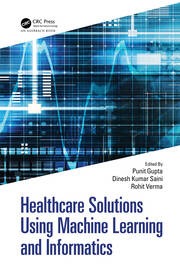
Healthcare solutions using machine learning and informatics
Covers novel and innovative solutions for the healthcare that apply machine learning and biomedical informatics technology. The healthcare sector is one of the most critical in society. This book presents a series of artificial intelligence, machine learning, intelligent IoT-based solutions for medical image analysis, medical big data processing, disease predictions. Machine learning and artificial intelligence use cases in healthcare presented in the book give researchers, practitioners, and students a wide range of practical examples of cross-domain convergence. The wide variety of topics covered include: Artificial Intelligence in healthcare Machine learning solutions for such disease as diabetes, arthritis, cardiovascular disease, and COVID-19 Big data analytics solutions for healthcare data processing Reliable biomedical applications using AI models Intelligent IoT in healthcare. The book explains fundamental concepts as well as the advanced use cases illustrating how to apply emerging technologies such as machine learning, AI models, data informatics into practice to tackle challenges in the field of healthcare with real-world scenarios. Chapters contributed by noted academicians and professionals examine various solutions, frameworks, applications, case studies, and best practices in the healthcare domain
