



الصفحة 10
الصفحة 10

Multiphase Flow Dynamics 1 : Fundamentals ; 3rd ed.
Multi-phase flows are part of our natural environment such as tornadoes, typhoons, air and water pollution and volcanic activities as well as part of industrial technology such as power plants, combustion engines, propulsion systems, or chemical and biological industry. The industrial use of multi-phase systems requires analytical and numerical strategies for predicting their behavior. In its third extended edition this monograph contains theory, methods and practical experience for describing complex transient multi-phase processes in arbitrary geometrical configurations, providing a systematic presentation of the theory and practice of numerical multi-phase fluid dynamics. This third edition includes various updates, extensions and improvements in all book chapters.

Multiphase Flow Dynamics 1 : Fundamentals ; 2nd ed.
In its second extended edition this monograph contains theory, methods and practical experience for describing complex transient multi-phase processes in arbitrary geometrical configurations. In the present first volume the fundamentals of multiphase dynamics are provided, as well as various interactive multimedia demonstrations on an accompanying CD-ROM.

Multi-Objective Evolutionary Algorithms for Knowledge Discovery from Databases
The present volume provides a collection of seven articles containing new and high quality research results demonstrating the significance of Multi-objective Evolutionary Algorithms (MOEA) for data mining tasks in Knowledge Discovery from Databases (KDD). These articles are written by leading experts around the world. It is shown how the different MOEAs can be utilized, both in individual and integrated manner, in various ways to efficiently mine data from large databases.
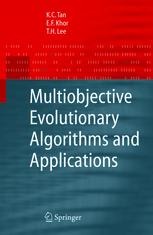
Multiobjective Evolutionary Algorithms and Applications
Multiobjective Evolutionary Algorithms and Applications provides comprehensive treatment on the design of multiobjective evolutionary algorithms and their applications in domains covering areas such as control and scheduling. Emphasizing both the theoretical developments and the practical implementation of multiobjective evolutionary algorithms, a profound mathematical knowledge is not required. Written for a wide readership, engineers, researchers, senior undergraduates and graduate students interested in the field of evolutionary algorithms and multiobjective optimization with some basic knowledge of evolutionary computation will find this book a useful addition to their book case.
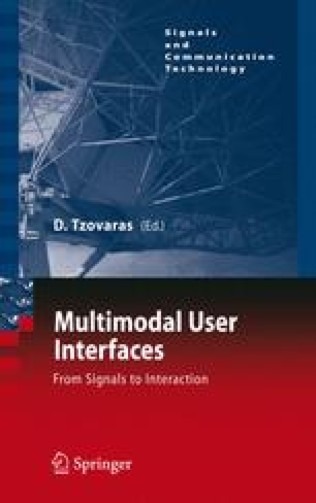
Multimodal User Interfaces : From Signals to Interaction
The book presents a common theoretical framework for fusion and fission of multimodal information using the most advanced signal processing algorithms constrained by HCI rules, described in detail and integrated in the context of a common distributed software platform for easy and efficient development and usability assessment of multimodal tools. The book also demonstrates the use of the multimodal framework for the development of a set of applications in the areas of edutainment, interfaces for disabled people and interfaces for medical applications.

Multimodal Texts in Disciplinary Education : A Comprehensive Framework
This book provides an introduction to multimodality and the role of multimodal texts in today’s education. Presenting a comprehensive framework for analysing and working with multimodal texts in disciplinary education, it serves as a tool for researchers and teachers alike. The second part of the book focuses on sample analyses of a variety of educational texts for different age groups and from different disciplines, including games and online resources. The authors also comment on the specific challenges of each text, and how teachers can discuss such texts with their students to enhance both their understanding of the content and their multimodal literacy.

Multimedia Services in Intelligent Environments : Advanced Tools and Methodologies
This book presents a sample of recent research results in multimedia services. Besides the introductory chapter, this book includes fourteen additional chapters. Nine of these chapters cover various aspects of data processing in multimedia services in intelligent environments, such as storage, recognition and classification, transmission, information retrieval, and information securing. Four additional chapters present multimedia services in noise and hearing monitoring and measuring, augmented reality, automated lecture rooms and rights management and licensing. Finally, the last chapter is devoted to an intelligent recommender service in scientific digital libraries.

Multimedia security : Algorithm development, analysis and applications (algorithms for intelligent systems)
Provides an insight about various techniques used in multimedia security and identifies its progress in both technological and algorithmic perspectives. In the contemporary world, digitization offers an effective mechanism to process, preserve and transfer all types of information. The incredible progresses in computing and communication technologies augmented by economic feasibility have revolutionized the world. The availability of efficient algorithms together with inexpensive digital recording and storage peripherals have created a multimedia era bringing conveniences to people in sharing the digital data that includes images, audio and video. The ever-increasing pace, at which the multimedia and communication technology is growing, has also made it possible to combine, replicate and distribute the content faster and easier, thereby empowering mankind by having a wealth of information at their disposal.

Multimedia Retrieval
The single chapters of this textbook explain the general architecture of multimedia information retrieval systems; various metadata languages like Dublin Core, RDF, or MPEG; pattern recognition through Markov models, unsupervised learning, and pattern clustering; various indexing approaches to audio and video streams; interaction and control; the protection of content and user privacy; and search effectiveness and efficiency.
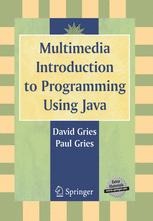
Multimedia Introduction to Programming Using Java
Although vital to modern software development, Java and object-oriented programming can pose significant challenges to newcomers. This text, unique in both scope and approach and accompanied by interactive content that you may find on extras.springer.com, addresses that learning curve by providing a careful, classroom-tested presentation of Java -- from the fundamentals of variables, types, and expressions to procedural concepts like loops and sophisticated object-oriented ideas. Additional key features of this work Introduces objects and classes early in the exposition, rendering object-oriented programming intuitive and natural. Develops programs, rather than simply showcasing them. Supports all concepts through complementary lectures on the zip-file featured on extras.springer.com. Contains numerous self-help exercises that encourage readers to practice programming. With its comprehensive appendices and bibliography, systematic approach, and helpful interactive programs on extras.springer.com, this exciting work provides the key tools they needed for successful object-oriented programming. It is ideal for use at the undergraduate and graduate beginning level, whether in the classroom or for distance learning; furthermore, the text will also be a valuable self-study resource or reference volume in any programmer’s library.

Multimedia Forensics
Media forensics has never been more relevant to societal life. Not only media content represents an ever-increasing share of the data traveling on the net and the preferred communications means for most users, it has also become integral part of most innovative applications in the digital information ecosystem that serves various sectors of society, from the entertainment, to journalism, to politics. Undoubtedly, the advances in deep learning and computational imaging contributed significantly to this outcome. The underlying technologies that drive this trend, however, also pose a profound challenge in establishing trust in what we see, hear, and read, and make media content the preferred target of malicious attacks.

Multimedia Encryption and Watermarking
Multimedia Encryption and Watermarking presents a comprehensive survey of contemporary multimedia encryption and watermarking techniques, which enable a secure exchange of multimedia intellectual property. Part I, Digital Rights Management (DRM) for Multimedia, introduces DRM concepts and models for multimedia content protection, and presents the key players. Part II, Multimedia Cryptography, provides an overview of modern cryptography, with the focus on modern image, video, speech, and audio encryption techniques. This book also provides an advanced concept of visual and audio sharing techniques. Part III, Digital Watermarking, introduces the concept of watermarking for multimedia, classifies watermarking applications, and evaluates various multimedia watermarking concepts and techniques, including digital watermarking techniques for binary images. Multimedia Encryption and Watermarking is designed for researchers and practitioners, as well as scientists and engineers who design and develop systems for the protection of digital multimedia content. This volume is also suitable as a textbook for graduate courses on multimedia security.
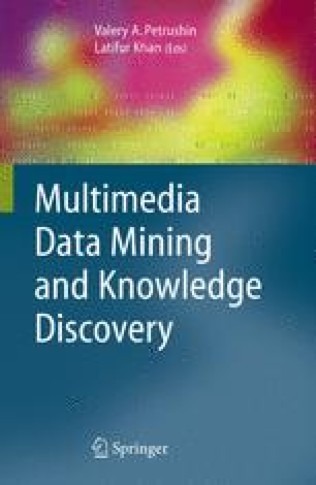
Multimedia Data Mining and Knowledge Discovery
Multimedia Data Mining and Knowledge Discovery provides an overview of the current state-of-the-art in the field of multimedia data mining and knowledge discovery, and discusses the variety of hot topics in multimedia data mining research. Consisting of an introductory section and four topical parts, the book describes the objectives and current tendencies in multimedia data mining research and their applications.
Multimedia computing systems and virtual reality
Presents recent advancements in multimedia systems as they relate to various application areas such as healthcare services and agriculture-related industries. The authors also discuss human-machine interface design, graphics modelling, rendering/animation, image/graphics techniques/systems and visualization. They then go on to explore multimedia content adaptation for interoperable delivery. Finally, the book covers cultural heritage, philosophical/ethical/societal/international issues, standards-related virtual technology and multimedia uses. This book is intended for computer engineers and computer scientists developing applications for multimedia and virtual reality and professionals working in object design and visualization, transformation, modelling and animation of the real world.
Multimedia Cartography
The various sections of this book cover the theoretical backgrounds, applications and future developments of Multimedia Cartography. This second edition of Multimedia Cartography includes updated applications areas that are Internet-focussed. Since the release of Edition 1 in 1999 the focus of the delivery of Multimedia Cartography applications now includes the World Wide Web and mobile services, as well as discrete media. New chapters in the book reflect this. As well, the book includes additional chapters on 3D applications and Virtual Reality applications.

Multilingualism: Understanding Linguistic Diversity
Multilingualism is everywhere in our globalised society. Delving into the 'social life' of languages, John Edwards provides a brief yet compelling overview of multilingualism and its sociocultural implications and consequences. Covering major topics including language origins, language death, lingua francas, pidgins, creoles and artificial languages, this book provides a complete introduction to what happens when languages meet.

Multilevel Synthesis : From the Group to the Individual
This book presents a historical panorama of the evolution of demographic thought from its eighteenth-century origins up to the present day, and uses it to demonstrate how the multilevel approach can resolve some of the contradictions that have become apparent and achieve a synthesis of the different approaches employed. Part one guides the reader from period analysis to multilevel analysis, examining longitudinal and event history analysis on the way. Part two is a detailed account of multilevel analysis, its methods, and the relevant mathematical models notably as regards the type of variables being used. Numerous examples, examined across successive sections, make the book clear and easy to follow.

Multilayered Low Temperature Cofired Ceramics (LTCC) Technology
LTCCs are made by combining ceramic insulating materials, conductor materials, and other materials through numerous processes culminating in co-firing. The materials and the processes used are therefore interdependent. By ensuring the consistency between materials and processes, it is possible to achieve circuit boards and various types of high frequency passive components and so on with the desired characteristics. This book describes the general technical information of each material (ceramic, conductor, and resistor materials) and each process, and it offers commentaries on unique examples resulting from these interrelations.

Multifunctional Pharmaceutical Nanocarriers
Various pharmaceutical nanocarriers, such as nanospheres,nanocapsules, liposomes, micelles, cell ghosts, lipoproteins and some others are widely used for experimental (and already clinical) delivery of therapeutic and diagnostic agents. The use of nanoparticulate pharmaceutical carriers to enhance the in vivo efficiency of many drugs well established itself over the past decade both in pharmaceutical research and clinical setting.

Multidisciplinary Methods for Analysis, Optimization and Control of Complex Systems
Consists of lecture notes of a summer school named after the late Jacques Louis Lions. The summer school was designed to alert both Academia and Industry to the increasing role of multidisciplinary methods and tools for the design of complex products in various areas of socio-economic interest.
