



الصفحة 10
الصفحة 10

Manufacturing Systems and Technologies for the New Frontier ; The 41st CIRP Conference on Manufacturing Systems May 26–28, 2008, Tokyo, Japan
Manufacturing systems and technology stand on a new frontier, facing up to the challenges posed by the ever-evolving requirements of global sustainability. Value-creation is taking its place alongside more traditional production-process priorities. Collected here are over a hundred papers concerned with all manner of new directions in manufacturing systems and given at the 41st CIRP Conference on Manufacturing Systems. The high-quality material presented in this volume includes reports of work from both scientific and engineering standpoints and several invited and keynote papers addressing the current cutting edge and likely future trends in manufacturing systems.
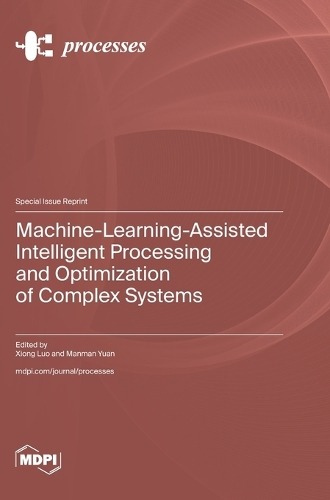
Machine-learning-assisted intelligent processing and optimization of complex systems
Focuses on the most recent developments in intelligent optimization methods and their applications in various test cases. The reprint covers various topics, including distributed multiagent modeling, metaheuristic algorithms, multisource data fusion, mobile computing and mobile sensing, machine learning-based intelligent processing for modeling complex manufacturing systems, and data-driven intelligent modeling
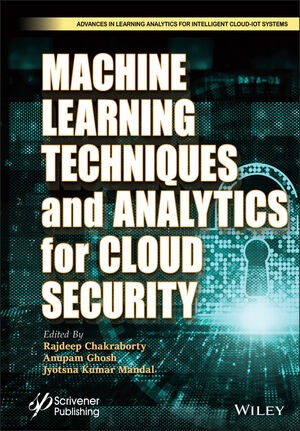
Machine Learning Techniques and Analytics for Cloud Security
covers new methods, surveys, case studies, and policy with almost all machine learning techniques and analytics for cloud security solutions
Machine learning in healthcare : Fundamentals and recent applications
Discusses how to build various ML algorithms and how they can be applied to improve healthcare systems. Healthcare applications of AI are innumerable: medical data analysis, early detection and diagnosis of disease, providing objective-based evidence to reduce human errors, curtailing inter- and intra-observer errors, risk identification and interventions for healthcare management, real-time health monitoring, assisting clinicians and patients for selecting appropriate medications, and evaluating drug responses. Extensive demonstrations and discussion on the various principles of machine learning and its application in healthcare is provided, along with solved examples and exercises.
Machine Learning for Cyber Physical Systems : Selected papers from the International Conference ML4CPS 2020
Presents new approaches to Machine Learning for Cyber Physical Systems, experiences and visions. It contains selected papers from the fifth international Conference ML4CPS – Machine Learning for Cyber Physical Systems, which was held in Berlin, March 12-13, 2020.

Machine Learning for Cyber Physical Systems : Selected papers from the International Conference ML4CPS 2018
Presents new approaches to Machine Learning for Cyber Physical Systems, experiences and visions. Cyber Physical Systems are characterized by their ability to adapt and to learn: They analyze their environment and, based on observations, they learn patterns, correlations and predictive models. Typical applications are condition monitoring, predictive maintenance, image processing and diagnosis. Machine Learning is the key technology for these developments.
Machine learning and deep learning in medical data analytics and healthcare applications
Introduces and explores a variety of schemes designed to empower, enhance, and represent multi-institutional and multi-disciplinary machine learning (ML) and deep learning (DL) research in healthcare paradigms. Serving as a unique compendium of existing and emerging ML/DL paradigms for the healthcare sector, this book demonstrates the depth, breadth, complexity, and diversity of this multi-disciplinary area. It provides a comprehensive overview of ML/DL algorithms and explores the related use cases in enterprises such as computer-aided medical diagnostics, drug discovery and development, medical imaging, automation, robotic surgery, electronic smart records creation, outbreak prediction, medical image analysis, and radiation treatments.

Lunar and planetary rovers : The wheels of apollo and the Quest for Mars
Provides extensive quotes from the astronauts who drove the LRV on the Moon from interviews conducted especially for the book. It also details new material from interviews of engineers and managers at the Jet Propulsion Laboratory covering the robotic rovers, Sojourner, Sprit and Opportunity. The Foreword is written by David R. Scott, Commander of Apollo 15. Chapter 1: From Concept to Reality; Chapter 2: Lunar Roving Vehicle Subsystems; Chapter 3: Training for the Moon; Chapter 4: To the Hadley Plains; Chapter 4: Mysterious and Unknown Descartes; Chapter 5: Destiny at Taurus-Littrow; Chapter Six: The Quest for Mars-Chapter Seven: The New Vision of Exploration.

Logic Programming and Nonmonotonic Reasoning ; 9th International Conference, LPNMR 2007, Tempe, AZ, USA, May 15-17, 2007, Proceedings
This book constitutes the refereed proceedings of the 9th International Conference on Logic Programming and Nonmonotonic Reasoning, LPNMR 2007, held in Tempe, AZ, USA, May 2007.
Linear Systems Control : Deterministic and Stochastic Methods
Modern control theory and in particular state space or state variable methods can be adapted to the description of many different systems because it depends strongly on physical modeling and physical intuition. The laws of physics are in the form of differential equations and for this reason, this book concentrates on system descriptions in this form. This means coupled systems of linear or nonlinear differential equations. The physical approach is emphasized in this book because it is most natural for complex systems. It also makes what would ordinarily be a difficult mathematical subject into one which can straightforwardly be understood intuitively and which deals with concepts which engineering and science students are already familiar.

Leveraging applications of formal methods, verification and validation : Engineering Principles ; 9th International Symposium on Leveraging Applications of Formal Methods, ISoLA 2020, Rhodes, Greece, October 20–30, 2020, Proceedings, Part II
Constitutes the refereed proceedings of the 9th International Symposium on Leveraging Applications of Formal Methods, ISoLA 2020, which was planned to take place during October 20–30, 2020, on Rhodes, Greece. The event itself was postponed to 2021 due to the COVID-19 pandemic. The papers presented were carefully reviewed and selected for inclusion in the proceedings. Each volume focusses on an individual topic with topical section headings within the volume: Part II, Engineering Principles : Automating Software Re-Engineering ; Rigorous Engineering of Collective Adaptive Systems.

Leonardo´s Lost Robots
Reinterprets Leonardo's legacy of notes, showing that apparently unconnected fragments from dispersed manuscripts actually comprise cohesive designs for functioning automata. Using the rough sketches scattered throughout almost all of Leonardo's notebooks, the author has reconstructed Leonardo's programmable cart, which was the platform for other automata: a Robot Lion, a Robot Knight, and a hydraulically powered automaton for striking a bell.
Learning Classifier Systems in Data Mining
Just over thirty years after Holland first presented the outline for Learning Classifier System paradigm, the ability of LCS to solve complex real-world problems is becoming clear. In particular, their capability for rule induction in data mining has sparked renewed interest in LCS. This book brings together work by a number of individuals who are demonstrating their good performance in a variety of domains.

Learning Classifier Systems ; 10th International Workshop, IWLCS 2006, Seattle, MA, USA, July 8, 2006 and 11th International Workshop, IWLCS 2007, London, UK, July 8, 2007, Revised Selected Papers
Constitutes the thoroughly refereed joint post-conference proceedings of two consecutive International Workshops on Learning Classifier Systems that took place in Seattle, WA, USA in July 2006, and in London, UK, in July 2007 - all hosted by the Genetic and Evolutionary Computation Conference, GECCO.The 14 revised full papers presented were carefully reviewed and selected from the workshop contributions. The papers are organized in topical sections on knowledge representation, analysis of the system, mechanisms, new directions, as well as applications.

Leading edge technologies in fashion innovation : Product design and development process from materials to the end products to consumers
Offers cutting-edge knowledge on various design and product development related technologies, and applications of these technologies in fashion. Further, it envisions the future of these technologies when designing and engineering apparel-related products.

Le Cancer du rein = Kidney cancer
Localized tumors are discovered at an earlier stage. The concept of active surveillance emerges. Minimally invasive treatments such as cryotherapy or radiofrequency for selected cases are now available. The indications for elective open partial nephrectomy are expanding and laparoscopic and then robotic partial nephrectomy are being evaluated.

Lagrangian and Hamiltonian Methods for Nonlinear Control 2006 ; Proceedings from the 3rd IFAC Workshop, Nagoya, Japan, July 2006
A Differential-Geometric Approach for Bernstein’s Degrees-of-Freedom Problem.- Nonsmooth Riemannian Optimization with Applications to Sphere Packing and Grasping.- Synchronization of Networked Lagrangian Systems.- An Algorithm to Discretize One-Dimensional Distributed Port Hamiltonian Systems.- Virtual Lagrangian Construction Method for Infinitedimensional Systems with Homotopy Operators.- Direct Discrete-Time Design for Sampled-Data Hamiltonian Control Systems.- Kinematic Compensation in Port-Hamiltonian Telemanipulation.- Interconnection and Damping Assignment Passivity-Based Control of a Four-Tank System.- Towards Power-based Control Strategies for a Class of Nonlinear Mechanical Systems.- Power Shaping Control of Nonlinear Systems: A Benchmark Example.- Total Energy Shaping Control of Mechanical Systems: Simplifying the Matching Equations via Coordinate Changes.- Simultaneous Interconnection and Damping Assignment Passivity–Based Control: Two Practical Examples.

Knowledge-Based Intelligent Information and Engineering Systems ; Vol.3683 : 9th International Conference, KES 2005, Melbourne, Australia, September 14-16, 2005, Proceedings, Part III
The KES conference series has been established for almost a decade, and it cont- ues each year to attract participants from all geographical areas of the world, including Europe, the Americas, Australasia and the Paci?c Rim. The KES conferences cover a wide range of intelligent systems topics. The broad focus of the conference series is the theory and applications of intelligent systems. From a pure research ?eld, intel- gent systems have advanced to the point where their abilities have been incorporated into many business and engineering application areas. KES 2005 provided a valuable mechanism for delegates to obtain an extensive view of the latest research into a range of intelligent-systems algorithms, tools and techniques. The conference also gave de- gates the chance to come into contact with those applying intelligent systems in diverse commercial areas. The combination of theory and practice represented a unique opp- tunity to gain an appreciation of the full spectrum of leading-edge intelligent-systems activity. The papers for KES 2005 were either submitted to invited sessions, chaired and organized by respected experts in their ?elds, or to a general session, managed by an extensive International Program Committee, or to the Intelligent Information Hiding and Multimedia Signal Processing (IIHMSP) Workshop, managed by an International Workshop Technical Committee.

Knowledge-Based Intelligent Information and Engineering Systems ; Vol. 4251 ; 10th International Conference, KES 2006, Bournemouth, UK, October 9-11 2006, Proceedings, Part I
Delegates and friends, we are very pleased to extend to you the sincerest of welcomes to this, the 10th International Conference on Knowledge Based and Intelligent Information and Engineering Systems at the Bournemouth International Centre in Bournemouth, UK, brought to you by KES International. This is a special KES conference, as it is the 10th in the series, and as such, it represents an occasion for celebration and an opportunity for reflection. The first KES conference was held in 1997 and was organised by the KES conference founder, Lakhmi Jain. In 1997, 1998 and 1999 the KES conferences were held in Adelaide, Australia. In 2000 the conference moved out of Australia to be held in Brighton, UK; in 2001 it was in Osaka, Japan; in 2002, Crema near Milan, Italy; in 2003, Oxford, UK; in 2004, Wellington, New Zealand; and in 2005, Melbourne, Australia. The next two conferences are planned to be in Italy and Croatia. Delegate numbers have grown from about 100 in 1997, to a regular figure in excess of 500. The conference attracts delegates from many different countries, in Europe, Australasia, the Pacific Rim, Asia and the Americas, and may truly be said to be ‘International’.

Knowledge-Based Intelligent Information and Engineering Systems ; 12th International Conference, KES 2008, Zagreb, Croatia, September 3-5, 2008, Proceedings, Part I
The 316 revised papers presented were carefully reviewed and selected. The papers present a wealth of original research results from the field of intelligent information processing in the broadest sense; topics covered in the first volume are artificial neural networks and connectionists systems; fuzzy and neuro-fuzzy systems; evolutionary computation; machine learning and classical AI; agent systems; knowledge based and expert systems; intelligent vision and image processing; knowledge management, ontologies, and data mining; Web intelligence, text and multimedia mining and retrieval; and intelligent robotics and control.
