



الصفحة 10
الصفحة 10
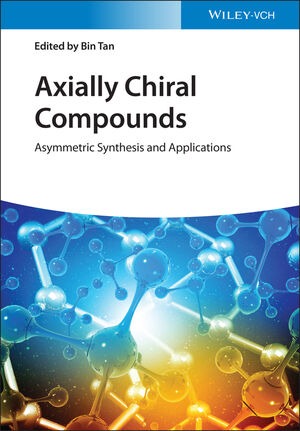
Axially chiral compounds : Asymmetric synthesis and applications
Appearing widely in natural products, biologically active molecules, asymmetric chemistry, and material science, axially chiral motifs constitute the core backbones of the majority of chiral ligands and organocatalysts in asymmetric catalysis. In a new work of particular relevance to synthetic chemists, Axially Chiral Compounds: Asymmetric Synthesis and Applications delivers a clearly structured and authoritative volume covering the classification, characteristics, synthesis, and applications of axial chirality.

Aulton's pharmaceutics : The design and manufacture of medicines
Offers a complete course in one book for students in all years of undergraduate pharmacy and pharmaceutical sciences degrees. Thoroughly revised, updated and extended by experts in their fields and edited by Professors Kevin Taylor and Michael Aulton, this new edition includes the science of formulation, pharmaceutical manufacturing and drug delivery. All aspects of pharmaceutics are covered in a clear and readily accessible way and extensively illustrated throughout, providing an essential companion to the entire pharmaceutics curriculum from day one until the end of the course. Fully updated throughout, with the addition of new chapters, to reflect advances in formulation and drug delivery science, pharmaceutical manufacturing and medicines regulation Designed and written for newcomers to the design and manufacture of dosage forms Relevant pharmaceutical science covered throughout Includes the science of formulation and drug delivery Reflects current practices and future applications of formulation and drug delivery science to small drug molecules, biotechnology products and nanomedicines Key points boxes throughout Over 400 online multiple choice questions
Atoms, molecules and photons : An introduction to atomic- molecular- and quantum physics
This introduction to Atomic and Molecular Physics explains how our present model of atoms and molecules has been developed over the last two centuries both by many experimental discoveries and, from the theoretical side, by the introduction of quantum physics to the adequate description of micro-particles. It illustrates the wave model of particles by many examples and shows the limits of classical description. The interaction of electromagnetic radiation with atoms and molecules and its potential for spectroscopy is outlined in more detail and in particular lasers as modern spectroscopic tools are discussed more thoroughly. Many examples and problems with solutions are offered to encourage readers to actively engage in experimentation.
Atomistic approaches in modern biology : From quantum chemistry to molecular simulations
This volume of Topics in Current Chemistry presents an overview of atomistic theoreticalmethodsapplied tomolecular biologicalsystems. Itthus repesents abottom-upview of chemistryonbiologyfroma theoreticalperspective. The chapters arearrangedsuchthat important issuesareconsidered startingfrom a quantum mechanical perspective and proceeding to a molecular mechanics and molecular dynamics descriptiono fthemotionoftheelementaryparticles involved.which are responsible for the properties and function of biomolecules. Depending on the length and time scales relevant for a given phenomenon to be investigated, tailored theoretical methods are required to account for these. If one is interested in large scale motions of molecules, a molecul- mechnanics-based description willbeappropriate.

Arum palaestenium in cancer therapies
Cancer is a very complicated sequence of disease conditions progressing gradually with a generalized loss of growth control.1–3 There were only a few options of cancer treatment for patients for many decades which include surgery, radiation therapy, and chemotherapy as single treatments or in combination.4,5 But recently, many pathways involved in cancer therapy progression and how they can be targeted has improved dramatically, with combinatorial strategies, involving multiple targeted therapies or “traditional” chemotherapeutics, such as the taxanes and platinum compounds, being found to have a synergistic effect.6 New approaches, such as drugs, biological molecules, and immune-mediated therapies, are being used for treatment.

Aromatase Inhibitors
Many breast tumours are dependent upon oestrogen for their development and continued growth. Over the last 25 years hormone therapy has progressed from the irreversible destruction of endocrine glands to the use of drugs that reversibly suppress oestrogen synthesis or action. The inhibition of oestrogen synthesis is most readily achieved by inhibiting the final step in the pathway of oestrogen biosynthesis, the reaction which transforms androgens into oestrogens by creating an aromatic ring in the steroid molecule (hence the enzyme's trivial name, aromatase). Whereas the first aromatase inhibitors to be used therapeutically could be shown to produce drug-induced inhibition of the enzyme and therapeutic benefits in patients with breast cancer, they were not particularly potent and lacked specificity. However, second-generation drugs were developed and most recently third-generation inhibitors have evolved which possess remarkable specificity and potency. Initial results from clinical trials suggest that these agents will become the cornerstones of future endocrine therapy.

Aromatase Inhibitors
Many breast tumours are dependent upon oestrogen for their development and continued growth. Over the last 25 years hormone therapy has progressed from the irreversible destruction of endocrine glands to the use of drugs that reversibly suppress oestrogen synthesis or action. The inhibition of oestrogen synthesis is most readily achieved by inhibiting the final step in the pathway of oestrogen biosynthesis, the reaction which transforms androgens into oestrogens by creating an aromatic ring in the steroid molecule (hence the enzyme's trivial name, aromatase). Whereas the first aromatase inhibitors to be used therapeutically could be shown to produce drug-induced inhibition of the enzyme and therapeutic benefits in patients with breast cancer, they were not particularly potent and lacked specificity. However, second-generation drugs were developed and most recently third-generation inhibitors have evolved which possess remarkable specificity and potency. Initial results from clinical trials suggest that these agents will become the cornerstones of future endocrine therapy.
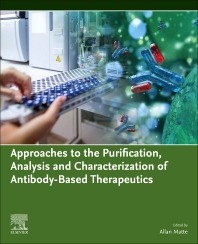
Approaches to the purification, analysis and characterization of antibody-based therapeutics
Provides the interested and informed reader with an overview of current approaches, strategies and considerations relating to the purification, analytics and characterization of therapeutic antibodies and related molecules. While there are obviously other books published in and around this subject area, they seem to be either older (c.a. year 2000 publication date) or are more limited in scope. The book will include an extensive bibliography of the published literature in the respective areas covered. It is not, however, intended to be a how-to methods book.
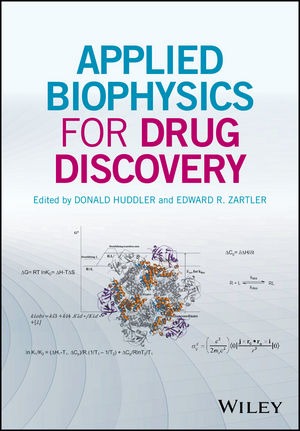
Applied biophysics for drug discovery
It is a guide to new techniques and approaches to identifying and characterizing small molecules in early drug discovery. Biophysical methods are reasserting their utility in drug discovery and through a combination of the rise of fragment-based drug discovery and an increased focus on more nuanced characterisation of small molecule binding, these methods are playing an increasing role in discovery campaigns.

Applications of Mass Spectrometry in Life Safety
MS is continuously developing as one of the most re- able analytical method for elucidating the structure of molecules originating from various biological matrices. The potential of MS for high-sensitive structural a- lyses became unsurpassable after the introduction of electrospray (ESI) and matrix assisted laser/desorption ionization (MALDI) methods, on one hand, and the pos- bility to deduce in detail unknown biopolymer structures by highly accurate mo- cular mass measurement followed by sequencing using dissociation techniques based on multiple stage MS, on the other.

Apitherapy and therapeutic properties
Apitherapy is an alternate therapy that relies on the usage of honeybee products, most importantly bee venom for the treatment of many human diseases. Bee venom contains several active molecules such as peptides and enzymes that have advantageous potential in treating inflammation and central nervous system diseases, such as Parkinson’s disease, and Alzheimer’s disease and autoimmume diseases like reumatic and atherosclerosis .Bee venom (BV) is usually associated with pain since, when humans are stung by bees,local inflammation and even an allergic reaction can be produced. It also consists of a mixture of proteins and peptides, including enzymes such as Melittin and phospholipase A2 (PLA2) are the most abundant and studied compounds of BV Stings of hymenoptera can induce IgE-mediated hypersensitivity reactions in venom-allergic patients, ranging from local up to severe systemic reactions and even fatal anaphylaxis. skin is larger than any other organ in humans.

Anion Sensing
This treatise on anion sensing and recognition represents a new addition to a very small number of books in this area, Although this Topics volume does not cover all the different classes fo receptors, it does provide new and timely perspectives to anion chemistry by highlighting several areas that have been generally overlooked in other reviews. The individual chapters are well-written and include references from earlier works up to the present. As such, this volume will be of interest to the community of researchers interested in anions as well as to those who wish to learn about the host-guest chemistry of anion recognition and its applications.
Analytical Ultracentrifugation VIII
This book presents a comprehensive collection of 21 contributions from leading scientists in this field covering a broad spectrum of topics and presenting recent progress concerning instrumentation, data analysis and modeling, biological systems, particles, colloids, synthetic macromolecules, interacting systems. Due to the versatility of this fascinating and powerful technique, information and original publications are widespread and comprehensive collections are rare. Therefore, this volume presents a valuable source for biologists, chemists, materials scientists, and physicists interested in most recent information, results and development related to this important analytical method.
Analysis and Control of Ultrafast Photoinduced Reactions
The present monograph summarizes, in a comprehensive way, several years of joint experimental and theoretical frontier research on ultrafast laser-induced molecular dynamics and its control. Emphasis is set on the characterization of the nuclear dynamics within molecular systems in various environments (gas phase, surfaces, solids, solution, strong fields) triggered by optical excitations spanning from the infrared to the ultraviolet. Building on the converged analysis between experiment and theory, control of chemical reactions is established by means of optimally shaped laser pulses. This paves the road toward new applications and future challenges in this rapidly developing research field.

African Biodiversity : molecules, organisms, ecosystems
BIOTA is an interdisciplinary research project focusing on sustainable use and conservation of biodiversity in Africa (http://www.biote-africa.de). Session titles were Biogeography and Speciation Processes, Phylogenetic Patterns and Systematics, Diversity Declines and Conservation, and Applied Biodiversity Informatics
Advances in Spectroscopy for Lasers and Sensing
This volume presents the Proceedings of the Institute “New Development in Optics and Related Fields,” held in Erice, Sicily, Italy, from the 6th to the 21st of June, 2005.

Advances in solid state physics ; Vol. 46
Many topical talks given at the numerous symposia are included. Most of these were organized collaboratively by several of the divisions of the Arbeitskreis. The topis range from zero-dimensional physics in quantum dots, molecules and nanoparticles over one-dimensional physics in nanowires and 1d systems to more applied subjects like optoelectronics and materials science in thin films.
Advanced Time-Correlated Single Photon Counting Techniques
Time-correlated single photon counting (TCSPC) is a remarkable technique for recording low-level light signals with extremely high precision and picosecond-time resolution. TCSPC has developed from an intrinsically time-consuming and one-dimensional technique into a fast, multi-dimensional technique to record light signals. So this reference and text describes how advanced TCSPC techniques work and demonstrates their application to time-resolved laser scanning microscopy, single molecule spectroscopy, photon correlation experiments, and diffuse optical tomography of biological tissue. It gives practical hints about constructing suitable optical systems, choosing and using detectors, detector safety, preamplifiers, and using the control features and optimising the operating conditions of TCSPC devices. Advanced TCSPC Techniques is an indispensable tool for everyone in research and development who is confronted with the task of recording low-intensity light signals in the picosecond and nanosecond range.

Advanced Techniques in Soil Microbiology
"Advanced Techniques in Soil Microbiology" presents a wide range of biotechnological methods for application in soil microbiology analysis. These include all essential methods involving molecular biology, immunology, microbiology, and structural biology, such as transcriptome analysis, RNAi technology, molecular matchmaking, RAPD, T-RFLP and FT/MS. The techniques and procedures have been selected with the aim of offering practical guides for immediate use in the laboratory. The systems investigated range from individual molecules and cells to entire eukaryotic organisms, with a focus on bacteria, fungi, mycorrhiza, and higher plants. This volume of state-of-the-art, practice oriented methods will be of great use both to the first-timer and to the experienced scientist.
Advanced concepts in fluorescence sensing ; Part A : Small molecule sensing
"This volume incorporates authoritative small molecule analytical fluorescence sensing reviews specialized enough to be attractive to professional researchers, yet also appealing to the wider audience of scientists in related disciplines of fluorescence. Advanced Concepts in Fluorescence Sensing Part A: Small Molecule Sensing is an essential reference for any lab working in the analytical fluorescence sensing field. All academics, bench scientists, and industry professionals wishing to take advantage of the latest and greatest in the continuously emerging field of fluorescence sensing will find it an invaluable resource. Advanced Concepts in Fluorescence Sensing Part A: Small Molecule Sensing topics include: Probes for Anion and Cation Sensing / Fluorescent Carbon Dioxide Indicators / Fluorescent Redox-Switchable Devices / PET based Fluorescence Sensors / Oxygen Sensing / Fluorescence Sensing using Charge Transfer Probes / Fluorescence-based Nitric Oxide Detection "
