



الصفحة 10
الصفحة 10

Human interface and the management of information : Interacting in information environments ; Symposium on Human Interface 2007, Held as Part of HCI International 2007, Beijing, China, July 22-27, 2007, Proceedings, Part II
The 12th International Conference on Human-Computer Interaction, HCI Inter- tional 2007, was held in Beijing, P.R. This volume, edited by Michael J. Smith and Gavriel Salvendy, contains papers in the thematic area of Human Interface and the Management of Information, addressing the following major topics: • Communication and Collaboration • Knowledge, Learning and Education • Mobile Interaction • Interacting with the World Wide Web and Electronic Services • Business Management and Industrial Applications • Environment, Transportation and Safety.

Human interactive proofs ; 2nd International workshop, HIP 2005, Bethlehem, PA, USA, May 19-20, 2005, Proceedings
Constitutes the refereed proceedings of the Second International Workshop on Human Interactive Proofs, HIP 2005, held in Bethlehem, PA, USA in May 2005. This book is devoted to the new class of security protocols called human interactive proofs. It includes sections such as: CAPTCHAs and performance analysis, and HIP architectures.

Human Ear Recognition by Computer
Human Ear Recognition by Computer is the first book on the automatic recognition of human ears. It presents an entire range of computational algorithms for recognition of humans by their ears. These algorithms have been tested and validated on the largest databases that are available today,This state-of-the-art research reference explores all aspects of 3D ear recognition, including representation, detection, recognition, indexing and performance prediction. It has been written for a professional audience of both researchers and practitioners within industry, and is also ideal as an informative text for graduate students in computer science and engineering.

Hubble : 15 Years of Discovery
This book forms part of the European Space Agency’s 15th anniversary celebration activities for the 1990 launch of the NASA/ESA Hubble Space Telescope. As an observatory in space, Hubble is one of the most successful scientific projects of all time, both in terms of scientific output and its immediate public appeal.Hubble creates an enormous impact by exploiting a unique scientific niche where no other instruments can compete. It consistently delivers super-sharp images and clean, uncontaminated spectra over the entire near-infrared and ultraviolet regions of the electromagnetic spectrum. This has opened up new scientific territory and resulted in many paradigm-breaking discoveries.

How to photograph the moon and planets with your Digital camera
Using just a regular digital camera along with an amateur astronomical telescope, anyone can produce spectacular photographs of the Moon, as well as surprisingly good images of major planets.Purpose-made astronomical CCD cameras are still very expensive, but technology has now progressed so that digital cameras – the kind you use for everyday photos – are more than capable of being used for astronomy. Tony Buick has written this illustrated step-by-step manual for anyone who has a telescope (of any size) and a digital camera. Look inside at the beautiful color images he has produced – you could do the same.

How to Build Your Brand : Implementing a Proven and Effective Process
Develop "big picture" insight that inspires big brand ideas Use imagery to understand the fundamental human values that give our life meaning as well as learn about the feelings that reveal our hopes and dreams. Develop highly motivating brand concepts that link to our values and aspirations. Create the tactical roadmap to implement the concepts.

How the immune system recognizes self and nonself : Immunoreceptors and their signaling
This brain function must have been particularly important for most animals to protect their lives from enemies and for species to survive through evolution. Similarly, higher organisms have also acquired their immune system through evolution that discriminates nonself pathogens and self-body to protect their lives from pathogens such as bacteria or viruses. The brain system may distinguish integrated images of self and nonself created from many inputs, such as vision, sound, smell, and others. The immune system recognizes and distinguishes a variety of structural features of self and nonself components. The latter actually include almost everything but self.

How AI Impacts Urban Living and Public Health ; 17th International Conference, ICOST 2019, New York City, NY, USA, October 14-16, 2019, Proceedings
This book cover topics such as: e-health technology design; well-being technology; biomedical and health informatics; and smart environment technology.

High-Resolution Sonography of the Peripheral Nervous System
This second, revised edition reflects these ongoing developments in various ways: many state of the art high-resolution images are included, the text has been adapted to reflect the current state of the literature, and information is presented using a more modern layout.

High-Dynamic-Range (HDR) Vision : Microelectronics, Image Processing, Computer Graphics
This first comprehensive account of high-dynamic-range (HDR) vision focusses on HDR real-time, high-speed digital video recording and also systematically presents HDR video transmission and display. The power of the eye-like, logarithmic optoelectronic conversion concept is demonstrated in machine-vision, medical, automotive, surveillance and cinematic applications, and it is extended to HDR sub-retinal implants for the vision impaired. While the book conveys the overall picture of HDR vision, specific knowledge of microelectronics and image processing is not required. It provides a quantitative summary of the major issues to allow the assessment of the state of the art and a glimpse at future developments. Selected experts share their know-how and expectations in this rapidly evolving art related to the single most powerful of our senses.

High Resolution Imaging in Microscopy and Ophthalmology : New Frontiers in Biomedical Optics
This book provides a comprehensive overview of the application of the newest laser and microscope/ophthalmoscope technology in the field of high resolution imaging in microscopy and ophthalmology. Starting by describing High-Resolution 3D Light Microscopy with STED and RESOLFT, the book goes on to cover retinal and anterior segment imaging and image-guided treatment and also discusses the development of adaptive optics in vision science and ophthalmology. Using an interdisciplinary approach, the reader will learn about the latest developments and most up to date technology in the field and how these translate to a medical setting.

High performance computing for computational science - VECPAR 2004 ; 6th International conference, Valencia, Spain, June 28-30, 2004, Revised Selected and Invited Papers
VECPAR is a series of international conferences dedicated to the promotion and advancement of all aspects of high-performance computing for computational science, as an industrial technique and academic discipline, extending the fr- tier of both the state of the art and the state of practice. The audience for and participants in VECPAR are seen as researchers in academic departments, g- ernment laboratories and industrial organizations. There is now a permanent website for the series, http://vecpar.fe.up.pt, where the history of the conf- ences is described. ThesixtheditionofVECPARwasthe?rsttimetheconferencewascelebrated outside Porto – at the Universitad Politecnica de Valencia (Spain), June 28–30, 2004.

High performance computational science and engineering : IFIP TC5 Workshop on High Performance Computational Science and Engineering (HPCSE), World Computer Congress, August 22-27, 2004, Toulouse, France
The IFIP series publishes state-of-the-art results in the sciences and technologies of information and communication. The scope of the series includes: foundations of computer science; software theory and practice; education; computer applications in technology; communication systems; systems modeling and optimization; information systems; computers and society; computer systems technology; security and protection in information processing systems; artificial intelligence; and human-computer interaction. Proceedings and post-proceedings of referred international conferences in computer science and interdisciplinary fields are featured. These results often precede journal publication and represent the most current research. The principal aim of the IFIP series is to encourage education and the dissemination and exchange of information about all aspects of computing.

High accuracy detection of mobile malware using machine learning
As increasingly sophisticated and evasive malware attacks continue to emerge, more effective detection solutions to tackle the problem are being sought through the application of advanced machine learning techniques. This reprint presents several advances in the field including: a new method of generating adversarial samples through byte sequence feature extraction using deep learning; a state-of-the-art comparative evaluation of deep learning approaches for mobile botnet detection; a novel visualization-based approach that utilizes images for Android botnet detection; a study on the detection of drive-by exploits in images using deep learning; etc. Furthermore, this reprint presents state-of-the-art reviews about machine learning-based detection techniques that will increase researchers' knowledge in the field and enable them to identify future research and development directions.

Hexagonal image processing : A practical approach
Hexagonal Image Processing provides an introduction to the processing of hexagonally sampled images, includes a survey of the work done in the field, and presents a novel framework for hexagonal image processing (HIP) based on hierarchical aggregates. Digital image processing is currently dominated by the use of square sampling lattices, however, hexagonal sampling lattices can also be used to define digital images. The strengths offered by hexagonal lattices over square lattices are considerable: • higher packing density, • uniform connectivity of points (pixels) in the lattice, • better angular resolution by virtue of having more nearest neighbours, and • superlative representation of curves. The utility of the HIP framework is demonstrated by implementing several basic image processing techniques (for the spatial and frequency domain) and some applications. The HIP framework serves as a tool for comparing processing of images defined on a square vs hexagonal grid, to determine their relative merits and demerits. The theory and algorithms covered are supplemented by attention to practical details such as accommodating hardware that support only images sampled on a square lattice. Including a Foreword written by Professor Narendra Ahuja, an eminent researcher in the field of Image Processing and Computer Vision, the book’s fresh approach to the subject offers insight and workable know-how to both researchers and postgraduates.

Helping Couples Cope with Womens Cancers : An Evidence-Based Approach for Practitioners
Close relationships can be vital to a woman’s recovery from breast or gynecological cancer and the myriad stressors that accompany diagnosis and treatment. Helping Couples Cope with Women’s Cancer shows readers not only how to enlist the patient’s closest support person in coping with the disease, but also to help that partner with the stressors, such as feelings of inadequacy and loss, that so often come with the role.

Heating, cooling, lighting : Sustainable design methods for architects
Helps architects minimize mechanical systems and energy usage over the life of the building by siting, building design, and landscaping to maximize natural heating, cooling, and lighting. This new fourth edition includes new information on integrated design strategies and designing for the Tropics. Resources include helpful case studies, checklists, diagrams, and a companion website featuring additional cases, an image bank, and instructor materials. Designing buildings that require less energy to heat, cool, and light means allowing the natural energy of the sun and wind to reduce the burden on the mechanical and electrical systems. Basic design decisions regarding size, orientation, and form have a great impact on the sustainability, cost, and comfort of a building. Heating, Cooling, and Lighting provides detailed guidance for each phase of a design project.
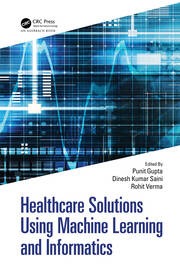
Healthcare solutions using machine learning and informatics
Covers novel and innovative solutions for the healthcare that apply machine learning and biomedical informatics technology. The healthcare sector is one of the most critical in society. This book presents a series of artificial intelligence, machine learning, intelligent IoT-based solutions for medical image analysis, medical big data processing, disease predictions. Machine learning and artificial intelligence use cases in healthcare presented in the book give researchers, practitioners, and students a wide range of practical examples of cross-domain convergence. The wide variety of topics covered include: Artificial Intelligence in healthcare Machine learning solutions for such disease as diabetes, arthritis, cardiovascular disease, and COVID-19 Big data analytics solutions for healthcare data processing Reliable biomedical applications using AI models Intelligent IoT in healthcare. The book explains fundamental concepts as well as the advanced use cases illustrating how to apply emerging technologies such as machine learning, AI models, data informatics into practice to tackle challenges in the field of healthcare with real-world scenarios. Chapters contributed by noted academicians and professionals examine various solutions, frameworks, applications, case studies, and best practices in the healthcare domain

Healthcare design basics
Delivers an up-to-date text covering the critical aspects of healthcare design, preparing students for a specialty rapidly growing in importance and size. includes: Step by step studio guidance outlining the basic design elements required for a wide range of ambulatory healthcare facilities and rooms Comprehensive explorations of the demands of new and improved healthcare facilities that meet the needs of an aging population Practical discussions of the space planning challenges involved in designing rooms and facilities for use during public health crises, including pandemics Dozens of full-color images that illustrate and highlight important concepts, examples, and design solutions

Health Information Science ; 9th International Conference, HIS 2020, Amsterdam, The Netherlands, October 20–23, 2020, Proceedings
This book constitutes the proceedings of the 9th International Conference on Health Information Science, HIS 2020, which took place in Amsterdam, The Netherlands, during October 20-23, 2020. The 11 full papers and 6 short papers presented in this volume were carefully reviewed and selected from 62 submissions. They were organized in topical sections named: mental health; medical record processing; medical information systems; medical diagnosis with machine learning; and health behavior and medication.
