



الصفحة 10
الصفحة 10

Functional Analysis and Evolution Equations : The Günter Lumer Volume
Günter Lumer was an outstanding mathematician whose work has great influence on the research community in mathematical analysis and evolution equations. He was at the origin of the breath-taking development the theory of semigroups saw after the pioneering book of Hille and Phillips of 1957. This volume contains invited contributions presenting the state of the art of these topics and reflecting the broad interests of Günter Lumer.

Functional aesthetic dentistry : How to achieve predictable aesthetic results using principles of a stable occlusion
This book provides all the information needed by the dentist in order to understand functional occlusion and describes a coherent method that, through application of principles of form and function, allows the delivery of predictable, natural, and long-lasting aesthetic results.

Frontiers of multifunctional integrated nanosystems ; Proceedings of the NATO ARW on Frontiers of molecular-scale science and technology of nanocarbon, nanosilicon and biopolymer integrated nanosystems,Ilmenau, Germany from 12 to 16 July 2003
Presents exciting new developments of the early 21st century. Significant progress has been made in nanotechnology of building blocks for integrated nanosystems, single and assembled molecules, nanoparticles characterisation, and multifunctional applications of nanosystems. The realisation and the application of novel multifunctional nanosystems in electronics, optics, biomedicine (nano-bioelectronic devices based on DNA and proteins, silicon nanocrystal memory devices, monolithically integrated silicon photonics, nanocapsules, biosensor nanosystems) are described by well known experts. This multi-disciplinary, scientific display of cutting-edge research across the entire spectrum of nanoscience and nanotechnology of inorganic, and organic systems, as well as systems for electronics photonics, and spintronics demonstrates that researching nanocarbon, nanosilicon, biomolecular integrated nanosystems, and developing their new applications, is a complex and exiting topic that will continue to attract scientists and engineers for many years to come.

Frontiers in Hardware Security and Trust : Theory, design and practice
The footprint and power constraints imposed on internet-of-things end-points, smart sensors, mobile and ad hoc network devices make traditional and software based cryptographic solutions that require a general-purpose processor increasingly unfeasible. The fact that security is not the primary functionality of these devices means that only a small portion of their limited processing power and storage is available for security, driving the need for alternative security solutions. Hardware security - including hardware obfuscation, hardware security primitives, side-channel attacks and so on - is therefore becoming an increasingly active research area in both academia and industry.
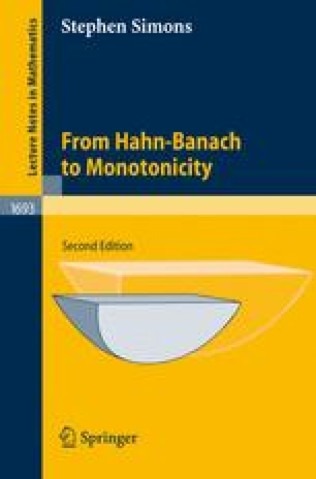
From Hahn-Banach to Monotonicity
In this new edition of LNM 1693 the essential idea is to reduce questions on monotone multifunctions to questions on convex functions. However, rather than using a “big convexification” of the graph of the multifunction and the “minimax technique”for proving the existence of linear functionals satisfying certain conditions, the Fitzpatrick function is used. The journey begins with a generalization of the Hahn-Banach theorem uniting classical functional analysis, minimax theory, Lagrange multiplier theory and convex analysis and culminates in a survey of current results on monotone multifunctions on a Banach space.

Fractures du genou = Knee fractures
Provides a comprehensive yet practical overview of the management of knee fractures and their complications. The editorial team comprises specialists from France, Switzerland, Belgium, the United States, and Ireland, many of whom are members of the AO group. Imaging strategies, assessment, classification, and anatomical variations are reviewed for each anatomical location. All therapeutic approaches are discussed without exception: conventional implants, intramedullary nailing, minimally invasive techniques, including the role of external fixation, and newer technologies such as the LISS. These approaches are subjected to critical analysis to identify the best options based on the indications and individual circumstances. The patellar apparatus is addressed in its functional unity. Postoperative management, influenced by functional prognosis, is also covered, as is the management of malunion, stiffness, and other complications. Finally, very specific problems are discussed, such as pediatric injuries, patellectomies, periprosthetic fractures, often complex projectile injuries, the role of immediate arthroplasty and massive grafts, but also associated injuries which sometimes have a heavy impact on the final prognosis.

Fractional calculus—theory and applications
Fractional calculus has led to tremendous progress in various areas of science and mathematics. New definitions of fractional derivatives and integrals have been uncovered, extending their classical definitions in various ways. Moreover, rigorous analysis of the functional properties of these new definitions has been an active area of research in mathematical analysis. Systems considering differential equations with fractional-order operators have been investigated thoroughly from analytical and numerical points of view, and potential applications have been proposed for use in sciences and in technology. The purpose of this Special Issue is to serve as a specialized forum for the dissemination of recent progress in the theory of fractional calculus and its potential applications.

Fourier Series in Control Theory
Fourier Series in Control Theory successfully gathers all of the available theory of these "nonharmonic Fourier series" in one place, combining published results with new results, to create a unique source of such material for practicing applied mathematicians, engineers, and other scientific professionals.Starting with an overview of the problems of observability, controllability, and stabilization of linear systems and their interconnections, the text contains complete proofs along with a short, simplified, presentation of some properties of Bessel functions for the convenience of the reader. Only basic knowledge of functional analysis is required.

Foundations of Sport-Related Brain Injuries
A major take-home point from this book should be the assumption that symptom resolution does not necessarily mean injury resolution. As can be seen by research focusing on global metabolic cascades and neural activity of the brain, long-standing dysfunctional pathways continue to exist for extended periods of time even after a minor concussion. Until we completely understand the consequences of short-term perturbations and long-term residual brain dysfunctions, concussions must be treated with respect and given a higher priority for continued research activity.

Foundations of Quantum Theory : From Classical Concepts to Operator Algebras
This book studies the foundations of quantum theory through its relationship to classical physics. This idea goes back to the Copenhagen Interpretation (in the original version due to Bohr and Heisenberg), which the author relates to the mathematical formalism of operator algebras originally created by von Neumann. The book therefore includes comprehensive appendices on functional analysis and C*-algebras, as well as a briefer one on logic, category theory, and topos theory. Matters of foundational as well as mathematical interest that are covered in detail include symmetry (and its "spontaneous" breaking), the measurement problem, the Kochen-Specker, Free Will, and Bell Theorems, the Kadison-Singer conjecture, quantization, indistinguishable particles, the quantum theory of large systems, and quantum logic, the latter in connection with the topos approach to quantum theory.

Foundations of Microsoft® Expression Web : The Basics and Beyond
Expression Web, one of the excellent programs within the suite, is a powerful web site creation tool that allows you to rapidly build up standards-compliant web pages, style them with CSS, add dynamic ASP.NET functionality to them, and publish them to the weball from the comfort of one program, and "Foundations of Microsoft Expression Web: The Basics and Beyond" is one of the first books available on the program.

Foundations of landscape architecture : Integrating form and space using the language of site design
Illustrates the importance of spatial language. It introduces concepts, typologies, and rudimentary principles of form and space. Including designs for projects such as parks, campuses, and memorials, this text provides the core concepts necessary for designers to shape functional landscapes. Additionally, chapters discuss organizational and spatial design structures based on orthogonal forms, angular forms, and circular forms.

Foundations of F#
F# is much more than just an FP language. Every professional .NET programmer needs to learn about FP, and there's no better way to do it than by learning F#, and no easier way to learn F# than from Foundations of F#, and this is the first book to bring F# to the world.

Foundations of Atlas : Rapid Ajax Development with ASP.NET 2.0
This book introduces a fast-track path to understanding Atlas, and how this technology can increase the power and functionality of your code while conserving time and effort. The book begins with a bare-bones introduction that explains how Atlas relates to Ajax. Microsoft Atlas is a web-client framework that makes building Ajax-style applications easier. It provides a prewritten framework that gives you a structured environment in which to work. Atlas also provides you with an object model and standardized debugging to make development faster and simpler. Ajax is a way of combining a number of Web technologies including JavaScript, dynamic HTML, and a feature known as XMLHttp (which reduces the need for client browsers to constantly reconnect to the server every time new information is downloaded). But at the moment, people developing with Ajax have to write their code from the ground up, which is complex and time consuming.

Foundations and applications of MIS : A model theory approach
Foundations and Applications of MIS presents a unique systems theory approach to management information system (MIS) development. The development is driven by the need to eliminate ambiguity in specification, design and construction of the application software. Further, the authors show that the considerable effort being expanded nowadays on validation, verification and testing, as required in current software engineering practices, will be reduced. The approach also reinforces the belief that MIS development is independent of software development. The work presents an approach that provides a theoretical foundation for MIS development from the systems theoretic viewpoint along with practical applications ranging from a transaction processing system to a solver system. Both formal systems theory and automatic system generation based on the authors' newly extended Prolog offer a significant increase in the efficiency of specification, design and production of the application software, as well as an increase in the functional reliability of the software produced. The book assumes a working knowledge of elementary set theory, logic, and familiarity with some systems concepts, such as the automaton model.

Foundation Flex for Designers
All Flex applications look the same—a blue-gray background and silver-skinned components—right? That doesn't have to be the case, though. This book shows you how to ensure that your Flex 2 and 3 projects stand out from the crowd and provide your users with an application that is both visually stunning and beautifully functional. Flex Builder, coupled with the Adobe Creative Suite (CS3), is a powerful combination, providing all the tools you need to create compelling, vibrant interfaces. This book guides you through creating applications with Flex Builder, designing layouts in Fireworks, creating custom skins for your components in Photoshop and Illustrator, and using CSS to enhance the appearance of your rich Internet applications (RIAs).

Foundation Flash 8
The fourth edition of friends of ED's legendary beginner Flash book, Foundation Flash 8 uses a series of structured exercises and detailed discussions to help you start your exploration of Flash. The detailed tutorial style will ensure that you retain the knowledge you gain and are able to draw upon it throughout your Flash career. Foundation Flash 8 features a running case study that evolves into a fully-functional Flash website as you work through the tutorials, so you'll immediately see everything that you learn being used in a practical project. This book focuses on the core skills that you need to get started working with Flash 8: understanding the interface, becoming familiar with the creative tools and their capabilities, grasping the relationships between the different components that make up a Flash movie, and getting insight into how to put all the pieces together to create your own Flash-based website.
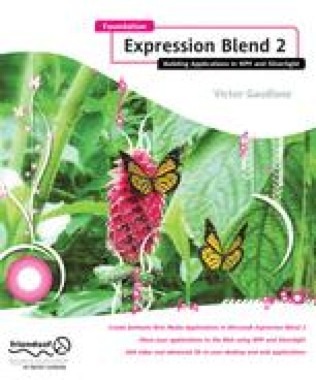
Foundation Expression Blend 2 : Building applications in WPF and silverlight
This book shows you how to take full advantage of Blend's interface, together with and Silverlight's vastly improved designer-developer workflow, guiding you through every step of development from downloading and installing of the development environment through creating finished, functional projects. You'll learn how to create simple drawing applications with the InkCanvas, make tabbed and scrollable interfaces, as well as build fully featured media players, photo galleries, and interactive 3D designs. Each chapter discusses major WPF and Silverlight features, provides a hands-on tutorial, and explains how that feature is implemented in the real world. In the end, you will have a collection of impressive WPF and Silverlight applications that can be added to your portfolio.

Food powders : Physical properties, processing, and functionality
Food Powders: Physical Properties, Processing, and Functionality is a comprehensive review on the characterization of ingredients, semi-processed and finished products when they are in a powdered form. It includes the description of different industrial unit operations such as drying, grinding, mixing, agglomeration, and encapsulation that supply food powders of different composition and microstructure. It also includes several analytical tools to characterize food powders by their particle size, size distribution, physical properties, and functionality.

Food nanotechnology
Nanotechnology is increasingly being utilized within the food industry to create innovative products with new or improved properties. This book introduces the history of nanotechnology applications in the food industry. It then discusses the key physicochemical and structural characteristics of the different kinds of nanoparticles found in foods, as well as showing how these characteristics lead to their unique functional attributes. Applications of nanotechnology in the food and agricultural industries are then covered, including the creation of nanopesticides, nanofertilizers, nutrient delivery systems, functional ingredients, smart packaging materials, nanofilters, and sensors, as well as for the conversion of waste materials into value-added products. Finally, the potential toxicity of both organic and inorganic nanoparticles found in foods is critically assessed. The author is a Distinguished Professor of food science who uses physics, chemistry, and biology to improve the quality, safety, and healthiness of foods. He has published over a thousand scientific articles and numerous books in this area and is currently the most highly cited food scientist in the world. He has won numerous awards for his scientific achievements.
