



الصفحة 10
الصفحة 10

Fast software encryption ; Vol. 4047 ; 13th international workshop, FSE 2006, Graz, Austria, March 15-17, 2006, Revised Selected Papers
Fast Software Encryption (FSE) 2006 is the 13th in a series of workshops on symmetric cryptography. It has been sponsored for the last ?ve years by the International Association for Cryptologic Research (IACR), and previous FSE workshops have been held around the world: 1993 Cambridge, UK 1994 Leuven, Belgium 1996 Cambridge, UK 1997 Haifa, Israel 1998 Paris, France 1999 Rome, Italy 2000 New York, USA 2001 Yokohama, Japan 2002 Leuven, Belgium 2003 Lund, Sweden 2004 New Delhi, India 2005 Paris, France The FSE workshop is devoted to research on fast and secure primitives for symmetric cryptography, including the design and analysis of block ciphers, stream ciphers, encryption schemes, analysis and evaluation tools, hash fu- tions, and message authentication codes.

Fast software encryption ; Vol. 3557 ; 12th International Workshop, FSE 2005, Paris, France, February 21-23, 2005, Revised Selected Papers
The Fast Software Encryption 2005 Workshop was the twelfth in a series of annual workshops on symmetric cryptography, sponsored for the fourth year by the International Association for Cryptologic Research (IACR). The workshop concentratedonallaspectsoffastprimitivesforsymmetriccryptology, including thedesign, cryptanalysisandimplementationofblockandstreamciphersaswell as hash functions and message authentication codes. The ?rst FSE workshop was held in Cambridge in 1993, followed by Leuven in 1994, Cambridge in 1996, Haifain1997, Parisin1998, Romein1999, NewYorkin2000, Yokohamain2001, Leuven in 2002, Lund in 2003, and New Delhi in 2004. This year, a total of 96 submissions were received. After an extensive review by the Program Committee, 30 submissions were accepted.

Fare astronomia con piccoli telescopi = Are astronomy with small telescopes
Giant tools are not necessarily required to produce scientifically valid results in the field of astronomy. Even the amateur with a small telescope, with a diameter of only 8-9 cm, can contribute to the science of the sky by making useful observations of the Sun, the Moon, planets, comets, asteroids, double or variable stars, nebulae and star clusters. The manual of M.K. Gainer explains what the minimum equipment is (a small telescope, a computer, a simple digital camera), how to use it, and what are the appropriate techniques to be adopted in the observations. It also offers schemes for interpreting and reducing the collected data, as well as forms to be filled in and sent to international collection centers.

Family-Oriented Primary Care
I was a Medical Student in 1966 when the Millis Report on the training of the generalist physician was published,de?ning the concept of primary care. According to the Report, the primary provider has four major responsib- ities or roles. The ?rst role is that of initial contact care of the undiffer- tiated patient. The second is to provide comprehensive care based on the belief that the primary provider should be able to manage the overwhe- ing majority of problems with which patients present. Equally important is the third role—continuity and coordination of care within the health care system. Finally,the primary provider is responsible for demonstrating le- ership in the community. This Report’s description of a primary provider seems as relevant today as it was when it was written. In 1994,the Institute of Medicine’s assessment of primary care added the responsibility of family and community integration of care to the Millis Report description. Without question there are many challenges to a contemporary imp- mentation of this comprehensive description of primary care, beginning with the level of individual patients who so often suffer from complex pr- lems, such as mental disorders and obesity. Treating these conditions in a brief primary care visit is dif?cult. At the level of the larger system, re- bursement is often inadequate and can represent policies that are uns- portive of primary care, such as those that compromise payment for preventive services that help patients to quit smoking or lose weight.

Extensionalism : The Revolution in Logic
This vivid and thought-provoking book by the Israeli logician Nimrod Bar-Am impels one to rethink the place of logic in Western thought. It shows that the history of logic from Aristotle to Tarski is the history of the gradual undoing of the classic conflation of logic and empirical science. It sets tomorrow’s agenda for philosophers and historians of logic and scientific method by taking as its starting point the mere fact that, curiously, ancient logic is not as formal as current literature presents it. Rather, as Bar-Am explains, modern formal logic became possible only after a series of bold criticisms of the magnificent Aristotelian system. These criticisms begin with David Hume’s declaration that logic does not sanction induction, follow on with Kant’s view of logic as an extremely limited system, and culminating with Booles’ introduction of logic as an extensional system, and Russell’s solution to his own paradox.

Expert F#
Expert F# is about practical programming in a beautiful language that puts the power and elegance of functional programming into the hands of .NET developers. In combination with .NET, F# achieves unrivaled levels of programmer productivity and program clarity. This books serves as: The authoritative guide to F# by the designer of F#. A comprehensive reference of F# concepts, syntax, and features. A treasury of expert F# techniques for practical, real–world programming.

Experimental Algorithms ; 6th International Workshop, WEA 2007, Rome, Italy, June 6-8, 2007, Proceedings
Fostering and disseminating high quality research results focused on the experimental analysis of algorithms the papers are devoted to the design, analysis, implementation, experimental evaluation, and engineering of efficient algorithms. Among the application areas addressed are most fields applying advanced algorithmic techniques, such as combinatorial optimization, approximation, graph theory, discrete mathematics, data mining, simulation, cryptography and security, scheduling, searching, sorting, string matching, coding, networking, etc.

Exosomes based drug delivery strategies for brain disorders
Provides a comprehensive overview of the role of exosomes in brain diseases, including stroke, multiple sclerosis, Parkinson's disease, Alzheimer's disease, epilepsy, and depression. It covers the basics of exosome biogenesis, composition, and synthesis, as well as the therapeutic potential of exosomes in brain disorders. The correlation between exosomes and neuroinflammation, the challenges of using exosomes as a novel carrier, and engineered exosomes to deliver therapeutic protein are covered well in this book. Use of radiolabelled exosomes as a diagnostic tool and the toxicity studies of exosomes with potential overcome approaches. It is an essential resource for researchers, clinicians, and healthcare professionals working in the field of exosome research, especially on its applications in brain disorders.

Exogenous and endogenous factors affecting happiness, happy mind, happy life
Emotions are the language of the soul. Our brain is the emotional center where every emotion is produced including happiness. Happiness underlying factors are considerable from two dimensions: endogenous factors and exogenous factors Therefore, this research aimed to consider biological factors that underlie happiness. The research is divided into several sub-groups (brain, genetics, neurotransmitters, endocrinology, hormones, drugs, diseases, and other exogenous factors). In spite of difficulties in finding special genes, several genes distributed to emotion and mood. Neuroscience studies showed that some part of brain (e.g. amygdala, hipocamp and limbic system) and neurotransmitters (e.g. dopamine, serotonin, norepinefrine and endorphin) play a role in control of happiness. A few studies pointed to the role of cortisol and adrenaline (adrenal gland) and oxitocin (pituitary gland) in controlling happiness.

Evidence Use in Health Policy Making : An International Public Policy Perspective
Provides a set of conceptual, empirical, and comparative chapters that apply a public policy perspective to investigate the political and institutional factors driving the use of evidence to inform health policy in low, middle, and high income settings. The work presents key findings from the Getting Research Into Policy (GRIP-Health) project: a five year, six country, programme of work supported by the European Research Council. The chapters further our understanding of evidence utilisation in health policymaking through the application of theories and methods from the policy sciences. They present new insights into the roles and importance of factors such as issue contestation, institutional arrangements, logics of appropriateness, and donor influence to explore individual cases and comparative experiences in the use of evidence to inform health policy.

European Robotics Symposium 2006
This unique reference represents a cross-section of forefront robotics research, ranging from robotics and systems to learning, autonomy and failure detection, from vision and navigation to localization and mapping, which are based on the papers presented at the 1st European Robotics Symposium (EUROS-06) held in Palermo, Italy from 16-18 March, 2006. The European Robotics Symposium (EUROS) is a brand-new International scientific event promoted by EURON, the European Robotics Network. Since its inception in 2000, EURON links most of the European robotics research teams and today (2006) involves more than 165 universities and companies across all of its member states. The EUROS meeting will be held in Europe every other year, but international participation at all levels is strongly encouraged making it a meeting place for high-quality presentation of interesting international research on robotics.

Ethylene Action in Plants
The plant hormone ethylene plays a prominent role among several intrinsic and extrinsic factors that control growth and physiology of plants. Its biological activity was discovered over a century ago. However, extensive studies on its mode of action came later. To date, it is well documented that ethylene is a versatile signaling molecule that plays an important role in many physiological processes - like growth, senescence, fruit ripening, stress responses, symbioses, and photosynthesis. Molecular-genetic analyses have revealed mechanisms responsible for ethylene production, perception, and signal transduction. The present work brings into focus the recent developments on the biochemical, physiological, and molecular basis for ethylene action in plants.

Ethics and Civil Drones : European Policies and Proposals for the Industry
Disseminates some of the results of the European H2020 AiRT Project (Technology transfer of RPAs for the creative industry).
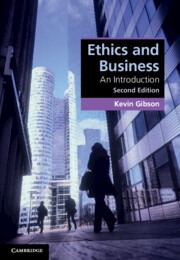
Ethics and Business : An Introduction
Offers a clear and accessible framework for understanding the important and complex ethical issues facing business in the contemporary world. Kevin Gibson explains ethical concepts in plain language, showing how terms such as responsibility, autonomy, justice, equality, rights, and beneficence are central to the ways in which business is and should be conducted.

Estimates of cost of crime : History, methodologies, and implications
With the emergence and development of quantitative methods in economics and statistics, the exercise of calculating costs of crime became possible, In this book, it's argue that we can estimate costs of different crimes, and that such estimates are relevant for criminal law and crime policy. Notwithstanding the incommensurability of many consequences of crime, society every day makes numerous decisions how to tackle crime, and at least implicitly assesses the relative importance of the problem. Properly done costs of crime estimates make people’s evaluation more visible, and allow for more coherent public policy.

Esthetic & restorative dentistry : Material selection & technique
Provides the most up-to-date information on enhanced developments, materials, and techniques that have emerged since the publication of the second edition, offering the reader a completely updated, revised, and newly illustrated overview of modern esthetic and restorative dentistry complete with tutorial videos. New topics include web-based communication with the laboratory, indirect composite chairside CAD/CAM restorations, a comparison of digital and conventional techniques, the resin composite injection technique, as well as updated information on composites and ceramic systems, including esthetic zirconia. New cases illustrate the maintenance of esthetic restorative materials, esthetic contouring, immediate dentin sealing, and novel surgical techniques such as lip repositioning, connective tissue grafting, and ridge preservation with collagen membranes.
Establishing The Foundation Of Collaborative Networks ; IFIP TC 5 Working Group 5.5 Eighth IFIP Working Conference on Virtual Enterprises September 10-12, 2007, Guimarães, Portugal
While today production and service provision constitute the main areas of application for Collaborative Networks (CNs) worldwide, during the last decade the paradigm is extending to many new application areas. These developments emphasize the need for establishing a sounder foundation for collaborative networks, namely in terms of theoretical principles and formal models, capturing the concepts, entities, behaviors, and operations of the CNs, and developing technology-independent infrastructure architectures, tools and methodologies. This book includ represent a comprehensive overview of recent advances in various domains and lines of research and development on collaborative networks. There is a special emphasis on the CN topics related to trust aspects, performance and value systems, VO breeding environments, VO creation, e-contracting, collaborative architectures and frameworks, professional virtual communities, interoperability issues, business benefits, and case studies and applications in industry and services.

Essentials of Dental Photography
A guide to incorporating dental photographs into daily practice. Containing real-world advice and proven techniques, this book helps clinicians understand and apply the fundamental principles of dental photography. Covers all the basic concepts, equipment, and techniques of dental photography Illustrates the photographic setups for both intra- and extra-oral images Provides recommendations for appropriate types of cameras, lenses, flashes, reflectors, tripods, and software Discusses photographic archiving, electronic dissemination, printing, publishing, and presenting images

Essential Software Architecture
Job titles like "Technical Architect" and "Chief Architect" nowadays abound in the software industry, yet many people suspect that "architecture" is one of the most overused and least understood terms in professional software development. Gorton's book helps resolve this predicament. It concisely describes the essential elements of knowledge and key skills required to be a software architect. The explanations encompass the essentials of architecture thinking, practices, and supporting technologies.

Equilibrium States and the Ergodic Theory of Anosov Diffeomorphisms
For this printing of R. Bowen's book, J.-R. Chazottes has retyped it in TeX for easier reading, thereby correcting typos and bibliographic details. From the Preface by D. Ruelle: "Rufus Bowen has left us a masterpiece of mathematical exposition... Here a number of results which were new at the time are presented in such a clear and lucid style that Bowen's monograph immediately became a classic. More than thirty years later, many new results have been proved in this area, but the volume is as useful as ever because it remains the best introduction to the basics of the ergodic theory of hyperbolic systems."
