



الصفحة 1
الصفحة 1

Nanoscale Phenomena : Basic Science to Device Applications
Nanotechnology is the result of the continuing technological trend toward device miniaturization and the characterization, manipulation, and fine control of structure and function at diminishing length scales. A large class of nanoscale materials can be stable even though they are far from the lowest-energy thermodynamic state, and many possess novel properties unattainable in bulk. These trends are supported by the increasing sophistication of characterization and fabrication tools such as the scanning tunneling microscope and the transmission electron microscope, which allow the resolution and manipulation of single atoms and molecules.

Microsurgery in Periodontal and Implant Dentistry : Concepts and Applications
Compiles all relevant information regarding fundamental concepts and advanced techniques related to the applications of minimally invasive procedures in periodontal and implant therapy facilitated with the operating microscope. Microsurgical therapy, wound healing principles as well as biomechanical and design aspects of micro-instruments and suturing armamentarium are discussed. The book offers information that is usually scattered in the dental and medical literature and not only hard to compile but also to frame in the appropriate clinical categories. Its unique emphasis on ergonomics (patient, operator and assistant positioning) and collaboration techniques like four to six hand assisting make this work unique. Each topic is discussed by world renowned experts in the field. The book is a valuable resource for the dental society including general dentists, periodontists, oral surgeons and implantologists.

Microscopy of Semiconducting Materials ; Proceedings of the 14th Conference, April 11-14, 2005, Oxford, UK
This is a long-established international biennial conference series, organised in conjunction with the Royal Microscopical Society, Oxford, the Institute of Physics, London and the Materials Research Society, USA. The 14th conference in the series focused on the most recent advances in the study of the structural and electronic properties of semiconducting materials by the application of transmission and scanning electron microscopy. The latest developments in the use of other important microcharacterisation techniques were also covered and included the latest work using scanning probe microscopy and also X-ray topography and diffraction. Developments in materials science and technology covering the complete range of elemental and compound semiconductors are described in this volume.

Inorganic Constituents in Soil : Basics and Visuals
A must-read for students of and beginners in soil science. In a well-organized and easy-to-follow manner, it provides basic outlines of soil minerals, new methods and recent developments in the field, with a special focus on visual aids. The chapters on primary minerals, secondary minerals, non-crystalline inorganic constituents and inorganic constituents sensitive to varying redox conditions will help readers understand the basic components of soils. Further, readers are introduced to new analytical methods with the aid of microscopy and recent developments in the field. Uniquely, the book features case studies on the identification and isolation methods for vivianite crystals from paddy field soils, as well as a identical procedure for identifying noncrystalline constituents such as volcanic glasses and plant opals, which can also be applied to other soils depending on the local conditions.
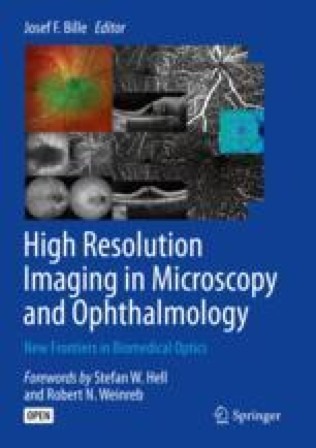
High Resolution Imaging in Microscopy and Ophthalmology : New Frontiers in Biomedical Optics
This book provides a comprehensive overview of the application of the newest laser and microscope/ophthalmoscope technology in the field of high resolution imaging in microscopy and ophthalmology. Starting by describing High-Resolution 3D Light Microscopy with STED and RESOLFT, the book goes on to cover retinal and anterior segment imaging and image-guided treatment and also discusses the development of adaptive optics in vision science and ophthalmology. Using an interdisciplinary approach, the reader will learn about the latest developments and most up to date technology in the field and how these translate to a medical setting.

Handbook of microscopy for nanotechnology
Handbook of Microscopy for Nanotechnology aims to provide an overview of the basics and applications of various microscopy techniques for nanotechnology. This handbook highlights various key microcopic techniques and their applications in this fast-growing field. Topics to be covered include the following: scanning near field optical microscopy, confocal optical microscopy, atomic force microscopy, magnetic force microscopy, scanning turning microscopy, high-resolution scanning electron microscopy, orientational imaging microscopy, high-resolution transmission electron microscopy, scanning transmission electron microscopy, environmental transmission electron microscopy, quantitative electron diffraction, Lorentz microscopy, electron holography, 3-D transmission electron microscopy, high-spatial resolution quantitative microanalysis, electron-energy-loss spectroscopy and spectral imaging, focused ion beam, secondary ion microscopy, and field ion microscopy.

Hair Follicle : Differentiation under the Electron Microscope - An Atlas
This book contains many superb electron mic- graphs, from low-magni?cation panoramic views for orientation to hi- power views showing ultrastructural detail. Captions and schematic drawings are also very helpful in “reading” electron micrographs and - derstanding the structural detail.

Fundamentals of Friction and Wear on the Nanoscale
In the past twenty years, powerful tools such as atomic force microscopy have made it possible to accurately investigate the phenomena of friction and wear, down to the nanometer scale. Readers of this book will become familiar with the concepts and techniques of nanotribology, explained by an international team of scientists and engineers, actively involved and with long experience in this field. Edited by two pioneers in the field, 'Fundamentals of Frictions and Wear at the Nanoscale' is suitable both as first introduction to this fascinating subject, and also as a reference for researchers wishing to improve their knowledge of nanotribology and to keep up with the latest results in this field.

Empire under the microscope : Parasitology and the British literary imagination, 1885–1935
This book considers science and empire, and the stories we tell ourselves about them. Emilie Taylor-Pirie examines a wealth of archival material including medical lectures, scientific publications, popular biography, and personal and professional correspondence, alongside novels, poems, newspaper articles, and political speeches, to excavate the shared vocabularies of literature and medicine. She demonstrates how forms such as poetry and biography; genres such as imperial romance and detective fiction; and modes such as adventure and the Gothic, together informed how tropical diseases, their parasites, and their vectors, were understood in relation to race, gender, and nation.

Elementi di fisica teorica = Elements of theoretical physics
The approach in this book is less formal than traditional Theoretical Physics Foundations courses. The goal is still to achieve a genuine understanding of physical concepts and the ability to independently solve problems. The style is conversational, with abundant examples, and the presentation of all important steps is detailed, answering all the questions students typically ask in advance. The author has given space to recent and interesting developments, such as the scanning tunneling microscope and quantum cryptography. He has always sought to explain the rationale behind mathematical manipulations and the physical meaning of all measurable quantities. Above all, he has emphasized the aspects that make Theoretical Physics a science full of practical implications and a particularly fascinating intellectual adventure.

Electron Tomography : Methods for Three-Dimensional Visualization of Structures in the Cell
Electron tomography has become a standard technique with applications in cell biology, structural biology, and materials science. This definitive work provides a comprehensive treatment of the mathematical background and working methods of three-dimensional reconstruction from tilt series, with special emphasis on the problems presented by limitations of data collection in the transmission electron microscope. In addition to chapters that are applicable to 3D reconstruction in all fields of science, such as radiological imaging in medicine and electron tomography in materials science, Electron Tomography also focuses on specimen preparation and imaging unique to biological electron microscopy.

Electron crystallography : Novel approaches for structure determination of nanosized materials
During the last decade we have been witness to several exciting achievements in electron crystallography. This includes structural and charge density studies on organic molecules complicated inorganic and metallic materials in the amorphous, nano-, meso- and quasi-crystalline state and also development of new software, tailor-made for the special needs of electron crystallography. This volume comprises the proceedings of the NATO Advanced Study Institute on Electron Crystallography: Novel Approaches for Structure Determination of Nanosized Materials, Erice, Italy, 10 - 24 June 2004

Dynamics of Freezing-Thawing Soil around Subway Shield Tunnels
Addresses development laws for axial strain and excess pore water pressure in silty clay around subway shield tunnels before and after freezing-thawing when subjected to subway loading, as well as the effect of freezing-thawing on the dynamic parameters of silty clay, including the dynamic modulus and damping ratio, introducing readers to the design and construction of bypasses in subway tunnels with the artificial freezing method. On this basis, it then studies the microstructures of silty clay before and after freezing-thawing cyclic loading by means of scanning electron microscope tests and mercury intrusion porosimetry tests. Lastly, the book presents a numerical simulation of the dynamics of silty clay around subway tunnels before and after thawing.

IUTAM Symposium on Physicochemical and Electromechanical Interactions in Porous Media
The purpose of the IUTAM symposium from which this proceedings volume has been compiled was to dive deep into the mechanics of those porous media that involve mechanics and chemistry, mechanics and electromagnetism, mechanics and thermal fluctuations of mechanics and biology.
Biophotonics ; Optical science and engineering for the 21st century
Biophotonics: Optical Science and Engineering in the 21st Century serves as an ideal aid to the research and development of these areas integrating light, photonics, and biological systems.Key topics include: Fluctuation Correlation Spectroscopy in Cells: Determination of Molecular Aggregation ,Using GFP and FRET Technologies for Studying Signaling Mechanisms of Apoptosis in a Single Living Cell, Study on Protein-Protein Interaction in Single Living Cells, Functional Optical Coherence Tomography: Simultaneous In Vivo Imaging of Tissue Structure and Physiology, Imaging –Photo- and Sonodynamic Diagnosis of Cancer Mediated by Chemiluminescence Probes, Biophotonic Analysis of Spontaneous Self-Organizing Oxidative Processes in Aqueous Systems, Biophoton Emission and Defense Systems in Plants
Biological Low-Voltage Scanning Electron Microscopy
Biological Low-Voltage Scanning Electron Microscopy is the first book to address both of these aspects of biological LVSEM. After providing a thorough description of the unique advantages and the operating constraints related to operating a scanning electron microscope at low beam voltage, the remainder of book focuses on the the best way to image all types of plant and animal cells and covers specimens that range from macromolecules to the surfaces revealed by de-embedding resin-embedded samples. Advanced specimen preparation techniques such as cryo-LVSEM, and immuno-gold-LVSEM are fully covered, as is x-ray microanalysis at low beam voltage and live-time stereo imaging. The preparative protocols provided represent the distilled essence of the experience of a group of world-renowned authors who have, for many decades, been instrumental in developing and applying new approaches to LVSEM to support their own biological research.

Best practices in endodontics : A desk reference
A compilation of practical information shared by some of the finest clinical endodontists in the world. Most of the chapters focus on how to perform a single clinical procedure. Written in simple language with ample photographic support. Provides guidance for most common endodontic procedures but also for some procedures that are less common, such as how to treat teeth containing Russian Red; surgical extrusion; root submergence; and decompression. Because most of the procedures described are performed under a dental operating microscope, there are chapters on operatory design for microscopic endodontics, microscope ergonomics for the doctor and assistant, and how to set up and use a microscope for photography and video documentation.

Automated nanohandling by microrobots
Automated Nanohandling by Microrobots introduces an actuation principle for such microrobots and presents a new robot design. Different aspects of this research field regarding the hardware and software implementation of the system components, including the sensory feedback for automated nanohandling, are discussed in detail. Extensive applications of the microrobot station for nanohandling, nano-characterization and nanostructuring are provided, together with the experimental results.

Applied scanning probe methods X : Biomimetics and industrial applications
The success of the Springer Series Applied Scanning Probe Methods I–VII and the rapidly expanding activities in scanning probe development and applications worldwide made it a natural step to collect further speci c results in the elds of development of scanning probe microscopy techniques (Vol. VIII), characterization (Vol. IX), and biomimetics and industrial applications (Vol. X). These three volumes complement the previous set of volumes under the subject topics and give insight into the recent work of leading specialists in their respective elds. Following the tradition of the series, the chapters are arranged around techniques, characterization and biomimetics and industrial applications. Volume VIII focuses on novel scanning probe techniques and the understanding of tip/sample interactions. Topics include near eld imaging, advanced AFM, specialized scanning probe methods in life sciences including new self sensing cantilever systems, combinations of AFM sensors and scanning electron and ion microscopes, calibration methods, frequency modulation AFM for application in liquids, Kelvin probe force microscopy, scanning capacitance microscopy, and the measurement of electrical transport properties at the nanometer scale.
Applied scanning probe methods VIII : Scanning probe microscopy techniques
The success of the Springer Series Applied Scanning Probe Methods I–VII and the rapidly expanding activities in scanning probe development and applications worldwide made it a natural step to collect further speci c results in the elds of development of scanning probe microscopy techniques (Vol. VIII), characterization (Vol. IX), and biomimetics and industrial applications (Vol. X). These three volumes complement the previous set of volumes under the subject topics and give insight into the recent work of leading specialists in their respective elds. Following the tradition of the series, the chapters are arranged around techniques, characterization and biomimetics and industrial applications. Volume VIII focuses on novel scanning probe techniques and the understanding of tip/sample interactions. Topics include near eld imaging, advanced AFM, s- cializedscanningprobemethodsinlifesciencesincludingnewselfsensingcantilever systems, combinations of AFM sensors and scanning electron and ion microscopes, calibration methods, frequency modulation AFM for application in liquids, Kelvin probe force microscopy, scanning capacitance microscopy, and the measurement of electrical transport properties at the nanometer scale.
