



الصفحة 1
الصفحة 1
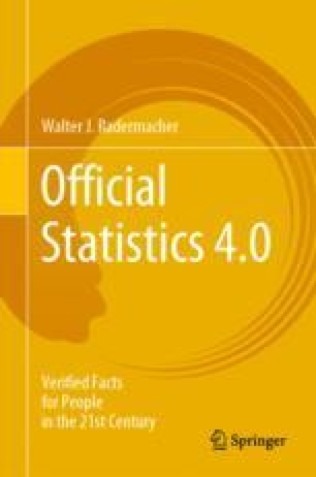
Official Statistics 4.0 : Verified Facts for People in the 21st Century
Explores official statistics and their social function in modern societies. Digitisation and globalisation are creating completely new opportunities and risks, a context in which facts (can) play an enormously important part if they are produced with a quality that makes them credible and purpose-specific. In order for this to actually happen, official statistics must continue to actively pursue the modernisation of their working methods.

Introduction to Intelligent Construction Technology of Transportation Infrastructure
Expounds on the related technologies of intelligent transportation infrastructure construction. Based on the essential characteristics of intelligent construction, "perception, analysis, decision-making, and execution," the basic structure of intelligent construction technology (ICT) is established. With the integration of engineering construction technologies, the analyses of the essence of intelligent algorithms and the feasibility of Artificial Intelligence (AI) are provided. The book introduces the essential characteristics of Big Data and the Internet of Things and their relationship with engineering construction. On this basis, the feasibility and implementation plan of intelligent technology applications in design, construction, and maintenance are analyzed and demonstrated with engineering examples.

Finance 4.0 - towards a socio-ecological finance system : A participatory framework to promote sustainability
The first is Bitcoin that infamously pursues a state-independent, decentralized conception of money. The second is Finance 4.0, a system that proposes a participatory multi-dimensional money system with built-in incentives for sustainable behavior

Emerging Technologies in Computing ; 3rd EAI International Conference, iCETiC 2020, London, UK, August 19–20, 2020, Proceedings
This book constitutes the refereed conference proceedings of the Third International Conference on Emerging Technologies in Computing, iCEtiC 2020, held in London, UK, in August 2020. Due to VOVID-19 pandemic the conference was helt virtually.The 25 revised full papers were reviewed and selected from 65 submissions and are organized in topical sections covering blockchain and cloud computing; security, wireless sensor networks and IoT; AI, big data and data analytics; emerging technologies in engineering, education and sustainable development.

Manual of Digital Earth
This book offers a summary of the development of Digital Earth over the past twenty years. By reviewing the initial vision of Digital Earth, the evolution of that vision, the relevant key technologies, and the role of Digital Earth in helping people respond to global challenges, this publication reveals how and why Digital Earth is becoming vital for acquiring, processing, analysing and mining the rapidly growing volume of global data sets about the Earth.
Challenges and Solutions for Sustainable Smart City Development
Discusses advances in smart and sustainable development of smart environments. The authors discuss the challenges faced in developing sustainable smart applications and provide potential solutions. The solutions are aimed at improving reliability and security with the goal of affordability, safety, and durability. Topics include health care applications, sustainable smart transportation systems, intelligent sustainable wearable electronics, and sustainable smart building and alert systems. Authors are from both industry and academia and present research from around the world. Addresses problems and solutions for sustainable development of smart cities; Includes applications such as healthcare, transportation, wearables, security, and more ; Relevant for scientist and researchers working on real time smart city development.
Biogeochemical cycles in globalization and sustainable development
This valuable study of environmental subsystems functioning under various climatic and anthropogenic conditions provides a unique insight into the social context of global changes in biogeochemical cycles and demonstrates current understanding of globalization and sustainable development.
Biofuels, Solar and Wind as Renewable Energy Systems : Benefits and Risks
With shortages of fossil energy, especially oil and natural gas, and heavy biomass energy use occurring in both developed and developing countries, a major focus has developed worldwide on renewable energy systems. Renewable energy systems include wind power, biomass, photovoltaics, hydropower, solar thermal, thermal ponds, and biogas. Currently, a heavy focus is on biofuels made from crops, such as corn, sugarcane, and soybeans, for use as renewable energy sources. Wood and crop residues also are being used as fuel. Though it may seem beneficial to use renewable plant materials for biofuel, the use of crop residues and other biomass for biofuels raises many concerns about major environmental problems, including food shortages and serious destruction of vital soil resources.
Bioeconomy and Global Inequalities Socio-Ecological Perspectives on Biomass Sourcing and Production
This book explores bioeconomy and bioenergy policies across South America, Asia and Europe. It discusses how a transition away from a fossil and towards a bio-based economic order alters, reinforces and challenges socio-ecological inequalities. A series of conceptual discussions and case studies with a multidisciplinary background in the Social Science illuminate how the deployment of biomass sources from the agricultural and forestry sectors affect societal changes concerning knowledge production, land and labour relations, political participation and international trade
Becoming citizens in a changing world : IEA international civic and citizenship education study 2016 International Report
Presents the results from the second cycle of the IEA International Civic and Citizenship Education Study (ICCS 2016). Using data from 24 countries in Asia, Europe and Latin America, the study investigates the ways in which young people are prepared to undertake their roles as citizens in a range of countries in the second decade of the 21st century. It also responds to the enduring and emerging challenges of educating young people in a world where contexts of democracy and civic participation continue to change. New developments of this kind include the increase in the use of social media by young people as a tool for civic engagement, growing concerns about global threats and sustainable development, as well as the role of schools in fostering peaceful ways of interaction between young people. Besides enabling the evaluation of a wide range of aspects of civic and citizenship education, including those related to recent developments in a number of countries, the inclusion of test and questionnaire material from the first cycle of the study in 2009 allows the results from ICCS 2016 to be used to examine changes in civic knowledge, attitudes and engagement over seven years.
Applications of artificial intelligence, big data and internet of things in sustainable development
Focuses on different algorithms and models related to AI, big data and IoT used for various domains. It enables the reader to have a broader and deeper understanding of several perspectives regarding the dynamics, challenges, and opportunities for sustainable development using artificial intelligence, big data and IoT. Applications of Artificial Intelligence, Big Data and Internet of Things (IoT) in Sustainable Development focuses on IT-based advancements in multidisciplinary fields such as healthcare, finance, bioinformatics, industrial automation, and environmental science.
Analysis and Development of Sustainable Urban Production Systems
Manufacturing of products in urban production sites is connected to unique potentials, yet also to specific challenges. Urban factories can provide functional diversity and contribute positive impacts to a city. The concept of urban production receives rising attention in research and industry and it is recognized in its interdisciplinary nature. With a holistic approach from both the urban perspective and the factory perspective, negative impacts can be minimized, positive effects enabled and mutually beneficial, symbiotic combinations created. The presented framework and methods for the evaluation and implementation of sustainable urban production systems allow the assessment of impacts and provide the means to control and utilize the unique strengths of urban factories for cities and industry. This will allow a structured derivation of methods and measures from the concept of urban production for producing enterprises and the urban stakeholders.
