



الصفحة 1
الصفحة 1

Numerical computation, data analysis and software in mathematics and engineering
Include the aspects of the meshless method, numerical simulation, mathematical models, deep learning and data analysis. Meshless methods, such as the improved element-free Galerkin method, the dimension-splitting, interpolating, moving, least-squares method, the dimension-splitting, generalized, interpolating, element-free Galerkin method and the improved interpolating, complex variable, element-free Galerkin method, are presented. Some complicated problems, such as tge cold roll-forming process, ceramsite compound insulation block, crack propagation and heavy-haul railway tunnel with defects, are numerically analyzed.

Model and Mathematics : From the 19th to the 21st Century
This book collects the historical and medial perspectives of a systematic and epistemological analysis of the complicated, multifaceted relationship between model and mathematics, ranging from, for example, the physical mathematical models of the 19th century to the simulation and digital modelling of the 21st century. The aim of this anthology is to showcase the status of the mathematical model between abstraction and realization, presentation and representation, what is modeled and what models.

Intelligent Algorithms for Packing and Cutting Problem
Introduces intelligent solving algorithms for classical packing and cutting problem and their variants / Investigates novel methods, e.g. reinforcement learning algorithms, for rectangular and irregular packing problems / Presents practical engineering application cases in combination of theory and practice / investigates in detail the two-dimensional packing and cutting problems in the field of operations research and management science. It introduces the mathematical models and intelligent solving algorithms for these problems, as well as their engineering applications. Most intelligent methods reported in this book have already been applied in reality, which can provide reference for the engineers. The presented novel methods for the two-dimensional packing problem provide a new way to solve the problem for researchers interested in operations research or computer science. This book also introduces three new variants of packing problems and their solving methods, which offer a different research direction.

Handbook of Mathematical Models in Computer Vision
In this edited volume we present the most prominent mathematical models that are considered in computational vision. To this end, tasks of increasing complexity are considered and we present the state-of-the-art methods to cope with such tasks. The volume consists of six thematic areas that provide answers to the most dominant questions of computational vision: Image reconstruction, Segmentation and object extraction, Shape modeling and registration, Motion analysis and tracking, 3D from images, geometry and reconstruction Applications in medical image analysis
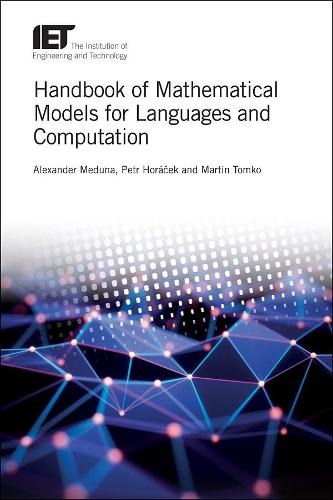
Handbook Of Mathematical Models For Languages And Computation
Introduces a variety of concepts in discrete mathematics and mathematical modeling for languages and computation. The authors pay special attention to the implementation of mathematical concepts to explain clearly how to encode them in computational practice. All computer programs are written in C#. The theory of computation is used to address challenges arising in many computer science areas such as artificial intelligence, language processors, compiler writing, information and coding systems, programming language design, computer architecture and more. To grasp topics concerning this theory readers need to familiarize themselves with its computational and language models, based on concepts of discrete mathematics including sets, relations, functions, graphs and logic.
Fundamentals of image data mining : Analysis, features, classification and retrieval
Presents a comprehensive review of the essentials of image data mining, and the latest cutting-edge techniques used in the field. The coverage spans all aspects of image analysis and understanding, offering deep insights into areas of feature extraction, machine learning, and image retrieval. The theoretical coverage is supported by practical mathematical models and algorithms, utilizing data from real-world examples and experiments. Topics and features: Describes essential tools for image mining, covering Fourier transforms, Gabor filters, and contemporary wavelet transforms / Develops many new exercises (most with MATLAB code and instructions) / Includes review summaries at the end of each chapter / Analyses state-of-the-art models, algorithms, and procedures for image mining / Integrates new sections on pre-processing, discrete cosine transform, and statistical inference and testing / Demonstrates how features like color, texture, and shape can be mined or extracted for image representation / Applies powerful classification approaches: Bayesian classification, support vector machines, neural / networks, and decision trees / Implements imaging techniques for indexing, ranking, and presentation, as well as database visualization

E-CARGO and role-based collaboration : Modeling and solving problems in the complex
A model for collaboratively solving complex problems Explains the nature of collaboration, explores an easy-to-follow process of collaboration, and defines a model to solve complex problems in collaboration and complex systems. Written by a noted expert on the topic, the book initiates the study of an effective collaborative system from a novel perspective. The role-based collaboration (RBC) methodology investigates the most important aspects of a variety of collaborative systems including societal-technical systems. The models and algorithms can also be applied across system engineering, production, and management. Contains a set of concepts, models, and algorithms for the analysis, design, implementation, maintenance, and assessment of a complex system Presents computational methods that use roles as a primary underlying mechanism to facilitate collaborative activities including role assignment Explores the RBC methodology that concentrates on the aspects that can be handled by individuals to establish a well-formed team Offers an authoritative book written by a noted expert on the topic

Differential Models : An Introduction with Mathcad
Differential equations are often used in mathematical models for technological processes or devices. However, the design of a differential mathematical model is crucial and difficult in engineering.

Deep neural networks and data for automated driving : robustness, uncertainty quantification, and insights towards safety
Environment perception for highly automated driving heavily employs deep neural networks, facing many challenges. How much data do we need for training and testing? How to use synthetic data to save labeling costs for training? How do we increase robustness and decrease memory usage? For inevitably poor conditions: How do we know that the network is uncertain about its decisions? Can we understand a bit more about what actually happens inside neural networks? This leads to a very practical problem particularly for DNNs employed in automated driving: What are useful validation techniques and how about safety? This book unites the views from both academia and industry, where computer vision and machine learning meet environment perception for highly automated driving. Naturally, aspects of data, robustness, uncertainty quantification, and, last but not least, safety are at the core of it. This book is unique: In its first part, an extended survey of all the relevant aspects is provided. The second part contains the detailed technical elaboration of the various questions mentioned above.

Deep Learning-Based Face Analytics
Provides an overview of different deep learning-based methods for face recognition and related problems. Specifically, the authors present methods based on autoencoders, restricted Boltzmann machines, and deep convolutional neural networks for face detection, localization, tracking, recognition, etc. The authors also discuss merits and drawbacks of available approaches and identifies promising avenues of research in this rapidly evolving field.

Continuous System Simulation
Continuous System Simulation describes systematically and methodically how mathematical models of dynamic systems, usually described by sets of either ordinary or partial differential equations possibly coupled with algebraic equations, can be simulated on a digital computer.

Computer Algebra in Scientific Computing ; 10th International Workshop, CASC 2007, Bonn, Germany, September 16-20, 2007, Proceedings
The book covers not only various expanding applications of computer algebra to scientific computing but also the computer algebra systems themselves and the CA algorithms. Topics addressed are studies in polynomial and matrix algebra, quantifier elimination, and Gröbner bases, as well as stability investigation of both differential equations and difference methods for them. Several papers are devoted to the application of computer algebra methods and algorithms to the derivation of new mathematical models in biology and in mathematical physics.
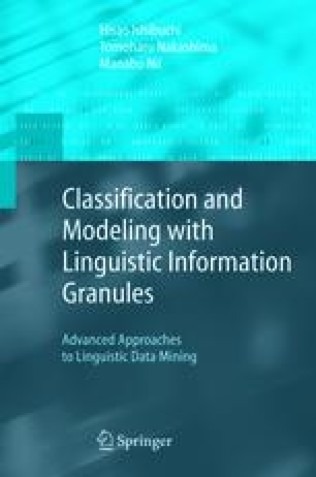
Classification and Modeling with Linguistic Information Granules : Advanced Approaches to Linguistic Data Mining
Many approaches have already been proposed for classification and modeling in the literature. These approaches are usually based on mathematical mod els. Computer systems can easily handle mathematical models even when they are complicated and nonlinear (e.g., neural networks). On the other hand, it is not always easy for human users to intuitively understand mathe matical models even when they are simple and linear. This is because human information processing is based mainly on linguistic knowledge while com puter systems are designed to handle symbolic and numerical information. A large part of our daily communication is based on words. We learn from various media such as books, newspapers, magazines, TV, and the Inter net through words. We also communicate with others through words. While words play a central role in human information processing, linguistic models are not often used in the fields of classification and modeling. If there is no goal other than the maximization of accuracy in classification and modeling, mathematical models may always be preferred to linguistic models. On the other hand, linguistic models may be chosen if emphasis is placed on interpretability.
Bioinformatics
In this textbook present mathematical models in bioinformatics and they describe the biological problems that inspire the computer science tools used to handle the enormous data sets involved. The first part of the book covers the mathematical and computational methods, while the practical applications are presented in the second part. The mathematical presentation is descriptive and avoids unnecessary formalism, and yet remains clear and precise. Emphasis is laid on motivation through biological problems and cross applications. Each of the four chapters in the first part is accompanied by exercises and problems to support an understanding of the techniques presented. Each of the six chapters of the second part is devoted to some specific application domain: sequence alignment, molecular phylogenetics and coalescence theory, genomics, proteomics, RNA, and DNA microarrays. Each chapter concludes with a problems and projects section, to deepen the reader's understanding and to allow for the design of derived methods. Many of the projects involve publicly available software and/or Web-based bioinformatics depositories. Finally, the book closes with a thorough bibliography, reaching from classic research results to very recent findings, providing many pointers for future research.Overall, this volume is ideally suited for a senior undergraduate or graduate course on bioinformatics, with a strong focus on its mathematical and computer science background.

Algorithms for a New World : When Big Data and Mathematical Models Meet
Algorithms, artificial neural networks, and machine learning help us discover the opportunities and pitfalls of a world governed by mathematics and artificial intelligence.
Advanced mathematical science for mobility society
The automotive industry has made steady progress in technological innovations under the names of Connected Autonomous-Shared-Electric (CASE) and Mobility as a Service (MaaS). Needless to say, mathematics and informatics are important to support such innovations. As the concept of cars and movement itself is diversifying, they are indispensable for grasping the essence of the future mobility society and building the foundation for the next generation. This book contains three main contents. 1. Mathematical models of flow 2. Mathematical methodsfor huge data and network analysis 3. Algorithm for mobility society The first one discusses mathematical models of pedestrian and traffic flow, as they are important for preventing accidents and achieving efficient transportation.
