



الصفحة 1
الصفحة 1
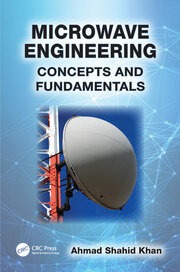
Microwave Engineering : Concepts and Fundamentals
Covers everything from wave propagation to reflection and refraction, guided waves, and transmission lines, providing a comprehensive understanding of the underlying principles at the core of microwave engineering. This encyclopedic text not only encompasses nearly all facets of microwave engineering, but also gives all topics—including microwave generation, measurement, and processing—equal emphasis. Packed with illustrations to aid in comprehension. Describes the mathematical theory of waveguides and ferrite devices, devoting an entire chapter to the Smith chart and its applications Discusses different types of microwave components, antennas, tubes, transistors, diodes, and parametric devices Examines various attributes of cavity resonators, semiconductor and RF/microwave devices, and microwave integrated circuits

Microelectronic Circuits
Devices and basic circuits -- Signals, amplifiers and semiconductors -- Operational amplifiers -- Diodes -- Bipolar junction transistors (BJTS) -- Mos field-effect transistors (MOSFETS) -- Transistor amplifiers -- Analog integrated circuits -- Building blocks of integrated-circuit amplifiers -- Differential and multistage amplifiers -- Frequency response -- Feedback -- Output stages and power amplifiers -- Operational-amplifier circuits -- Filters and oscillators -- Digital integrated circuits -- CMOS digital logic circuits -- Digital Design: Power, Speed, and Area -- Memory and Clocking Circuits

Integrated Circuit and System Design. Power and Timing Modeling, Optimization and Simulation ; Vol. 4148 ; 16th International Workshop, PATMOS 2006, Montpellier, France, September 13-15, 2006, Proceedings
Welcome to the proceedings of PATMOS 2006, the 16th in a series of international workshops. PATMOS 2006 was organized by LIRMM with CAS technical - sponsorship and CEDA sponsorship. Over the years, the PATMOS workshop has evolved into an important European event, where researchers from both industry and academia discuss and investigate the emerging challenges in future and contemporary applications, design methodologies, and tools required for the development of upcoming generations of integrated circuits and systems. The technical program of PATMOS 2006 contained state-of-the-art technical contributions, three invited talks, a special session on hearing-aid design, and an embedded tutorial. The technical program focused on timing, performance and power consumption, as well as architectural aspects with particular emphasis on modeling, design, characterization, analysis and optimization in the nanometer era. The Technical Program Committee, with the assistance of additional expert reviewers, selected the 64 papers presented at PATMOS. The papers were organized into 11 technical sessions and 3 poster sessions. As is always the case with the PATMOS workshops, full papers were required, and several reviews were received per manuscript.

Integrated Circuit and System Design. Power and Timing Modeling, Optimization and Simulation ; Vol. 3728 ; 15th International Workshop, PATMOS 2005, Leuven, Belgium, September 21-23, 2005, Proceedings
Welcome to the proceedings of PATMOS 2005, the 15th in a series of international workshops.PATMOS2005wasorganizedbyIMECwithtechnicalco-sponsorshipfrom the IEEE Circuits and Systems Society. Over the years, PATMOS has evolved into an important European event, where - searchers from both industry and academia discuss and investigate the emerging ch- lenges in future and contemporary applications, design methodologies, and tools - quired for the developmentof upcominggenerationsof integrated circuits and systems. The technical program of PATMOS 2005 contained state-of-the-art technical contri- tions, three invited talks, a special session on hearing-aid design, and an embedded - torial. The technical program focused on timing, performance and power consumption, as well as architectural aspects with particular emphasis on modeling, design, char- terization, analysis and optimization in the nanometer era. The Technical Program Committee, with the assistance of additional expert revi- ers, selected the 74 papers to be presented at PATMOS. The papers were divided into 11 technical sessions and 3 poster sessions. As is always the case with the PATMOS workshops, the review process was anonymous, full papers were required, and several reviews were carried out per paper. Beyond the presentations of the papers, the PATMOS technical program was - riched by a series of speeches offered by world class experts, on important emerging research issues of industrial relevance. Prof. Jan Rabaey, Berkeley, USA, gave a talk on “Traveling the Wild Frontier of Ulta Low-Power Design”, Dr. Sung Bae Park, S- sung, gave a presentation on “DVL (Deep Low Voltage): Circuits and Devices”, Prof.
Integrated circuit and system design : Power and timing modeling, optimization and simulation ; 17th International Workshop, PATMOS 2007, Gothenburg, Sweden, September 3-5, 2007, Proceedings
Papers cover high level design, low power design techniques, low power analog circuits, statistical static timing analysis, power modeling and optimization, low power routing optimization, security and asynchronous design, low power applications, modeling and optimization, and more.

Handbook of Biochips : Integrated Circuits and Systems for Biology and Medicine
This book provides a broad survey of the field of biochips, including fundamentals of microelectronics and biomaterials interaction with various, living tissues, as well as numerous, diverse applications. Although a wide variety of biochips will be described, there will be a focus on those at the brain-machine interface. Analysis is included of the relationship between different categories of biochips and their interactions with the body and coverage includes wireless remote control of biochips and arrays of microelectrodes, based on new biomaterials.

Frontiers in Hardware Security and Trust : Theory, design and practice
The footprint and power constraints imposed on internet-of-things end-points, smart sensors, mobile and ad hoc network devices make traditional and software based cryptographic solutions that require a general-purpose processor increasingly unfeasible. The fact that security is not the primary functionality of these devices means that only a small portion of their limited processing power and storage is available for security, driving the need for alternative security solutions. Hardware security - including hardware obfuscation, hardware security primitives, side-channel attacks and so on - is therefore becoming an increasingly active research area in both academia and industry.

Fault Diagnosis of Analog Integrated Circuits
Fault Diagnosis of Analog Integrated Circuits is a textbook for advanced undergraduate and graduate level students as well as practicing engineers. The objective of this book is to study the testing and fault diagnosis of analog and analog part of mixed signal circuits. A background in analog integrated circuit, artificial neural network is desirable but not essential.
