



الصفحة 1
الصفحة 1
Modeling and Using Context ; 5th International and Interdisciplinary Conference, CONTEXT 2005, Paris, France, July 5-8, 2005, Proceedings
Context is of crucial importance for research and applications in many disciplines, as evidenced by many workshops, symposia, seminars, and conferences on specific aspects of context. The International and Interdisciplinary Conference on Modeling and Using Context (CONTEXT), the oldest conference series focusing on context, provides a unique interdisciplinary emphasis, bringing together participants from a wide range of disciplines, including artificial intelligence, cognitive science, computer science, linguistics, organizational science, philosophy, psychology, ubiquitous computing, and application areas such as medicine and law, to discuss and report on context-related research and projects. Previous CONTEXT conferences were held in Rio de Janeiro, Brazil (1997), Trento, Italy (1999, LNCS 1688), Dundee, UK (2001, LNCS 2116), and Palo Alto, USA (2003, LNCS 2680). CONTEXT 2005 was held in Paris, France during July 5–8, 2005. There was a strong response to the CONTEXT 2005 Call for Papers, with 120 submissions received. A careful review process assessed all submissions, with each paper first reviewed by the international Program Committee, and then reviewer discussions were initiated as needed to assure that the final decisions carefully considered all aspects of each paper. Reviews of submissions by the Program Chairs were supervised independently and anonymously, to assure fair consideration of all work. Out of the 120 submissions, 23 were selected as full papers for oral presentation, and 20 were selected as full papers for poster presentation. These outstanding papers are presented in this proceedings.
Handbook of multibiometrics
Handbook of Multibiometrics, a professional book, introduces multibiometric systems, and demonstrates the noteworthy advantages of these systems over their unimodal counterparts. In addition, this book describes in detail the various scenarios that are possible when fusing biometric evidence from multiple information sources. This comprehensive volume on multibiometric systems concisely and clearly outlines the different fusion methodologies that have been proposed by researchers to integrate multiple biometric traits.

Framing global mathematics : The international mathematical union between theorems and politics
This book is about the shaping of international relations in mathematics over the last two hundred years. It focusses on institutions and organizations that were created to frame the international dimension of mathematical research. Today, striking evidence of globalized mathematics is provided by countless international meetings and the worldwide repository ArXiv. The text follows the sinuous path that was taken to reach this state, from the long nineteenth century, through the two wars, to the present day. International cooperation in mathematics was well established by 1900, centered in Europe. The first International Mathematical Union, IMU, founded in 1920 and disbanded in 1932, reflected above all the trauma of WW I. Since 1950 the current IMU has played an increasing role in defining mathematical excellence, as is shown both in the historical narrative and by analyzing data about the International Congresses of Mathematicians. For each of the three periods discussed, interactions are explored between world politics, the advancement of scientific infrastructures, and the inner evolution of mathematics. Readers will thus take a new look at the place of mathematics in world culture, and how international organizations can make a difference. Aimed at mathematicians, historians of science, scientists, and the scientifically inclined general public.
Forensic Computing
In the second edition of this very successful book, Tony Sammes and Brian Jenkinson show how information held in computer systems can be recovered when it has been hidden or subverted by criminals, and give the reader the means to insure that it is accepted as admissible evidence in court.

Engineering and Managing Software Requirements
This book provides an exploration of key issues in requirements engineering, the book is organized in three parts. Part 1 presents surveys of state-of-the art requirements engineering process research along with critical assessments of existing models, frameworks and techniques. Part 2 addresses key areas in requirements engineering, such as market-driven requirements engineering, goal modeling, requirements ambiguity, and others. Part 3 concludes the book with articles that present empirical evidence and experiences from practices in industrial projects. Its broader perspective gives this book its distinct appeal and makes it of interest to both researchers and practitioners, not only in software engineering but also in other disciplines such as business process engineering and management science.
DNA Computing ; Vol. 3892 ; 11th International Workshop on DNA Computing, DNA11, London, ON, Canada, June 6-9, 2005. Revised Selected Papers.
It is evidence of how well the interdisciplinary nature of the conference has truly matured that the major criterion of quality, agreed upon in advance by the Program Committee (PC), produced a nearly balanced program as well across the two major categories, full papers and talks with an abstract only.
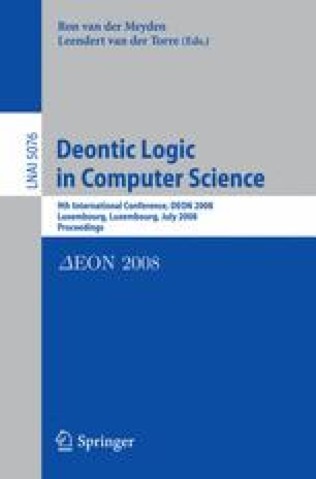
Deontic Logic in Computer Science ; 9th International Conference, DEON 2008, Luxembourg, Luxembourg, July 15-18, 2008. Proceedings
This volume presents the refereed proceedings of the 9th International Conference on Deontic Logic in Computer Science, DEON 2008, held in Luxembourg in July 2008.

Contemporary Empirical Methods in Software Engineering
This book presents contemporary empirical methods in software engineering related to the plurality of research methodologies, human factors, data collection and processing, aggregation and synthesis of evidence, and impact of software engineering research. The individual chapters discuss methods that impact the current evolution of empirical software engineering and form the backbone of future research.
Conceptual Modeling - ER 2005
Conceptual modeling is fundamental to any domain where one must cope with complex real-world situations and systems because it fosters communication - tween technology experts and those who would bene?t from the application of those technologies. Conceptual modeling is the key mechanism for und- standing and representing the domains of information system and database - gineering but also increasingly for other domains including the new “virtual” e-environmentsandtheinformationsystemsthatsupportthem.Theimportance of conceptual modeling in software engineering is evidenced by recent interest in “model-drivenarchitecture”and“extremenon-programming”.Conceptualm- eling also plays a prominent rolein various technical disciplines and in the social sciences. The Annual International Conference on Conceptual Modeling (referred to as the ER Conference) provides a central forum for presenting and discussing current research and applications in which conceptual modeling is the major emphasis.

Computer Insecurity : Risking the System
Security is one of the most significant issues facing the owners and users of computer systems in the Internet age, and recent years have convincingly illustrated that the problem is increasing in both scale and cost. Computer Insecurity: Risking the System approaches its topic from the perspective of vulnerability – how can your system be attacked? Covering technical issues and human factors, the comprehensively researched text makes reference to numerous real-life security incidents, which help to provide persuasive practical evidence of the problems and the impacts that result. Key issues covered include: • the problem of computer insecurity • the need to raise security awareness • common failings that compromise protection • the attack and exploitation of systems • considerations in responding to the threats
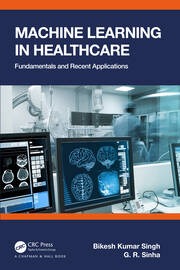
Machine learning in healthcare : Fundamentals and recent applications
Discusses how to build various ML algorithms and how they can be applied to improve healthcare systems. Healthcare applications of AI are innumerable: medical data analysis, early detection and diagnosis of disease, providing objective-based evidence to reduce human errors, curtailing inter- and intra-observer errors, risk identification and interventions for healthcare management, real-time health monitoring, assisting clinicians and patients for selecting appropriate medications, and evaluating drug responses. Extensive demonstrations and discussion on the various principles of machine learning and its application in healthcare is provided, along with solved examples and exercises.

IUTAM Symposium on Laminar-Turbulent Transition and Finite Amplitude Solutions
This volume contains refereed papers presented symposium on "Non-Uniqueness of Solutions to the Navier-Stokes equations and their Connection with Laminar-Turbulent Transition" The central objective of the symposium was to discuss the increasing amount of experimental and numerical evidence for finite amplitude solutions to the Navier-Stokes equations and to set the work into a modern theoretical context.

Berufliche passagen im lebenslauf : berufsbildungs- und transitionsforschung in der Schweiz = Vocational passages in the CV : Vocational training and transition research in Switzerland
During the transition from school to work, important groundwork is laid that prepares the further course of a person's life. In addition, this volume presents new results from diverse transition research from all over Switzerland, which are based on various disciplines such as psychology, sociology, educational sciences or educational economics. For this purpose, theoretical foundations and empirical evidence for the analysis and control of significant passages in the life course are developed.

Bayesian Networks and Decision Graphs
Probabilistic graphical models and decision graphs are powerful modeling tools for reasoning and decision making under uncertainty. As modeling languages they allow a natural specification of problem domains with inherent uncertainty, and from a computational perspective they support efficient algorithms for automatic construction and query answering. This includes belief updating, finding the most probable explanation for the observed evidence, detecting conflicts in the evidence entered into the network, determining optimal strategies, analyzing for relevance, and performing sensitivity analysis. The book introduces probabilistic graphical models and decision graphs, including Bayesian networks and influence diagrams.It contians two parts. The first part focuses on probabilistic graphical models. Compared with the previous book, the new edition also includes a thorough description of recent extensions to the Bayesian network modeling language, advances in exact and approximate belief updating algorithms, and methods for learning both the structure and the parameters of a Bayesian network. The second part deals with decision graphs, and in addition to the frameworks described in the previous edition, it also introduces Markov decision processes and partially ordered decision problems.

Automorphic Forms and Lie Superalgebras
Most known examples of Lie superalgebras with a related automorphic form such as the Fake Monster Lie algebra whose reflection group is given by the Leech lattice arise from (super)string theory and can be derived from lattice vertex algebras. The No-Ghost Theorem from dual resonance theory and a conjecture of Berger-Li-Sarnak on the eigenvalues of the hyperbolic Laplacian provide strong evidence that they are of rank at most 26.The aim of this book is to give the reader the tools to understand the ongoing classification and construction project of this class of Lie superalgebras and is ideal for a graduate course.
Artificial intelligence in medicine
Provides a structured and analytical guide to the use of artificial intelligence in medicine. Covering all areas within medicine, the chapters give a systemic review of the history, scientific foundations, present advances, potential trends, and future challenges of artificial intelligence within a healthcare setting.

Advances in Mass Data Analysis of Images and Signals in Medicine, Biotechnology, Chemistry and Food Industry ; 3rd International Conference, MDA 2008 Leipzig, Germany, July 14, 2008 Proceedings
Presents the broad and growing scientific evidence linking mass data analysis with challenging problems in medicine, biotechnology and chemistry.

Advances in Digital Forensics IV
Advances in Digital Forensics IV describes original research results and innovative applications in the emerging discipline of digital forensics. In addition, it highlights some of the major technical and legal issues related to digital evidence and electronic crime investigations.

Advances in Digital Forensics III ; IFIP International Conference on Digital Forensics, National Center for Forensic Science, Orlando Florida, January 28-January 31, 2007
Digital forensics deals with the acquisition, preservation, examination, analysis and presentation of electronic evidence. Networked computing, wireless communications and portable electronic devices have expanded the role of digital forensics beyond traditional computer crime investigations. Practically every crime now involves some aspect of digital evidence; digital forensics provides the techniques and tools to articulate this evidence. Digital forensics also has myriad intelligence applications. Furthermore, it has a vital role in information assurance -- investigations of security breaches yield valuable information that can be used to design more secure systems.it describes original research results and innovative applications in the emerging discipline of digital forensics. In addition, it highlights some of the major technical and legal issues related to digital evidence and electronic crime investigations.

Advances in Digital Forensics II
This book is the second volume in the anual series produced by the International Federation for Information Processing (IFIP) Working Group 11.9 on Digital Forensics, an international community of scientists, engineers and practitioners dedicated to advancing the state of the art of research and practice in digital forensics. The book contains a selection of twenty-five edited papers from the First Annual IFIP WG 11.9 Conference on Digital Forensics, held at the National Center for Forensic Science, Orlando, Florida, USA in the spring of 2006.
