



الصفحة 1
الصفحة 1

Object-oriented metrics in practice : Using software metrics to characterize, Evaluate, and Improve the design of object-oriented systems
The combination of theoretically sound results and practically tested procedures and solution paths makes this book an ideal companion for professional software architects, developers and quality engineers. The pattern-oriented description of disharmonies offers easy access to detecting shortcomings and applying solution strategies. "This well-written book is an important piece of work that takes the seemingly forgotten art of object-oriented metrics to the next level in terms of relevance and usefulness."

Numerical computation, data analysis and software in mathematics and engineering
Include the aspects of the meshless method, numerical simulation, mathematical models, deep learning and data analysis. Meshless methods, such as the improved element-free Galerkin method, the dimension-splitting, interpolating, moving, least-squares method, the dimension-splitting, generalized, interpolating, element-free Galerkin method and the improved interpolating, complex variable, element-free Galerkin method, are presented. Some complicated problems, such as tge cold roll-forming process, ceramsite compound insulation block, crack propagation and heavy-haul railway tunnel with defects, are numerically analyzed.
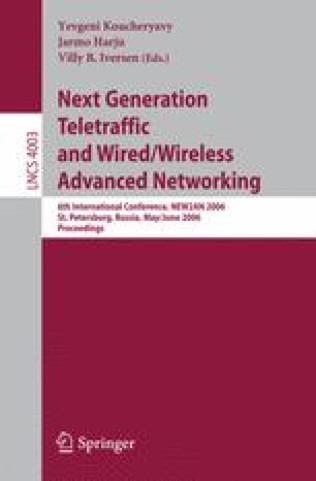
Next Generation Teletraffic and Wired ; 6th International Conference, NEW2AN 2006, St. Petersburg, Russia, May 29-June 2, 2006, Proceedings
This book constitutes the refereed proceedings of the 6th International Conference on Next Generation Teletraffic and Wired/Wireless Advanced Networking, NEW2AN 2006, held in St. Petersburg, Russia in May/June 2006. The book includes 49 revised full papers presented together with 2 keynote talks. The papers are organized in topical sections on teletraffic, traffic characterization and modeling, 3G/UMTS, sensor networks, WLAN, QoS, MANETs, lower layer techniques, PAN technologies, and TCP.

Nearest Neighbor Search : A Database Perspective
Modern applications are both data and computationally intensive and require the storage and manipulation of voluminous traditional (alphanumeric) and nontraditional data sets (images, text, geometric objects, time-series). Examples of such emerging application domains are: Geographical Information Systems (GIS), Multimedia Information Systems, CAD/CAM, Time-Series Analysis, Medical Information Sstems, On-Line Analytical Processing (OLAP), and Data Mining. These applications pose diverse requirements with respect to the information and the operations that need to be supported. From the database perspective, new techniques and tools therefore need to be developed towards increased processing efficiency. This monograph explores the way spatial database management systems aim at supporting queries that involve the space characteristics of the underlying data, and discusses query processing techniques for nearest neighbor queries. It provides both basic concepts and state-of-the-art results in spatial databases and parallel processing research, and studies numerous applications of nearest neighbor queries.

Nanoinformatics
Brings out the state of the art on how informatics-based tools are used and expected to be used in nanomaterials research. There has been great progress in the area in which “big-data” generated by experiments or computations are fully utilized to accelerate discovery of new materials, key factors, and design rules. Data-intensive approaches play indispensable roles in advanced materials characterization. "Materials informatics" is the central paradigm in the new trend. "Nanoinformatics" is its essential subset, which focuses on nanostructures of materials such as surfaces, interfaces, dopants, and point defects, playing a critical role in determining materials properties. There have been significant advances in experimental and computational techniques to characterize individual atoms in nanostructures and to gain quantitative information. The collaboration of researchers in materials science and information science is growing actively and is creating a new trend in materials science and engineering.

Multimodal Video Characterization and Summarization
Multimodal Video Characterization and Summarization is a valuable research tool for both professionals and academicians working in the video field. This book describes the methodology for using multimodal audio, image, and text technology to characterize video content. This new and groundbreaking science has led to many advances in video understanding, such as the development of a video summary. Applications and methodology for creating video summaries are described, as well as user-studies for evaluation and testing.

Multiaccess, Reservations & Queues
Reservation procedures constitute the core of many popular data transmission protocols. They consist of two steps: A request phase in which a station reserves the communication channel and a transmission phase in which the actual data transmission takes place. Such procedures are often applied in communication networks that are characterised by a shared communication channel with large round-trip times.In this book, we propose queuing models for situations that require a reservation procedure and validate their applicability in the context of cable networks.

Motion in Games ; 1st International Workshop, MIG 2008, Utrecht, The Netherlands, June 14-17, 2008. Revised Papers
This book constitutes the thoroughly refereed post-workshop proceedings of the First International Workshop on Motion in Games, held in Utrecht, The Netherlands, during June 14-17, 2008, in collaboration with the NLGD Festival of Games.The 24 revised papers presented during the workshop cover topics on crowd simulation; virtual humans; motion synthesis; interfaces; navigation and steering; and facial and behavioral animation.

Mobility Aware Technologies and Applications ; 2nd International Workshop, MATA 2005, Montreal, Canada, October 17 -- 19, 2005, Proceedings
The beginning of the twenty-first century is characterized by global markets, and the mobility of people is becoming an important fact of life. Consequently, the mobile user is demanding appropriate technical solutions to make use of customized information and communication services. In this context the notion of next-generation networks (NGNs), which are driven by the convergence of the entertainment sector, the mobile Internet, and fixed/mobile telecommunications, is emerging. Such NGNs are aggregating a variety of different access networks and supporting the seamless connection of an open set of end-user devices, and due to the adoption of an all-IP network paradigm they enable a much better integration of voice and data services. Coincidently the buzzword ‘fixed mobile convergence’ (FMC) describes the current trend towards providing common services across fixed and mobile networks resulting in the medium term in the full integration of fixed and mobile telecommunication networks. The adoption of appropriate middleware technologies and the provision of - called service delivery platforms driven by the ongoing innovation in the field of information technologies provides today the technical foundation for supporting terminal, personal and service mobility and thus the implementation of real seamless information and communication services. Furthermore, users are nowadays looking, in light of an omnipresent service environment, for a much higher degree of customization and context awareness in the services they use. The papers in this volume look at these enabling mobility-aware technologies and their use for implementing mobility-aware and context-aware applications.

Mission AI: the new system technology
Offers a strategic perspective on AI and the process of embedding it in society. After decades of research, Artificial Intelligence (AI) is now entering society at large. Due to its general purpose character, AI will change society in multiple, fundamental and unpredictable ways. Therefore, the Netherlands Scientific Council for Government Policy (WRR) characterizes AI as a system technology: a rare type of technologies that have a systemic impact on society. Earlier system technologies include electricity, the combustion engine and the computer. The history of these technologies provides us with useful insights about what it takes to direct the introduction of AI in society.

Medical Biometrics ; 1st International Conference, ICMB 2008, Hong Kong, China, January 4-5, 2008, Proceedings
Medical biometrics primarily refers to the usage of beh- ioral and physiological characteristics of humans for medical diagnosis and body care. Thus the goal of medical biometrics is to explore solutions to the open problems in medicine using biometric measurements, technologies and systems.

MDATA : A New Knowledge Representation Model: Theory, Methods and Applications
This book introduces a new knowledge representation model called MDATA (Multi-dimensional Data Association and inTelligent Analysis). By modifying the representation of entities and relations in knowledge graphs, dynamic knowledge can be efficiently described with temporal and spatial characteristics. The MDATA model can be regarded as a high-level temporal and spatial knowledge graph model, which has strong capabilities for knowledge representation. This book introduces some key technologies in the MDATA model, such as entity recognition, relation extraction, entity alignment, and knowledge reasoning with spatiotemporal factors. The MDATA model can be applied in many critical applications and this book introduces some typical examples, such as network attack detection, social network analysis, and epidemic assessment.

Introduction to Intelligent Construction Technology of Transportation Infrastructure
Expounds on the related technologies of intelligent transportation infrastructure construction. Based on the essential characteristics of intelligent construction, "perception, analysis, decision-making, and execution," the basic structure of intelligent construction technology (ICT) is established. With the integration of engineering construction technologies, the analyses of the essence of intelligent algorithms and the feasibility of Artificial Intelligence (AI) are provided. The book introduces the essential characteristics of Big Data and the Internet of Things and their relationship with engineering construction. On this basis, the feasibility and implementation plan of intelligent technology applications in design, construction, and maintenance are analyzed and demonstrated with engineering examples.

Interconnect-Centric Design for Advanced SoC and NoC
In Interconnect-centric Design for Advanced SoC and NoC, we have tried to create a comprehensive understanding about on-chip interconnect characteristics, design methodologies, layered views on different abstraction levels and finally about applying the interconnect-centric design in system-on-chip design.
Interactive storytelling ; 1st Joint International Conference on interactive digital storytelling, ICIDS 2008 Erfurt, Germany, November 26-29, 2008 Proceedings
This book constitutes the refereed proceedings of the First Joint International Conference on Interactive Digital Storytelling, ICIDS 2008, held in Erfurt, Germany, in November 2008.The 19 revised full papers, 5 revised short papers, and 5 poster papers presented together with 3 invited lectures and 8 demo papers were carefully reviewed and selected from 62 submission. The papers are organized in topical sections on future perspectives on interactive digital storytelling, interactive storytelling applications, virtual characters and agents, user experience and dramatic immersion, architectures for story generation, models for drama management and interacting with stories, as well as authoring and creation of interactive narrative.

Interactive Curve Modeling : With Applications to Computer Graphics, Vision and Image Processing
Interactive curve modeling techniques and their applications are extremely useful in a number of academic and industrial settings, and specifically play a significant role in multidisciplinary problem solving, such as in font design, designing objects, CAD/CAM, medical operations, scientific data visualization, virtual reality, character recognition, and object recognition, etc. Various problems such as iris, fingerprint, and signature recognition, can also be intelligently solved and automated using curve techniques.

Intelligent Virtual Agents ; Vol.3661 : 5th International Working Conference, IVA 2005, Kos, Greece, September 12-14, 2005, Proceedings
The origin of the Intelligent Virtual Agents conference dates from a successful workshop on Intelligent Virtual Environments held in Brighton at the 13th European Conference on Artificial Intelligence (ECAI'98). This workshop was followed by a second one held in Salford in Manchester in 1999. Subsequent events took place in Madrid, Spain in 2001 and Irsee, Germany in 2003 and attracted participants from both sides of the Atlantic as well as Asia. th This volume contains the proceedings of the 5 International Working Conference on Intelligent Virtual Agents, IVA 2005, held on Kos Island, Greece, September 12–14, 2005, which highlighted once again the importance and vigor of the research field. A half-day workshop under the title “Socially Competent IVA’s: We are not alone in this (virtual) world!” also took place as part of this event. IVA 2005 received 69 submissions from Europe, North and South America, Africa and Asia. The papers published here are the 26 full papers and 14 short papers presented at the conference, as well as one-page descriptions of the 15 posters and the descriptions of the featured invited talks by Prof. Justine Cassell, of Northwestern University and Prof. Kerstin Dautenhahn, of the University of Hertfordshire. We would like to thank a number of people that have contributed to the success of this conference. First of all, we thank the authors for their high-quality work and their willingness to share their ideas.

Intelligent technologies for interactive entertainment ; 1st International Conference, INTETAIN 2005, Madonna di Campaglio, Italy, November 30 - December 2, 2005, Proceedings
Constitutes the proceedings of the First International Conference on Intelligent Technologies for Interactive Entertainment, 2005 held in Madonna di Campiglio, Italy. The papers included in this title cover topics such as intelligent interactive games, intelligent music, interactive cinema, edutainment, interactive art, and interactive real TV.

Integrated Circuit and System Design. Power and Timing Modeling, Optimization and Simulation ; Vol. 4148 ; 16th International Workshop, PATMOS 2006, Montpellier, France, September 13-15, 2006, Proceedings
Welcome to the proceedings of PATMOS 2006, the 16th in a series of international workshops. PATMOS 2006 was organized by LIRMM with CAS technical - sponsorship and CEDA sponsorship. Over the years, the PATMOS workshop has evolved into an important European event, where researchers from both industry and academia discuss and investigate the emerging challenges in future and contemporary applications, design methodologies, and tools required for the development of upcoming generations of integrated circuits and systems. The technical program of PATMOS 2006 contained state-of-the-art technical contributions, three invited talks, a special session on hearing-aid design, and an embedded tutorial. The technical program focused on timing, performance and power consumption, as well as architectural aspects with particular emphasis on modeling, design, characterization, analysis and optimization in the nanometer era. The Technical Program Committee, with the assistance of additional expert reviewers, selected the 64 papers presented at PATMOS. The papers were organized into 11 technical sessions and 3 poster sessions. As is always the case with the PATMOS workshops, full papers were required, and several reviews were received per manuscript.

Image and Signal Processing ; 3rd International Conference, ICISP 2008. Cherbourg-Octeville, France, July 1 - 3, 2008. Proceedings
This book constitutes the refereed proceedings of the Third International Conference on Image and Signal Processing, ICISP 2008, held in Cherbourg-Octeville, France, in July 2008.The 48 revised full papers and 22 revised poster papers presented were carefully reviewed and selected from 193 submissions. The papers are organized in topical sections on image filtering, image segmentation, computer vision, feature extraction, pattern recognition, graph-based representations, motion detection and estimation, new interfaces, document processing, and signal processing.
