



الصفحة 9
الصفحة 9

Interactive storytelling ; 1st Joint International Conference on interactive digital storytelling, ICIDS 2008 Erfurt, Germany, November 26-29, 2008 Proceedings
This book constitutes the refereed proceedings of the First Joint International Conference on Interactive Digital Storytelling, ICIDS 2008, held in Erfurt, Germany, in November 2008.The 19 revised full papers, 5 revised short papers, and 5 poster papers presented together with 3 invited lectures and 8 demo papers were carefully reviewed and selected from 62 submission. The papers are organized in topical sections on future perspectives on interactive digital storytelling, interactive storytelling applications, virtual characters and agents, user experience and dramatic immersion, architectures for story generation, models for drama management and interacting with stories, as well as authoring and creation of interactive narrative.

Interactive Computation : The New Paradigm
The interaction paradigm provides a new conceptualization of computational phenomena that emphasizes interaction rather than algorithms, thus reflecting the shift in technology from number-crunching on mainframes to distributed intelligent networks with graphical user interfaces.

Intelligent system algorithms and applications in science and technology
Explores the application of intelligent techniques in various fields of engineering and technology. It addresses diverse topics in such areas as machine learning-based intelligent systems for healthcare, applications of artificial intelligence and the Internet of Things, intelligent data analytics techniques, intelligent network systems and applications, and inequalities and process control systems. The authors explore the full breadth of the field, which encompasses data analysis, image processing, speech processing and recognition, medical science and healthcare monitoring, smart irrigation systems, insurance and banking, robotics and process control, and more.

Intelligent Information Technology ; 7th International Conference on Information Technology, CIT 2004, Hyderabad, India, December 20-23, 2004, Proceedings
Focused on the latest research findings on all topics in the area of information technology. Although the natural focus was on computer science issues, research results contributed from management, business and other disciplines formed an integral part. We received more than 200 papers from over 27 countries in the areas of com- tational intelligence, neural networks, mobile and adhoc networks, security, databases, software engineering, signal and image processing, and Internet and WWW-based computing. The programme committee, consisting of eminent researchers, academicians and practitioners, finally selected 43 full papers on the basis of reviewer grades. This proceedings contains the research papers selected for presentation at the c- ference and this is the first time that the proceedings have been published in the Lecture Notes in Computer Science (LNCS) series. The poster papers are being printed as a separate conference proceedings.

Intelligent information processingg II ; IFIP TC12/WG12.3 International Conference on Intelligent Information Processing (IIP2004) October 21-23, 2004, Beijing, China
This book is based on IIP2004, which provides a forum for engineers and scientists in academia, university and industry to present their latest research findings in any aspect of intelligent information processing. Papers on intelligence science, intelligent agents, machine learning, and autonomic computing, as well as papers that highlight bioinformatics, e-commerce, and business intelligence were presented. IIP2004 meets the needs of a large and diverse community.

Intelligent glasses store
Technology has been found to facilitate humankind's life. Hence, there is a new technique almost every day. One of the most common is E-commerce. This is the first project in Syria. about online glasses Shop, which displays sets of glasses on a website. The website allows the shopkeeper (the admin) to add their collections of glasses. Set prices and show reservations. Users can view glasses on the website and try whatever he wants by real-time or by recording video, then they add the preferred ones to the cart to reserve the sample they like the most for a specific time. This project aims to allow busy traders to make their own business online, in addition, it saves time and effort for them and users as they can make shopping and compare goods whatever the situation is especially in quarantine.

Intelligent data engineering and automated Learning - IDEAL 2006 ; 7th International Conference, Burgos, Spain, September 20-23, 2006, Proceedings
This volume of Lecture Notes in Computer Science contains accepted - pers presented at IDEAL 2006 held at the University of Burgos, Spain, during, September 20–23, 2006. The conference received 557 submissions from over 40 countriesaroundtheworld,whichweresubsequentlyrefereedbytheProgramme Committeeandmanyadditionalreviewers.Afterrigorousreview,170top-quality papers were accepted and included in the proceedings. The acceptance rate was only 30%, which ensured an extremely high-quality standard of the conference. The buoyant number of submitted papers is a clear proof of the vitality and increased importance of the ?elds related to IDEAL, and is also an indication of the rising popularity of the IDEAL conferences.

Intelligent data engineering and automated Learning - IDEAL 2005 ; 6th International Conference, Brisbane, Australia, July 6-8, 2005, Proceedings
Constitutes the refereed proceedings of the 6th International Conference on Intelligent Data Engineering and Automated Learning, IDEAL 2005, held in Brisbane, Australia, in July 2005. These papers are organized in topical sections on data mining and knowledge engineering, learning algorithms and systems, bioinformatics, and more.

Intelligent Computing ; International Conference on Intelligent Computing, ICIC 2006, Kunming, China, August 16-19, 2006, Proceedings, Part I
The International Conference on Intelligent Computing (ICIC) was formed to provide an annual forum with dedication to the emerging and challenging topics in artificial intelligence, machine learning, bioinformatics, and computational biology, etc. It aims to bring together researchers and practitioners from both the academia and industry to share ideas, problems and solutions related to the multifaceted aspects of intelligent computing. The ICIC 2006 to be held in Kunming, Yunnan, China, 16-19 August 2006 is the second International Conference on Intelligent Computing, which is built upon the success of ICIC 2005 held in Hefei, China, 2005. This year, the conference mainly concentrates on the theories & methodologies as well as the emerging applications of intelligent computing. It intends to unify the contemporary intelligent computing techniques within an integral framework that highlights the trends in advanced computational intelligence and bridges the theoretical research with the applications. In particular, the bio-inspired computing emerges as a key role in pursuing for novel technology in recently years. The resulting techniques vitalize the life science engineering and daily life applications. In light of this trend, the theme for this conference is the Emerging Intelligent Computing Technology and Applications. Papers related to this theme were especially solicited, including theories, methodologies, and applications in science and technology.

Intelligent Agents and Multi-Agent Systems ; 11th Pacific Rim International Conference on Multi-Agents, PRIMA 2008, Hanoi, Vietnam, December 15-16, 2008. Proceedings
This book constitutes the proceedings of the the 11th Pacific Rim International Conference on Multi-Agents, PRIMA 2008, held in Hanoi, Vietnam, in December 2008.The 19 regular papers and 22 short papers presented together with 3 keynote speeches, were carefully reviewed and selected from 56 submissions. Many current subjects in multi-agent research and development are addressed, ranging from theoretical and methodological issues to various applications in different fields. There was a track on multi-issue negotiation and agents and HCI.

Intelleger = انتليجر
The project management system is a web application designed to assist software managers in efficiently managing their projects, including websites, mobile apps, and other software initiatives. Utilizing artificial intelligence, the application streamlines project creation and management processes, offering significant benefits in terms of organization and accuracy. Managers can create projects by inputting essential details such as the name, scope, deadline, and tasks. The system generates AI-based functional and non-functional requirements tailored to the project scope using gpt2 model on Pure dataset. Managers can then review and edit these requirements as needed before finalizing the project. The application facilitates comprehensive task management by allowing managers to assign tasks to developers, edit task details, and ensure task deadlines align with project deadlines. Developers can log their start and end times automatically when they begin and complete tasks, providing accurate time tracking and performance analysis.also they can use code generation model to generate their task’s code using codebert model on concode and codesearchnet dataset Real-time notifications keep both managers and developers informed of task assignments, completions, and other critical updates.

Intel® Galileo and Intel® Galileo Gen 2 : API Features and Arduino Projects for Linux Programmers
ntel® Galileo and Intel® Galileo Gen 2: API Features and Arduino Projects for Linux Programmers provides detailed information about Intel® Galileo and Intel® Galileo Gen 2 boards for all software developers interested in Arduino and the Linux platform. The book covers the new Arduino APIs and is an introduction for developers on natively using Linux.

Integration of AI and OR Techniques in Constraint Programming for Combinatorial Optimization Problems ; Vol.3990 ; 3rd International Conference, CPAIOR 2006, Cork, Ireland, May 31 - June 2, 2006, Proceedings
Constitutes the refereed proceedings of the Third International Conference on Integration of AI and OR Techniques in Constraint Programming for Combinatorial Optimization Problems, CPAIOR 2006. The 20 revised full papers presented together with 3 invited talks address methodological and foundational issues from AI, OR, and algorithmics and present applications to the solution of combinatorial optimization problems in various fields via constraint programming.

Integration of AI and OR Techniques in Constraint Programming for Combinatorial Optimization Problems ; Vol.3524 : 2nd International Conference, CPAIOR 2005, Prague, Czech Republic, May 31 -- June 1, 2005
Intended primarily as a forum to focus on the integration and hybridization of the approaches of constraint programming (CP), arti?cial intelligence (AI), and operations research (OR) technologies for solving large-scale and complex real-life optimization problems. Therefore, CPAIOR is never far from industrial applications. The high number of submissions received this year, almost 100 papers, in witness to the interest of the research community in this conference. From these submissions, we chose 26 to be published in full in the proceedings. This volume includes summaries of the invited talks of CPAIOR: one from industry, one from the embedded system research community, and one from the operations research community.

Integration of AI and OR Techniques in Constraint Programming for Combinatorial Optimization Problems ; 5th International Conference, CPAIOR 2008 Paris, France, May 20-23, 2008 Proceedings
The 5th International Conference on Integration of AI and OR Techniques in Constraint Programming for Combinatorial Optimization Problems (CPAIOR 2008) was held in Paris, France May 20–23, 2008. The purpose of this conference series is to bring together researchers in the felds of constraint programming, artifcial intelligence, and operations research to explore ways of solving large-scale, practical optimization problems through integration and hybridization of the felds’ diferent techniques. Through the years, this research community is discovering that the felds have much in c- mon, and there has been tremendous richness in the resulting cross-fertilization of felds.

Integration of AI and OR Techniques in Constraint Programming for Combinatorial Optimization Problems ; 4th International Conference, CPAIOR 2007, Brussels, Belgium, May 23-26, 2007, Proceedings
This book constitutes the refereed proceedings of the 4th International Conference on Integration of AI and OR Techniques in Constraint Programming for Combinatorial Optimization Problems, CPAIOR 2007, held in Brussels, Belgium in May 2007.

Integrated Research in GRID Computing : CoreGRID Integration Workshop 2005 (Selected Papers) November 28-30, Pisa, Italy
Integrated Research in Grid Computing presents a selection of the best papers presented at the CoreGRID Integration Workshop (CGIW2005). The aim of CoreGRID is to strengthen and advance scientific and technological excellence in the area of Grid and Peer-to-Peer technologies in order to overcome the current fragmentation and duplication of effort in this area.
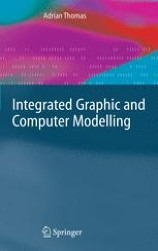
Integrated Graphic and Computer Modelling
Full colour throughout, the book explores programming language developments from machine code to more natural language forms, and the basic display operations and commands needed to create effective computer graphic systems. As the visual presentation of real and virtual environments becomes more and more the norm in application systems, a clear understanding of the theory that underpins these techniques is required of all students and practitioners studying and working on large computer systems.

Integrated formal methods ; 3rd International Conference, IFM 2002, Turku, Finland, May 15-18, 2002. Proceedings.
IFM 2002 explored the relations between formal methods and graphical notations, especially the industrial standard language for software design, the Unified Modeling Language (UML). The themes of IFM 2002 reflect what we believe is a growing trend in the Formal Methods and Software Engineering research communities. Over the last threedecades,computer scientists have developed a range of formalisms focusing on particular aspects of behavior or analysis, such as sequential program structures, concurrent program structures, data and information structures, temporal reasoning, deductive proof, and model checking. Much effort is now being devoted to integrating these methods in order to combine their advantages and ensure they scale up to industrial needs. Graphical notations are now widely used in software engineering and there is growing recognition of the importance of providing these with the for mal underpinnings and form alanalysis capabilities found in formal methods.

Integrated Circuit and System Design. Power and Timing Modeling, Optimization and Simulation ; Vol. 4148 ; 16th International Workshop, PATMOS 2006, Montpellier, France, September 13-15, 2006, Proceedings
Welcome to the proceedings of PATMOS 2006, the 16th in a series of international workshops. PATMOS 2006 was organized by LIRMM with CAS technical - sponsorship and CEDA sponsorship. Over the years, the PATMOS workshop has evolved into an important European event, where researchers from both industry and academia discuss and investigate the emerging challenges in future and contemporary applications, design methodologies, and tools required for the development of upcoming generations of integrated circuits and systems. The technical program of PATMOS 2006 contained state-of-the-art technical contributions, three invited talks, a special session on hearing-aid design, and an embedded tutorial. The technical program focused on timing, performance and power consumption, as well as architectural aspects with particular emphasis on modeling, design, characterization, analysis and optimization in the nanometer era. The Technical Program Committee, with the assistance of additional expert reviewers, selected the 64 papers presented at PATMOS. The papers were organized into 11 technical sessions and 3 poster sessions. As is always the case with the PATMOS workshops, full papers were required, and several reviews were received per manuscript.
