



الصفحة 8
الصفحة 8

Introduction to the Tools of Scientific Computing
The book provides an introduction to common programming tools and methods in numerical mathematics and scientific computing. Unlike widely used standard approaches, it does not focus on any particular language but aims to explain the key underlying concepts. In general, new concepts are first introduced in the particularly user-friendly Python language and then transferred and expanded in various scientific programming environments from C / C ++, Julia and MATLAB to Maple. This includes different approaches to distributed computing.

Introduction to robotics : Analysis, control, applications
Offers a guide to the fundamentals of robotics, robot components and subsystems and applications. The author—a noted expert on the topic—covers the mechanics and kinematics of serial and parallel robots, both with the Denavit-Hartenberg approach as well as screw-based mechanics. In addition, the text contains information on microprocessor applications, control systems, vision systems, sensors, and actuators.

Introduction to Programming with Fortran : with coverage of Fortran 90, 95, 2003 and 77
Introduction to Programming with Fortran contains: lots of clear and simple examples highlighting the key language features of the most recent versions of Fortran – Fortran 2003, 95 and 90. practical examples based on ISO TR 15580 and ISO TR 15581 which are widely supported and cover the ISO TR on Enhanced Modules – particularly important to large code suites common problems that occur when programming which are highlighted via clear examples and solutions Introduction to Programming with Fortran is an essential introduction for beginners as well as a concise reference for professionals. Overall the book gives a very effective hands-on coverage of Fortran, valuable to students and practitioners alike.

Introduction to Geometric Computing
The geometric ideas in computer science, mathematics, engineering, and physics have considerable overlap and students in each of these disciplines will eventually encounter geometric computing problems. The topic is traditionally taught in mathematics departments via geometry courses, and in computer science through computer graphics modules. This text isolates the fundamental topics affecting these disciplines and lies at the intersection of classical geometry and modern computing.

Introduction to Cryptography : Principles and Applications
In the first part, this book covers the key concepts of cryptography on an undergraduate level, from encryption and digital signatures to cryptographic protocols. In the second part, more advanced topics are addressed, such as the bit security of one-way functions and computationally perfect pseudorandom bit generators.

Introduction à SCILAB
Ce livre est organisé en deux parties. La première partie est consacrée au langage Scilab et à son environnement. Dans la seconde partie, les fonctionnalités des grands domaines d'utilisation du calcul numérique sont décrites et illustrées par des exemples: calcul matriciel, simulation, optimisation, résolution d'équations, statistiques.

Internet of things, artificial intelligence and blockchain technology
Explores the concepts and techniques of IoT, AI, and blockchain. Also discussed is the possibility of applying blockchain for providing security in various domains. The specific highlight of this book is focused on the application of integrated technologies in enhancing data models, better insights and discovery, intelligent predictions, smarter finance, smart retail, global verification, transparent governance, and innovative audit systems. Explains how blockchain can significantly increase data privacy and security while boosting accuracy and integrity in IoT generated data and AI processed information; Gives insight into blockchain’s numerous potential applications, starting with recent technologies that give users control over sharing and privacy; Shows readers how to employ blockchain in IoT and AI, helping them to understand what they can and cannot do with blockchain.

Internet of things from hype to reality : The road to digitization
Presents updated material on its core content: an end-to-end IoT architecture that is comprised of devices, network, compute, storage, platform, applications along with management and security components. As with the second edition, it is organized into six main parts: an IoT reference model; fog computing and the drivers; IoT management and applications; smart services in IoT; IoT standards; and case studies. This edition’s features include overhaul of the IoT Protocols (Chapter 5) to include an expanded treatment of low-power wide area networks including narrow band IoT (NB-IoT) protocol, updated IoT platforms and capabilities (Chapter 7) to include comparison of commercially available platforms (e.g. AWS IoT Platform, Google Cloud IoT Platform, Microsoft Azure IoT Platform, and PTC ThinkWorx), updated security (Chapter 8) to include approaches for securing IoT devices with examples of IoT devices used in security attacks and associated solutions including MUD and DICE, and finally new Appendix B to include six IoT project detailed for students.

Interferometry and Synthesis in Radio Astronomy
This book is open access under a CC BY-NC 4.0 license.The third edition of this indispensable book in radio interferometry provides extensive updates to the second edition, including results and technical advances from the past decade; discussion of arrays that now span the full range of the radio part of the electromagnetic spectrum observable from the ground, 10 MHz to 1 THz; an analysis of factors that affect array speed; and an expanded discussion of digital signal-processing techniques and of scintillation phenomena and the effects of atmospheric water vapor on image distortion, among many other topics.

Inter-Domain Management ; 1st International conference on autonomous infrastructure, management and security, AIMS 2007, Oslo, Norway, June 21-22, 2007, Proceedings
Therearealreadymanyexcellentconferencesinthe?eldofNetworkofSystem Management : LISA, IM, NOMS, DSOM, Policy Workshop, etc. Although there is an overlap, both in attendance and ideas, AIMS does not compete with any of these. Rather we have sought a strong cross-disciplinary forum, in which novelty and discussion are made paramount. An additional objective of AIMS is to provide a forum for doctoral students, the future leaders of our research, to discuss their research with a wider audience and receive training to help make their research careers successful.
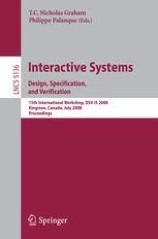
Interactive systems. design, specification, and verification ; 15th International Workshop, DSV-IS 2008 Kingston, Canada, July 16-18, 2008 Revised Papers
This book constitutes the refereed proceedings of the 15th International Workshop on Design, Specification, and Verification of Interactive Systems, DSV-IS 2008, held in Kingston, Canada, in July 2008.The 21 revised full papers and 10 late breaking and experience report papers presented were carefully reviewed and selected from numerous submissions for inclusion in the book. The papers cover user interface evaluation and specification, with particular emphasis on the use of task models to provide high-level approaches for capturing the intended functionality of a user interface; examining techniques for modeling user interfaces, particularly for mobile and ubiquitous applications.

Interactive Media : The Semiotics of Embodied Interaction
Human Computer Interaction has been looking at versions of these questions for a long time now, but as technology advances so quickly it is hard to keep pace with the changes. In reflecting on some of these issues and by providing a way to relate some of the disparate threads of theory from fields such as phenomenology, cognitive science, semiotics and the ecological theory of perception, Shaleph O’Neill provides an exploration of the theories that impact our understanding over a spectrum of interactive media.

Interactive Computation : The New Paradigm
The interaction paradigm provides a new conceptualization of computational phenomena that emphasizes interaction rather than algorithms, thus reflecting the shift in technology from number-crunching on mainframes to distributed intelligent networks with graphical user interfaces.

Intelligent Virtual Agents ; Vol.4133 ; 6th International Conference, IVA 2006, Marina Del Rey, CA; USA, August 21-23, 2006, Proceedings
This volume contains the proceedings of the 6th International Conference on Intelligent Virtual Agents, IVA 2006, held in Marina del Rey, California, USA from August 21–23.For the second year in a row,IVA also hosted the Gathering of Animated Lifelike Agents (GALA 2006), an annual festival to showcase the latest animated lifelike agents created by university students and academic or industrial research groups. IVA 2006 received 73 submissions from Europe, the AmericasandAsia.Thepaperspublishedherearethe24fullpapersand11short papers presented at the conference, as well as one-page descriptions of posters and the featured invited talks by Brian Parkinson of Oxford University, Rod Humble of Electronic Arts, and Michael Mateas of the University of California, Santa Cruz and Andrew Stern of Procedural Arts.

Intelligent Virtual Agents ; Vol.3661 : 5th International Working Conference, IVA 2005, Kos, Greece, September 12-14, 2005, Proceedings
The origin of the Intelligent Virtual Agents conference dates from a successful workshop on Intelligent Virtual Environments held in Brighton at the 13th European Conference on Artificial Intelligence (ECAI'98). This workshop was followed by a second one held in Salford in Manchester in 1999. Subsequent events took place in Madrid, Spain in 2001 and Irsee, Germany in 2003 and attracted participants from both sides of the Atlantic as well as Asia. th This volume contains the proceedings of the 5 International Working Conference on Intelligent Virtual Agents, IVA 2005, held on Kos Island, Greece, September 12–14, 2005, which highlighted once again the importance and vigor of the research field. A half-day workshop under the title “Socially Competent IVA’s: We are not alone in this (virtual) world!” also took place as part of this event. IVA 2005 received 69 submissions from Europe, North and South America, Africa and Asia. The papers published here are the 26 full papers and 14 short papers presented at the conference, as well as one-page descriptions of the 15 posters and the descriptions of the featured invited talks by Prof. Justine Cassell, of Northwestern University and Prof. Kerstin Dautenhahn, of the University of Hertfordshire. We would like to thank a number of people that have contributed to the success of this conference. First of all, we thank the authors for their high-quality work and their willingness to share their ideas.

Intelligent Virtual Agents ; 7th International Working Conference, IVA 2007, Paris, France, September 17-19, 2007, Proceedings
The 19 revised full papers and 12 revised short papers presented together with five invited talks and the abstracts of 32 poster papers are organized in topical sections on rendering and analysis, culture and identity, behavior models, feedback models, dialogues, applications, evaluation, gaze models and emotions.

Intelligent Techniques for Web Personalization ; IJCAI 2003 Workshop, ITWP 2003, Acapulco, Mexico, August 11, 2003, Revised Selected Papers
Web personalizationcan be de?ned as any set of actions that can tailor the Web experience to a particular user or set of users. The experience can be something as casualas browsinga Web site oras (economically)signi?cantas tradingstock or purchasing a car. The actions can range from simply making the presentation more pleasing to anticipating the needs of a user and providing customized and relevant information. To achieve e?ective personalization, organizations must rely on all available data, including the usage and click-stream data (re?e- ing user behavior), the site content, the site structure, domain knowledge, user demographics and pro?les. In addition, e?cient and intelligent techniques are needed to mine these data for actionable knowledge, and to e?ectively use the discovered ...

Intelligent system algorithms and applications in science and technology
Explores the application of intelligent techniques in various fields of engineering and technology. It addresses diverse topics in such areas as machine learning-based intelligent systems for healthcare, applications of artificial intelligence and the Internet of Things, intelligent data analytics techniques, intelligent network systems and applications, and inequalities and process control systems. The authors explore the full breadth of the field, which encompasses data analysis, image processing, speech processing and recognition, medical science and healthcare monitoring, smart irrigation systems, insurance and banking, robotics and process control, and more.
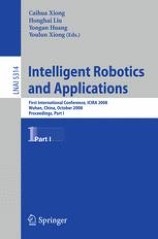
Intelligent robotics and applications ; 1st International Conference, ICIRA 2008, Wuhan, China, October 15-17, 2008, Proceedings, Part I
These two volumes constitute the refereed proceedings of the First International Conference on Intelligent Robotics and Applications, ICIRA 2008, held in Wuhan, China, in October 2008.The 265 revised full papers presented were thoroughly reviewed and selected from 552 submissions; they are devoted but not limited to robot motion planning and manipulation; robot control; cognitive robotics; rehabilitation robotics; health care and artificial limb; robot learning; robot vision; human-machine interaction & coordination; mobile robotics.
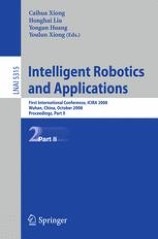
Intelligent robotics and applications ; 1st International Conference, ICIRA 2008 Wuhan, China, October 15-17, 2008 Proceedings, Part II
This two volumes constitute the refereed proceedings of the First International Conference on Intelligent Robotics and Applications, ICIRA 2008, held in Wuhan, China, in October 2008.The 265 revised full papers presented were thoroughly reviewed and selected from 552 submissions; they are devoted but not limited to robot motion planning and manipulation; robot control; cognitive robotics; rehabilitation robotics; health care and artificial limb; robot learning; robot vision; human-machine interaction & coordination; mobile robotics.
