



الصفحة 56
الصفحة 56
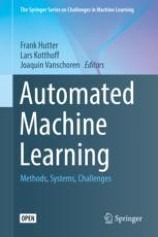
Automated machine learning : Methods, systems, challenges
This book presents the first comprehensive overview of general methods in Automated Machine Learning (AutoML), collects descriptions of existing systems based on these methods, and discusses the first series of international challenges of AutoML systems. The recent success of commercial ML applications and the rapid growth of the field has created a high demand for off-the-shelf ML methods that can be used easily and without expert knowledge. However, many of the recent machine learning successes crucially rely on human experts, who manually select appropriate ML architectures (deep learning architectures or more traditional ML workflows) and their hyperparameters. To overcome this problem, the field of AutoML targets a progressive automation of machine learning, based on principles from optimization and machine learning itself.

Automated deduction – CADE-20 ; 20th International Conference on automated deduction, Tallinn, Estonia, July 22-27, 2005, Proceedings
This book constitutes the refereed proceedings of the 20th International Conference on Automated Deduction, CADE-20, held in Tallinn, Estonia, in July 2005. The 25 revised full papers and 5 system descriptions presented were carefully reviewed and selected from 78 submissions. All current aspects of automated deduction are addressed, ranging from theoretical and methodological issues to presentation and evaluation of theorem provers and logical reasoning systems.

Automata, languages and programming ; Vol. 4052 : 33rd International Colloquium, ICALP 2006, Venice, Italy, July 10-14, 2006, Proceedings, Part II
a series of annual conferences of the European Association for Theoretical Computer Science (EATCS) which frsttookplacein 1972.Thisyear,. ICALP 2006 consisted of four invited lectures and the contributed papers. This volume of the proceedings contains all contributed papers presented at the conference in Track A, together with the paper by the invited speaker Noga Alon , A companion volume contains all contributed papers presented inTrack Band TrackCtogetherwiththepapersbytheinvited speakers Cynthia Dwork (Microsoft Research, USA) and Prakash Panangaden (Mc Gill University, Canada). The programhad an additional invited lecture by Simon Peyton Jones (Microsoft Research, UK), which does not appear in the proceedings.

Automata, languages and programming ; Vol. 4051 : 33rd International Colloquium, ICALP 2006, Venice, Italy, July 10-14, 2006, Proceedings, Part I
ICALP is a series of annual conferences of the European Association for Theoretical Computer Science (EATCS) which frsttookplacein1972 .Thisyear, ICALP 2006 consisted of four invited lectures and the contributed papers. This volume of the proceedings contains all contributed papers presented at the conference in Track A, together with the paper by the invited speaker Noga Alon (Tel Aviv University, Israel). A companion volume contains all contributed paper spresentedinTrackBandTrackCtogetherwiththepapersbytheinvited speakers Cynthia Dwork (Microsoft Research, USA) and Prakash Panangaden (Mc Gill University, Canada).

Automata, languages and programming ; Vol. 3580 ; 32nd International Colloquim, ICALP 2005, Lisbon, Portugal, July 11-15, 2005, Proceedings
This book constitutes the refereed proceedings of 32nd International Colloquium on Automata, Languages and Programming ICALP 2005, Lisbon, Portugal, July 11-15, 2005. including Topics Computer Science, general Mathematical Logic and Foundations Theory of Computation Software Engineering/Programming and Operating Systems Data Structures and Information Theory Data Structures

Automata, languages and programming ; 35th International Colloquium, ICALP 2008, Reykjavik, Iceland, July 7-11, 2008, Proceedings, Part II
The two-volume set LNCS 5125 and LNCS 5126 constitutes the refereed proceedings of the 35th International Colloquium on Automata, Languages and Programming, ICALP 2008, held in Reykjavik, Iceland, in July 2008.
Automata, Languages and Programming ; 35th International Colloquium, ICALP 2008, Reykjavik, Iceland, July 7-11, 2008, Proceedings, Part I
The two-volume set LNCS 5125 and LNCS 5126 constitutes the refereed proceedings of the 35th International Colloquium on Automata, Languages and Programming, ICALP 2008, held in Reykjavik, Iceland, in July 2008.

Automata, languages and programming ; 34th International Colloquium, ICALP 2007, Wroclaw, Poland, July 9-13, 2007, Proceedings
This volume presented three major tracks covering algorithms, automata, complexity, and games
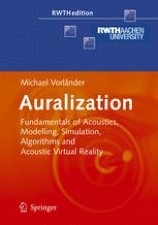
Auralization : Fundamentals of acoustics, modelling, simulation, algorithms and acoustic virtual reality
"Auralization" is the technique of creation and reproduction of sound on the basis of computer data. With this tool is it possible to predict the character of sound signals which are generated at the source and modified by reinforcement, propagation and transmission in systems such as rooms, buildings, vehicles or other technical devices. This book is organized as a comprehensive collection of the basics of sound and vibration, acoustic modelling, simulation, signal processing and audio reproduction. Implementations of the auralization technique are described using examples drawn from various fields in acoustic’s research and engineering, architecture, sound design and virtual reality.
Augmented reality, virtual reality, and computer graphics ; 7th International conference, AVR 2020, Lecce, Italy, September 7–10, 2020, Proceedings, Part I
he 2-volume set LNCS 12242 and 12243 constitutes the refereed proceedings of the 7th International Conference on Augmented Reality, Virtual Reality, and Computer Graphics, AVR 2020, held in Lecce, Italy, in September 2020.* The 45 full papers and 14 short papers presented were carefully reviewed and selected from 99 submissions. The papers discuss key issues, approaches, ideas, open problems, innovative applications and trends in virtual reality, augmented reality, mixed reality, 3D reconstruction visualization, and applications in the areas of cultural heritage, medicine, education, and industry.
Attention in Cognitive Systems : Theories and Systems from an Interdisciplinary Viewpoint ; 4th International Workshop on Attention in Cognitive Systems, WAPCV 2007 Hyderabad, India, January 8, 2007 Revised Selected Papers
The embodied nature of sensory-motor intelligence requires a continuous and focused interplay between the control of motor activities and the interpretation of feedback from perceptual modalities. Decision making about the selection of information from the incoming sensory stream – in tune with contextual processing on a current task and an agent’s global objectives – becomes a further challenging issue in attentional control. Attention must operate at interfaces between bottom-up driven world int- pretation and top-down driven information selection, thus acting at the core of arti?cial cognitive systems. These insights have already induced changes in AI-related disciplines, such as the design of behavior-based robot control and the computational modeling of animats. Today, the development of enabling technologiessuch as autonomous robotic systems,miniaturizedmobile–evenwearable–sensors,andambientintelligence systems involves the real-time analysis of enormous quantities of data. These data have to be processed in an intelligent way to provide “on time delivery” of the required relevant information. Knowledge has to be applied about what needs to be attended to, and when, and what to do in a meaningful sequence, in correspondence with visual feedback.

Attendnce system during covid-19
Authentication system has become a hot topic in the field of security, one of the most interested methods of authentication systems is the radio frequency identity (RFID) which is used in this project to build a smart record attendance system that contains many features, one of it to determine whether the student is wearing a mask or not by using Deep Learning algorithms, another feature is the student's temperature measurement through an electronic sensor. The results obtained are processed and stored by the processing unit which is the Raspberry pi then display the data on a mobile application.

Artificial neural networks with Java : Tools for Building Neural Network Applications
Covers the internals of front and back propagation and helps you understand the main principles of neural network processing. You also will learn how to prepare the data to be used in neural network development and you will be able to suggest various techniques of data preparation for many unconventional tasks. You will learn: Use Java for the development of neural network applications / Prepare data for many different tasks / Carry out some unusual neural network processing / Use a neural network to process non-continuous functions / Develop a program that recognizes handwritten digits
Artificial neural networks in Pattern Recognition ; 9th IAPR TC3 Workshop, ANNPR 2020, Winterthur, Switzerland, September 2–4, 2020, Proceedings
This book constitutes the refereed proceedings of the 9th IAPR TC3 International Workshop on Artificial Neural Networks in Pattern Recognition, ANNPR 2020, held in Winterthur, Switzerland, in September 2020. The conference was held virtually due to the COVID-19 pandemic. The 22 revised full papers presented were carefully reviewed and selected from 34 submissions. The papers present and discuss the latest research in all areas of neural network-and machine learning-based pattern recognition. They are organized in two sections: learning algorithms and architectures, and applications.
Artificial neural networks in Pattern Recognition ; 3d IAPR Workshop, ANNPR 2008 Paris, France, July 2-4, 2008 Proceedings
Constitutes the refereed proceedings of the Third TC3 IAPR Workshop on Artificial Neural Networks in Pattern Recognition, ANNPR 2008, held in Paris, France, in July 2008.
Artificial neural networks in Pattern Recognition ; 2nd IAPR Workshop, ANNPR 2006, Ulm, Germany, August 31-September 2, 2006, Proceedings
This book constitutes the refereed proceedings of the Second IAPR Workshop on Artificial Neural Networks in Pattern Recognition, ANNPR 2006, held in Ulm, Germany in August/September 2006. The 26 revised papers presented were carefully reviewed and selected from 49 submissions. The papers are organized in topical sections on unsupervised learning, semi-supervised learning, supervised learning, support vector learning, multiple classifier systems, visual object recognition, and data mining in bioinformatics

Artificial neural networks : Recent advances, new perspectives and applications
This book explores the potential of ANNs for applications in different fields. Itincludes eight chapters that discuss deep learning, ANN tools, and other cutting-edgetechnologies. It also suggests avenues for further research into ANN techniques formedical imaging to detect breast tumors, classification of COVID-19 surveillancedatasets, health management, estimation of materials processing parameters, solarenergy management, and control of a petrochemical unit.
Artificial neural networks : Formal Models and Their Applications – ICANN 2005 ; 15th International Conference, Warsaw, Poland, September 11-15, 2005, Proceedings, Part II
The second volume contains 162 contributions related to Formal Models and their Applications and deals with new neural network models, supervised learning algorithms, ensemble-based learning, unsupervised learning, recurent neural networks, reinforcement learning, bayesian approaches to learning, learning theory, artificial neural networks for system modeling, decision making, optimalization and control, knowledge extraction from neural networks, temporal data analysis, prediction and forecasting, support vector machines and kernel-based methods, soft computing methods for data representation, analysis and processing, data fusion for industrial, medical and environmental applications, non-linear predictive models for speech processing, intelligent multimedia and semantics, applications to natural language processing, various applications, computational intelligence in games, and issues in hardware implementation.
Artificial neural networks : Biological Inspirations – ICANN 2005 ; 15th International Conference, Warsaw, Poland, September 11-15, 2005, Proceedings, Part I
The two volume set LNCS 3696 and LNCS 3697 constitutes the refereed proceedings of the 15th International Conference on Artificial Neural Networks, ICANN 2005, held in Warsaw, Poland in September 2005. The over 600 papers submitted to ICANN 2005 were thoroughly reviewed and carefully selected for presentation. The first volume includes 106 contributions related to Biological Inspirations; topics addressed are modeling the brain and cognitive functions, development of cognitive powers in embodied systems spiking neural networks, associative memory models, models of biological functions, projects in the area of neuroIT, evolutionary and other biological inspirations, self-organizing maps and their applications, computer vision, face recognition and detection, sound and speech recognition, bioinformatics, biomedical applications, and information- theoretic concepts in biomedical data analysis.
Artificial neural networks - ICANN 2008 ; 18th International Conference, Prague, Czech Republic, September 3-6, 2008, Proceedings, Part II
This two volume set LNCS 5163 and LNCS 5164 constitutes the refereed proceedings of the 18th International Conference on Artificial Neural Networks, ICANN 2008, held in Prague Czech Republic, in September 2008.
