



الصفحة 51
الصفحة 51

Brain-inspired computing ; 4th International Workshop, BrainComp 2019, Cetraro, Italy, July 15–19, 2019, Revised Selected Papers
The 11 papers presented in this volume were carefully reviewed and selected for inclusion in this book. They deal with research on brain atlasing, multi-scale models and simulation, HPC and data infra-structures for neuroscience as well as artificial and natural neural architectures.
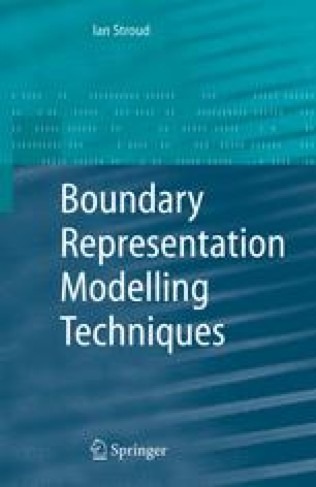
Boundary Representation Modelling Techniques
Boundary representation is the principle solid modelling method used in modern CAD/CAM systems. There have been a long series of developments on which currently available systems are based, full details of which are only partially known. Ian Stroud’s thorough coverage of these developments puts this technology in perspective. Ian Stroud started working with boundary representation solid modelling in 1977. Since then he has researched and is researching a wide variety of topics in and around this field. The information in the book comes from the results of this research.

Botnet Detection : Countering the Largest Security Threat
Botnet Detection: Countering the Largest Security Threat, a contributed volume by world-class leaders in this field, is based on the June 2006 ARO workshop on Botnets. This edited volume represents the state-of-the-art in research on Botnets. It provides botnet detection techniques and response strategies, as well as the latest results from leading academic, industry and government researchers.

Boosting Collaborative Networks 4.0 ; 21st IFIP WG 5.5 Working Conference on Virtual Enterprises, PRO-VE 2020, Valencia, Spain, November 23–25, 2020, Proceedings
This book constitutes the refereed proceedings of the 21st IFIP WG 5.5 Working Conference on Virtual Enterprises, PRO-VE 2020, held in Valencia, Spain, in November 2020. The conference was held virtually. The 53 full papers were carefully reviewed and selected from 135 submissions. They provide a comprehensive overview of major challenges and recent advances in various domains related to the digital transformation and collaborative networks and their applications with a strong focus on the following areas related to the main theme of the conference: collaborative business ecosystems; collaborative business models; collaboration platform; data and knowledge services; blockchain and knowledge graphs; maintenance, compliance and liability; digital transformation; skills for organizations of the future

Blockchains For Network Security : Principles, technologies and applications
Blockchain technology is a powerful, cost-effective method for network security. Essentially, it is a decentralized ledger for storing all committed transactions in trustless environments by integrating several core technologies such as cryptographic hash, digital signature and distributed consensus mechanisms. Over the past few years, blockchain technology has been used in a variety of network interaction systems such as smart contracts, public services, Internet of Things (IoT), social networks, reputation systems and security and financial services. With its widespread adoption, there has been increased focus on utilizing blockchain technologies to address network security concerns and vulnerabilities as well as understanding real-world security implications.
Blockchain, artificial intelligence, and the internet of things : Possibilities and opportunities
Provides basic concepts and deep knowledge about various security mechanisms that can be implemented in IoT through Blockchain technology. This book aids readers in gaining insight and knowledge about providing security and solutions to different challenges in IoT using Blockchain technology. This book primarily focuses on challenges to addressing the integration of the IoT with Blockchain with respect to potential benefits for IoT. This book gives descriptive analysis of Blockchain integrated with IoT applications and platforms for the development of IoT solutions along with possible topologies to that integration. Several application examples are included in a variety of industries / Provides the latest on secure IIoT communication using Blockchain technology for Industry 4.0 / Includes updates on using Blockchain technology in secure vehicular communication (VANET), healthcare, retail, and gaming / Provides the latest on secure IIoT communication using Blockchain technology for Industry 4.0
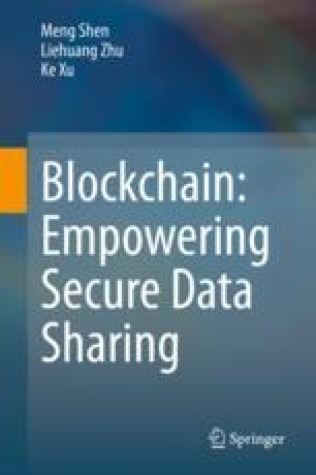
Blockchain : Empowering Secure Data Sharing
The book explains the security architecture model and the practice of building data sharing from the blockchain infrastructure, allowing readers to understand the importance of data sharing security based on the blockchain framework, as well as the threats to security and privacy. Further, by presenting specific data sharing case studies, it offers insights into solving data security sharing problems in more practical fields. The book is intended for readers with a basic understanding of the blockchain infrastructure, consensus mechanisms, smart contracts, secure multiparty computing, homomorphic encryption and image retrieval technologies.

Blind smart helmet
The Smart Helmet for the Blind is a project aimed at providing solutions for the challenges faced by blind individuals in their daily lives. The problem of detecting objects, identifying obstacles and distances, knowing the current location, and using a mobile application is a common issue for blind people. To address these problems, the Smart Helmet project was created, utilizing advanced technology and artificial intelligence to provide real-time assistance to the wearer. The helmet is connected to a Raspberry Pi 4, which processes information from the helmet's cameras and AI algorithms to analyze and predict the surrounding environment for a blind person.

Biosurveillance and biosecurity ; International Workshop, BioSecure 2008, Raleigh, NC, USA, December 2, 2008. Proceedings
This book constitutes the refereed proceedings of the International Workshop on Biosurveillance and Biosecurity, BioSecure 2008, held in Raleigh, NC, USA, in December 2008.
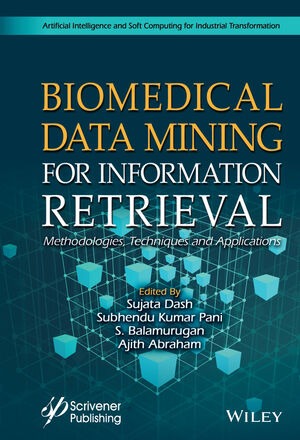
Biomedical data mining for information retrieval : Methodologies, techniques, and applications
Discusses data mining, biomedical image processing, information retrieval with broad coverage of basic scientific applications. covers the topic of mining biomedical text, images and visual features towards information retrieval. Biomedical and health informatics is an emerging field of research at the intersection of information science, computer science, and healthcare and brings tremendous opportunities and challenges due to easily available and abundant biomedical data for further analysis. The aim of healthcare informatics is to ensure the high-quality, efficient healthcare, better treatment and quality of life by analyzing biomedical and healthcare data including patient’s data, electronic health records (EHRs) and lifestyle. Previously, it was a common requirement to have a domain expert to develop a model for biomedical or healthcare; however, recent advancements in representation learning algorithms allows us to automatically to develop the model. Biomedical image mining, a novel research area, due to the vast amount of available biomedical images, increasingly generates and stores digitally.

Biology and mechanics of blood flows ; Part II : Mechanics and medical aspects
Biology and Mechanics of Blood Flows presents the basic knowledge and state-of-the-art techniques necessary to carry out investigations of the cardiovascular system using modeling and simulation. Part II of this two-volume sequence, Mechanics and Medical Aspects, refers to the extraction of input data at the macroscopic scale for modeling the cardiovascular system, and complements Part I, which focuses on nanoscopic and microscopic components and processes. This volume contains chapters on anatomy, physiology, continuum mechanics, as well as pathological changes in the vasculature walls including the heart and their treatments. Methods of numerical simulations are given and illustrated in particular by application to wall diseases. This authoritative book will appeal to any biologist, chemist, physicist, or applied mathematician interested in the functioning of the cardiovascular system.

Biological and medical data analysis ; Vol. 4345 : 7th International Symposium, ISBMDA 2006, Thessaloniki, Greece, December 7-8, 2006. Proceeding
This book constitutes the refereed proceedings of the 7th International Symposium on Biological and Medical Data Analysis, ISBMDA 2006, held in Thessaloniki, Greece, December 2006. Coverage in this volume includes functional genomics, sequence analysis, biomedical models, information modeling, biomedical signal processing, biomedical image analysis, biomedical data analysis, as well as decision support systems and diagnostic tools.
Biological and medical data analysis ; Vol. 3745 ; 6th International symposium, ISBMDA 2005, Aveiro, Portugal, November 10-11, 2005, Proceedings
The 6th International Symposium on Biological and Medical Data Analysisaimed to become a place where researchersinvolved in these diverse but increas-ingly complementary areas could meet topresent and discuss their scientificresults.The papers in this volume discuss issues from statistical models to archi-tectures and applications to bioinformatics and biomedicine. They cover bothpractical experience and novel research ideas and concepts.
Biological and artificial intelligence environments
The book reports the proceedings of the 15th Italian workshop on neural networks issued by the Italian Society on Neural Networks SIREN. The longevity recipe of this conference stands in three main points that normally renders the reading of these proceedings so interesting as appealing. 1. The topics of the neural networks is considered an attraction pole for a set of researches centered on the inherent paradigm of the neural networks, rather than on a specific tool exclusively. Thus, the subsymbolic management of the data information content constitutes the key feature of papers in various fields such as Pattern Recognition, Stochastic Optimization, Learning, Granular Computing, and so on, with a special bias toward bioinformatics operational applications. An excerpt of all these matters may be found in the book. 2. Though managed at domestic level, the conference attracts contributions from foreign researchers as well, so that in the book the reader may capture the flavor of the state of the art in the international community. 3. The conference is a meeting of friends as well. Thus the papers generally reflect a relaxed atmosphere where researchers meet to generously exchange their thought and explain their actual results in view of a common cultural growing of the community.

Bio-inspired computing and communication ; 1st Workshop on Bio-inspired design of networks, BIOWIRE 2007 Cambridge, UK, April 2-5, 2007 Revised Selected Papers
The book constitutes the thoroughly refereed post-workshop proceedings of the First Workshop on Bio-Inspired Design of Networks, BIOWIRE 2007, held in Cambridge, UK, in April 2007.
Bioinformatics technologies
Solving modern biological problems requires advanced computational methods. Bioinformatics evolved from the active interaction of two fast-developing disciplines, biology and information technology. The central issue of this emerging field is the transformation of often distributed and unstructured biological data into meaningful information. This book describes the application of well-established concepts and techniques from areas like data mining, machine learning, database technologies, and visualization techniques to problems like protein data analysis, genome analysis and sequence databases. Chen has collected contributions from leading researchers in each area. The chapters can be read independently, as each offers a complete overview of its specific area, or, combined, this monograph is a comprehensive treatment that will appeal to students, researchers, and R&D professionals in industry who need a state-of-the-art introduction into this challenging and exciting young field.
Bioinformatics research and development ; 2nd International Conference, BIRD 2008 Vienna, Austria, July 7-9, 2008 Proceedings
This book constitutes the refereed proceedings of the Second International Bioinformatics Research and Development Conference, BIRD 2008, held in Vienna, Austria in July 2008.

Bioinformatics research and development ; 1st International Conference, BIRD 2007, Berlin, Germany, March 12-14, 2007, Proceedings
This volume covers a wide range of topics related to bioinformatics like microarray data, genomics, single nucleotide polymorphism, sequence analysis, systems biology, medical applications, proteomics, information systems.

Bioinformatics research and applications : 4th International Symposium, ISBRA 2008, Atlanta, GA, USA, May 6-9, 2008. Proceedings
This book constitutes the refereed proceedings of the Fourth International Symposium on Bioinformatics Research and Applications, ISBRA 2008, held in Atlanta, GA, USA in May 2008.
Bioinformatics and Computational Biology Solutions Using R and Bioconductor
Bioconductor is a widely used open source and open development software project for the analysis and comprehension of data arising from high-throughput experimentation in genomics and molecular biology. Bioconductor is rooted in the open source statistical computing environment R. This volume's coverage is broad and ranges across most of the key capabilities of the Bioconductor project, including: Importation and preprocessing of high-throughput data from microarray, proteomic, and flow cytometry platforms / Curation and delivery of biological metadata for use in statistical modeling and interpretation. / Statistical analysis of high-throughput data, including machine learning and visualization,modeling and visualization of graphs and networks. This book is a dynamic document. Code underlying all of the computations that are shown is made available on a companion website, and readers can reproduce every number, figure, and table on their own computers.
