



الصفحة 50
الصفحة 50

Classification and Learning Using Genetic Algorithms : Applications in Bioinformatics and Web Intelligence
This book provides a unified framework that describes how genetic learning can be used to design pattern recognition and learning systems. The book is unique in the sense of describing how a search technique, the genetic algorithm, can be used for pattern classification mainly through approximating decision boundaries, and it demonstrates the effectiveness of the genetic classifiers vis-à-vis several widely used classifiers, including neural networks. It provides a balanced mixture of theories, algorithms and applications, and in particular results from the bioinformatics and Web intelligence domains.

Classification - the ubiquitous challenge ; Proceedings of the 28th annual conference of the Gesellschaft für Klassifikation e.V., University of Dortmund, March 9-11, 2004
This volume contains revised versions of selected papers presented duringthe 28th Annual Conference of the Gesellschaft f ̈ur Klassifikation (GfKl), theGerman Classification Society. contributed papers by authors from 18countries were presented at the conference in 52 parallel sessions representingthe whole field addressed by the title of the conference “Classification: TheUbiquitous Challenge”. Among these 52 sessions the VOC organized sessionson Mixture Modelling, Optimal Scaling, Multiway Methods, and Psychomet-rics with 18 papers. Overall, presentation of the papers in this volume is arranged in the fol-lowing parts:I. (Semi-)Plenary PresentationsII. Classification and Data AnalysisIII. Applications, andIV. Contest: Social Milieus in Dortmund

Citation Analysis in Research Evaluation
This book is written for members of the scholarly research community, and for persons involved in research evaluation and research policy. More specifically, it is directed towards the following four main groups of readers: – All scientists and scholars who have been or will be subjected to a quantitative assessment of research performance using citation analysis. – Research policy makers and managers who wish to become conversant with the basic features of citation analysis, and about its potentialities and limitations. – Members of peer review committees and other evaluators, who consider the use of citation analysis as a tool in their assessments. – Practitioners and students in the field of quantitative science and technology studies, informetrics, and library and information science. Citation analysis involves the construction and application of a series of indicators of the ‘impact’, ‘influence’ or ‘quality’ of scholarly work, derived from citation data, i.e. data on references cited in footnotes or bibliographies of scholarly research publications. Such indicators are applied both in the study of scholarly communication and in the assessment of research performance. The term ‘scholarly’ comprises all domains of science and scholarship, including not only those fields that are normally denoted as science – the natural and life sciences, mathematical and technical sciences – but also social sciences and humanities.

Cisco networks : Engineers' handbook of routing, switching, and security with IOS, NX-OS, and ASA
Overviews of the basic knowledge and skills needed by CCNA and CCNP exam takers. Prior familiarity with Cisco routing and switching is desirable but not necessary, as Chris Carthern, Dr. Will Wilson, and Noel Rivera start their book with a review of network basics. Further they explain practical considerations and troubleshooting when establishing a physical medium for network communications. Later they explain the concept of network layers, intermediate LAN switching, and routing. Next they introduce you to the tools and automation used with Cisco networks. Moving forward they explain management planes, data planes, and control planes. Next they describe advanced security, trouble shooting, and network management. They conclude the book with a section which focuses on using network automation to automate Cisco IOS networks. You will: Configure Cisco switches, routers, and data center devices in typical corporate network architectures / Use black-hat tools to conduct penetration testing on the security of your network / Configure and secure virtual private networks (VPNs) / Enable identity management in your network with the Cisco Identity Services Engine (ISE) to.

Chinese Spoken Language, Processing ; 5th International Symposium, ISCSLP 2006, Singapore, December 13-16, 2006, Proceedings
This book contains a selection of refereed papers presented at the Fifth Inter- tionalSymposium on Chinese Spoken Language Processing(ISCSLP 2006), held in Singapore during December 13-16, 2006. ISCSLP is a biennial conference for scientists, researchers, and practitionersto reportand discuss the latest progress in all scientifc and technological aspects of Chinese spoken language processing (CSLP). The previous four conferences were held in Singapore (ISCSLP 1998), Beijing (ISCSLP 2000), Taipei (ISCSLP 2002) and Hong Kong (ISCSLP 2004), respectively.

Chinese Computational Linguistics ; 19th China National Conference, CCL 2020, Hainan, China, October 30 – November 1, 2020, Proceedings
This book constitutes the proceedings of the 19th China National Conference on Computational Linguistics, CCL 2020, held in Hainan, China, in October/November 2020. The 32 full and 2 short papers presented in this volume were carefully reviewed and selected from 99 submissions. They were organized in topical sections named: fundamental theory and methods of computational linguistics; information retrieval, dialogue and question answering; text generation and summarization; knowledge graph and information extraction; machine translation and multilingual information processing; minority language information processing; language resource and evaluation; social computing and sentiment analysis; and NLP applications.

Charting the Topic Maps Research and Applications Landscape ; 1st International Workshop on Topic Map Research and Applications, TMRA 2005, Leipzig, Germany, October 6-7, 2005, Revised Selected Papers
The papers in this volume were presented at the workshop “Topic Map Research and Applications 2005” held on October 6-7, 2005, in Leipzig. TMRA 2005 was the first workshop of an annual series of international workshops dedicated to topic maps in research and industry. As the motto “Charting the Topic Maps Research and Applications Landscape” suggests, the aim of TMRA 2005 was to identify the primary open issues in research, learn about who is working on what, bring together researchers and application pioneers, stimulate the systematic tackling of such issues, and foster the exchange of ideas in a stimulating setting.

Challenges of expanding internet : E-commerce, e-business, and e-government ; 5th IFIP conference on e-commerce, e-business, and e-government (I3E'2005), October 28-30 2005, Poznan, Poland
This book constitutes the refereed proceedings of the5th IFIP Conference e-Commerce, e-Business, and e-Government (I3E’2005), 2005, Poznan, Poland This collection of papers offers Topics e-Commerce/e-business Sales/Distribution / Information Systems Applications (incl. Internet) / Computer Communication Networks / Cryptology / Database Managemen

Cellular Automata and Discrete Complex Systems ; 26th IFIP WG 1.5 International Workshop, AUTOMATA 2020, Stockholm, Sweden, August 10–12, 2020, Proceedings
This volume constitutes the refereed post-conference proceedings of the 26th IFIP WG 1.5 International Workshop on Cellular Automata and Discrete Complex Systems, AUTOMATA 2020, held in Stockholm, Sweden, in August 2020. The workshop was held virtually. The 11 full papers presented in this book were carefully reviewed and selected from a total of 21 submissions. The topics of the conference include dynamical, topological, ergodic and algebraic aspects of CA and DCS, algorithmic and complexity issues, emergent properties, formal languages, symbolic dynamics, tilings, models of parallelism and distributed systems, timing schemes, synchronous versus asynchronous models, phenomenological descriptions, scientific modeling, and practical applications.

Carpooling optimization
The aim of this project is to collect and use the GPS data from mobile devices to get geolocations and translate this data to paths, starting points and destinations to detect patterns out of each individual trajectories that have stochastic nature on the close sight and find representations of those patterns. The second half of the artificial intelligence algorithms has the task of finding the optimal matching of the patterns that were detected in a computation efficient way that achieve the most efficient way of transportation.

Business process management Workshops ; Vol. 4103 : BPM 2006 International Workshops, BPD, BPI, ENEI, GPWW, DPM, semantics4ws, Vienna, Austria, September 4-7, 2006, Proceedings
BPM 2006 was the fourth in a conference series that provides a forum for - searchers and practitioners in all areas of business process management. In c- junction with BPM 2006, a series of workshops were held. They were meant to facilitate the exchange of ideas and experiences between active researchers, and to stimulate discussions on new and emerging topics in line with the conference topics. We see the workshops as a necessary extension to the main conference. BPM has established itself rapidly as a high quality conference with a highly competitive selection process.

Business process management Workshops ; BPM 2007 International Workshops, BPI, BPD, CBP, ProHealth, RefMod, semantics4ws, Brisbane, Australia, September 24, 2007, Revised Selected Papers
This book constitutes the thoroughly refereed post-workshop proceedings of 6 internationl workshops held in Brisbane, Australia, in conjunction with the 5th International Conference on Business Process Management, BPM 2007, in September 2007.

Business process management ; 6th International Conference, BPM 2008, Milan, Italy, September 2-4, 2008. Proceedings
This book constitutes the refereed proceedings of the 6th International Conference on Business Process Management, BPM 2008, held in Milan, Italy, in September 2008.

Business modeling and software design ; 10th International Symposium, BMSD 2020, Berlin, Germany, July 6-8, 2020, Proceedings
This book constitutes the refereed proceedings of the 10th International Symposium on Business Modeling and Software Design, BMSD 2020, which took place in Berlin, Germany, in July 2020. BMSD is a leading international forum that brings together researchers and practitioners interested in business modeling and its relation to software design. Particular areas of interest are: Business Processes and Enterprise Engineering; Business Models and Requirements; Business Models and Services; Business Models and Software; Information Systems Architectures and Paradigms; Data Aspects in Business Modeling and Software Development; Blockchain-Based Business Models and Information Systems; IoT and Implications for Enterprise Information Systems.

Business Intelligence for the Real-Time Enterprises ; 1st International Workshop, BIRTE 2006, Seoul, Korea, September 11, 2006, Revised Selected Papers
The book includes different aspects in the lifecycle of business intelligence on very large enterprise-wide operational real-time data sets. In today’s competitive and highly dynamic environment, analyzing data to und- stand how the business is performing, to predict outcomes and trends, and to improve the effectiveness of business processes underlying business operations has become critical. The traditional approach to reporting is not longer adequate; users now - mand easy-to-use intelligent platforms and applications capable of analyzing real-time business data to provide insight and actionable information at the right time. The end goal is to improve the enterprise performance by better and timelier decision making, enabled by the availability of up-to-date, high-quality information.

Business Information Systems ; 11th International Conference, BIS 2008, Innsbruck, Austria, May 5-7, 2008. Proceedings
This book contains the refereed proceedings of the 11th International Conference on Business Information Systems, BIS 2008, held in Innsbruck, Austria, in May 2008.

Building the Infrastructure for Cloud Security : A Solutions view
For cloud users and providers alike, security is an everyday concern, yet there are very few books covering cloud security as a main subject. This book will help address this information gap from an Information Technology solution and usage-centric view of cloud infrastructure security. The book highlights the fundamental technology components necessary to build and enable trusted clouds. Here also is an explanation of the security and compliance challenges organizations face as they migrate mission-critical applications to the cloud, and how trusted clouds, that have their integrity rooted in hardware, can address these challenges.

Building an automated exam system
The project aims to build an automated exam for various exams, fields and institutions, and we have adopted in our project the National Exam for Informatics Engineering. The system builds an automatic exam that facilitates the conduct of exams and their correction automatically. The flutter application was developed to provide a user interface for students and a web page to control the system for teachers and Admins. Laravel will be used as the application programming interface (API) to manage the data and functions of the system. The system builds an automated exam for various specializations to make it easier for students to test their information and their readiness to take the official exam.
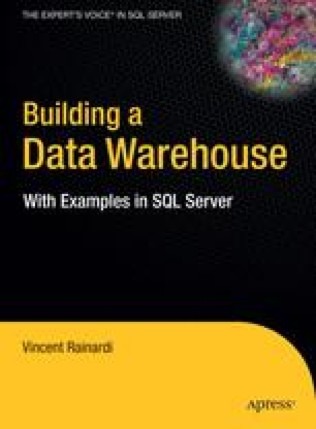
Building a Data Warehouse : With Examples in SQL Server
The book is organized as follows. In the beginning of this book (chapters 1 through 6), you learn how to build a data warehouse, for example, defining the architecture, understanding the methodology, gathering the requirements, designing the data models, and creating the databases. Then in chapters 7 through 10, you learn how to populate the data warehouse, for example, extracting from source systems, loading the data stores, maintaining data quality, and utilizing the metadata. After you populate the data warehouse, in chapters 11 through 15, you explore how to present data to users using reports and multidimensional databases and how to use the data in the data warehouse for business intelligence, customer relationship management, and other purposes. Chapters 16 and 17 wrap up the book: After you have built your data warehouse, before it can be released to production, you need to test it thoroughly. After your application is in production, you need to understand how to administer data warehouse operation.

Building a collaborative project management system: (Click)
Speaking on construction projects, we can imagine the huge amount of work, effort and time spent to complete any project. Because of the need for tools that facilitate the process of managing and tracking work and managing huge data and information and making it common to all the stockholder involved in the project, this system has been found to meet those needs of engineers, where it can manage employees, materials ,workers and the huge amount of data and enables it to track the progress of work .This system provides the possibility of communication between managers and this The system is considered a tool of the BIM system, which stands for Building Information Modeling.
