



الصفحة 5
الصفحة 5
Machine learning for brain disorders
Organized into five parts. Part One presents the fundamentals of ML. Part Two looks at the main types of data used to characterize brain disorders, including clinical assessments, neuroimaging, electro- and magnetoencephalography, genetics and omics data, electronic health records, mobile devices, connected objects and sensors. Part Three covers the core methodologies of ML in brain disorders and the latest techniques used to study them. Part Four is dedicated to validation and datasets, and Part Five discusses applications of ML to various neurological and psychiatric disorders.
Long-Term Preservation of Digital Documents : Principles and Practices
Key to our culture is that we can disseminate information, and then maintain and access it over time. While we are rapidly advancing from vulnerable physical solutions to superior, digital media, preserving and using data over the long term involves complicated research challenges and organization efforts. Uwe Borghoff and his coauthors address the problem of storing, reading, and using digital data for periods longer than 50 years. They briefly describe several markup and document description languages like TIFF, PDF, HTML, and XML, explain the most important techniques such as migration and emulation, and present the OAIS (Open Archival Information System) Reference Model. To complement this background information on the technology issues the authors present the most relevant international preservation projects, such as the Dublin Core Metadata Initiative, and experiences from sample projects run by the Cornell University Library and the National Library of the Netherlands. A rated survey list of available systems and tools completes the book.
Logging in Java with the JDK 1.4 Logging API and Apache log4j
In development scenarios where things can't be run in a debugger, or when you run the risk of masking the problem, logs are the greatest source of information about running a program. Pro Apache Log4j, Second Edition provides best practices guidelines and comprehensive coverage of the most recent release. Step by step, the book explains core concepts, from basic to advanced. Code samples are in Java and include guidelines for different application-specific needs. You'll also learn how to extend the API to write custom components and best practices for using the feature-rich log4j API. This book concludes with enterprise Java applications using log4j with JSP and J2EE.
Learning PHP, MySQL & JavaScript : With jQuery, CSS & HTML5
You'll tackle dynamic web programming with the latest versions of today's core technologies: PHP, MySQL, JavaScript, CSS, HTML5, and key jQuery libraries.
Knowledge Discovery in Databases : PKDD 2005 ; 9th European Conference on Principles and Practice of Knowledge Discovery in Databases, Porto, Portugal, October 3-7, 2005, Proceedings
585 different paper submissions were received for both events, which maintains the high s- mission standard of last year. Of these, 335 were submitted to ECML only, 220 to PKDD only and 30 to both. Such a high volume of scientific work required a tremendous effort from Area Chairs, Program Committee members and some additional reviewers. On average, PC members had 10 papers to evaluate, and Area Chairs had 25 papers to decide upon. We managed to have 3 highly qua- ?ed independent reviews per paper (with very few exceptions)and one additional overall input from one of the Area Chairs. After the authors’ responses and the online discussions for many of the papers, we arrived at the final selection of 40 regular papers for ECML and 35 for PKDD. Besides these, 32 others were accepted as short papers for ECML and 35 for PKDD. This represents a joint acceptance rate of around 13% for regular papers and 25% overall. We thank all involved for all the e?ort with reviewing and selection of papers. Besides the core technical program, ECML and PKDD had 6 invited speakers, 10 workshops, 8 tutorials and a Knowledge Discovery Challenge.
Knowledge and Data Management in GRIDs
Knowledge and Data Management in GRIDs is the third volume of the CoreGRID series and brings together scientific contributions by researchers and scientists working on storage, data, and knowledge management in GRID and Peer-to-Peer systems. This volume presents the latest GRID solutions and research results in key areas of knowledge and data management such as distributed storage management, GRID databases, Semantic GRID and GRID-aware data mining.

Job Scheduling Strategies for Parallel Processing ; 13th International Workshop, JSSPP 2007, Seattle, WA, USA, June 17, 2007. Revised Papers
Constitutes the thoroughly refereed post-workshop proceedings of the 13th International Workshop on Job Scheduling Strategies for Parallel Processing, JSSPP 2007, held in Seattle, WA, USA, in June 2007, in conjunction with the 21st ACM International Conference on Supercomputing, ICS 2007.The 10 revised full research papers presented went through the process of strict reviewing and subsequent improvement. The papers cover all current issues of job scheduling strategies for parallel processing from the supercomputer-centric viewpoint but also address many nontraditional high-performance computing and parallel environments that cannot or need not access a traditional supercomputer.
JavaScript data structures and algorithms : An Introduction to understanding and implementing core data structure and algorithm fundamentals
Combines clear explanations of data structure and algorithm theory with practical code samples, examples and exercises, all specifically relevant to JavaScript Provides background information on object-oriented programming and native JavaScript concepts to help understand how everything fits together Illustrates how these theoretical computer science concepts ties back to practical applications in software engineering
Java Methods for Financial Engineering : Applications in Finance and Investment
This book is structured around the main theories and models used by practitioners to engineer finance and investment tools. The methods developed and implemented in the text are organized as chapters which cover the core areas.
Java 17 Recipes : A Problem-Solution Approach
Quickly find solutions to dozens of common programming problems encountered while building Java applications, with recipes presented in the popular problem-solution format. Look up the programming problem that you want to resolve. Read the solution. Apply the solution directly in your own code. Problem solved! covers of some of the newest features, APIs, and more such as pattern matching for switch, Restore Always-Strict-Floating-Point-Semantics, enhanced pseudo-random number generators, the vector API, sealed classes, and enhancements in the use of String. Source code for all recipes is available in a dedicated GitHub repository. This must-have reference belongs in your library. You will learn : Look up solutions to everyday problems involving Java SE 17 LTS and other recent releases / Develop Java SE applications using the latest in Java SE technology / Incorporate Java major features introduced in versions 17, 16, and 15 into your code
Comprehensive mathematics for computer scientists 2 : Calculus and ODEs, splines, probability, fourier and wavelet theory, fractals and neural networks, categories and lambda calculus
This second volume of a comprehensive tour through mathematical core subjects for computer scientists completes the first volume in two - gards: Part III first adds topology, di?erential, and integral calculus to the t- ics of sets, graphs, algebra, formal logic, machines, and linear geometry, of volume 1. With this spectrum of fundamentals in mathematical e- cation, young professionals should be able to successfully attack more involved subjects, which may be relevant to the computational sciences. In a second regard, the end of part III and part IV add a selection of more advanced topics. In view of the overwhelming variety of mathematical approaches in the computational sciences, any selection, even the most empirical, requires a methodological justi?cation. Our primary criterion has been the search for harmonization and optimization of thematic - versity and logical coherence. This is why we have, for instance, bundled such seemingly distant subjects as recursive constructions, ordinary d- ferential equations, and fractals under the unifying perspective of c- traction theory.
Component models and systems for grid applications ; Proceedings of the Workshop on Component Models and Systems for Grid Applications held June 26, 2004 in Saint Malo, France.
This first volume of the CoreGRID series addresses such vital issues as the architecture of the Grid, the way software will influence the development of the Grid, and the practical applications of Grid technologies for individuals and businesses alike. Part I of the book, Application-Oriented Designs, focuses on development methodology and how it may contribute to a more component-based use of the Grid. Middleware Architecture, the second part, examines portable Grid engines, hierarchical infrastructures, interoperability, as well as workflow modeling environments. The final part of the book, Communication Frameworks, looks at dynamic self-adaptation, collective operations, and higher-order components. With Component Models and Systems for Grid Applications, editors Vladimir Getov and Thilo Kielmann offer the computing professional and the computing researcher the most informative, up-to-date, and forward-looking thoughts on the fast-growing field of Grid studies.
Case-Based Approximate Reasoning
Case-based reasoning (CBR) has received a great deal of attention in recent years and has established itself as a core methodology in the field of artificial intelligence. The key idea of CBR is to tackle new problems by referring to similar problems that have already been solved in the past. More precisely, CBR proceeds from individual experiences in the form of cases. The generalization beyond these experiences typically relies on a kind of regularity assumption demanding that 'similar problems have similar solutions'. Making use of different frameworks of approximate reasoning and reasoning under uncertainty, notably probabilistic and fuzzy set-based techniques, this book develops formal models of the above inference principle, which is fundamental to CBR. The case-based approximate reasoning methods thus obtained especially emphasize the heuristic nature of case-based inference and aspects of uncertainty in CBR. This way, the book contributes to a solid foundation of CBR which is grounded on formal concepts and techniques from the aforementioned fields. Besides, it establishes interesting relationships between CBR and approximate reasoning, which not only cast new light on existing methods but also enhance the development of novel approaches and hybrid systems.
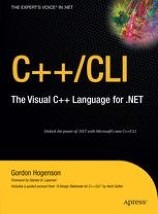
C++ /CLI : The Visual C++ Language for .NET
C++/CLI: The Visual C++ Language for .NET introduces Microsoft's extensions to the C++ syntax that allow you to target the common language runtime the key to the heart of the .NET 3.0 platform. In 12 no-fluff chapters, Microsoft insider Gordon Hogenson takes you into the core of the C++/CLI language and explains both how the language elements work and how Microsoft intends them to be used.

Blockchains For Network Security : Principles, technologies and applications
Blockchain technology is a powerful, cost-effective method for network security. Essentially, it is a decentralized ledger for storing all committed transactions in trustless environments by integrating several core technologies such as cryptographic hash, digital signature and distributed consensus mechanisms. Over the past few years, blockchain technology has been used in a variety of network interaction systems such as smart contracts, public services, Internet of Things (IoT), social networks, reputation systems and security and financial services. With its widespread adoption, there has been increased focus on utilizing blockchain technologies to address network security concerns and vulnerabilities as well as understanding real-world security implications.
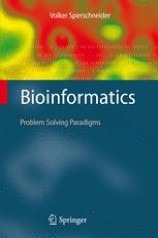
Bioinformatics : Problem Solving Paradigms
This book highlights basic paradigms of problem analysis and algorithm design in the context of core bioinformatics problems. Mathematically demanding themes are put across to the reader by properly chosen representations with the aid of lots of illustrations.
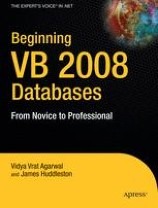
Beginning VB 2008 Databases : From novice to professional
Beginning VB 2008 Databases teaches you everything you need to know about relational databases, SQL, and ADO.NET 2.0, giving you a sound start in developing console and Windows database applications. The book also includes chapters on the SQL Server XML data type and the LINQ enhancements to the next version of Visual Basic. In addition to teaching you database basics like using SQL to communicate with databases, this book provides you with detailed, code-practical techniques to access data in Visual Basic 2008 across a range of coding situations. Code-heavy and full of practical detail, this book has been fully revised and upgraded for .NET 3.5 and offers you the best contemporary practice in this core programming area, so that you'll find yourself using it in nearly all your .NET projects.
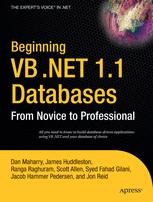
Beginning VB .NET Databases : From novice to professional
Visual Basic .NET is a powerful .NET programming language that is often considered the “workhorse” of programming. Further, development in VB .NET accounts for a huge portion of all programming efforts. To understand VB .NET is to meet challenging programming projects head-on. Author Dan Maharry livens the topic with his unique style, and presents you with the skill set you want and need, to enter today's VB .NET programming jobs. This book is an ideal read for beginning and intermediate VB .NET students who want to understand the core of VB .NET and database programming.
Beginning SQL Server 2005 for Developers : From novice to professional
SQL Server 2005 will increase your programming options, productivity, analysis, and database management. If you have some basic knowledge of relational databases and want to start a career as a developer using SQL Server, then this book is your ideal first step. It explains the core jobs and roles for developing a database in both SQL Server 2000 and 2005. This book features practical steps to help you overcome issues youre likely to encounter. You'll learn to use SQL for querying, inserting, updating, and deleting data. You'll also learn how to back up and restore databases for basic administration in SQL Server.
Beginning PHP and PostgreSQL 8 : From novice to professional
Beginning PHP and PostgreSQL 8 delves into some of the most popular open-source web development technologies, the PostgreSQL 8 database server and PHP 5 scripting language. You'll learn to reap the benefits of these core technologies by using them in unison to create dynamic, data-driven web applications. This is an ideal read if you are a web designer, programmer, hobbyist, or novice who wants to create applications with PHP 5 and PostgreSQL 8.
