



الصفحة 5
الصفحة 5

Artificial immune systems ; Vol. 4163 : 5th International conference, ICARIS 2006, Oeiras, Portugal, September 4-6, 2006, Proceedings
ICARIS 2006 is the ?fth instance of a series of conferences dedicated to the comprehension and the exploitation of immunological principles through their translation into computational terms.Their axis of research tries to stabilize an on-going identity somewhere in the crossroad of engineering (building useful artifacts), natural sciences (biologyor psychology— improving the comprehension and prediction of natural phenomena) and t- oretical computer sciences (developing and mastering the algorithmic world). Accordingly and depending on which of these perspectives receives more s- port, they attempt at attracting di?erent kinds of scientists and at stimul- ing di?erent kinds of scienti?c attitudes. For many years and in the previous ICARIS conferences, it was clearly the “engineering.

Artificial immune systems ; Vol. 3627 ; 4th International conference, ICARIS 2005, Banff, Alberta, Canada, August 14-17, 2005, Proceedings
Your immune system is unique. It is in many ways as complex as your brain, butit is not centred in one location, like the brain. It is not a single organ—it consistsof many different cell types, diverse methods of intercellular communication, andmany different organs. Its functionality is blurred throughout you—we can’textract the immune system, or point to where it begins and ends. The immunesystem is not separable from the system it protects. It has integral links to everyorgan of our bodies.This has radical implications for the field of Artificial Immune Systems (AIS),that we are only now beginning to comprehend. One of the first insights is thatmodelling the immune system, or developing any kind of immune algorithm, isdifficult. The immune system is one aspect of biology that we find difficult toapply simple reductionist explanations to. We can very successfully extract sub-processes of the whole and create immune algorithms based on those processes.

Artificial immune systems ; 7th International Conference, ICARIS 2008, Phuket, Thailand, August 10-13, 2008. Proceedings
This book constitutes the refereed proceedings of the 7th International Conference on Artificial Immune Systems, ICARIS 2008, held in Phuket, Thailand, in August 2008.

Artificial immune systems ; 6th International Conference, ICARIS 2007, Santos, Brazil, August 26-29, 2007, Proceedings
This book contains sections on search and optimization, classification and clustering, anomaly detection and negative selection, robotics, control and electronics. Modeling papers, conceptual papers, and technical papers and general applications are also included.
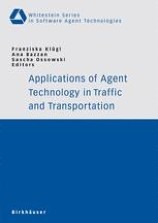
Applications of Agent Technology in Traffic and Transportation
Building effective and user-friendly transportation systems is one of the big challenges for engineers in the 21st century. There is an increasing need to understand, model, and govern such systems at both the individual (micro) and the society (macro) level. Still, this raises significant technical problems, as transportation systems may contain thousands of autonomous, "intelligent" entities that need to be simulated and/or controlled. Therefore, traffic and transportation scenarios are extraordinarily appealing for Distributed Artificial Intelligence, and (multi-) agent technology in particular. This book gives an overview of recent advances in agent-based transportation systems. It includes both a state-of-the-art survey and reports on cutting-edge research in the field.
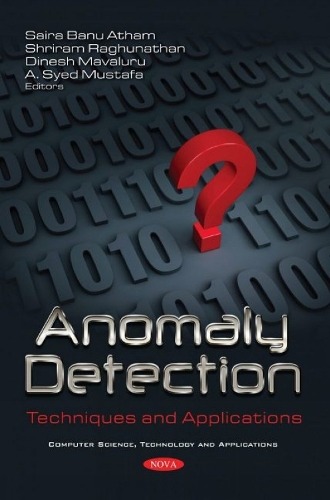
Anomaly Detection : Techniques and Applications
When information in the data warehouse is processed, it follows a definite pattern. An unexpected deviation in the data pattern from the usual behavior is called an anomaly. The anomaly in the data is also referred to as noise, outlier, spammer, deviations, novelties and exceptions. Identification of the rare items, events, observations, patterns which raise suspension by differing significantly from the majority of data is called anomaly detection. With progress in the technologies and the widespread use of data for the purpose for business the increase in the spams faced by the individuals and the companies are increasing day by day. This noisy data has boomed as a major problem in various areas such as Internet of Things, web service, Machine Learning, Artificial Intelligence, Deep learning, Image Processing, Cloud Computing, Audio processing, Video Processing, VoIP, Data Science, Wireless Sensor etc. Identifying the anomaly data and filtering them before processing is a major challenge for the data analyst. This anomaly is unavoidable in all areas of research. This book covers the techniques and algorithms for detecting the deviated data.

Android smart health monitoring system
Recent years have witnessed an increasing interest in the application of machine learning to clinical informatics and healthcare system never forgetting that the data also states that half of the world's population uses mobile devices. Despite of the existence of tons of applications, algorithms, and systems, the achievement of prescribing proper food that is suitable for patient health case based on face health status, height, weight, daily calories etc.., wasn’t achieved yet because of the lack of knowledge in food therapy process. Our system provides the service of food suggestion based on the input that is inserted by the user in sign-up form which are (height, weight, age, etc….).

An introduction to description logics
Designed so that domain knowledge can be described and so that computers can reason about this knowledge. DLs have recently gained increased importance since they form the logical basis of widely used ontology languages, in particular the web ontology language OWL. Written by four renowned experts, this is the first textbook on description logics. It is suitable for self-study by graduates and as the basis for a university course. Starting from a basic DL, the book introduces the reader to their syntax, semantics, reasoning problems and model theory and discusses the computational complexity of these reasoning problems and algorithms to solve them.

Agent Computing and Multi-Agent Systems ; 9th Pacific Rim International Workshop on Multi-Agents, PRIMA 2006, Guilin, China, August 7-8, 2006, Proceedings
PRIMA is a series of workshops on agent computing and multi-agent systems, integrating the activities in Asia and Pacific Rim countries. Agent computing and multi-agent systems are computational systems in which several autonomous or se- autonomous agents interact with each other or work together to perform some set of tasks or satisfy some set of goals. These systems may involve computational agents that are homogeneous or heterogeneous, they may involve activities on the part of agents having common or distinct goals, and they may involve participation on the part of humans and intelligent agents. The aim of PRIMA 2006 was to bring together Asian and Pacific Rim researchers and developers from academia and industry to report on the latest technical advances or domain applications and to discuss and explore scientific and practical problems as raised by the participants. PRIMA 2006 received 203 submitted papers.

Advances in web and network technologies, and information management ; APWeb/WAIM 2007 International Workshops : DBMAN 2007, WebETrends 2007, PAIS 2007 and ASWAN 2007, Huang Shan, China, June 16-18, 2007, Proceedings
With the increasing ubiquity of personal computing devices, such as mobile phones and PDAs, and the increasing deployment of sensor networks, new distributed applications are developed over networked databases posing interesting challenges. It aimed to bring together researchers in different fields related to database management and application over networks and to provide a forum where researchers and practitioners could share and exchange their knowledge and experience.

Advances in Enterprise Engineering I ; 4th International Workshop CIAO! and 4th International Workshop EOMAS, held at CAiSE 2008, Montpellier, France, June 16-17, 2008. Proceedings
This book constitutes the proceedings of the 4th International Workshop on Cooperation and Interoperability, Architecture and Ontology, CIAO!, and the 4th International Workshop on Enterprise and Organizational Modeling and Simulation, EOMAS, held at CAiSE 2008 in Montpellier, France, in June 2008.

Advances in Case-Based Reasoning ; 6th European Conference, ECCBR 2002 Aberdeen, Scotland, UK, September 4-7, 2002 Proceedings
The papers collected in this volume were presented at the 6th European C- ference on Case-Based Reasoning (ECCBR 2002) held at The Robert Gordon University in Aberdeen, UK. This conference followed a series of very succe- ful well-established biennial European workshops held in Trento, Italy (2000), Dublin, Ireland (1998), Lausanne, Switzerland (1996), and Paris, France (1994), after the initial workshop in Kaiserslautern, Germany (1993). These meetings have a history of attracting ?rst-class European and international researchers and practitioners in the years interleaving with the biennial international co- terpart ICCBR; the 4th ICCBR Conference was held in Vancouver, Canada in 2001.
Advances in Artificial Economics : The Economy as a Complex Dynamic System
Perceiving the economy as a complex dynamic system, generates a need for new tools for its study. As a constructive simulation method, Agent-Based Computational Economics (ACE) has in recent years proven its strength and extensive applicability. Fields of study are widely spread within economics, with a cluster around financial markets. This book is based on communications given at AE’2006 (Aalborg, Denmark) – the second symposium on Artificial Economics, and covers both wellknown questions of economics, like the existence of market efficiency, as well as new questions raised by the new tools, for example questions related to networks of social interaction.

Advanced NXT : The Da Vinci Inventions Book
About building some of Leonardo da Vinci's most famous inventions with LEGO's breathtaking robot technology, the LEGO MINDSTORMS NXT. In this book, you will revive such fascinating devices as the flying machine, the aerial screw, the revolving bridge, the double leaf spring catapult, and the armored car—five centuries after their creation by the great Renaissance engineer.
Advanced Information Systems Engineering ; 20th International Conference, CAiSE 2008 Montpellier, France, June 16-20, 2008 Proceedings
This book constitutes the refereed proceedings of the 20th International Conference on Advanced Information Systems Engineering, CAiSE 2008, held in Montpellier, France, in June 2008.
Advanced Information Systems Engineering ; 19th International Conference, CAiSE 2007, Trondheim, Norway, June 11-15, 2007, Proceedings
CAiSE 2007 was the 19th in the series of International Conferences on Advanced Information Systems Engineering. This year’s conference was located in Trondheim and hosted by the Norwegian University of Science and Technology, with the aim of bringing together practitioners and researchers in the field of information systems engineering. The CAiSE series thereby returned to the city where the third CAiSE conference was held in 1991.The special theme of CAiSE 2007 was “Ubiquitous Information Systems Engineering,” reflecting that modern information systems often span activities performed in several organizations and at different geographical locations.
Advanced Information Systems Engineering ; 18th International Conference, CAiSE 2006, Luxembourg, Luxembourg, June 5-9, 2006, Proceedings
This book constitutes the refereed proceedings of the 18th International Conference on Advanced Information Systems Engineering, CAiSE 2006, held in Luxembourg, in June 2006. The book presents 33 revised full papers together with 3 keynote talks. The papers are organized in topical sections on security, conceptual modeling, queries, document conceptualization, service composition, workflow, business modeling, configuration and separation, business process modeling, agent orientation, and requirements management.

Advanced information systems Engineering ; 17th International conference, CAiSE 2005, Porto, Portugal, June 13-17, 2005, Proceedings
Contains the papers accepted and presented at revised CAiSE 2005 the seventeenth in the series of International Conferences onAdvanced Information Systems. theCAiSE conferences have provided a forum for the presentation and exchange ofresearch results and practical experiences within the field of advanced informa-tion systems engineering. In 2005, .The conference theme of CAiSE 2005 was “Improving Communication andUnderstanding — Systems and Citizens.” Behind this theme, we find the factthat the Internet has been changing societies and economies, and the way in-stitutions and businesses operate has evolved rapidly.
Advanced Information Systems Engineering ; 14th International Conference, CAiSE 2002 Toronto, Canada, May 27-31, 2002 Proceedings
The explosive growth of the Internet and the Web have created a never-growing demand for information systems, and ever-growing challenges for Information Systems Engineering. The series of Conferences on Advanced Information S- tems Engineering (CAiSE) was launched in Scandinavia by Janis Bubenko and Arne Solvberg in 1989, became an important European conference, and was held annually in major European sites throughout the 1990s. Now, in its 14th year, CAiSE was held for the first time outside Europe, showcasing international research on information systems and their engineering. Not surprisingly, this year the conference enjoyed unprecedented attention.
