



الصفحة 49
الصفحة 49
Advanced Intelligent Computing Theories and Applications : With Aspects of Artificial Intelligence ; 4th International Conference on Intelligent Computing, ICIC 2008 Shanghai, China, September 15-18, 2008 Proceeding
This book - in conjunction with the two volumes CCIS 0015 and LNCS 5226 - constitutes the refereed proceedings of the 4th International Conference on Intelligent Computing, ICIC 2008, held in Shanghai, China, in September 2008.
Advanced Information Systems Engineering ; 20th International Conference, CAiSE 2008 Montpellier, France, June 16-20, 2008 Proceedings
This book constitutes the refereed proceedings of the 20th International Conference on Advanced Information Systems Engineering, CAiSE 2008, held in Montpellier, France, in June 2008.
Advanced functional programming ; 5th International School, AFP 2004, Tartu, Estonia, August 14-21, 2004, Revised Lectures
Contains the revised lecture notes corresponding to nine of thelecture courses presented at the 5th International School on Advanced Functional Programming, AFP 2004, held in Tartu, Estonia, August 14–21, 2004. The goal of the AFP schools is to inform the wide international communitiesof computer science students and software production professionals about thenew and important developments in the area of functional programming. The schools put a special emphasis on practical applications of advanced techniques.
AdvancED Flex Application Development : Building Rich Media X
Many Flex books cover the basics—this book does something different, and goes far further. The authors, leading Flash platform developers at Almer/Blank, working with Adobe User Group communities, are the creators of the Rich Media Exchange (RMX), a social media network for Adobe developers. In covering just how the RMX was built, this book contains all the knowledge you need to build similar large-scale rich Internet applications with Adobe Flex. From the inception of the idea through to deployment, the authors show the techniques needed to plan and build advanced applications. You'll learn how to use forms, styles, validators, video, sound analysis, and framework caching, ensuring you make the most of the features introduced in Flex 3.
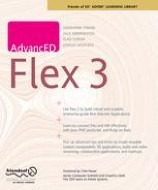
AdvancED Flex 3
Divided into three parts. The first part discusses the architectural and design aspects of Flex 3 application development. It explains the internals of a Flex 3 application and advocates a few best practices to fine-tune your application to ensure maximum performance. It includes tutorials on creating custom components, data binding, and creating AIR-powered desktop applications. The second part concentrates on effectively integrating Flex 3 with server- and client-side technologies. Techniques for integration with Java and PHP are covered in detail, and content covering interaction with client-side technologies is also included. After reading the chapter on JavaScript integration, you will be ready to create applications that can use Ajax and Flex 3 together. The third and final part of the book is a unique and eclectic mix of some advanced topics like mash-ups, collaborative applications, 3D rendering, highly interactive visualization, and audio and video streaming.
Advanced environments, tools, and applications for cluster computing ; NATO Advanced Research Workshop, IWCC 2001, Mangalia, Romania, September 1-6, 2001. Revised Papers
Started by small group of well known scientists with the aim of sharing knowledge, experiences, and results on all aspects of cluster computing, the initiative of a workshop on cluster computing received more attention after IFIP WG 10.3 and IEEE Romania Section accepted our request for sponsorship. Moreover, the application for a NATO ARW grant was successful, leading to a greater interest in the workshop. In this respect, we have to say that we chose Romania in order to attract scientists from Central and Eastern European countries and improve the cooperation in the region, in the field of cluster computing. We had an extremely short time to organize the event, but many people joined us and enthusiastically contributed to the process. The success of the workshop is wholly due to the hard work of the organizing committee, members of the program committee, key speakers, speakers from industry, and authors of accepted papers.
Advanced Data Mining and Applications ; 4th International Conference, ADMA 2008, Chengdu, China, October 8-10, 2008. Proceedings
This book constitutes the refereed proceedings of the 4th International Conference on Advanced Data Mining and Applications, ADMA 2008, held in Chengdu, China, in October 2008.
Advanced Data Mining and Applications ; 3rd International Conference, ADMA 2007, Harbin, China, August 6-8, 2007 Proceedings
The Third International Conference on Advanced Data Mining and Applications (ADMA) organized in Harbin, China continued the tradition already established by the first two ADMA conferences in Wuhan in 2005 and Xi’an in 2006. One major goal of ADMA is to create a respectable identity in the data mining research com- nity. This feat has been partially achieved in a very short time despite the young age of the conference, thanks to the rigorous review process insisted upon, the outstanding list of internationally renowned keynote speakers and the excellent program each year. The impact of a conference is measured by the citations the conference papers receive. Some have used this measure to rank conferences.
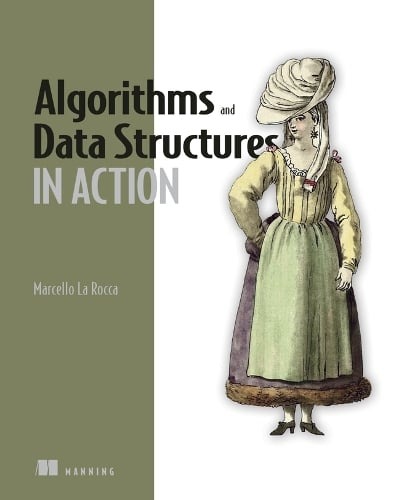
Advanced Algorithms and Data Structures
introduces a collection of algorithms for complex programming challenges in data analysis, machine learning, and graph computing. You’ll discover cutting-edge approaches to a variety of tricky scenarios. You’ll even learn to design your own data structures for projects that require a custom solution. What's inside Build on basic data structures you already know Profile your algorithms to speed up application Store and query strings efficiently Distribute clustering algorithms with MapReduce Solve logistics problems using graphs and optimization algorithms
AdvancED ActionScript Components : Mastering the Flash Component Architecture
Macromedia's architecture is like a chest filled with precious jewels, and this book is quite simply the key to open it! One of the most important tools provided with Flash is the Macromedia Component Architecture: a framework of components written in ActionScript 2, based on established design patterns, that provides a wealth of functionality you can just bolt on to your Flash applications when desired. This can save you an enormous amount of time during application development and help you improve the quality of your code. What's more, the source code is included, so if you can't find the component you need within the component architecture, you can just modify existing components to create your own!
Advanced .NET Remoting
Surpassing any white papers, specialist documents and other documentationthis book features in-depth coverage of the .NET Remoting Framework. The text is organized into three main parts, and this revised, second edition features 150 pages of entirely new material! Part one includes a guide to the 1.1 framework and its capabilities in real-world applications. Part two presents .NET remoting internals, and provides real-world code and development strategies. Finally, part three looks at futuristic remoting tools and their present implementation in Visual Studio .NET 2005. You will come to see how remoting procedures will change within the new IDE and revised framework.
Advance Concepts of Image Processing and Pattern Recognition : Effective Solution for Global Challenges
Explains the important concepts and principles of image processing to implement the algorithms and techniques to discover new problems and applications. It contains numerous fundamental and advanced image processing algorithms and pattern recognition techniques to illustrate the framework. It presents essential background theory, shape methods, texture about new methods, and techniques for image processing and pattern recognition. It maintains a good balance between a mathematical background and practical implementation. This book also contains the comparison table and images that are used to show the results of enhanced techniques. This book consists of novel concepts and hybrid methods for providing effective solutions for society. It also includes a detailed explanation of algorithms in various programming languages like MATLAB, Python, etc.
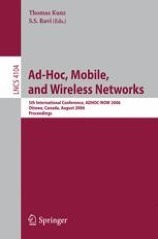
Ad-Hoc, mobile, and wireless networks ; Vol. 4104 ; 5th International Conference, ADHOC-NOW 2006, Ottawa, Canada, August 17-19, 2006 Proceedings
The 5th International Conference on Adhoc, Mobile and Wireless Networks (Adhoc-Now 2006) was held during August 17–19, 2006, in Ottawa, Canada. The ?rst four conferences in this series were held in Toronto (2002), Montreal (2003), Vancouver (2004) and Cancun (2005), respectively. The purpose of this conference is to provide a forum for researchers from academia/industry and practitioners to meet and exchange ideas regarding recent developments in the areas of ad hoc wireless networks. We received more than 170 papers for the conference submitted by authors from the following 25 countries: Australia, Bangladesh, Brazil, Canada, China, France, Germany, Greece, India, Iran, Ireland, Italy, Korea, Malaysia, Mexico, Nepal, Norway,Poland, Spain, Taiwan, The Netherlands, Turkey, UK, USA and Venezuela. Each paper was assignedto three members of the Technical Program Committee (TPC).

Ad-Hoc, mobile, and wireless networks ; 6th International Conference, ADHOC-NOW 2007, Morelia, Mexico, September 24-26, 2007, Proceedings
The sixth international conference on AD-HOC NetwOrks and Wireless was held in the city of Morelia, Michoacan State, Mexico. It follows the tradition of a multidisciplinary research program on all aspects of ad hoc networks that aims to create a collaborative forum between mathematicians, computer scientists and engineers. Previous Ad-Hoc Networks and Wireless conferences were held.
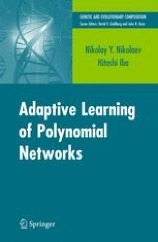
Adaptive Learning of Polynomial Networks : Genetic Programming, Backpropagation and Bayesian Methods
This book provides theoretical and practical knowledge for develop ment of algorithms that infer linear and nonlinear models. It offers a methodology for inductive learning of polynomial neural network mod els from data. The design of such tools contributes to better statistical data modelling when addressing tasks from various areas like system identification, chaotic time-series prediction, financial forecasting and data mining. The main claim is that the model identification process involves several equally important steps: finding the model structure, estimating the model weight parameters, and tuning these weights with respect to the adopted assumptions about the underlying data distrib ution. When the learning process is organized according to these steps, performed together one after the other or separately, one may expect to discover models that generalize well.
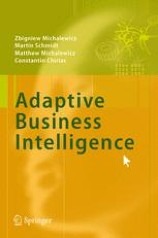
Adaptive Business Intelligence
In the modern information era, managers must recognize the competitive opportunities represented by decision-support tools. Adaptive business intelligence systems combine prediction and optimization techniques to assist decision makers in complex, rapidly changing environments. These systems address the fundamental questions: What is likely to happen in the future? And what is the best decision right now? Adaptive Business Intelligence includes elements of data mining, predictive modeling, forecasting, optimization, and adaptability.
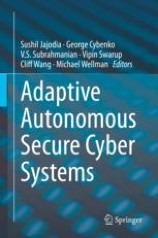
Adaptive Autonomous Secure Cyber Systems
Establishes scientific foundations for adaptive autonomous cyber systems and ultimately brings about a more secure and reliable Internet. The recent advances in adaptive cyber defense (ACD) have developed a range of new ACD techniques and methodologies for reasoning in an adaptive environment.

Adaptive and natural computing algorithms ; Proceedings of the International Conference in Coimbra, Portugal, 2005
The ICANNGA series of Conferences has been organised since 1993 and has a long history of promoting the principles and understanding of computational intelligence paradigms within the scientific community and is a reference for established workers in this area.and this book about Proceedings of the International Conference in Coimbra, Portugal, 2005 including Topics Artificial Intelligence Simulation and Modeling / Mathematics of Computing / Computer Applications
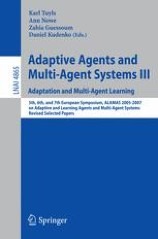
Adaptive agents and multi-agent systems III : Adaptation and multi-Agent learning ; 5th, 6th, and 7th European Symposium, ALAMAS 2005-2007 on Adaptive and Learning Agents and Multi-Agent Systems, Revised Selected Papers
This book contains selected and revised papers of the European Symposium on Adaptive and Learning Agents and Multi-Agent Systems (ALAMAS).

Adapting Proofs-as-Programs : The Curry--Howard Protocol
This book nuds new things to do with an old idea. The proofs-as-programs paradigm constitutes a set of approaches to developing programs from proofs in constructive logic. there is increasingly active research in applying constructive techniques to industrial-scale, complex software engineering problems. Thismonographdetailsseveralimportantadvancesinthisdirectionofpr- tical proofs-as-programs. One of the central themes of the book is a general, abstract framework for developing new systems of program synthesis by adapting proofs-as-programs to new contexts. Framework-oriented approaches that facilitate analogous - proaches to building systems for solving particular problems have been popular and successful. Thesemethodsarehelpful asthey providea formal toolbox that enablesa“roll-your-own”approachtodevelopingsolutions.Itishopedthatour framework will have a similar impact. The framework is demonstrated by example. We will give two novel - plications of proofs-as-programs to large-scale, coarse-grain software engine- ing problems: contractual imperative program synthesis and structured p- gram synthesis.
