



الصفحة 47
الصفحة 47
Applied algebra, algebraic algorithms and error-correcting codes ; 16th International Symposium, AAECC-16, Las Vegas, NV, USA, February 20-24, 2006, Proceedings
This book constitutes the refereed proceedings of the 16th International Symposium on Applied Algebra, Algebraic Algorithms and Error-Correcting Codes, AAECC-16, held in Las Vegas, NV, USA in February 2006. The 25 revised full papers presented together with 7 invited papers were carefully reviewed and selected from 32 submissions. Among the subjects addressed are block codes; algebra and codes: rings, fields, and AG codes; cryptography; sequences; decoding algorithms; and algebra: constructions in algebra, Galois groups, differential algebra, and polynomials.
Applications of Graph Transformations with Industrial Relevance ; 3rd International Symposium, AGTIVE 2007, Kassel, Germany, October 10-12, 2007, Revised Selected and Invited Papers
This book constitutes the thoroughly refereed post-conference proceedings of the Third International Symposium on Applications of Graph Transformations, AGTIVE 2007, held in Kassel, Germany, in October 2007.

Applications of evolutionary computing ; Vol. 3907 : EvoWorkshops 2006: EvoBIO, EvoCOMNET, EvoHOT, EvoIASP, EvoINTERACTION, EvoMUSART, and EvoSTOC, Budapest, Hungary, April 10-12, 2006, Proceedings
This book constitutes the refereed joint proceedings of seven workshops on evolutionary computing, EvoWorkshops 2006, held in Budapest, Hungary, in April 2006. The 65 revised full papers and 13 revised short papers presented were carefully reviewed and selected from a total of 149 submissions. In accordance with the seven workshops covered, the papers are organized in topical sections on evolutionary bioinformatics, evolutionary computation in communications, networks, and connected systems, evolutionary computation in hardware optimization, evolutionary computation in image analysis and signal processing, interactive evolution and humanized computational intelligence, evolutionary music and art, and evolutionary algorithms in stochastic and dynamic environments.

Applications of evolutionary computing ; Vol. 3449 ; Evoworkshops : EvoBIO, EvoCOMNET, EvoHot, EvoIASP, EvoMUSART, and EvoSTOC
Evolutionary computation (EC) techniques are e?cient nature-inspired pl- ning and optimization methods based on the principles of natural evolution and genetics. Due to their e?ciency and the simple underlying principles, these methods can be used for a large number of problems in the context of problem solving,optimization,andmachinelearning. Alargeandcontinuouslyincreasing number of researchers and practitioners make use of EC techniques in many - plication domains. The book at hand presents a careful selection of relevant EC applications combined with thorough examinations of techniques for a successful application of EC. The presented papers illustrate the current state of the art in the application of EC and should help and inspire researchers and practitioners to develop e?cient EC methods for design and problem solving.
Applications of evolutionary computing ; EvoWorkshops 2008 : EvoCOMNET, EvoFIN, EvoHOT, EvoIASP, EvoMUSART, EvoNUM, EvoSTOC, and EvoTransLog, Naples, Italy, March 26-28, 2008. Proceedings
This volume presents a careful selection of relevant EC examples combined with a thorough examination of the techniques used in EC. The papers in the volume illustrate the current state of the art in the application of EC and should help and - spire researchers and professionals to develop e?cient EC methods for design and problem solving.

Applications of evolutionary computing ; EvoWorkshops 2007 : EvoCOMNET, EvoFIN, EvoIASP, EvoINTERACTION, EvoMUSART, EvoSTOC, and EvoTransLog, Valencia, Spain, April 11-13, 2007, Proceedings
This volume contains contributions for EvoCOMNET, EvoFIN, EvoIHOT, EvoMUSART, EvoSTIM, and EvoTRANSLOC. The 51 revised full papers presented were carefully reviewed and selected from numerous submissions. This volume presents an overview about the latest research in EC. Areas where evolutionary computation techniques have been applied range from telecommunication networks to complex systems, finance and economics, games, image analysis, evolutionary music and art, parameter optimization, scheduling, and logistics. These papers may provide guidelines to help new researchers tackling their own problem using EC.
Applications of artificial intelligence, big data and internet of things in sustainable development
Focuses on different algorithms and models related to AI, big data and IoT used for various domains. It enables the reader to have a broader and deeper understanding of several perspectives regarding the dynamics, challenges, and opportunities for sustainable development using artificial intelligence, big data and IoT. Applications of Artificial Intelligence, Big Data and Internet of Things (IoT) in Sustainable Development focuses on IT-based advancements in multidisciplinary fields such as healthcare, finance, bioinformatics, industrial automation, and environmental science.
Applications and Theory of Petri Nets ; 29th International Conference, PETRI NETS 2008, Xi’an, China, June 23-27, 2008. Proceedings
This book constitutes the refereed proceedings of the 29th International Conference on Applications and Theory of Petri Nets and Other Models of Concurrency, PETRI NETS 2008, held in Xi'an, China, in June 2008.

Application of power electronics converters in smart grids and renewable energy systems
Focuses on the applications of Power Electronics Converters in smart grids and renewable energy systems. The topics covered include methods to CO2 emission control, schemes for electric vehicle charging, reliable renewable energy forecasting methods, and various power electronics converters. The converters include the quasi neutral point clamped inverter, MPPT algorithms, the bidirectional DC-DC converter, and the push–pull converter with a fuzzy logic controller.
Application and Theory of Petri Nets 2002 ; 23rd International Conference, ICATPN 2002, Adelaide, Australia, June 24-30, 2002. Proceedings
This book constitutes the refereed proceedings of the 23rd International Conference on Application and Theory of Petri Nets, ICATPN 2002, held in Adelaide, Australia, in June 2002. The 18 regular papers and one tool presentation presented together with six invited paper were carefully reviewed and selected from 45 submissions. All current issues on research and development of Petri nets are addressed, in particular concurrent systems analysis, model validation, business process management, reactive systems, workflow processes, wireless transaction protocols.
Ant Colony Optimization and Swarm Intelligence ; 6th International Conference, ANTS 2008, Brussels, Belgium, September 22-24, 2008. Proceedings
This book constitutes the refereed proceedings of the 6th International Workshop on Ant Colony Optimization and Swarm Intelligence, ANTS 2008, held in Brussels, Belgium, in September 2008.

Ant Colony Optimization and Swarm Intelligence ; 5th International Workshop, ANTS 2006, Brussels, Belgium, September 4-7, 2006, Proceedings
ANTS – The International Workshop on Ant Colony Optimization and Swarm Intelligence is now at its ?fth edition. The series started in 1998 with the - ganization of ANTS 1998. At that time the goal was to gather in a common meeting those researchers interested in ant colony optimization: more than 50 researchers from around the world joined for the ?rst time in Brussels, Belgium, to discuss ant colony optimization and swarm intelligence related research. A selectionofthebest paperspresentedatthe workshopwaspublished asa special issue of the Future Generation Computer Systems journal (Vol. 16, No. 8, 2000). Two years later, ANTS 2000, organized again in Brussels, attracted more than 70 participants. The 41 extended abstracts presented as talks or posters at the workshopwere collected in a booklet distributed to participants, and a selection of the best papers was published as a special section of the IEEE Transactions on Evolutionary Computation (Vol. 6, No. 4, 2002).
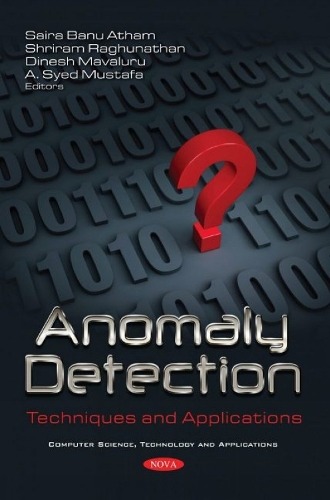
Anomaly Detection : Techniques and Applications
When information in the data warehouse is processed, it follows a definite pattern. An unexpected deviation in the data pattern from the usual behavior is called an anomaly. The anomaly in the data is also referred to as noise, outlier, spammer, deviations, novelties and exceptions. Identification of the rare items, events, observations, patterns which raise suspension by differing significantly from the majority of data is called anomaly detection. With progress in the technologies and the widespread use of data for the purpose for business the increase in the spams faced by the individuals and the companies are increasing day by day. This noisy data has boomed as a major problem in various areas such as Internet of Things, web service, Machine Learning, Artificial Intelligence, Deep learning, Image Processing, Cloud Computing, Audio processing, Video Processing, VoIP, Data Science, Wireless Sensor etc. Identifying the anomaly data and filtering them before processing is a major challenge for the data analyst. This anomaly is unavoidable in all areas of research. This book covers the techniques and algorithms for detecting the deviated data.

Android smart health monitoring system
Recent years have witnessed an increasing interest in the application of machine learning to clinical informatics and healthcare system never forgetting that the data also states that half of the world's population uses mobile devices. Despite of the existence of tons of applications, algorithms, and systems, the achievement of prescribing proper food that is suitable for patient health case based on face health status, height, weight, daily calories etc.., wasn’t achieved yet because of the lack of knowledge in food therapy process. Our system provides the service of food suggestion based on the input that is inserted by the user in sign-up form which are (height, weight, age, etc….).
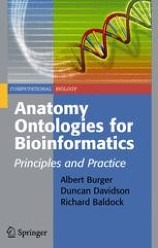
Anatomy ontologies for bioinformatics : Principles and practice
This book provides a timely and first-of-its-kind collection of contributed chapters on anatomy ontologies. It is interdisciplinary in its approach, bringing together relevant expertise from computing and biomedical studies, and covering both theoretical and applied aspects, with an emphasis on newer work relevant to the emerging Semantic Web.

Anaphora : Analysis, Algorithms and Applications ; 6th Discourse Anaphora and Anaphor Resolution Colloquium, DAARC 2007, Lagos Portugal, March 29-30, 2007, Selected Papers
This book presented sections on human processing and performance, language analysis and representation, resolution methodology and algorithms, as well as computational systems and applications.

Analysis and Modeling of Faces and Gestures ; 3rd International Workshop, AMFG 2007 Rio de Janeiro, Brazil, October 20, 2007 Proceedings
The book covered by these accepted papers include feature representation, 3D face, robust recognition under pose and illumination variations,video-basedface recognition,learning,facial motion analysis, body pose estimation, and sign recognition.
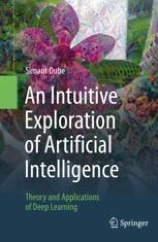
An Intuitive Exploration of Artificial Intelligence : Theory and Applications of Deep Learning
This book develops a conceptual understanding of Artificial Intelligence (AI), Deep Learning and Machine Learning in the truest sense of the word. It is an earnest endeavor to unravel what is happening at the algorithmic level, to grasp how applications are being built and to show the long adventurous road in the future.
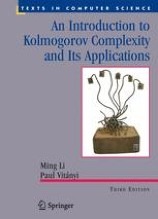
An Introduction to Kolmogorov Complexity and Its Applications
Written by two experts in the field, this book is ideal for advanced undergraduate students, graduate students, and researchers in all fields of science. It is self-contained: it contains the basic requirements from mathematics, probability theory, statistics, information theory, and computer science. Included are history, theory, new developments, a wide range of applications, numerous (new) problem sets, comments, source references, and hints to solutions of problems. This is the only comprehensive treatment of the central ideas of Kolmogorov complexity and their applications.

An Introduction to Knowledge Engineering
Knowledge Engineering refers to the development of systems that use knowledge, rather than data, to solve many novel computing problems. This is achieved by the application of computing techniques, closely associated with human cognitive processes, for transforming data into knowledge. An Introduction to Knowledge Engineering presents a simple but detailed exploration of current and established work in the field.
