



الصفحة 47
الصفحة 47
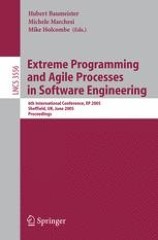
Extreme Programming and Agile Processes in Software Engineering ; Vol.3556 ; 6th International Conference, XP 2005, Sheffield, UK, June 18-23, 2005, Proceedings
Extreme Programming has come a long way since its ?rst use in the C3 project almost 10 years ago. Agile methods have found their way into the mainstream, and at the end of last year we saw the second edition of Kent Beck’s book on Extreme Programming, containing a major refactoring of XP. This year, the 6th International Conference on Extreme Programming and Agile Processes in Software Engineering took place June 18–23 in She?eld. As in the yearsbefore, XP 2005provideda unique forum for industry and academic professionals to discuss their needs and ideas on Extreme Programming and - ile methodologies. These proceedings re?ect the activities during the conference which ranged from presentation of research papers, invited talks, posters and demonstrations, panels and activity sessions, to tutorials and workshops. - cluded are also papers from the Ph.D. and Master’s Symposium which provided a forum for young researchers to present their results and to get feedback. Asvariedastheactivities werethe topicsofthe conferencewhichcoveredthe presentationofnewandimprovedpractices,empiricalstudies,experiencereports and case studies, and last but not least the social aspects of agile methods. The papers and the activities went through a rigorous reviewing process. Each paper was reviewed by at least three Program Committee members and wasdiscussedcarefullyamongtheProgramCommittee.Of62paperssubmitted, only 22 were accepted as full papers.
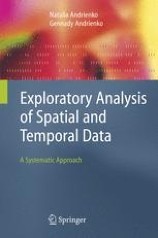
Exploratory Analysis of Spatial and Temporal Data : A Systematic Approach
Exploratory data analysis (EDA) is about detecting and describing patterns, trends, and relations in data, motivated by certain purposes of investigation. As something relevant is detected in data, new questions arise, causing specific parts to be viewed in more detail. So EDA has a significant appeal: it involves hypothesis generation rather than mere hypothesis testing.
Explainable Artificial Intelligence : An Introduction to Interpretable Machine Learning
Offers a curriculum for introducing interpretability to machine learning at every stage. The authors provide compelling examples that a core teaching practice like leading interpretive discussions can be taught and learned by teachers and sustained effort. And what better way to strengthen the quality of AI and Machine learning outcomes. I hope that this book will become a primer for teachers, data Science educators, and ML developers, and together we practice the art of interpretive machine learning.
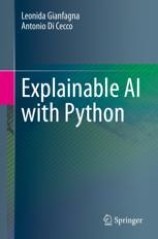
Explainable AI with Python
This book provides a full presentation of the current concepts and available techniques to make “machine learning” systems more explainable. The approaches presented can be applied to almost all the current “machine learning” models: linear and logistic regression, deep learning neural networks, natural language processing and image recognition, among the others.

Expert Network Time Protocol : An Experience in Time with NTP
Have you ever tried to figure out why your computer clock is off, or why your emails somehow have the wrong timestamp? Most likely, it's due to an incorrect network time synchronization, which can be reset using the Network Time Protocol. Until now, most network administrators have been too paranoid to work with this, afraid that they would make the problem even worse. However, Expert Network Time Protocol: An Experience in Time with NTP takes the mystery out of time, and shows the network administrator how to regain the upper hand. This book is a fascinating look into NTP, and the stories behind the science. Written by Peter Rybaczyk, one of the foremost experts on NTP, this book will show the network administrator how to become more comfortable working with time.

Expert Clouds and Applications ; Proceedings of ICOECA 2021
Features original papers from International Conference on Expert Clouds and Applications (ICOECA 2021), organized by GITAM School of Technology, Bangalore, India during February 18–19, 2021. It covers new research insights on artificial intelligence, big data, cloud computing, sustainability, and knowledge-based expert systems. The book discusses innovative research from all aspects including theoretical, practical, and experimental domains that pertain to the expert systems, sustainable clouds, and artificial intelligence technologies.
Expert C# 2005 Business Objects
Rockford Lhotka started writing his Business Objects books in 1996, and over the years, he's become one of the world's foremost authorities on building distributed object-oriented systems. His industry-standard VB .NET Business Objects book not only addresses changes in .NET 2.0 and Visual Studio 2005, but also reflects substantial enhancements and improvements to the CSLA .NET Framework and how it can be used to create enterprise-level .NET applications. The depth of Rockford's thinking now influences developers across language boundaries. With this book, you can learn directly from the expert whose framework has become universally accepted and respected.
Experimental Research in Evolutionary Computation : The New Experimentalism
This book introduces the new experimentalism in evolutionary computation, providing tools to understand algorithms and programs and their interaction with optimization problems. The book develops and applies statistical techniques to analyze and compare modern search heuristics such as evolutionary algorithms and particle swarm optimization. Treating optimization runs as experiments, the author offers methods for solving complex real-world problems that involve optimization via simulation, and he describes successful applications in engineering and industrial control projects.
Experimental and Efficient Algorithms ; 4th International Workshop, WEA 2005, Santorini Island, Greece, May 10-13, 2005, Proceedings
This proceedings volume contains the accepted papers and invited talks p- sented at the 4th International Workshop of E?cient and Experimental Al- rithms (WEA 2005), that was held May 10–13, on Santorini Island, Greece. The WEA events are intended to be an international forum for research on the design, analysis and especially the experimental implementation, evaluation and engineering of algorithms, as well as on combinatorial optimization and its applications. The?rstthreeworkshopsinthisserieswereheldinRiga(2001),MonteVerita (2003) and Rio de Janeiro (2004). Thisvolumecontains3invitedpapersrelatedtocorrespondingkeynotetalks.
Experimental Algorithms ; 7th International Workshop, WEA 2008 Provincetown, MA, USA, May 30-June 1, 2008 Proceedings
The Workshop on Experimental Algorithms, WEA, is intended to be an international forum for research on the experimental evaluation and engineering of algorithms, as well as in various aspects of computational optimization and its applications. The emphasis of the workshop is the use of experimental me- ods to guide the design, analysis, implementation, and evaluation of algorithms, heuristics, and optimization programs. WEA 2008 was held at the Provincetown Inn, Provincetown, MA, USA, on May 30 – June 1, 2008. This was the seventh workshop of the series.

Experimental Algorithms ; 6th International Workshop, WEA 2007, Rome, Italy, June 6-8, 2007, Proceedings
Fostering and disseminating high quality research results focused on the experimental analysis of algorithms the papers are devoted to the design, analysis, implementation, experimental evaluation, and engineering of efficient algorithms. Among the application areas addressed are most fields applying advanced algorithmic techniques, such as combinatorial optimization, approximation, graph theory, discrete mathematics, data mining, simulation, cryptography and security, scheduling, searching, sorting, string matching, coding, networking, etc.

Experimental Algorithms ; 5th International Workshop, WEA 2006, Cala Galdana, Menorca, Spain, May 24-27, 2006, Proceedings
This book constitutes the refereed proceedings of the 5th International Workshop on Experimental and Efficient Algorithms, WEA 2006, held in Cala Galdana, Menorca, Spain in May 2006. The 26 revised full papers presented together with 3 invited talks were carefully reviewed and selected from 92 submissions. The book is devoted to the design, analysis, implementation, experimental evaluation, and engineering of efficient algorithms. Among the application areas addressed are most fields applying advanced algorithmic techniques.

E-Voting and Identity ; 1st International Conference, VOTE-ID 2007, Bochum, Germany, October 4-5, 2007, Revised Selected Papers
Voting and identity have a very delicate relationship. Only a few processes - pendso much on an identity management respecting the fine line between reliable identification and reliable non-identifiability each at its part during the process. And only a few processes may change their outer appearance so much with the advent of new IT as voting and identity management do. So it was no surprise in FIDIS, the interdisciplinary Network of Excellence working on the Future of Identity in the Information Society

Evolving Connectionist Systems : The Knowledge Engineering Approach
Evolving Connectionist Systems is aimed at all those interested in developing and using intelligent computational models and systems to solve challenging real world problems in computer science, engineering, bioinformatics and neuroinformatics. The book challenges scientists and practitioners with open questions about future creation of new information models inspired by Nature. This edition includes new methods for adaptive, knowledge-based learning, such as online incremental feature selection, spiking neural networks, transductive neuro-fuzzy inference, adaptive data and model integration, cellular automata and artificial life systems, particle swarm optimisation, ensembles of evolving systems, and quantum inspired neural networks. New applications to gene and protein interaction modelling, brain data analysis and brain model creation, computational neuro-genetic modelling, adaptive speech, image and multimodal recognition, language modelling, adaptive robotics, modelling dynamic financial and socio-economic systems, and ecological modelling, are covered. An important new feature of the book is the attempt to connect different structural and functional levels of a complex, intelligent system, looking for inspiration from functional relationships in natural systems, such as the genetic and the brain activity.

Evolvable systems : From biology to hardware ; 8th International Conference, ICES 2008, Prague, Czech Republic, September 21-24, 2008. Proceedings
This book constitutes the refereed proceedings of the 8th International Conference on Evolvable Systems, ICES 2008, held in Prague, Czech Republic, in September 2008.The 28 revised full papers and 14 revised poster papers presented were carefully reviewed and selected from 52 submissions. The papers are organized in topical sections on evolution of analog circuits, evolution of digital circuits, hardware-software codesign and platforms for adaptive systems, evolutionary robotics, development, real-world applications, evolutionary networking, evolvable artificial neural networks, and transistor-level circuit evolution.

Evolvable systems : From biology to hardware ; 7th International Conference, ICES 2007, Wuhan, China, September 21-23, 2007, Proceedings
The 41 revised full papers collected in this volume are organized in topical sections on digital hardware evolution, analog hardware evolution, bio-inspired systems, mechanical hardware evolution, evolutionary design, evolutionary algorithms in hardware design, and hardware implementation of evolutionary algorithms.

Evolvable systems : From biology to hardware ; 6th International Conference, ICES 2005, Sitges, Spain, September 12-14, 2005, Proceedings
The flying machines proposed by Leonardo da Vinci in the fifteenth century, the se- reproducing automata theory proposed by John von Neumann in the middle of the twentieth century and the current possibility of designing electronic and mechanical systems using evolutionary principles are all examples of the efforts made by humans to explore the mechanisms present in biological systems that permit them to tackle complex tasks. These initiatives have recently given rise to the emergent field of b- inspired systems and evolvable hardware. The inaugural workshop, Towards Evolvable Hardware, took place in Lausanne in October 1995, followed by the successive events of the International Conference on Evolvable Systems: From Biology to Hardware, held in Tsukuba (Japan) in October 1996, in Lausanne (Switzerland) in September 1998, in Edinburgh (UK) in April 2000, in Tokyo (Japan) in October 2001, and in Trondheim (Norway) in March 2003. Following the success of these past events the sixth international conference was aimed at presenting the latest developments in the field, bringing together researchers who use biologically inspired concepts to implement real systems in artificial intelligence, artificial life, robotics, VLSI design, and related domains. The sixth conference consolidated this biennial event as a reference meeting for the community involved in bio-inspired systems research. All the papers received were reviewed by at least three independent reviewers, thus guaranteeing a high-quality bundle for ICES 2005.

Evolvable Hardware
The contributions in this book provide the basics of reconfigurable devices so that readers will be fully prepared to understand what EHW is, why it is necessary and how it is designed. The book also discusses the leading research in digital, analog and mechanical EHW. Selections from leading international researchers offer examples of cutting-edge research and applications, placing particular emphasis on their practical usefulness.

Evolutionary Synthesis of Pattern Recognition Systems
Evolutionary Synthesis of Pattern Recognition Systems presents novel effective approaches based on evolutionary computational techniques, such as genetic programming (GP), linear genetic programming (LGP), coevolutionary genetic programming (CGP) and genetic algorithms (GA) to automate the synthesis and analysis of object detection and recognition systems. The book’s concepts, principles, and methodologies will enable readers to automatically build robust and flexible systems—in a systematic manner—that can provide human-competitive performance and reduce the cost of designing and maintaining these systems. Its content covers all key aspects of object recognition: object detection, feature selection, feature discovery, object recognition, domain knowledge. Basic knowledge of programming and data structures, and some calculus, is presupposed.ing the book’s novel ideas

Evolutionary Multiobjective Optimization : Theoretical Advances and Applications
Evolutionary Multiobjective Optimization is a rare collection of the latest state-of-the-art theoretical research, design challenges and applications in the field of multiobjective optimization paradigms using evolutionary algorithms. It includes two introductory chapters giving all the fundamental definitions, several complex test functions and a practical problem involving the multiobjective optimization of space structures under static and seismic loading conditions used to illustrate the various multiobjective optimization concepts.
