



الصفحة 42
الصفحة 42
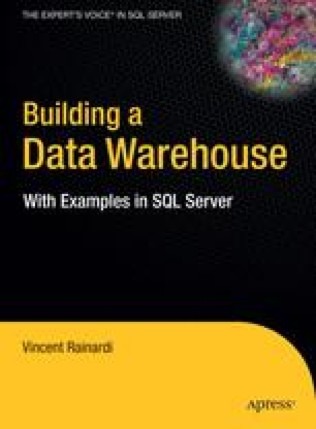
Building a Data Warehouse : With Examples in SQL Server
The book is organized as follows. In the beginning of this book (chapters 1 through 6), you learn how to build a data warehouse, for example, defining the architecture, understanding the methodology, gathering the requirements, designing the data models, and creating the databases. Then in chapters 7 through 10, you learn how to populate the data warehouse, for example, extracting from source systems, loading the data stores, maintaining data quality, and utilizing the metadata. After you populate the data warehouse, in chapters 11 through 15, you explore how to present data to users using reports and multidimensional databases and how to use the data in the data warehouse for business intelligence, customer relationship management, and other purposes. Chapters 16 and 17 wrap up the book: After you have built your data warehouse, before it can be released to production, you need to test it thoroughly. After your application is in production, you need to understand how to administer data warehouse operation.

Building a collaborative project management system: (Click)
Speaking on construction projects, we can imagine the huge amount of work, effort and time spent to complete any project. Because of the need for tools that facilitate the process of managing and tracking work and managing huge data and information and making it common to all the stockholder involved in the project, this system has been found to meet those needs of engineers, where it can manage employees, materials ,workers and the huge amount of data and enables it to track the progress of work .This system provides the possibility of communication between managers and this The system is considered a tool of the BIM system, which stands for Building Information Modeling.

Brain thoughts recognition
Humans controlling machines with their minds may sound like something from a scifi movie, but it’s becoming a reality through brain-computer interfaces BCI. Where BCI technology allows a human brain and an external device to talk to each other—to exchange signals. It gives humans the ability to directly control machines, without the physical constraints of the body. There are two ways to implement the BCI: Noninvasive tools often use sensors applied on or near the head to track and record brain activity, or Invasive BCI would require surgery. Electronic devices would need to be implanted beneath the skull, directly into the brain, to target specific sets of neurons. In order to implement a non-invasive BCI in a mobile phone, this study developed a mobile application to help paralyzed people who do not have the ability to use their phones to spend their basic daily needs, such as using the keyboard and interacting with PDF, etc.
Brain and Human Body Modeling : Computational Human Modeling at EMBC 2018
This book describes modern applications of computational human modeling with specific emphasis in the areas of neurology and neuroelectromagnetics, depression and cancer treatments, radio-frequency studies and wireless communications. Special consideration is also given to the use of human modeling to the computational assessment of relevant regulatory and safety requirements. Readers working on applications that may expose human subjects to electromagnetic radiation will benefit from this book’s coverage of the latest developments in computational modelling and human phantom development to assess a given technology’s safety and efficacy in a timely manner.

Boosting Collaborative Networks 4.0 ; 21st IFIP WG 5.5 Working Conference on Virtual Enterprises, PRO-VE 2020, Valencia, Spain, November 23–25, 2020, Proceedings
This book constitutes the refereed proceedings of the 21st IFIP WG 5.5 Working Conference on Virtual Enterprises, PRO-VE 2020, held in Valencia, Spain, in November 2020. The conference was held virtually. The 53 full papers were carefully reviewed and selected from 135 submissions. They provide a comprehensive overview of major challenges and recent advances in various domains related to the digital transformation and collaborative networks and their applications with a strong focus on the following areas related to the main theme of the conference: collaborative business ecosystems; collaborative business models; collaboration platform; data and knowledge services; blockchain and knowledge graphs; maintenance, compliance and liability; digital transformation; skills for organizations of the future
Body Sensor Networks
While the problems of long-term stability and biocompatibility are being addressed, several promising prototypes are starting to emerge for managing patients with acute diabetes, for treatment of epilepsy and other debilitating neurological disorders and for monitoring of patients with chronic cardiac diseases. Despite the technological developments in sensing and monitoring devices, issues related to system integration, sensor miniaturization, low-power sensor interface circuitry design, wireless telemetric links and signal processing still have to be investigated.

Bluetooth based indoor location positioning system for mobile robot navigation
Positioning objects has been an important topic since it’s needed to locate people, guide them to a certain place, and assist companies and organizations with their assets management. Great applicational opportunities emerge based on the inquiry of Received Signal Strength Indicator (RSSI). In this research, a positioning system using Bluetooth RSSI is proposed for indoor applications. First, RSSI values are inquired multiple times and the average is taken at multiple points of different distances from the transmitters. Then the distance is determined by the variations of RSSI values respectively to distance variations. Finally, a triangulation algorithm is used to calculate the current location of the receiver.
Blog Design Solutions
In this book, a team of renowned web designers take you through the ins and outs of putting together great blogs. They waste no time harking on about the philosophy of blogs, or the community behind them. Instead, they get straight to the practical details, showing how to set up a basic blog in some of the world's most popular blogging engines Movable Type, ExpressionEngine, WordPress, and Textpattern. With your blog set up, they then show you how to build great looking, usable layouts for your blog. The last chapter even shows you how to build your very own PHP/MySQL-based blog engine!
Blockchain : Empowering Secure Data Sharing
The book explains the security architecture model and the practice of building data sharing from the blockchain infrastructure, allowing readers to understand the importance of data sharing security based on the blockchain framework, as well as the threats to security and privacy. Further, by presenting specific data sharing case studies, it offers insights into solving data security sharing problems in more practical fields. The book is intended for readers with a basic understanding of the blockchain infrastructure, consensus mechanisms, smart contracts, secure multiparty computing, homomorphic encryption and image retrieval technologies.

Biometric Authentication ; International ECCV 2002 Workshop Copenhagen, Denmark, June 1, 2002 Proceedings
Biometric authentication refers to identifying an individual based on his or her distinguishing physiological and/or behavioral characteristics. It associates an individual with a previously determined identity based on that individual s appearance or behavior. Because many physiological or behavioral characteristics (biometric indicators) are distinctive to each person, biometric identifiers are inherently more reliable and more capable than knowledge-based (e.g., password) and token-based (e.g., a key) techniques in differentiating between an authorized person and a fraudulent impostor. For this reason, more and more organizations are looking to automated identity authentication systems to improve customer satisfaction, security, and operating efficiency as well as to save critical resources.
BioMEMS and Biomedical Nanotechnology : Vol. I: Biological and Biomedical Nanotechnology
Abe Lee has been working on micro/ and nanotechnology for biomedical and biotech applications since 1992. His recent research focuses on the development of integrated micro and nano fluidic chip processors for the following applications: point-of-care diagnostics, "smart" nanomedicine for early detection and treatment, stem cell biology and therapeutics, the synthesis of novel and pure materials, and biosensors to detect environmental and terrorism threats. Jim Lee's research interest includes BioMEMS/NEMS, and polymer micro/nanotechnology. In the last 4 years, he has over 20 refereed journal publications, 2 book chapters, and 5 patents in these areas. He is now leading an NSF Nanoscale Science and Engineering Center for Affordable Nanoengineering of Polymer Biomedical Devices at OSU.
BioMEMS
Here, a new discipline evolved which focuses on microsystems for living systems called "BIOMEMS". In this review at a glance the exciting field of bio-microsystems, from their beginnings to indicators of future successes are presented. It will also show that a broad penetration of micro and nano technologies into biology and medicine will be mandatory for future scientific and new product development progress in life science.
Biomedical Simulation; 4th International Symposium, ISBMS 2008, London, UK, July 7-8, 2008 Proceedings
This book constitutes the refereed proceedings of the 4th International Symposium on Biomedical Simulation, ISBMS 2008, held in London, UK, in July 2008.

Biomedical Image Registration ; 3rd International Workshop, WBIR 2006, Utrecht, The Netherlands, July 9-11, 2006, Proceedings
This book constitutes the thoroughly refereed post-proceedings of the Third International Workshop on Biomedical Image Registration. The 20 revised full papers and 18 revised poster papers presented were carefully reviewed and selected for inclusion in the book. The papers cover all areas of biomedical image registration; methods of registration, biomedical applications, and validation of registration.
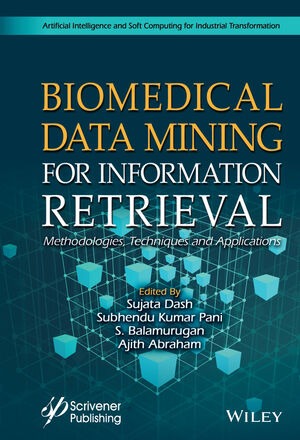
Biomedical data mining for information retrieval : Methodologies, techniques, and applications
Discusses data mining, biomedical image processing, information retrieval with broad coverage of basic scientific applications. covers the topic of mining biomedical text, images and visual features towards information retrieval. Biomedical and health informatics is an emerging field of research at the intersection of information science, computer science, and healthcare and brings tremendous opportunities and challenges due to easily available and abundant biomedical data for further analysis. The aim of healthcare informatics is to ensure the high-quality, efficient healthcare, better treatment and quality of life by analyzing biomedical and healthcare data including patient’s data, electronic health records (EHRs) and lifestyle. Previously, it was a common requirement to have a domain expert to develop a model for biomedical or healthcare; however, recent advancements in representation learning algorithms allows us to automatically to develop the model. Biomedical image mining, a novel research area, due to the vast amount of available biomedical images, increasingly generates and stores digitally.
Biologically Inspired Approaches to Advanced Information Technology ; 2nd International Workshop, BioADIT 2006, Osaka, Japan 26-27, 2006, Proceedings
This book contains 30 articles and three abstracts of invited talks presented at The Second International Workshop on Biologically Inspired Approaches for Advanced Information Technology,The workshop is intended to provide an e?ective forum for original research results in the ?eld of bio-inspired approaches to advanced information technologies. It also serves to foster the connection between biological paradigms and solutions to building the next-generation information systems.
Biologically Inspired Algorithms for Financial Modelling
Then Part I provides a thorough guide to the various bioinspired methodologies – neural networks, evolutionary computing (particularly genetic algorithms and grammatical evolution), particle swarm and ant colony optimization, and immune systems. Part II brings the reader through the development of market trading systems. Finally, Part III examines real-world case studies where BIA methodologies are employed to construct trading systems in equity and foreign exchange markets, and for the prediction of corporate bond ratings and corporate failures.

Biological Membrane Ion Channels : Dynamics, Structure, and Applications
Ion channels are biological nanotubes that are formed by membrane proteins. Because ion channels regulate all electrical activities in living cells, understanding their mechanisms at a molecular level is a fundamental problem in biology. This book deals with recent breakthroughs in ion-channel research that have been brought about by the combined effort of experimental biophysicists and computational physicists, who together are beginning to unravel the story of these exquisitely designed biomolecules. With chapters by leading experts.

Biological and medical data analysis ; Vol. 3745 ; 6th International symposium, ISBMDA 2005, Aveiro, Portugal, November 10-11, 2005, Proceedings
The 6th International Symposium on Biological and Medical Data Analysisaimed to become a place where researchersinvolved in these diverse but increas-ingly complementary areas could meet topresent and discuss their scientificresults.The papers in this volume discuss issues from statistical models to archi-tectures and applications to bioinformatics and biomedicine. They cover bothpractical experience and novel research ideas and concepts.

Bio-inspired computational intelligence and applications ; International conference on life system modeling, and simulation, LSMS 2007, Shanghai, China, September 14-17, 2007. Proceedings
It covers both micro and macro c- ponents ranging from cells, tissues and organs across to organisms and ecologic niches. These interact and evolve to produce an overall complex system whose beh- ior is difficult to comprehend and predict.The arrival of the 21st century has been marked by a resurgence of research interest both in arriving at a systems-level und- standing of biology and in applying such knowledge in complex real-world appli- tions. Consequently, computational methods and intelligence in systems, biology, as well as bio-inspired computational intelligence, have emerged as key drivers for new computational methods. For this reason papers dealing with theory, techniques and real-world applications relating to these two themes were especially solicited.
